
Relaunch the box again
You print new forms, hang a new poster and ask supervisors to push it at shift start. Submissions spike, then go quiet again.
Dead suggestion box
Somebody would put in the suggestion in the suggestion box, and then who knows when that suggestion box gets opened up. Imagine if that person has an avenue where they could just put in their idea and it goes directly to their manager, and the manager directly replies right there.
By clicking "Schedule Demo," you agree to the use of your data in accordance with LeanSuite's Privacy Notice, including for marketing purposes.
TRUSTED BY INNOVATIVE LEADERS

















Where ideas die
You print new forms, hang a new poster and ask supervisors to push it at shift start. Submissions spike, then go quiet again.
Once they put in what the problem is and put in what the suggestion is, from there the clock starts, in terms of how much time is it taking and who's actually working on it. They can then approve the suggestion, reject the suggestion or mark it as not a suggestion. Based on all that, users also receive points and then redeem those points.
Sound familiar?
Someone writes an idea on a slip of paper and drops it in the box. It gets emptied a few days later, read by one person who is already buried, and passed to whoever might own it. The operator never hears a yes, a no, or a reason. This is what an employee suggestion program looks like once the answers stop, and then leadership decides people have no ideas.
Weeks with no answer
Typically you have suggestion boxes all over the factory, where people write their suggestion and put that into the box. You've lost that voice, and that person would never come to you and say, hey, I have an idea, let's fix this.
One person approves everything
Every idea waits on whoever has time to get through the pile, and finance or quality input arrives by email, if at all.
Good ideas stay ideas
An idea that deserved a team and a budget never becomes a project, so nothing on the floor changes.
Submit in a minute
There's this web application, or they can also use Android or iOS devices like tablets or phones. Not everybody requires an email address, as long as they have an employee ID, that's all they need and they can input a suggestion.
A decision with feedback
You can design your workflow to where the suggestion should go to. If it's safety related, it could go to a certain individual, if it's quality related you can have those already go to the right people, so not everything needs to come to you. Once it reaches their inbox or their notification, they can approve the suggestion, reject the suggestion or mark it as not a suggestion.
Points, leaderboard, prizes
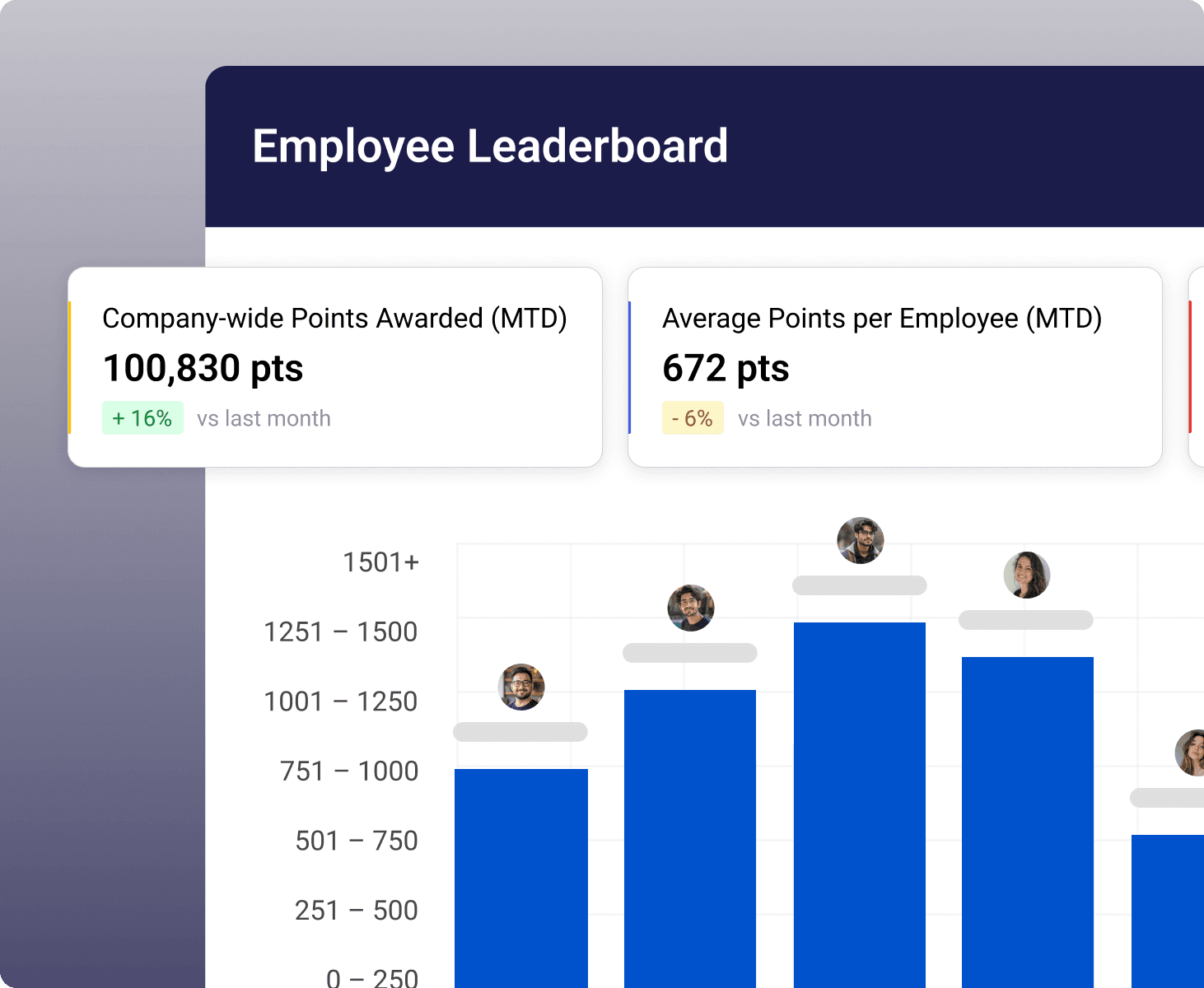
You have an option to add different points for different suggestions and at what stage you want to award them. You can build your own prize catalog where people can go and redeem those points, so it could be anything like company swag, jackets, mugs and T shirts. Plus it also keeps track of the leaderboard, and every month this refreshes.
What plants try first
Submissions spike for a week or two because the ask is fresh. Nothing comes back to the people who wrote the slips, so the box goes quiet again.
One person owns the file and retypes ideas into it. The floor cannot see it, so the submitter still has no way to know whether their idea was read, approved or dropped.
Ideas wait for the next meeting, and whoever is in the room that day decides. The decision rarely travels back down to the person who raised it.
How it works
You can have employees submit an idea and action on it, so it goes into first pending feedback. Once you provide the feedback, approve it, reject it, based on all that users also receive points. And when you're trying to action those suggestions, you can directly bring them into Kaizen, which is the continuous improvement module.
Step 1
They all have access to their phones, whether it's Android or iOS, they can simply download the app, scan the QR code, put in their suggestion and they're done. Everybody can have access to this, there's no per user licensing, it's like per facility license, so everybody in the factory can have access.
Step 2
It can route the idea to the right people. But let's say I'm the one who's approving ideas in my area, and some idea comes in and I love this idea but I cannot take action on it until finance gives me approval. So I can add finance as an inline approver, and until they approve the idea, I cannot move forward.
Step 3
As you're collecting ideas, you could then take those that are in pending implementation status and initiate Kaizen right from there and convert those into projects. You can also get visibility into the knowledge and the availability of users to build a team.
Step 4
You could establish different levels of points as to when someone gets points, for submission they could get a number of points, or when it gets converted into a project or gets approved, and if it gets implemented maybe you add some more points to it. It runs a monthly leaderboard, so if I put in two more suggestions, I'll be on the top. You can also run campaigns, let's say how do we reduce scrap on line one, and they could get more points based on whatever you set up in the system for that campaign.
Who feels it
The idea is that everything is in one place, and this is a tool where all different levels of people can utilize it in different ways. If someone at the senior leadership level is looking at something, it's there, and anyone who wants to work in the system, it's there.
Currently it's all on boards, where they write their suggestion and put that into the box.
With LeanSuiteThey come into the application and put in what problem they're facing and what they want to suggest, they can add sketches, they can add images, they can add videos and simply hit submit, and they will be awarded points. If there's somebody at number two level, they already know that if they submit another one, they can be on the top for this month.
Gets a stack of paper slips handed over with no context, and no simple way to pull in finance or quality.
With LeanSuiteDepending on what the suggestion is about, it can get routed automatically to the right people, and they get a notification on their phone, they can look at it and be like, oh, this is a great suggestion, approved, not approved. You can add additional people in there as well as needed, maybe for some other one you need quality approval.
Cannot say how many ideas came in, how many were answered, or which ones deserved a team and a budget.
With LeanSuiteThey could look at any of the dashboards that are available, which are fed automatically, and they could apply different filters, maybe they only care about open suggestions. You could assign projects to different individuals based on the level of knowledge that they have and also the availability.

From our co-founder
“Suggestion boxes get collected maybe once or twice a week, so by the time it gets to the actual person, the person who's suggesting something has lost their motivation.”
Where to go next
The box breaks down because ideas are not captured, tracked, or closed out anywhere people can see. These three pages cover where an idea goes once it leaves the operator's hand, and where the smaller day-to-day stuff should go instead.
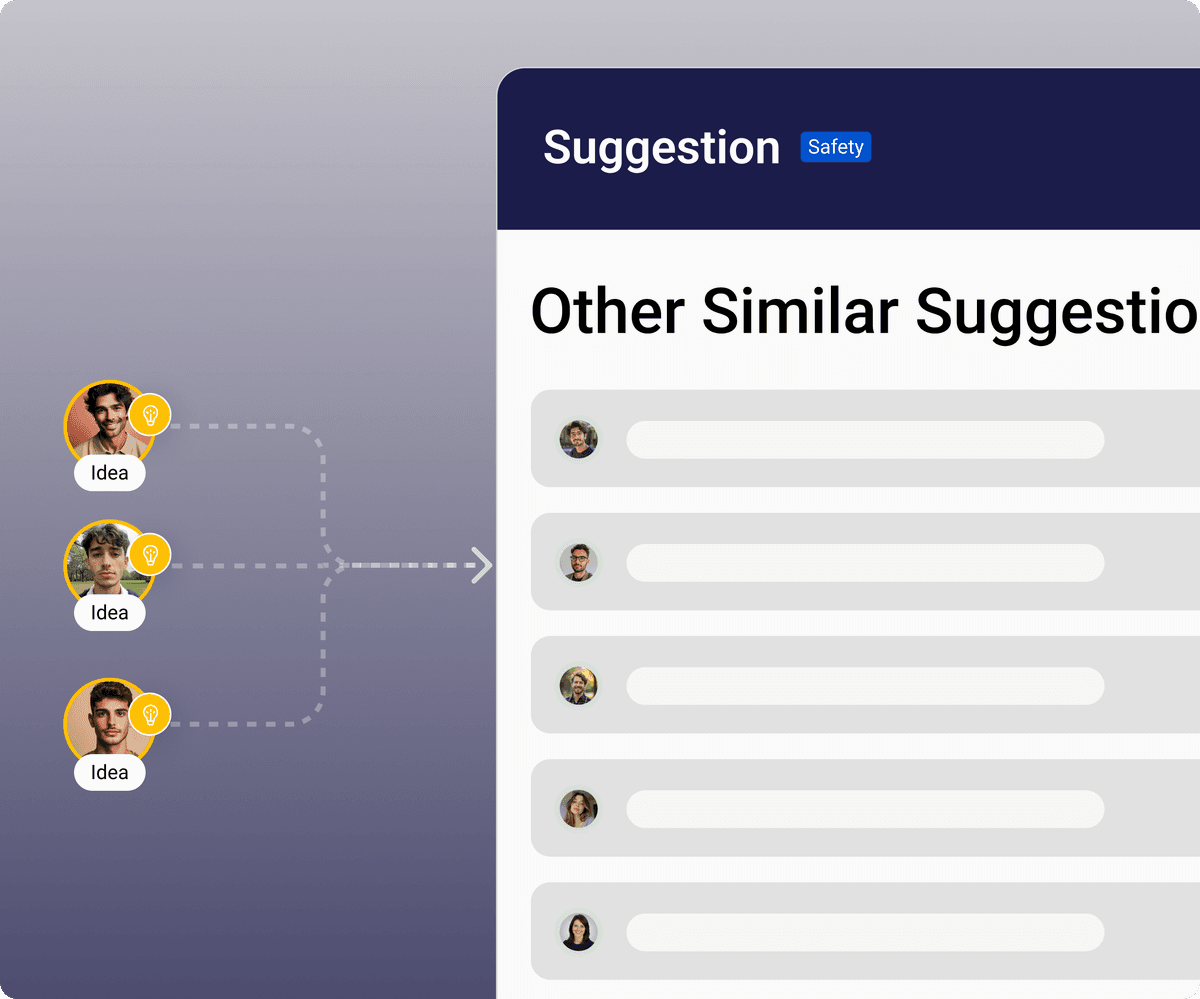
This is the direct replacement for the paper box: capture the suggestion, track where it sits, and implement the ones you decide to run. If the last idea went unanswered because nobody could see it after the box was emptied, start here.
See how it works →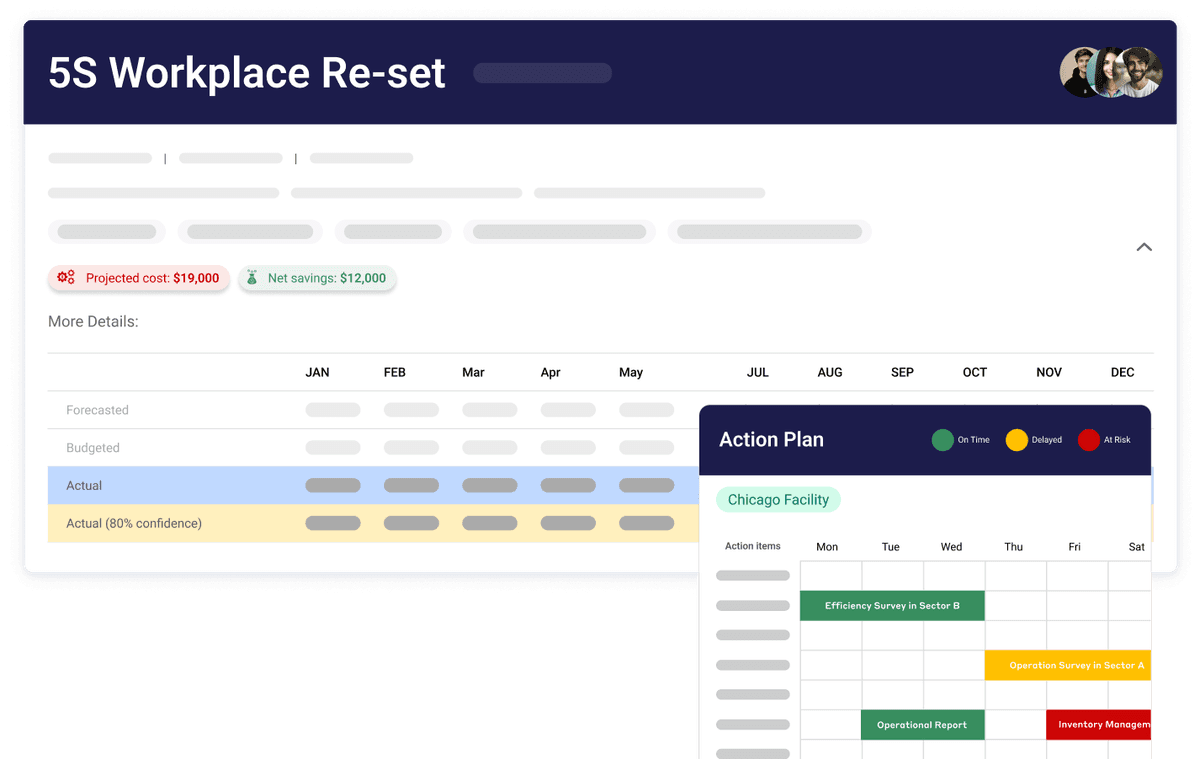
Some suggestions are bigger than a quick fix and turn into a Kaizen project with owners and dates. This keeps those projects in one place and tied to the goals you are being measured on, so an approved idea does not stall after the yes.
See how it works →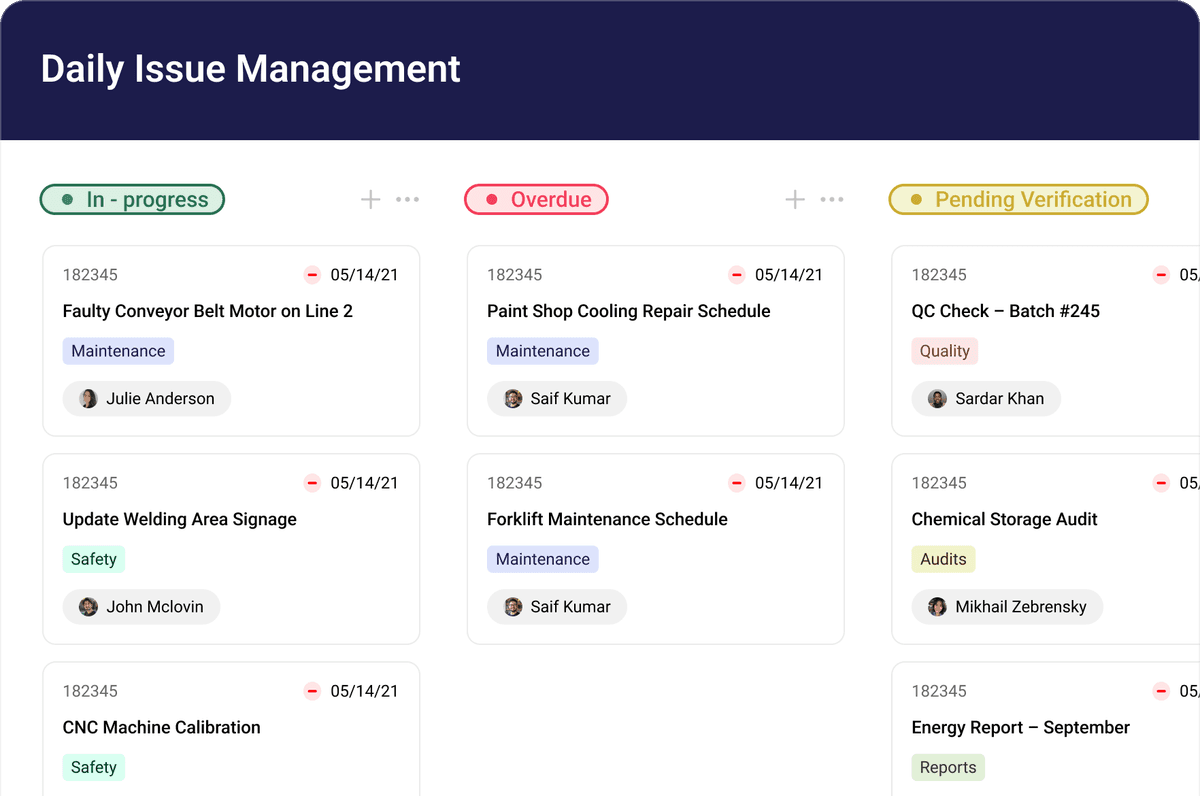
Not every slip in the box is an improvement idea; plenty of them are a problem on the line that needed an answer that shift. This gives the frontline a way to flag, track, and resolve those as they happen instead of waiting for the box to be emptied.
See how it works →Bring one real idea from your floor and we will walk it through submission, approval, feedback and a Kaizen in your own setup.