
Told, not logged
The idea gets mentioned at handover because there is nowhere for the operator to put it. It lives in one supervisor's memory until it fades.
Locked out of CI
The people running the line are the ones who see the problem first, and your suggestion form asks them for an address they have never been issued. A frontline worker app they sign into with an employee ID puts them back in it.
By clicking "Schedule Demo," you agree to the use of your data in accordance with LeanSuite's Privacy Notice, including for marketing purposes.
TRUSTED BY INNOVATIVE LEADERS

















Same idea, two runs
One operator, one idea, two different sign-in rules. One run never gets logged, the other comes back with an answer.
The idea gets mentioned at handover because there is nowhere for the operator to put it. It lives in one supervisor's memory until it fades.
The operator signs in with an employee ID on a tablet at the line and submits it themselves. It carries a category, so it routes to the person who can act on it.
Sound familiar?
An operator works around the same jam every shift and knows exactly what would stop it. The suggestion form wants a company email nobody on the line has ever been issued, and the nearest desktop is in the office. So the idea gets mentioned at handover, and that is the last anyone hears of it.
Paper into a box
Somebody writes it, somebody picks it up, somebody carries it, somebody reads it, and it stalls.
Ideas told at handover
It gets said out loud at shift change and there is nowhere to put it.
Only the office takes part
The people with logins raise the items, and they are not the ones standing at the machine.
Employee ID sign-in
Access is given through an employee ID, so a worker does not need an email address to have an account.
Everyone in the plant
Licensing is per facility with no user limit, so every person in the factory can have access.
The answer goes back
A submission moves from pending feedback to approved, rejected or implemented, and the person who raised it can see where it stands.
Sound familiar
None of these are culture problems. They are access problems.
If several of these are true, the floor is not quiet, it just has nowhere to speak.
How it works
Four steps that start with getting an account into the hands of someone who has never had a work email. Each one is a mechanic in the product, not a policy you have to enforce.
Step 1
Create an invite link in user management, set the role, the seat count and the facility, and share it as a QR code. People scan it, enter first name, last name and a password, and they are in, or you give them access by employee ID.
Step 2
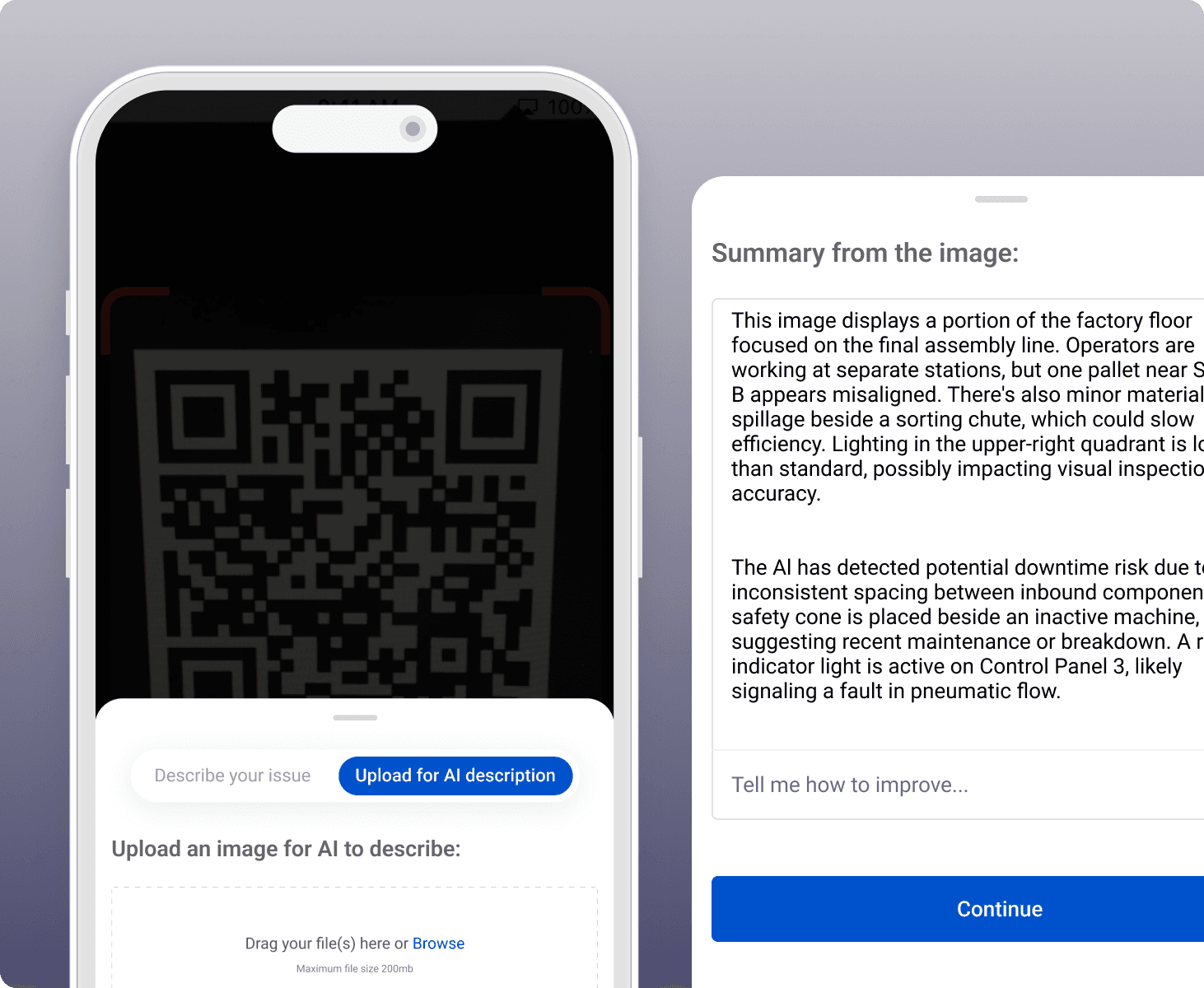
The app runs on Android, iOS and the web, and plants typically put a tablet or kiosk across every two or three lines. Scan the QR code on the asset and the system picks up area, line, workstation and machine; take a photo and it writes a description, or use speech to text instead of typing.
Step 3
Each submission carries a category, so a safety item goes to safety and a quality item goes to quality without anyone re-keying it. The reviewer gets a notification, can pull someone else into the conversation by mentioning them, and can approve, reject or open a Kaizen from it.
Step 4
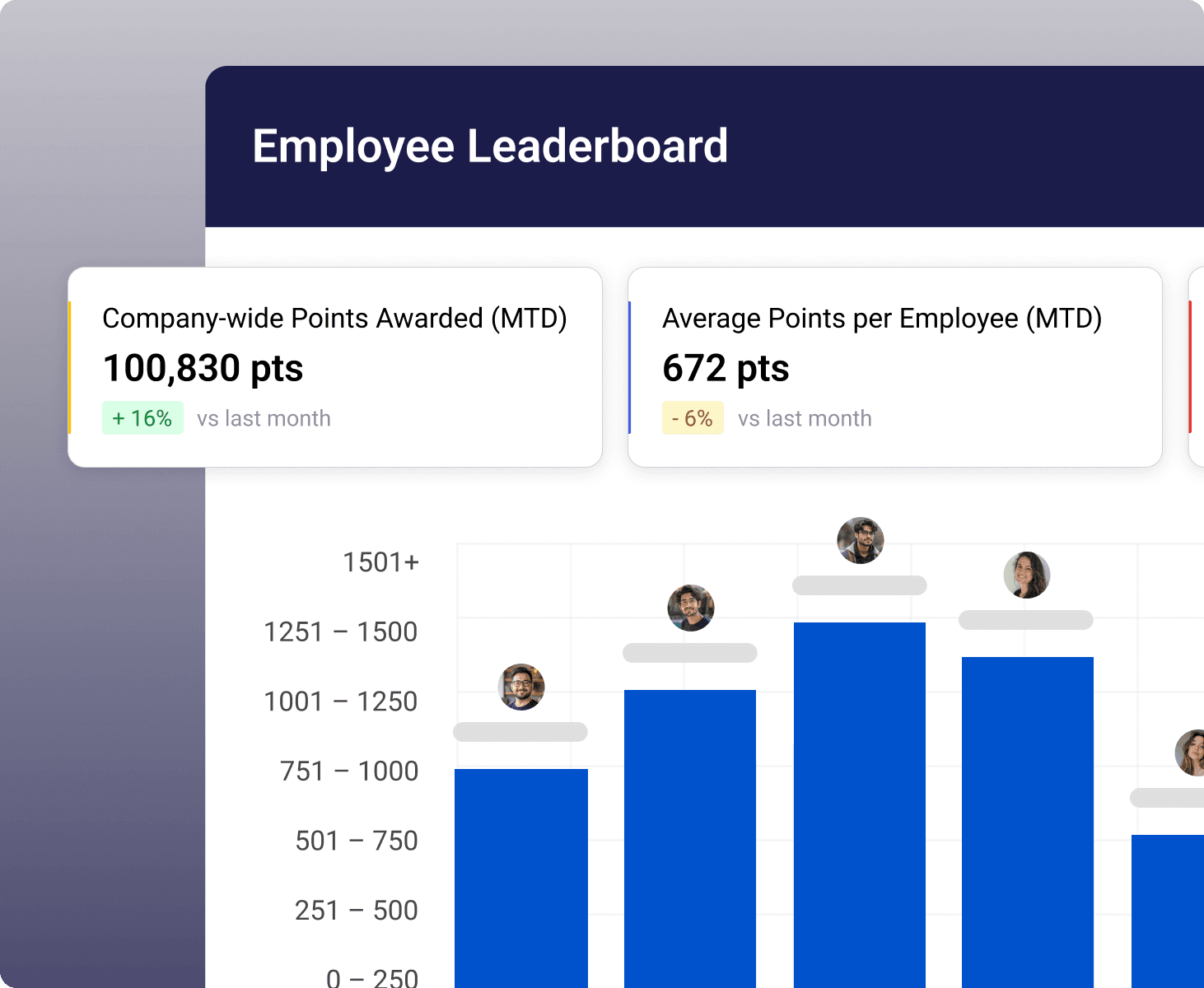
Submissions carry points, the prize catalogue is one your plant builds itself, and the monthly leaderboard refreshes on its own. Run a campaign with a point multiplier when you want the floor looking at one problem.
Before the software
Every plant has already had a go at this, usually more than once.
Somebody writes it, somebody picks it up, somebody reads it and passes it to whoever it belongs to. By the time it reaches a decision, nobody remembers raising it, and the box goes quiet.
Issues raised on WhatsApp or Outlook scroll away behind the next message. There is no status, no owner and no way to see what has already been reported.
It is a lot of IT work for accounts that people on the line rarely open. The floor is where the problem is seen, and that is where it needs to be logged.

From our co-founder
“Management, everybody has company emails, but at the operator level, nobody has email addresses.”
Where to next
The jam the operator described has to land somewhere and then get worked. These pages cover capturing the suggestion, handling the issue on the floor, and keeping the people who speak up.
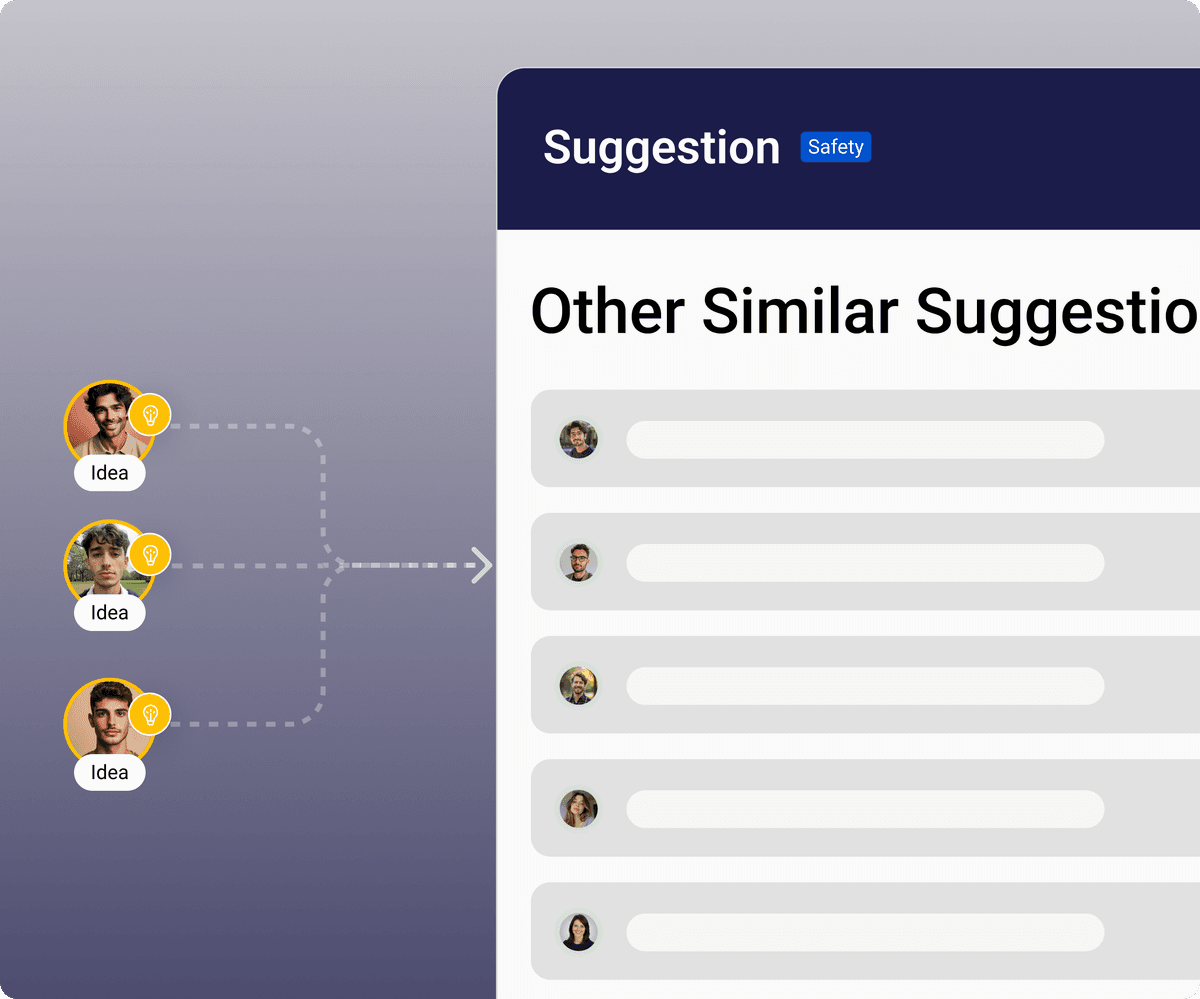
The idea mentioned at handover needs a place to sit where it can be tracked and implemented. This page covers capturing employee suggestions and following them through.
See how it works →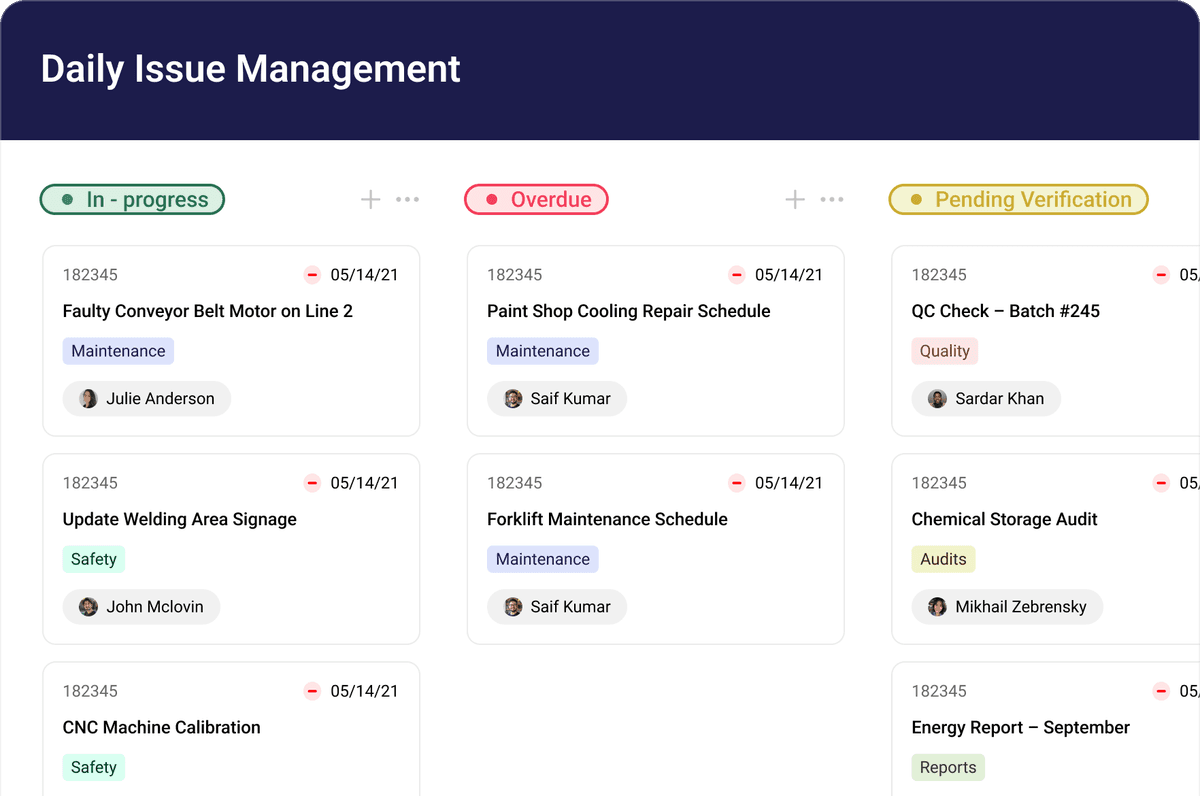
A jam that repeats every shift is an issue, not just an idea. This page covers letting frontline workers flag, track, and resolve issues as they happen.
See how it works →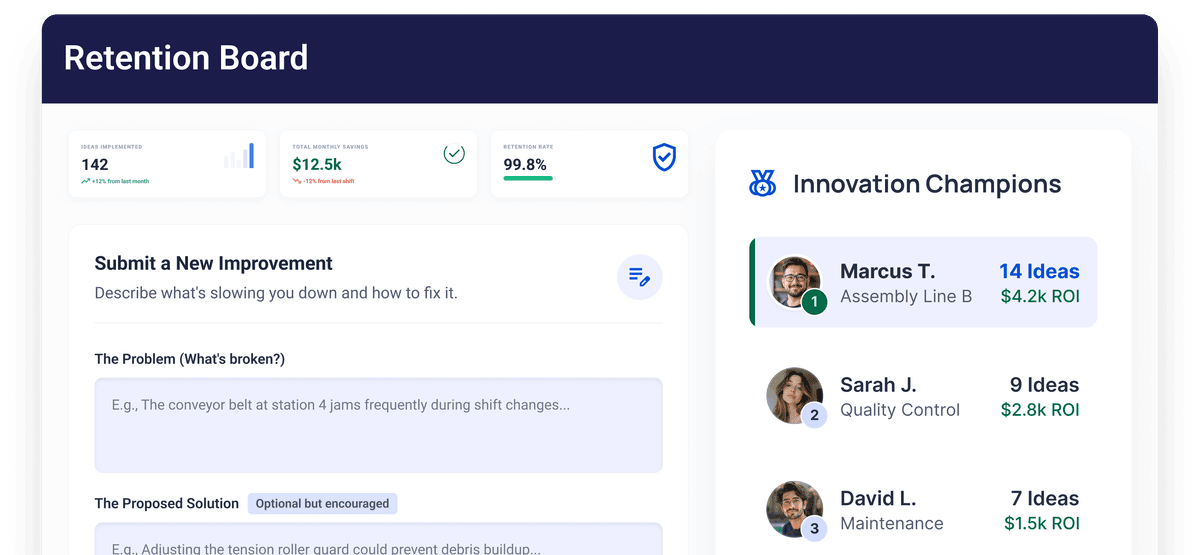
When suggestions go nowhere, the people making them stop making them. This page covers giving operators a voice, rewarding participation, and showing that leadership listens.
See how it works →Bring one line and one problem you know your operators could solve, and we will set up the sign-in, the QR code and the routing on the call.