

Safety poster
Updated · Free to print and share
Fire extinguisher classes poster
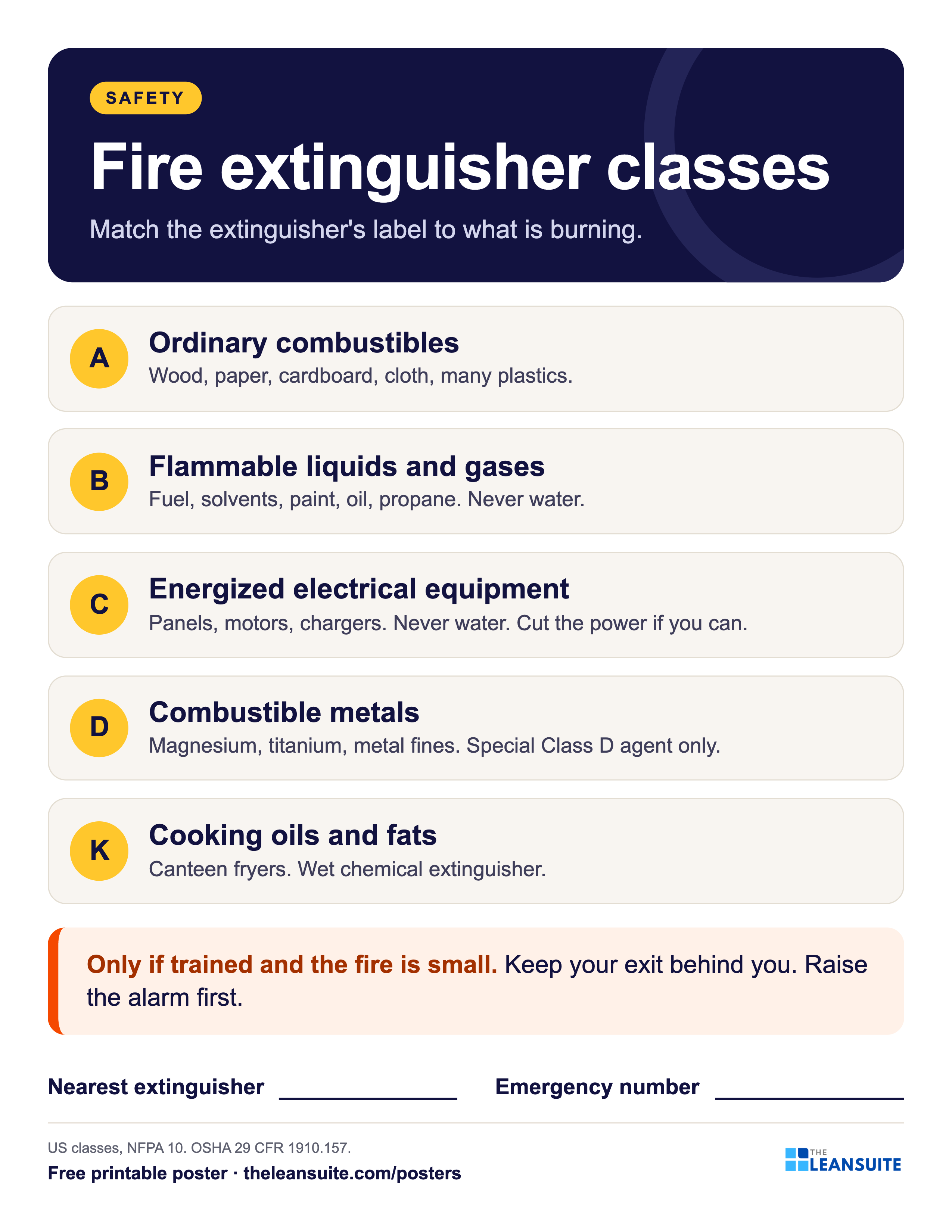
Fires are classed by what is burning, and each extinguisher is labelled with the classes it can put out. Using the wrong one can spread the fire or give an electric shock. This poster sets out the five US classes from NFPA 10: A for ordinary combustibles, B for flammable liquids and gases, C for energized electrical equipment, D for combustible metals and K for cooking oils and fats, with a reminder to fight a fire only when trained, when it is small and with the exit behind you.
Download the poster
The PNG is free to download now. The print-ready vector PDFs open after a short form, once.
Free to print and share with your team. Enter your name and work email once to download.
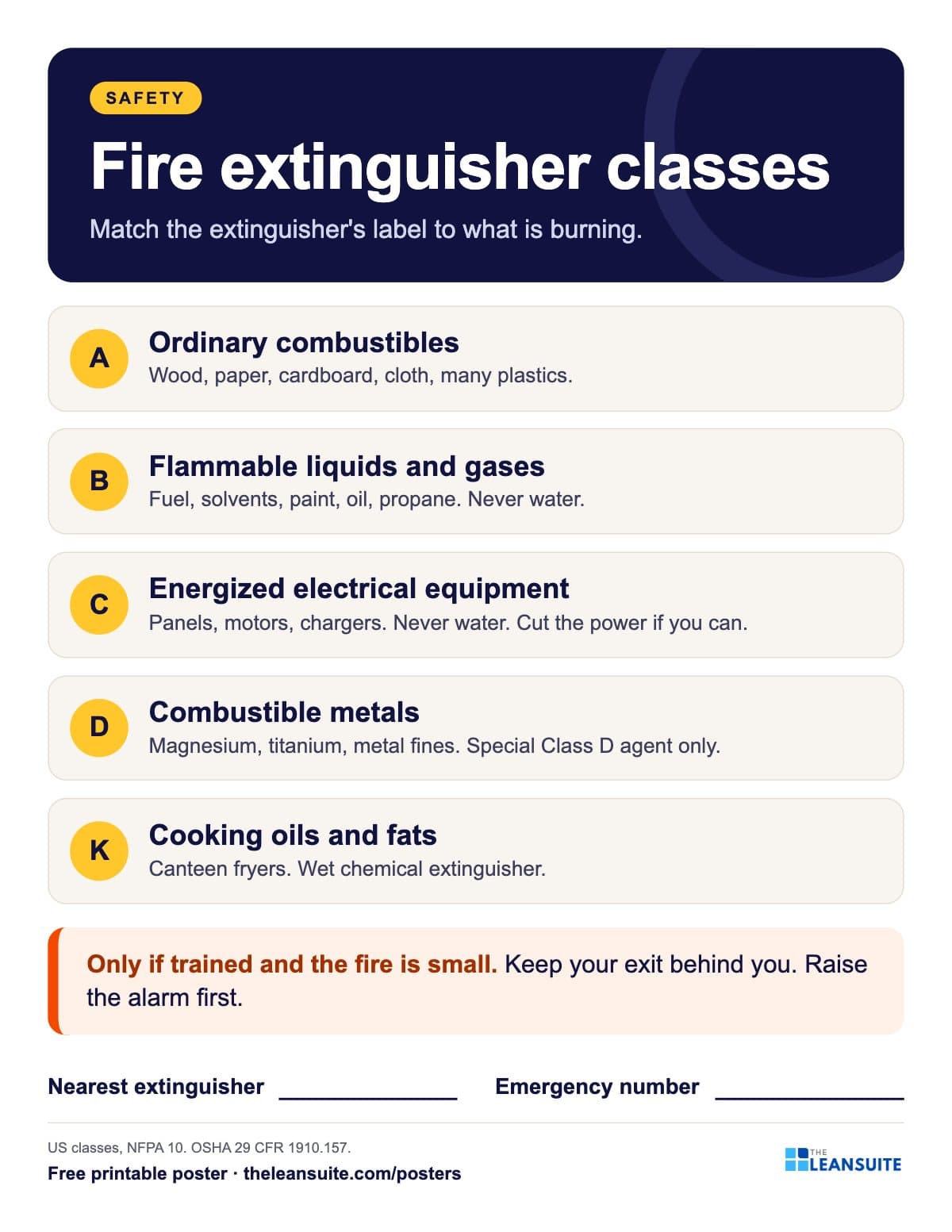 Five rows for classes A, B, C, D and K with what burns in each and which extinguisher to use.
The words on the poster
Fire extinguisher classes
Match the extinguisher's label to what is burning.
- Ordinary combustibles Wood, paper, cardboard, cloth, many plastics.
- Flammable liquids and gases Fuel, solvents, paint, oil, propane. Never water.
- Energized electrical equipment Panels, motors, chargers. Never water. Cut the power if you can.
- Combustible metals Magnesium, titanium, metal fines. Special Class D agent only.
- Cooking oils and fats Canteen fryers. Wet chemical extinguisher.
- Only if trained and the fire is small. Keep your exit behind you. Raise the alarm first.
- Nearest extinguisher: ____
- Emergency number: ____
US classes, NFPA 10. OSHA 29 CFR 1910.157.
On the floor
How to use it
Putting the Fire extinguisher classes poster to work
- 1
Post it next to extinguisher points and in welding, paint and battery charging areas.
- 2
Check that the extinguishers in each area match the fires that could start there.
- 3
Use it with the emergency response poster, which has the PASS method.
- 4
Outside the US, classes differ: check your local standard before you print.
Which size to print
- 24 x 36 in or A2: a main wall or team board, read from a few metres away.
- 18 x 24 in or A3: a station or notice board. The A3 file also fits 11 x 17 in paper.
- Letter or A4: a clipboard, binder or handout, on any office printer.
Every PDF is vector, so it stays sharp at full size. Nothing runs to the edge of the page, so no bleed is needed.
Sources and notes
These are the US classes (NFPA 10). Europe and many other countries use EN 2, where class C is flammable gases, F is cooking oils and fats, and electrical fires have no class of their own; Australia uses another set again. The idea is the same: match the extinguisher's label to what is burning.
- NFPA 10, Standard for Portable Fire Extinguishers: classes A, B, C, D and K.
- OSHA 29 CFR 1910.157, portable fire extinguishers: selected for the class of fire and the hazards of the area.
Templates, decks and guides to go with it
- Fire extinguisher inspection checklist and logThe 8 monthly checks for each portable extinguisher, plus a log with the hydro test interval from OSHA Table L-1, annual and 6-year due dates and open issues.
- Emergency action plan templateA written emergency plan for a plant: site facts, roles and backups, warden coverage, scenario steps and a drill record.
- Safety audit checklistThirty-four plant-wide safety checks answered Yes, No or N/A, scored by area, with a risk rating and an action for every No.
- Topic: Safety managementEvery guide we have on the subject, sorted.
Read more
Terms on this poster
More safety posters
All posters PPE by zone poster
 Lockout tagout (LOTO) steps poster
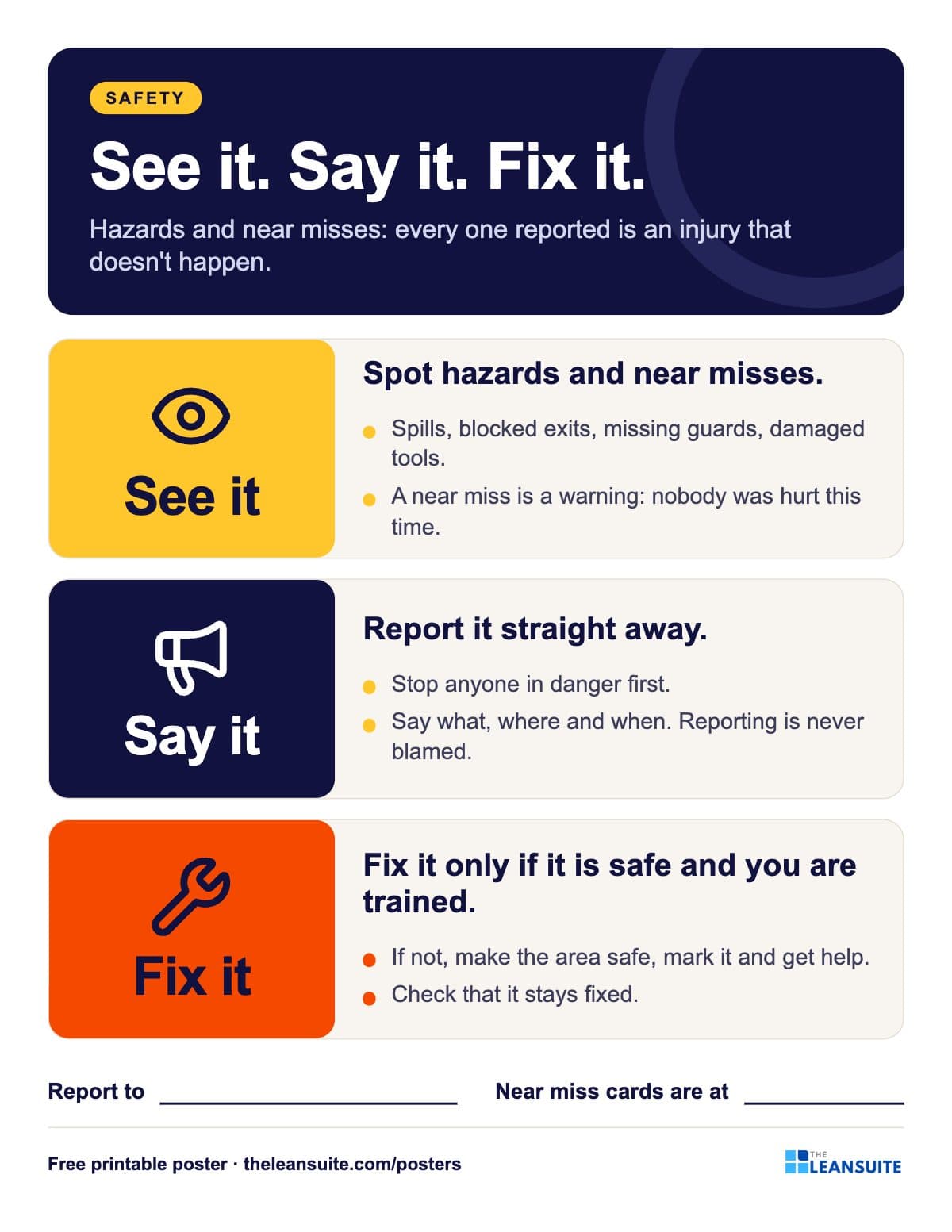 See it, say it, fix it safety poster
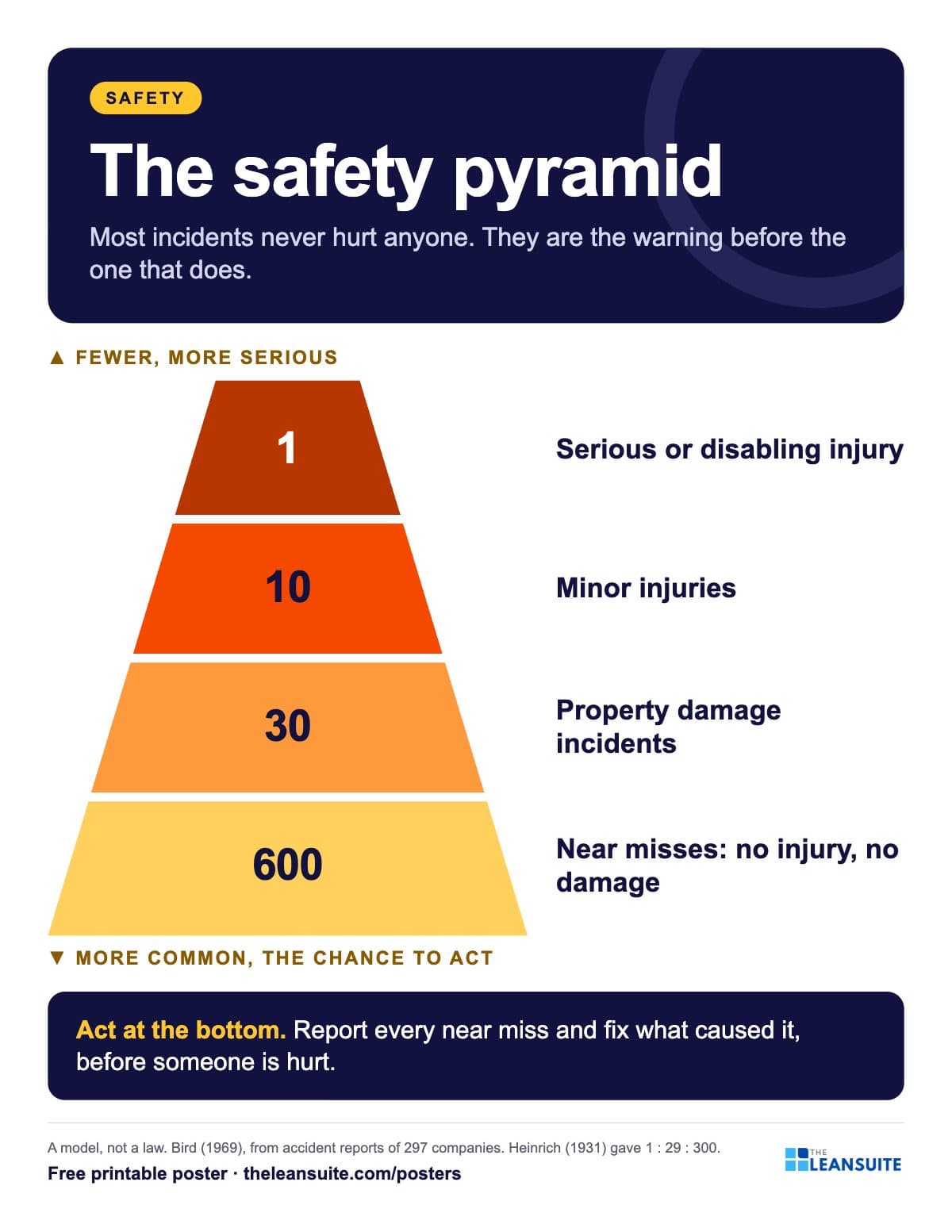 Safety pyramid poster (Bird's triangle)
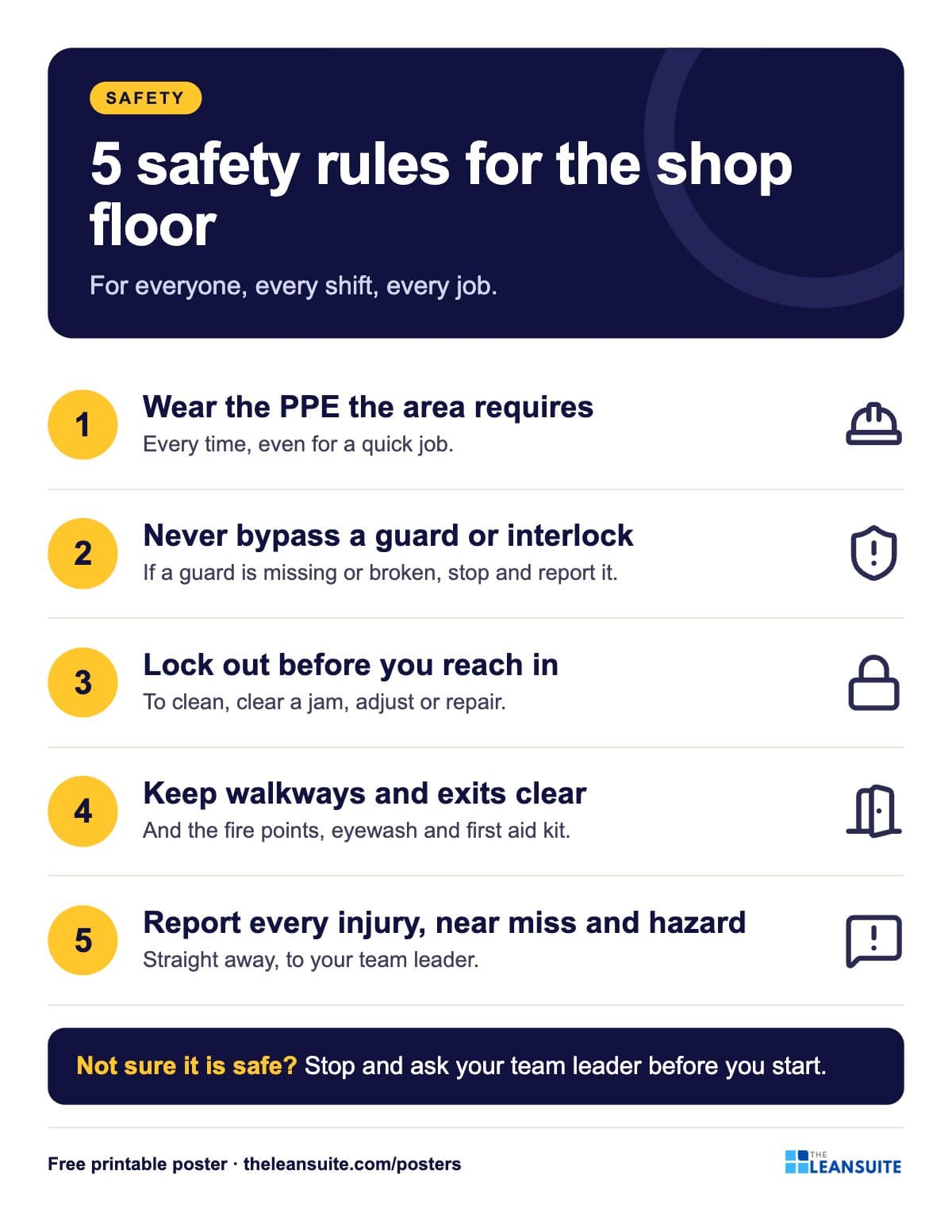 5 shop floor safety rules poster
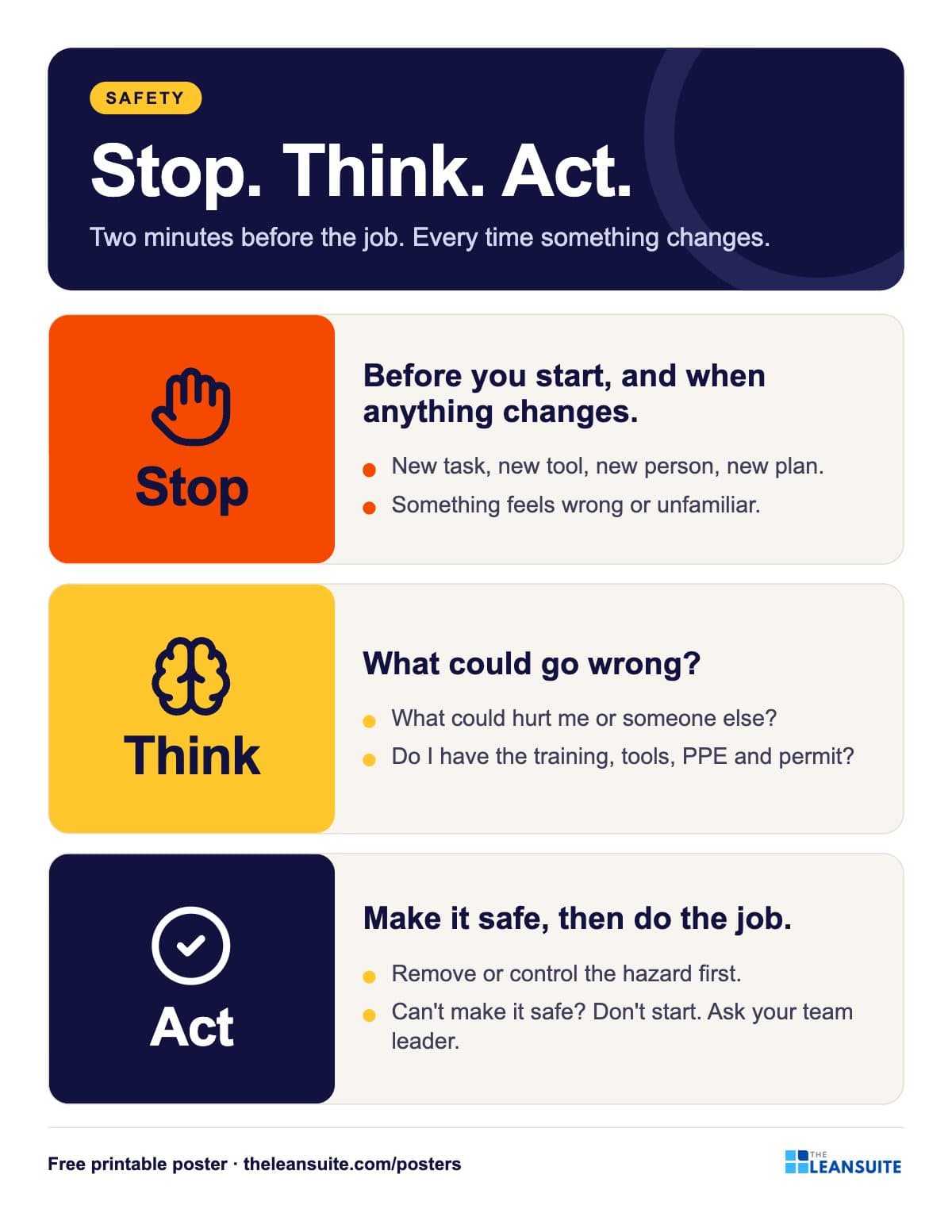 Stop, think, act safety poster
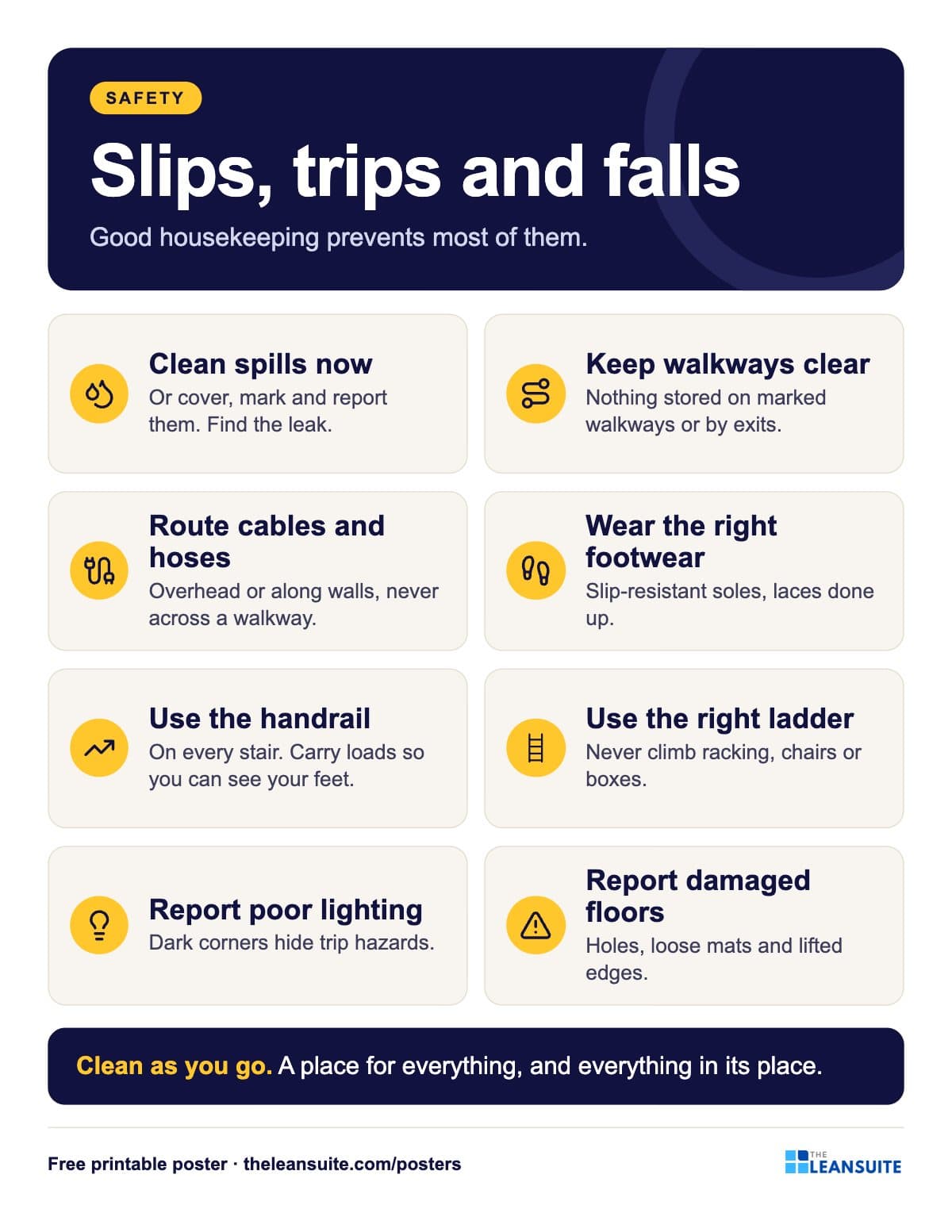 Slips, trips and falls housekeeping poster
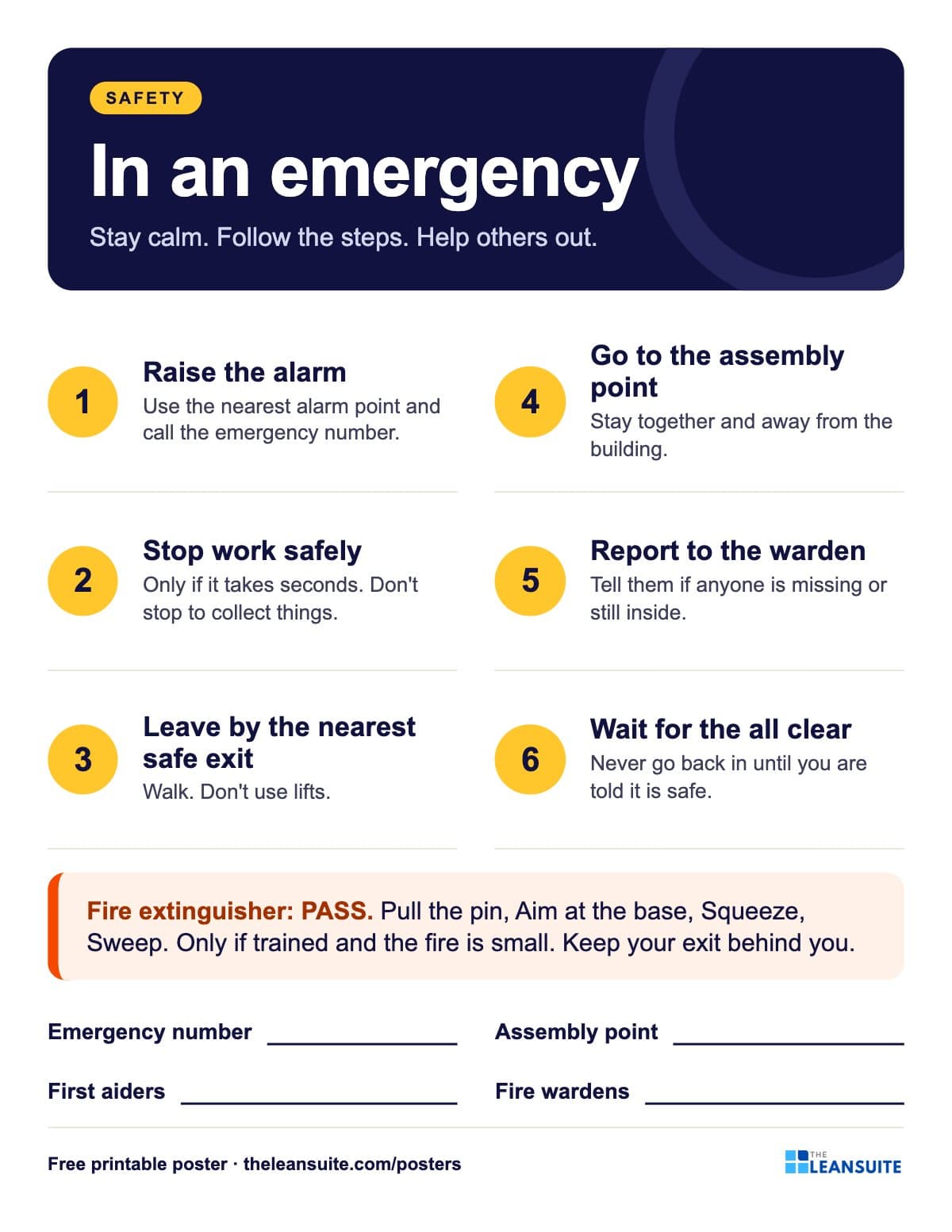 Emergency response poster
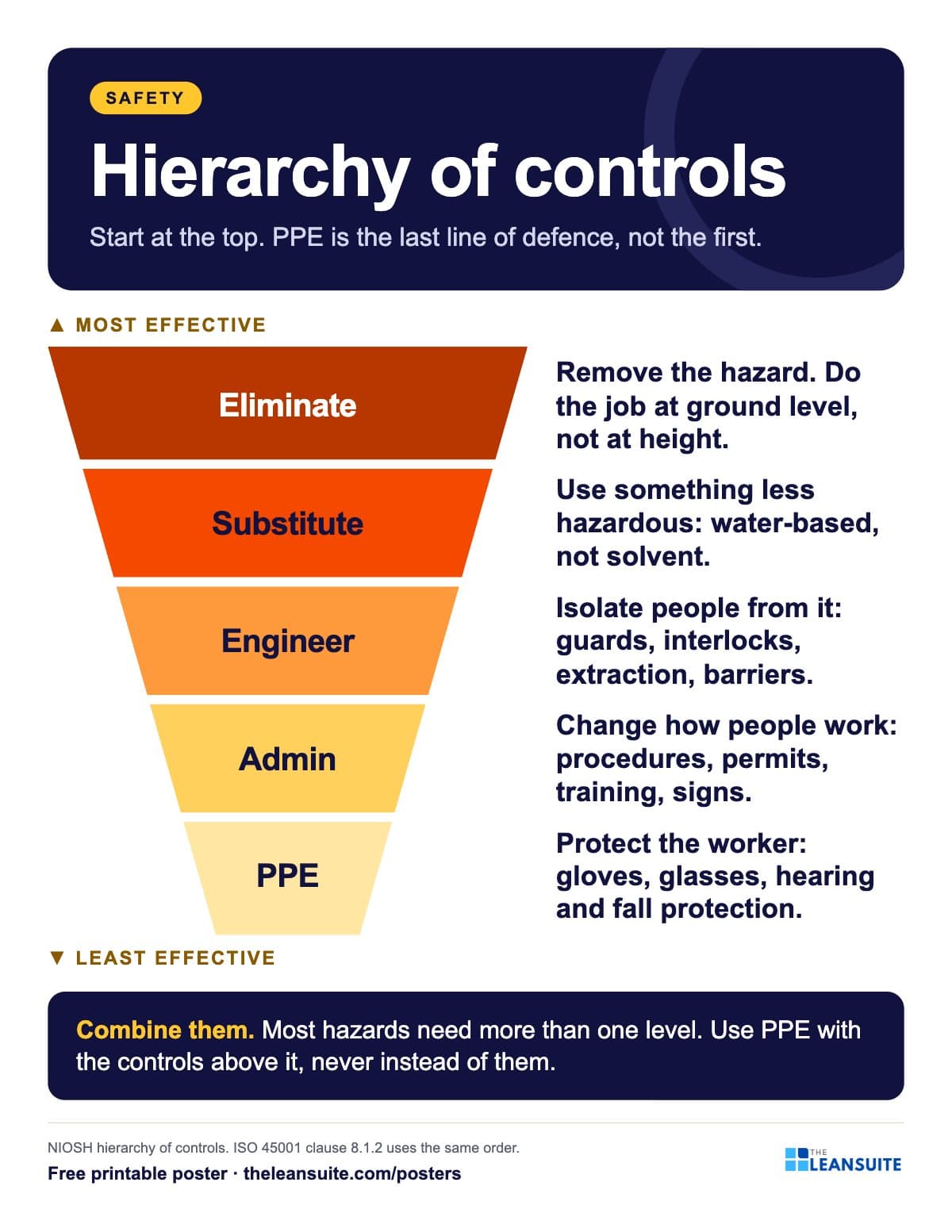 Hierarchy of controls poster
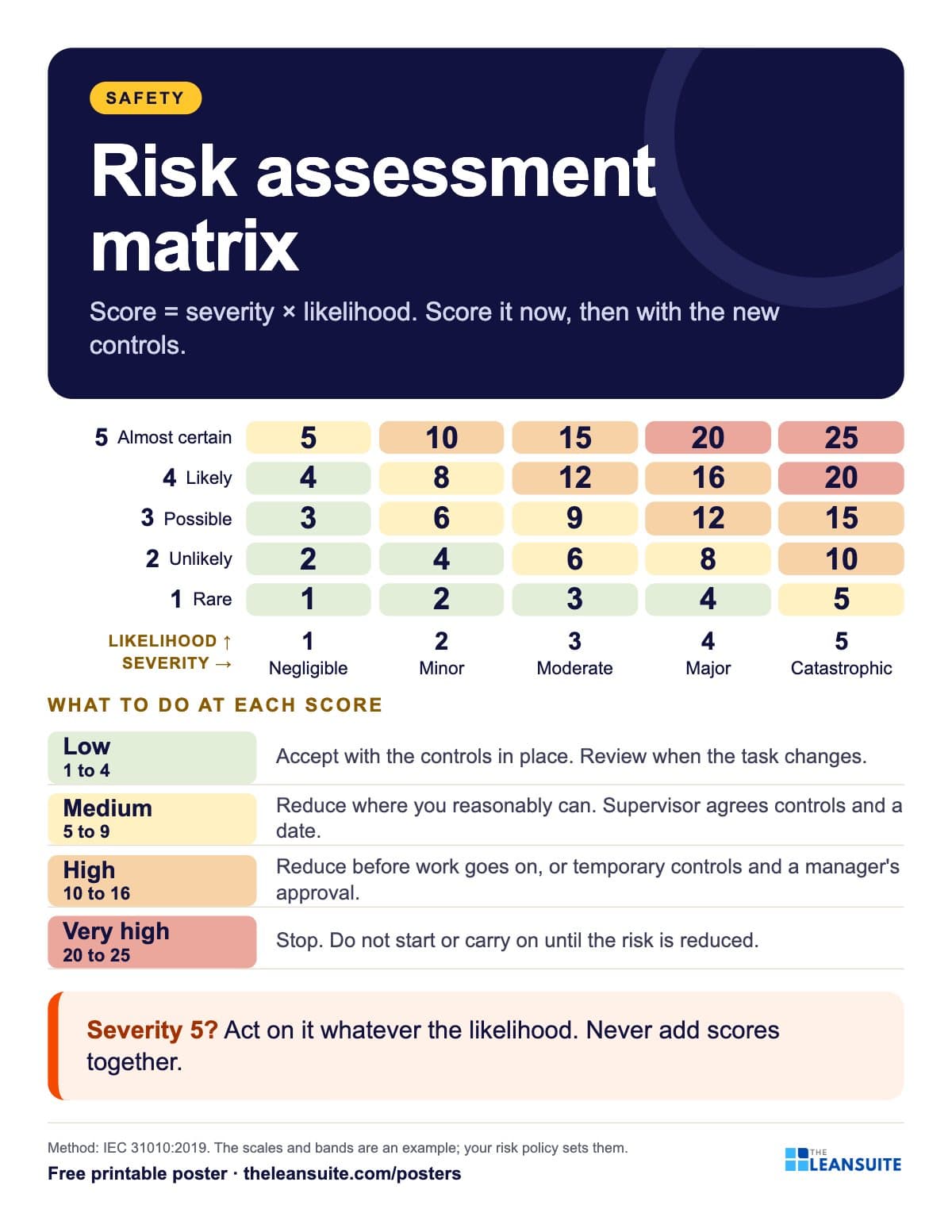 Risk assessment matrix poster (5 x 5)
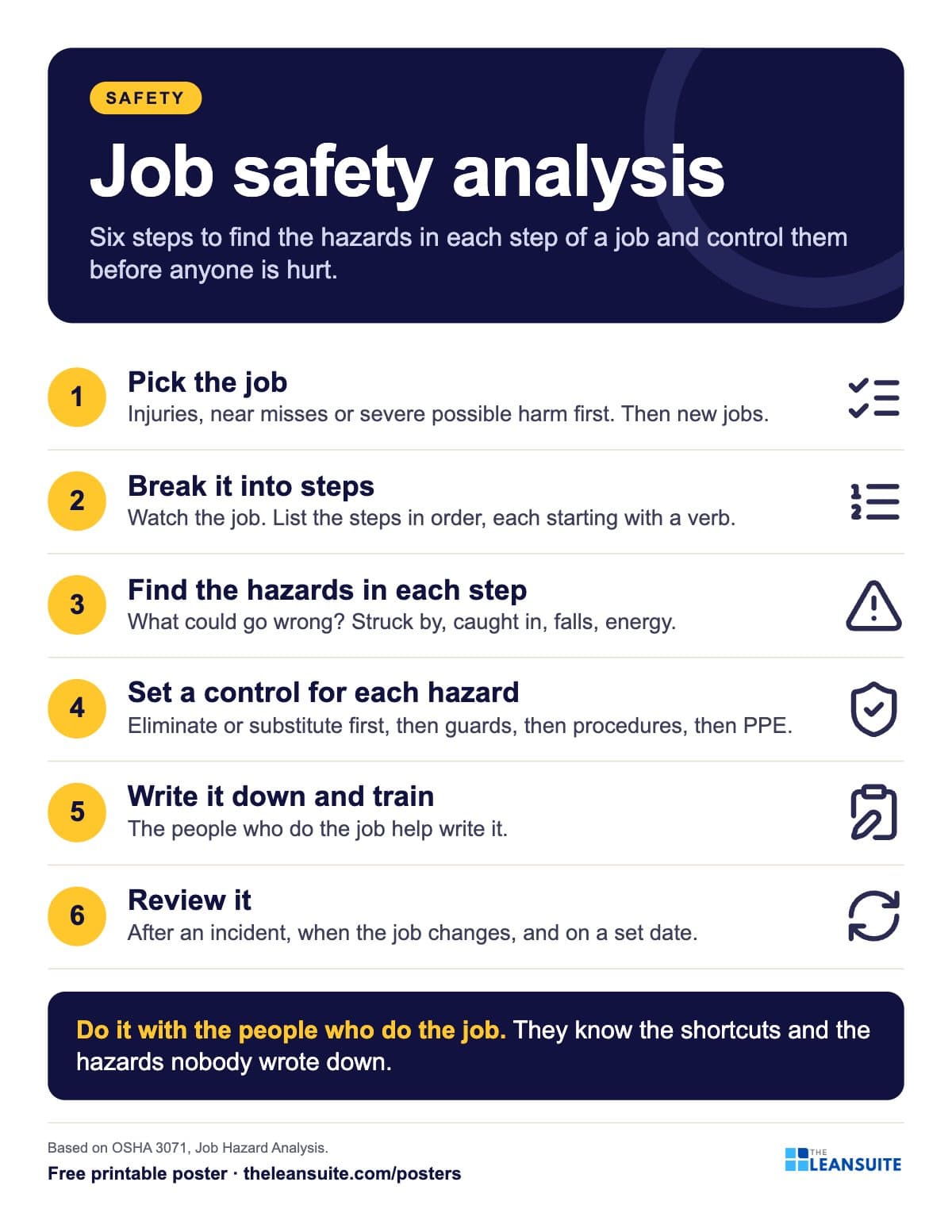 Job safety analysis (JSA) steps poster
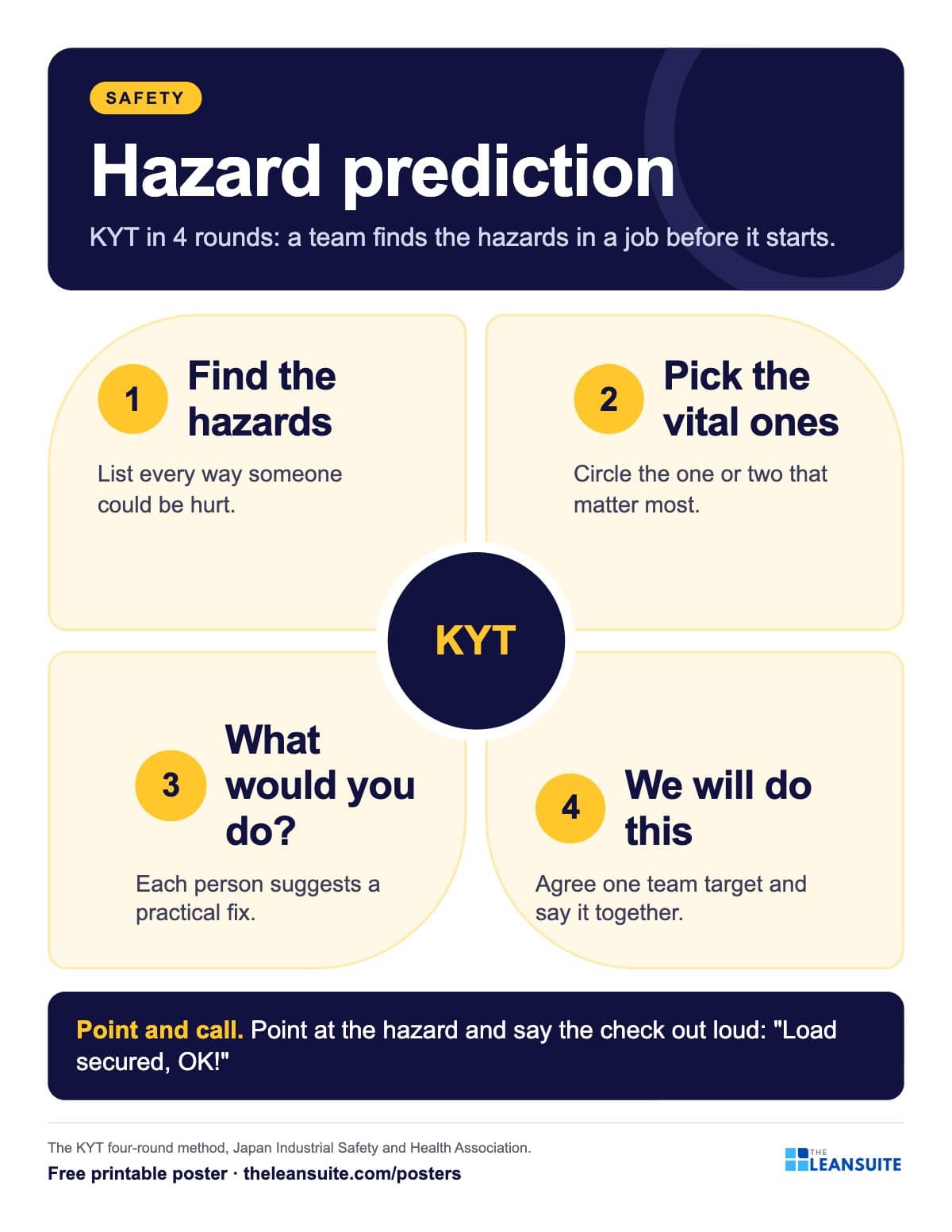 Hazard prediction (KYT) 4 rounds poster
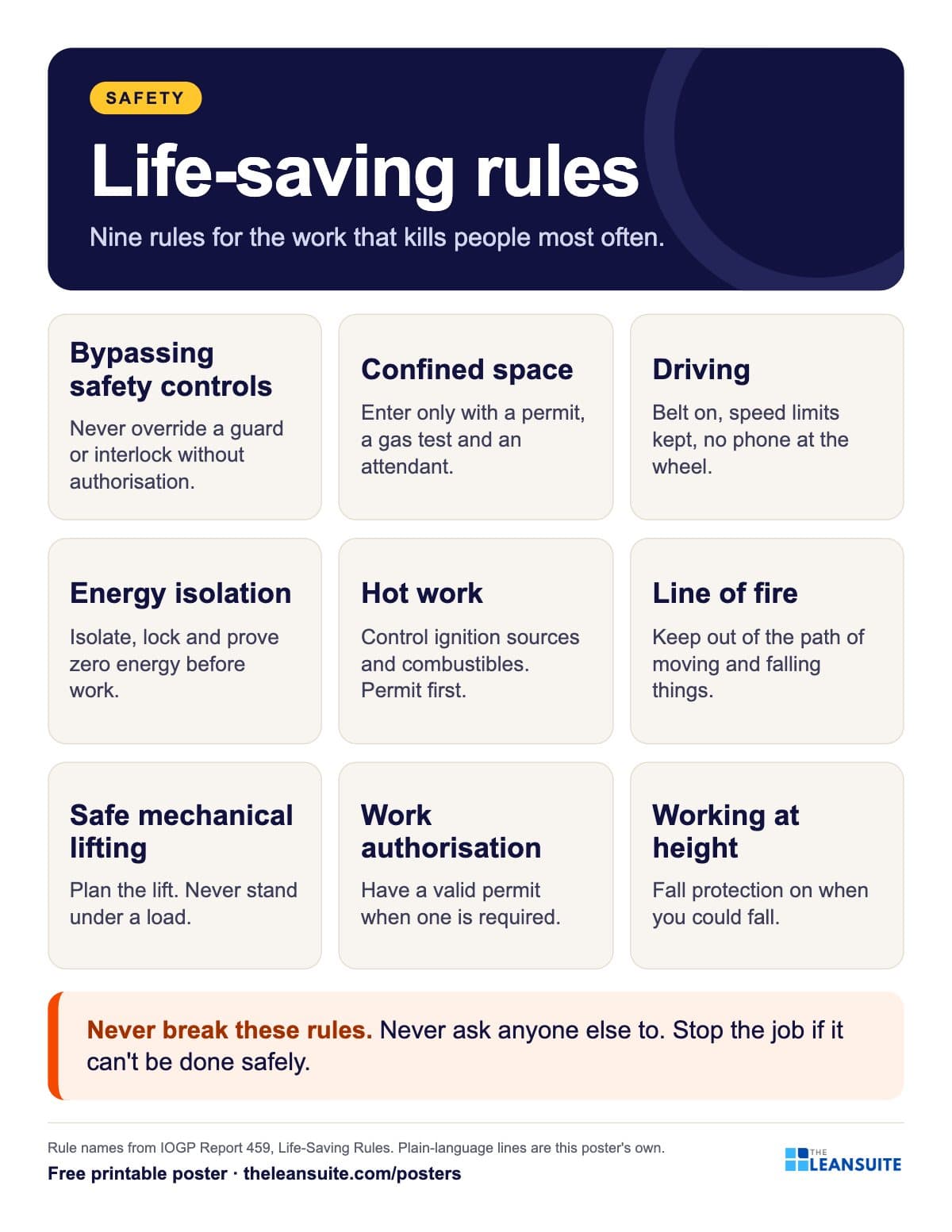 Life-saving rules poster
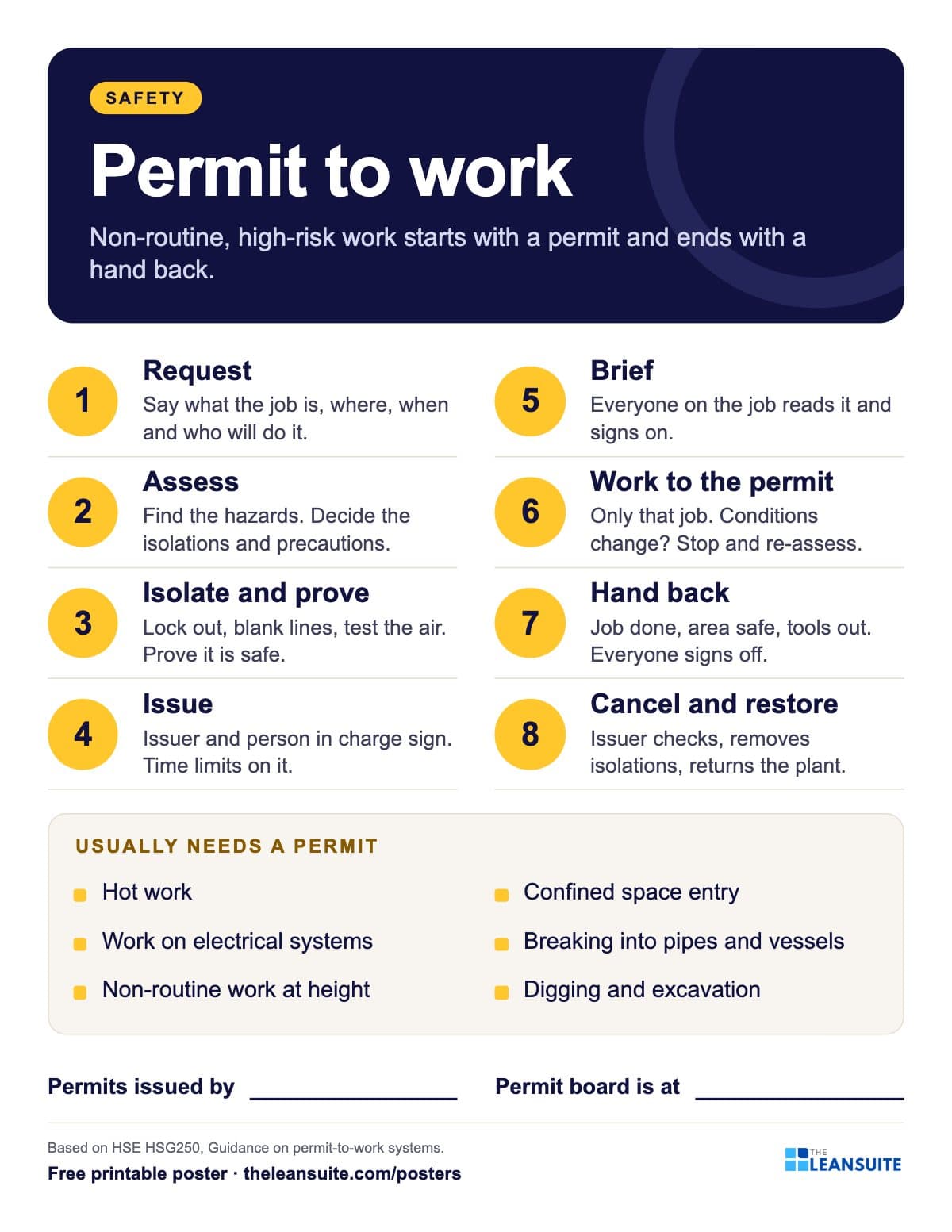 Permit to work poster
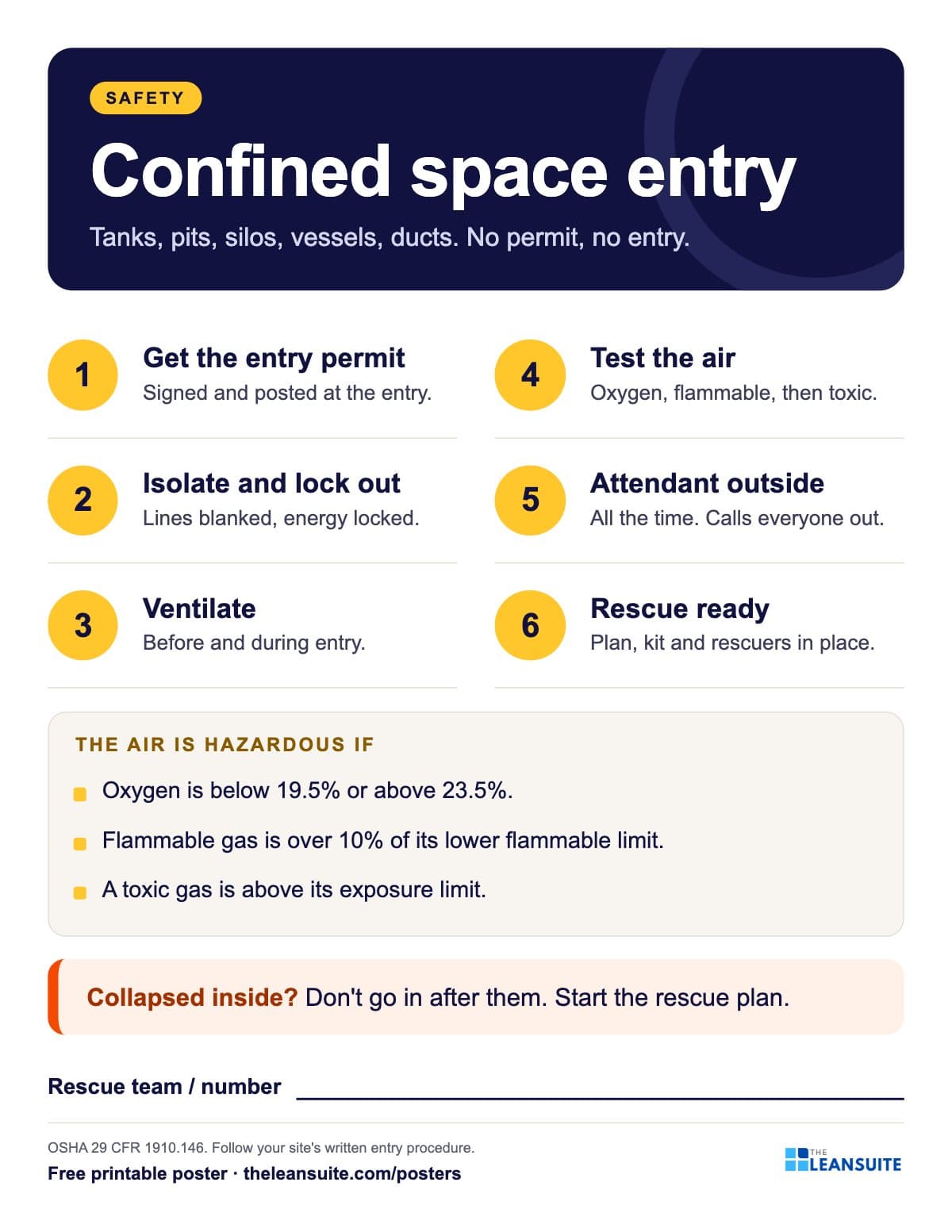 Confined space entry poster
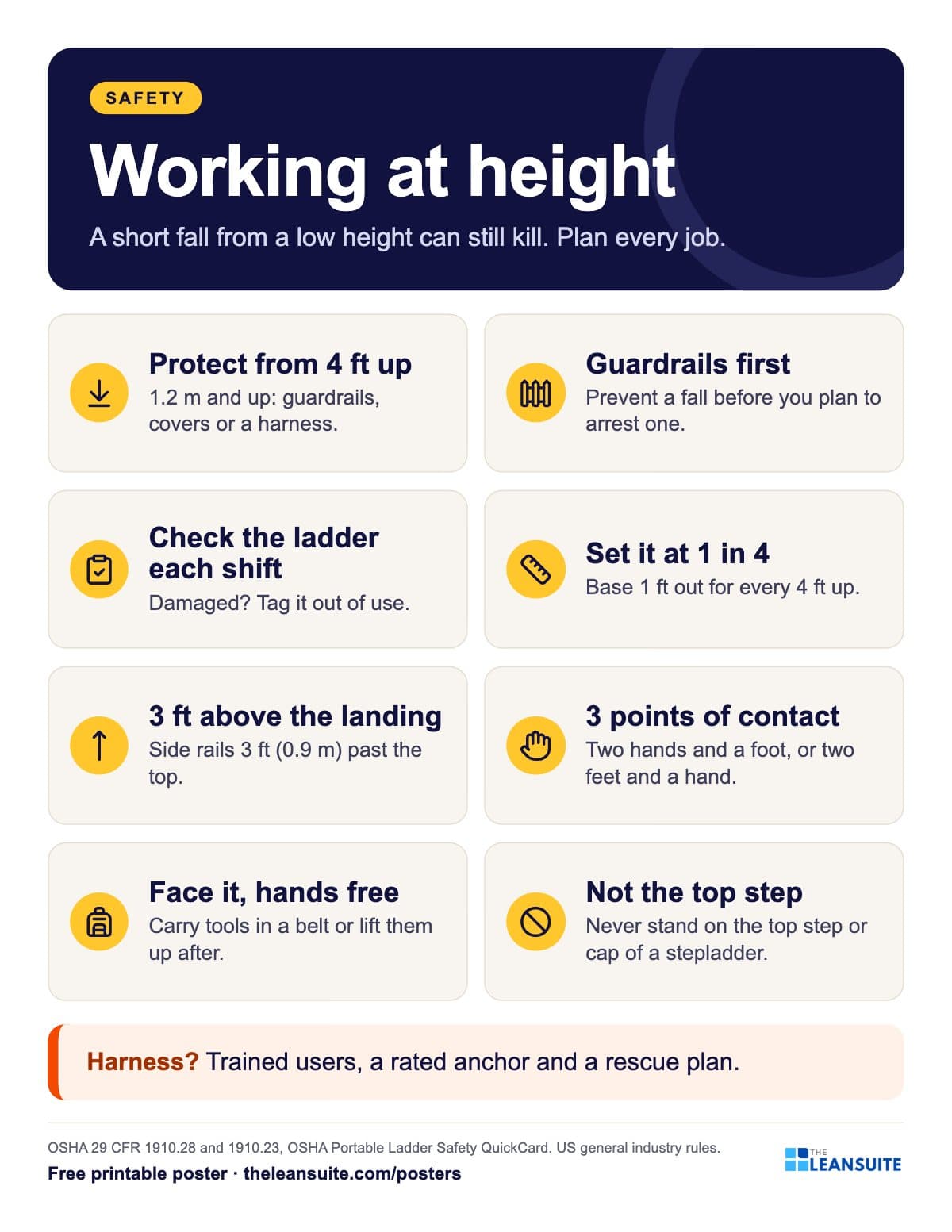 Working at height and ladder safety poster
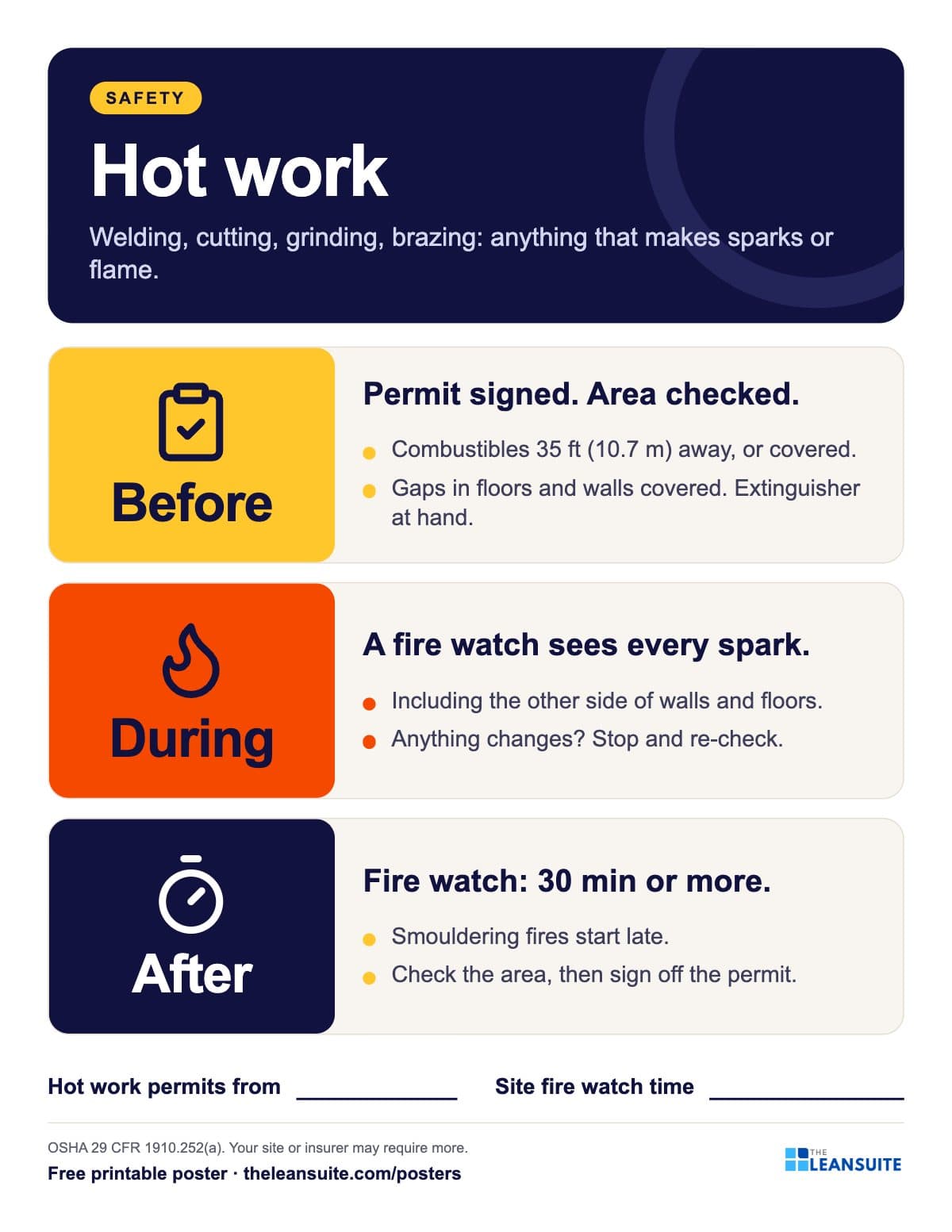 Hot work safety poster
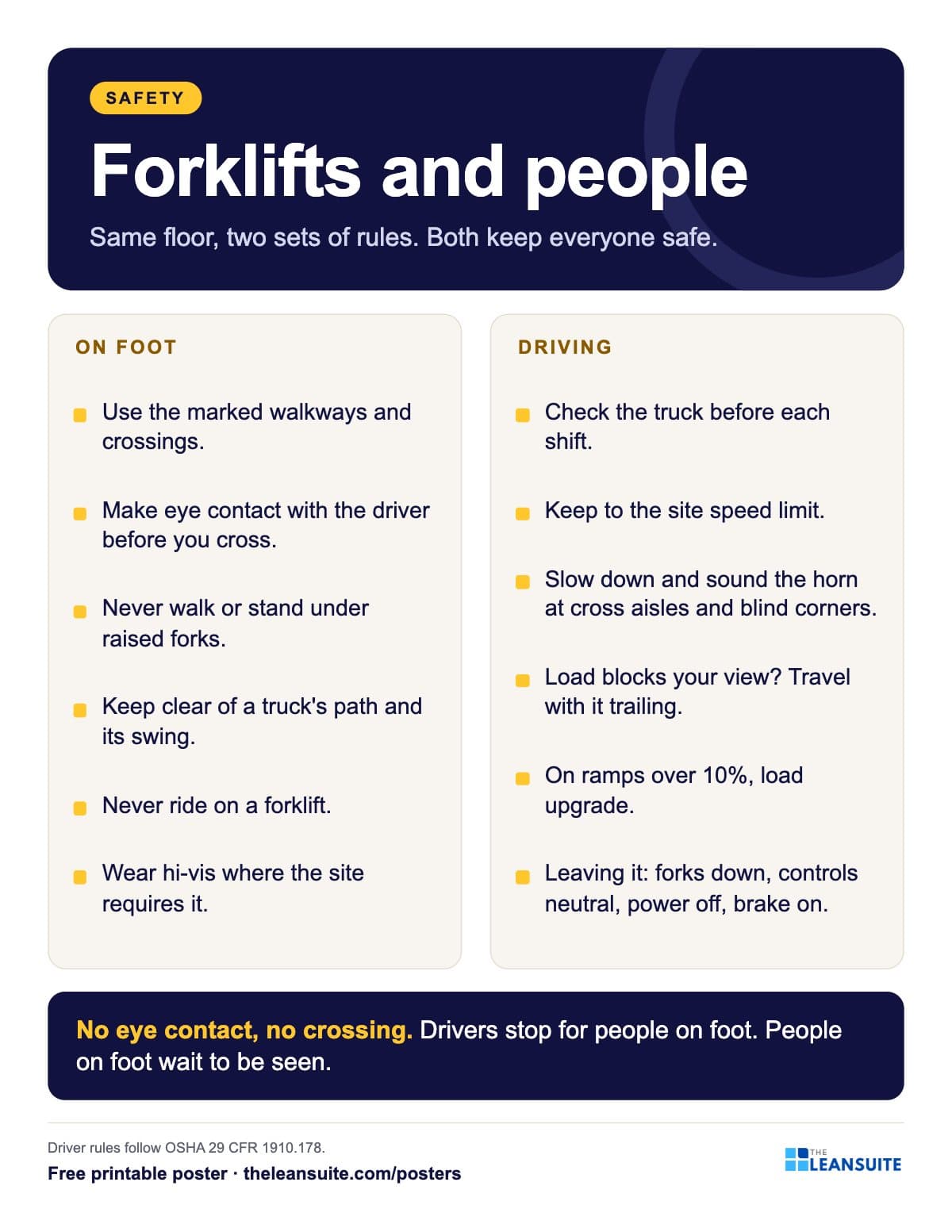 Forklift and pedestrian safety poster
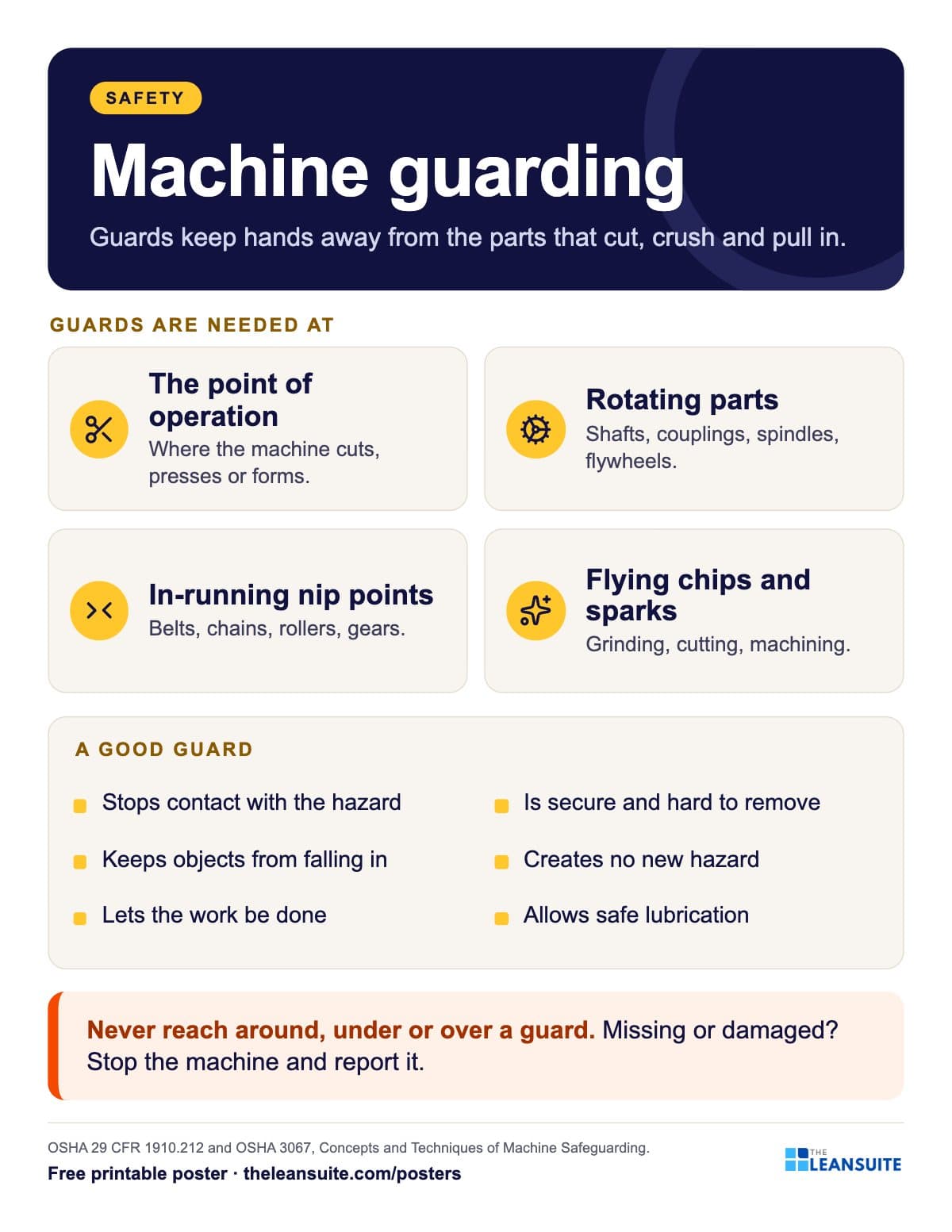 Machine guarding poster
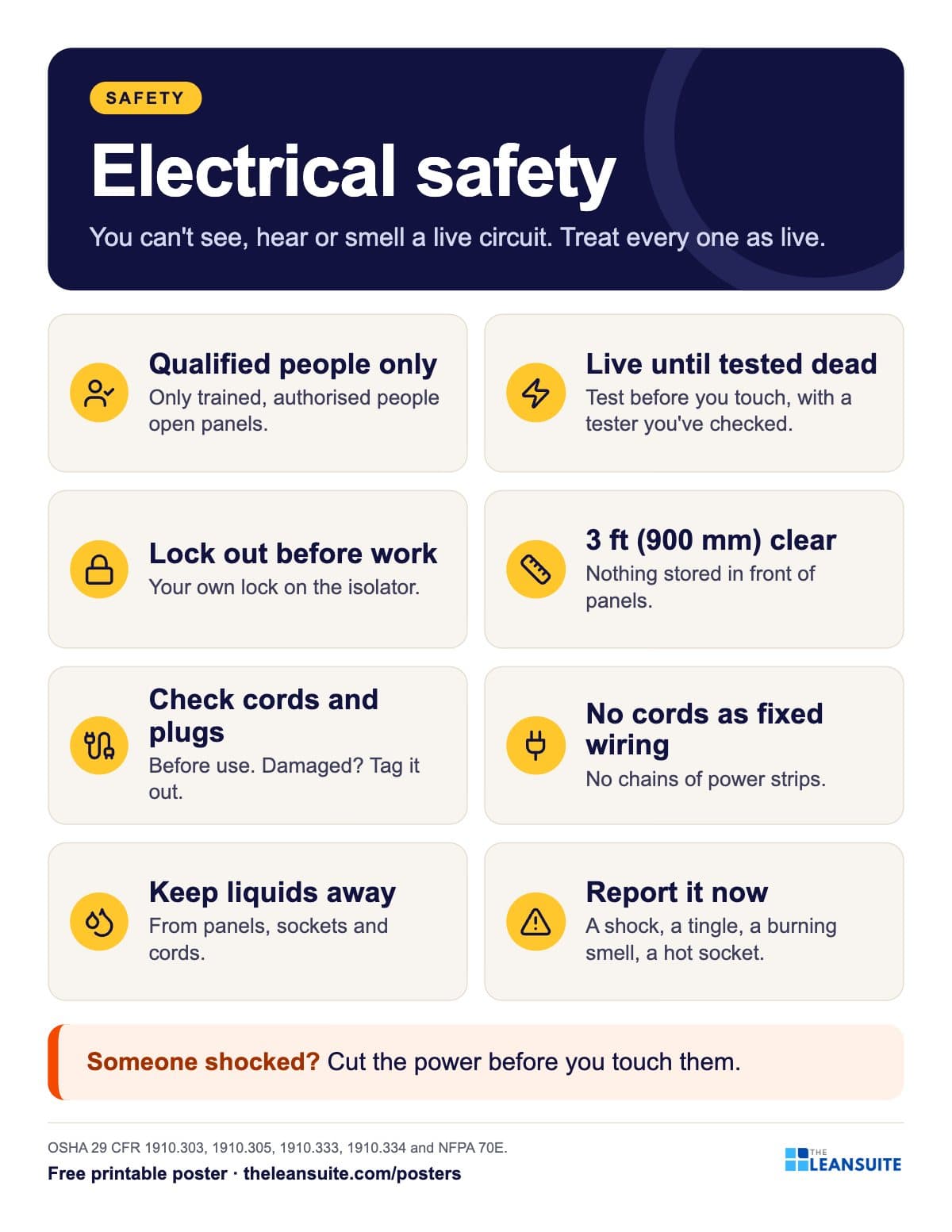 Electrical safety basics poster
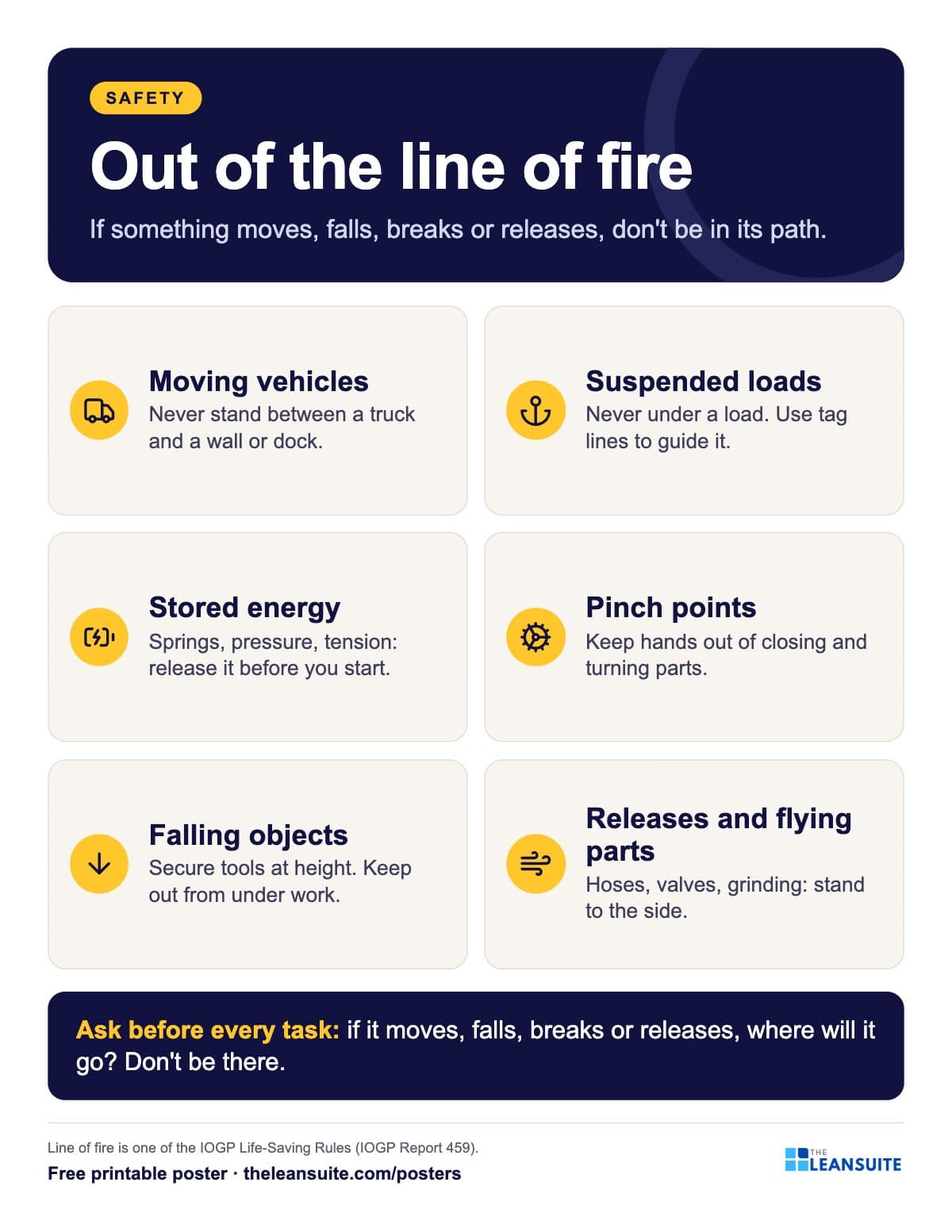 Line of fire poster
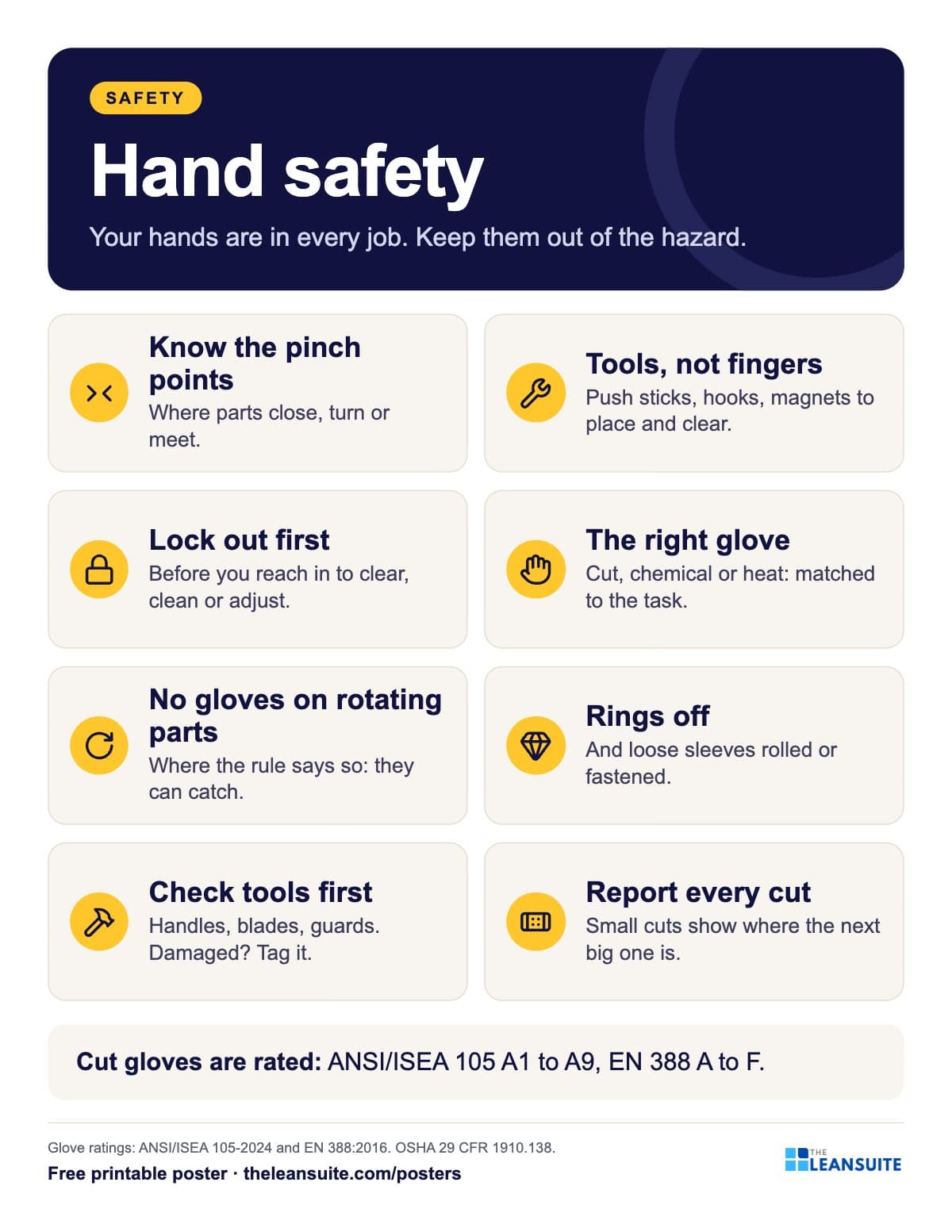 Hand safety poster
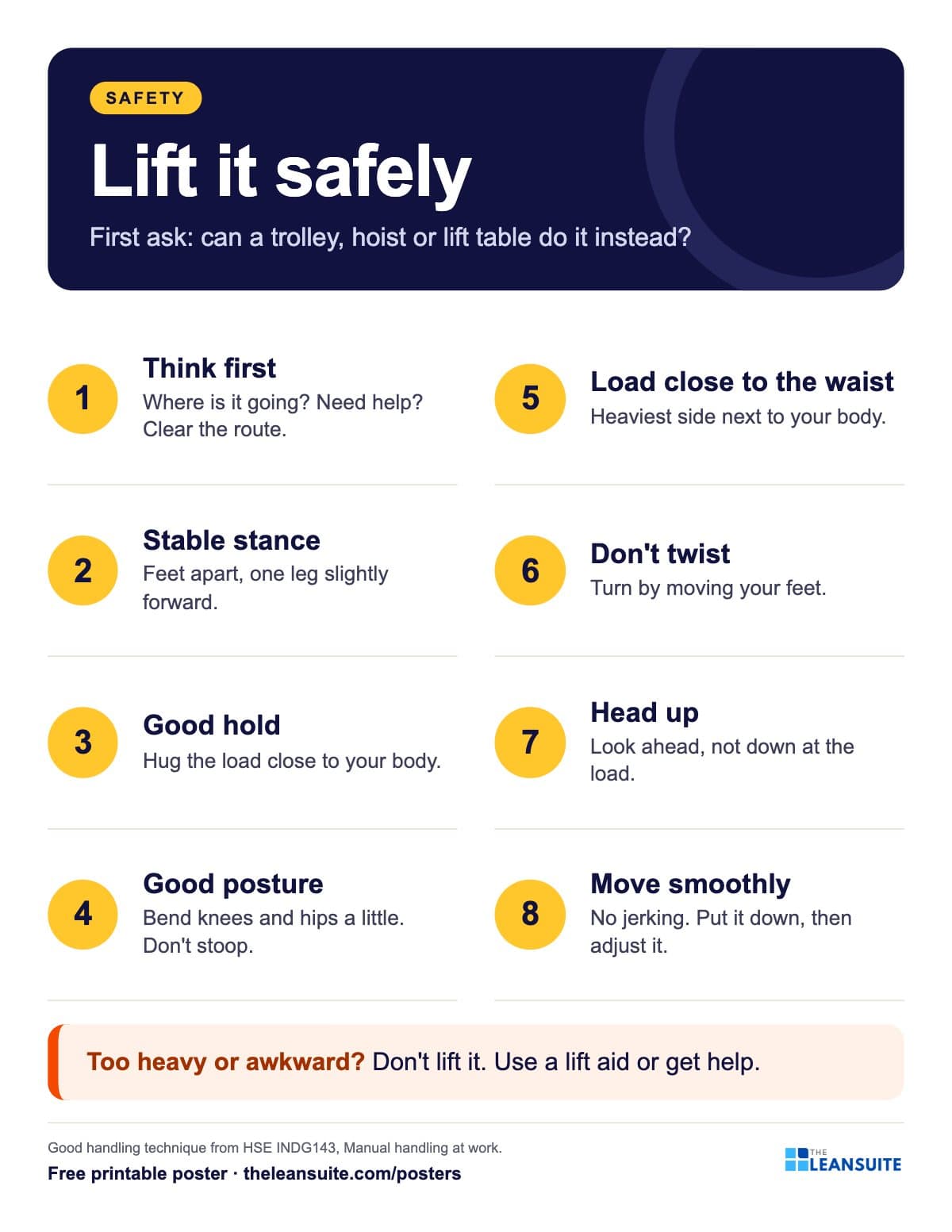 Safe lifting (manual handling) poster
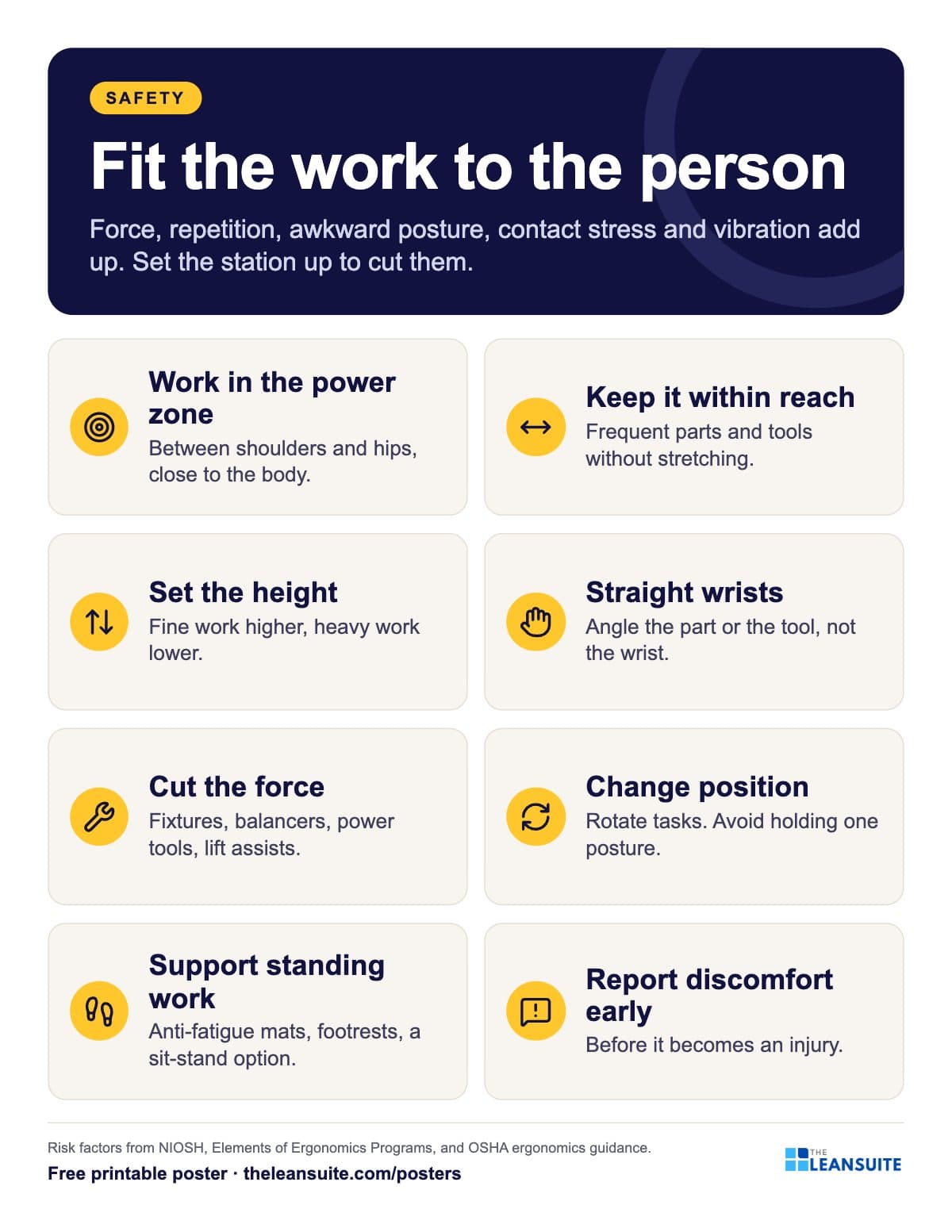 Workstation ergonomics poster
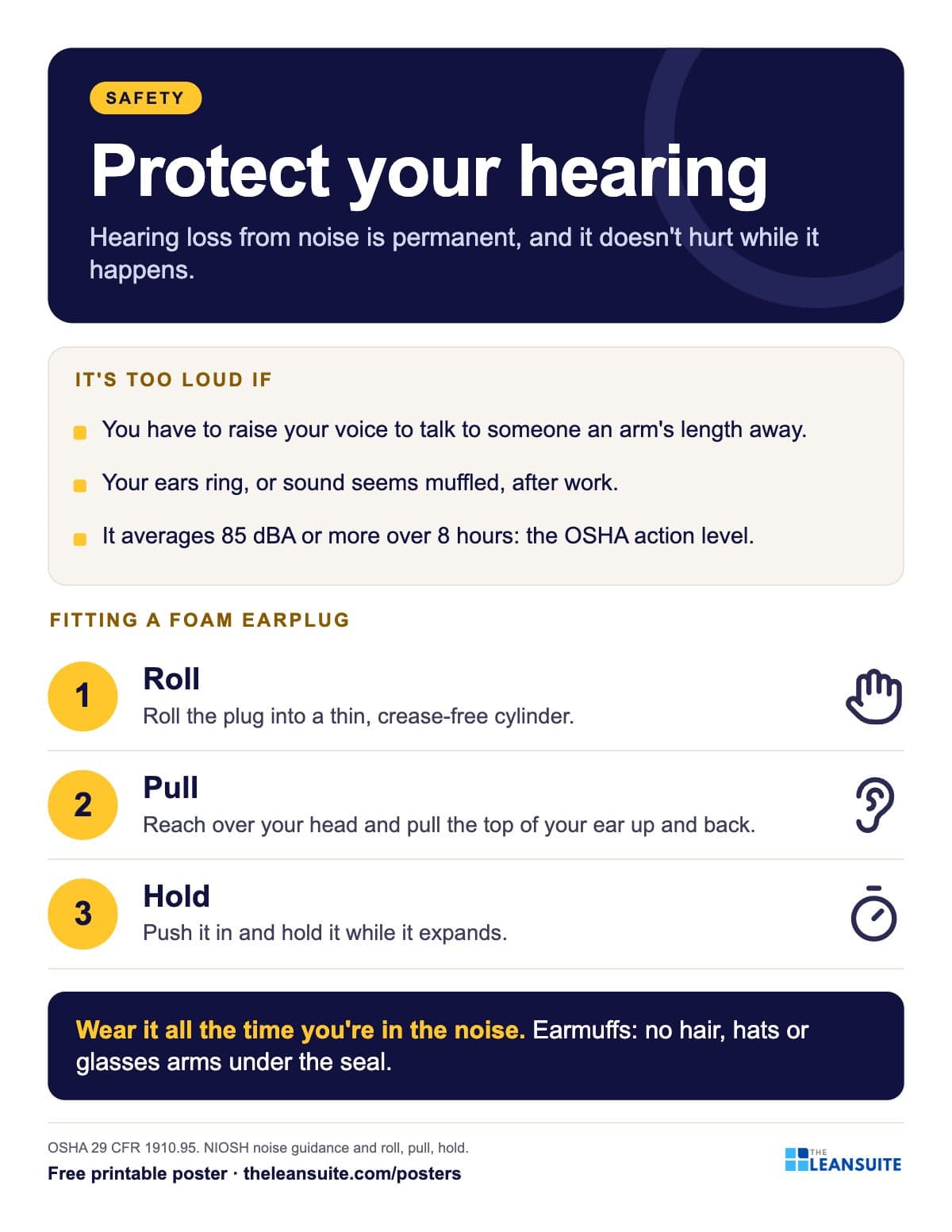 Hearing protection poster
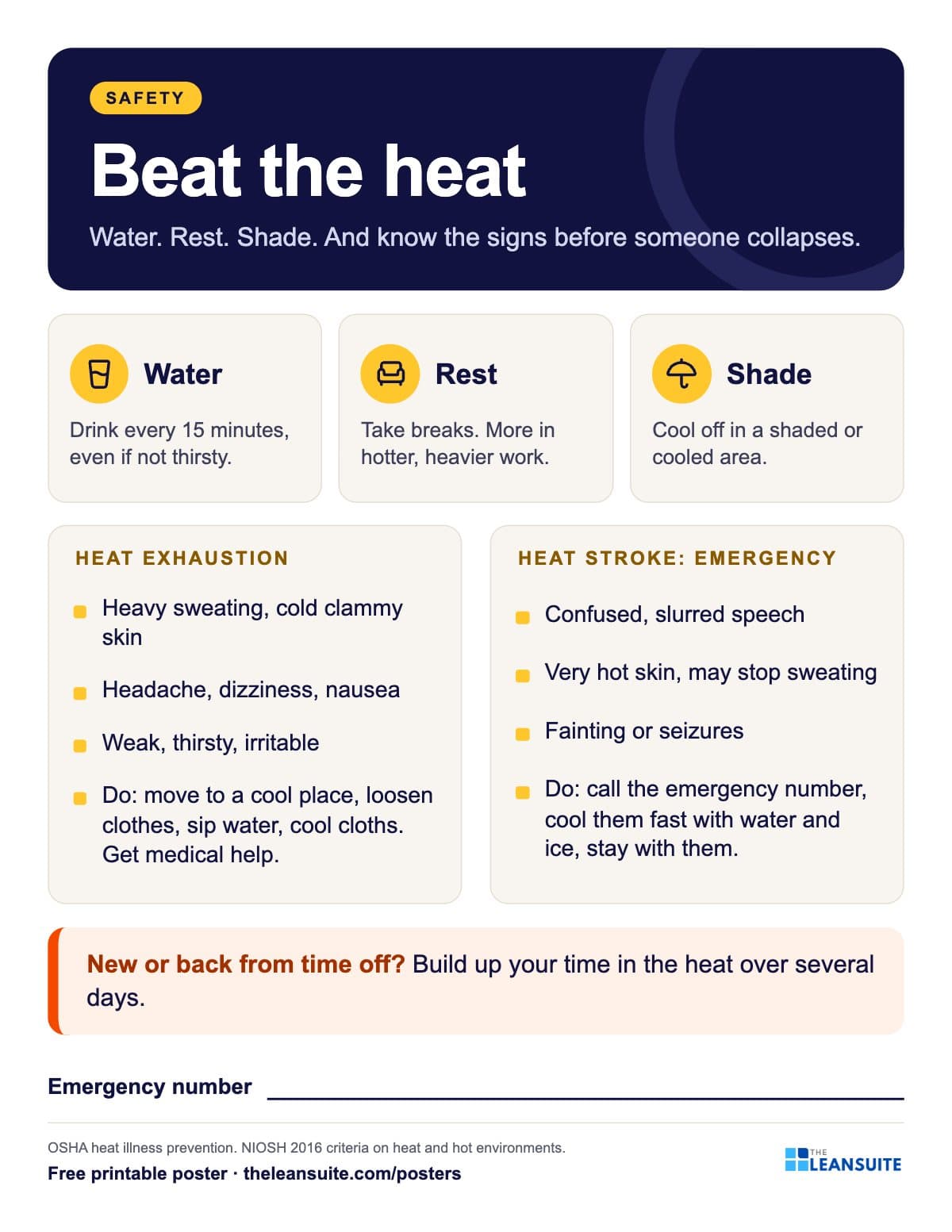 Heat stress poster
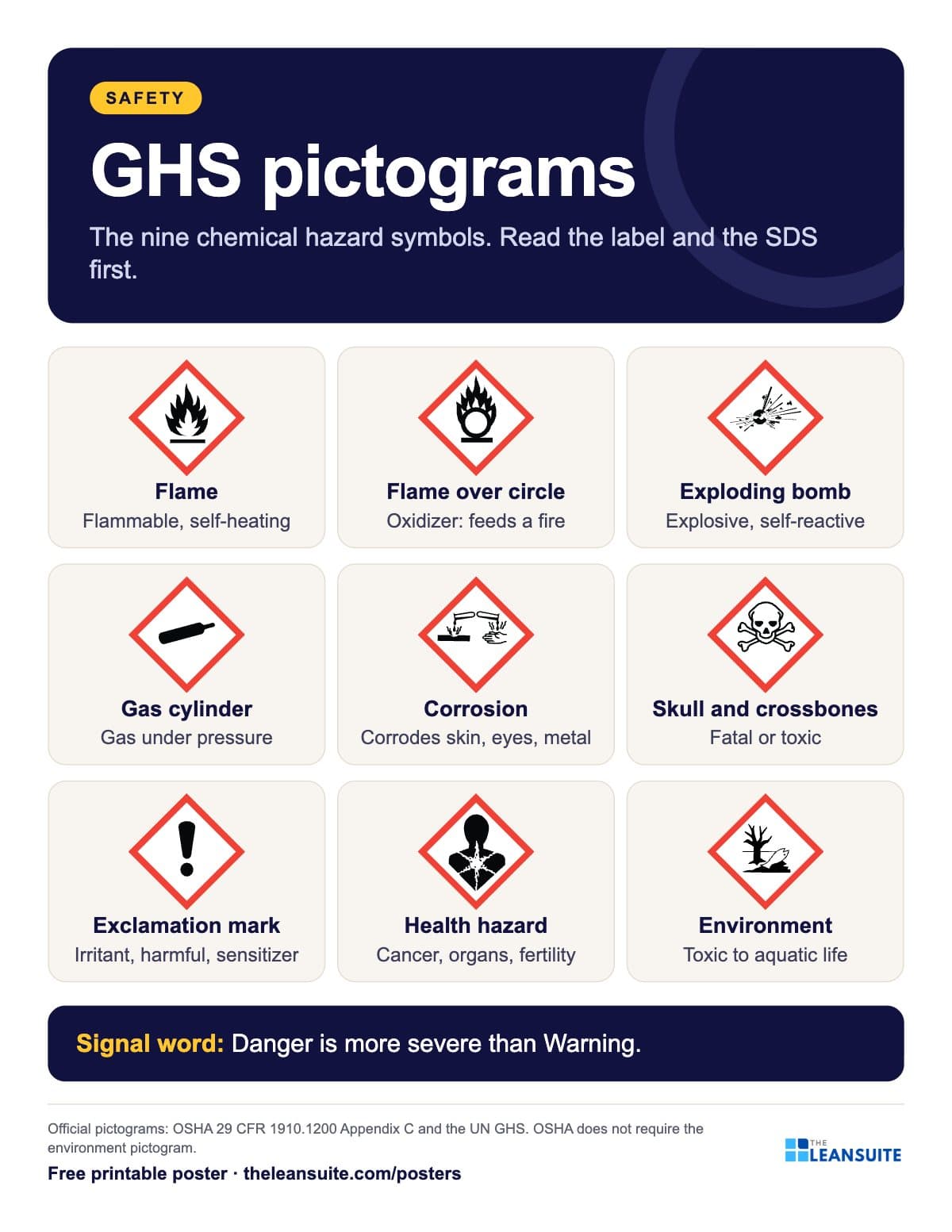 GHS hazard pictograms poster
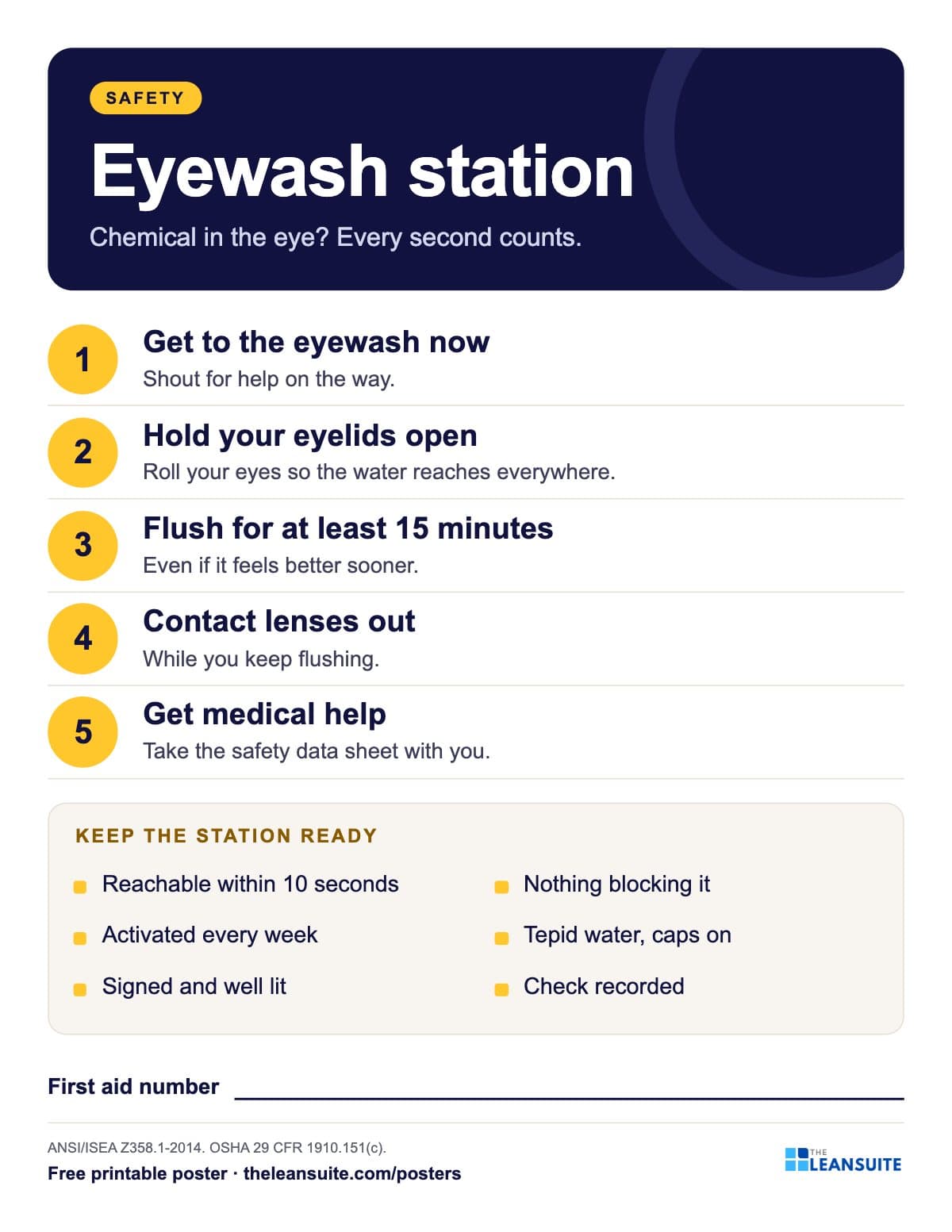 Eyewash station poster
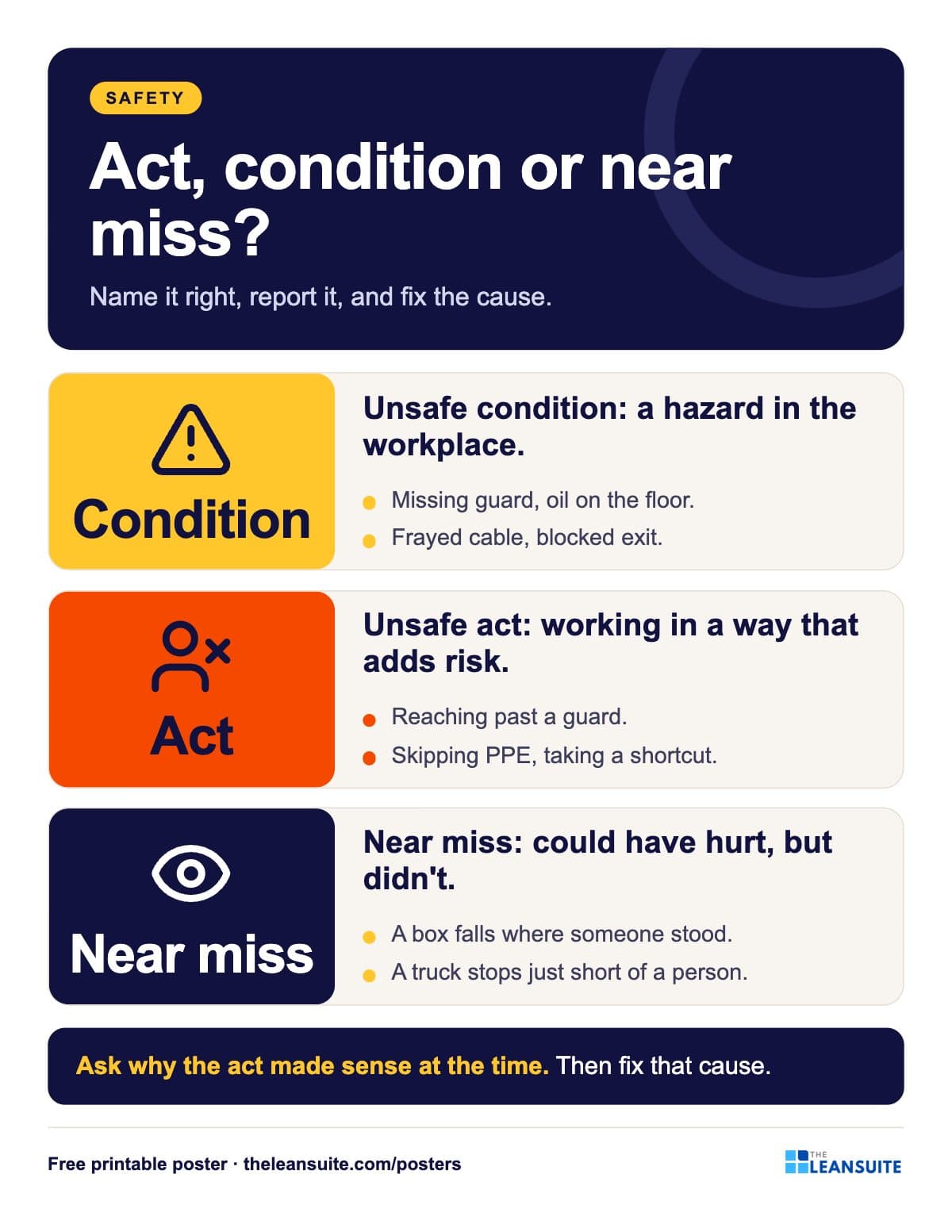 Unsafe acts and unsafe conditions poster
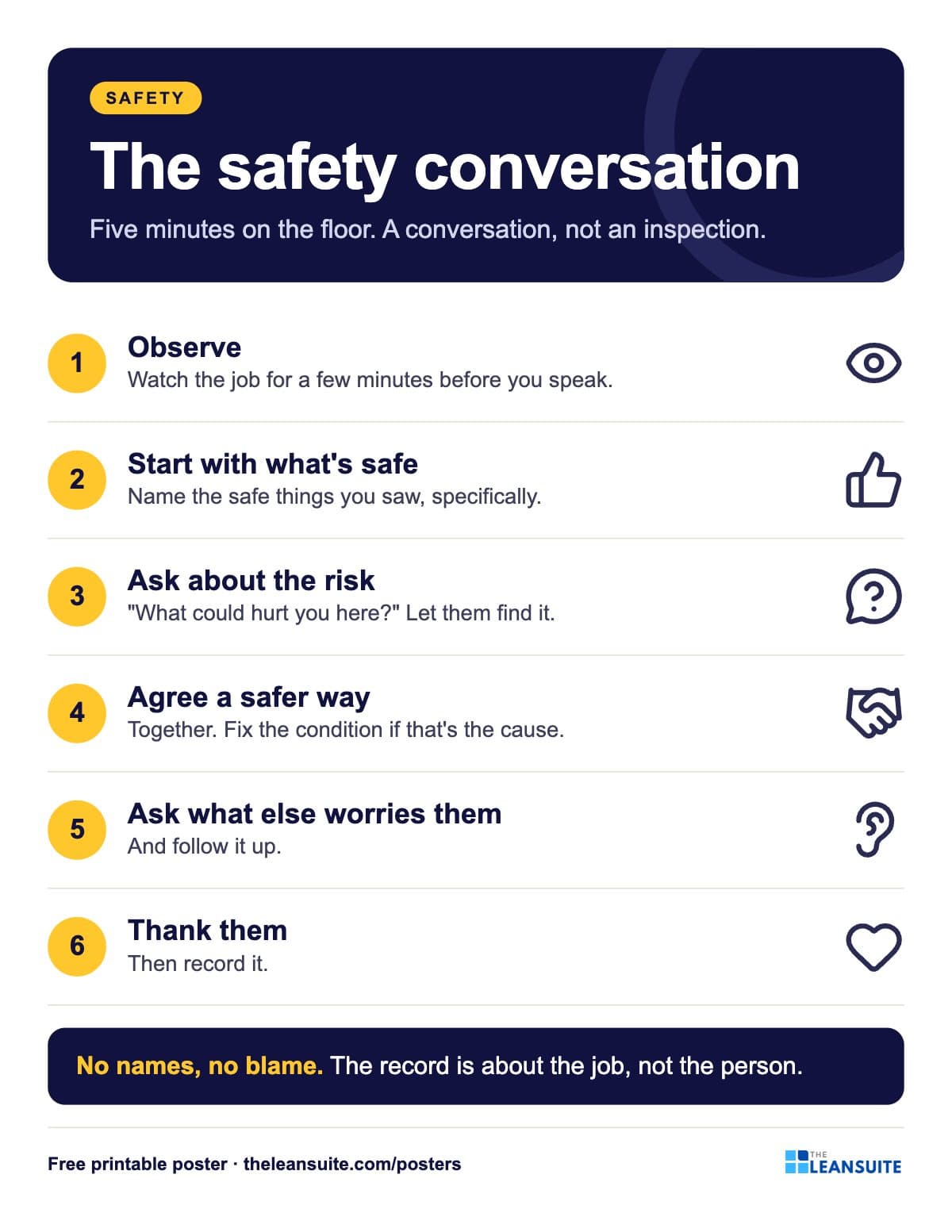 Safety observation conversation poster
 Incident investigation steps poster
 Safety cross calendar poster
A poster reminds. A routine makes it stick.
See how plants run their audits, improvements and follow-ups in LeanSuite, on a call built around your own problem.
Book a 45-minute demo