

Quality poster
Updated · Free to print and share
Fishbone 6M questions poster
A fishbone (cause and effect, or Ishikawa) diagram sorts the possible causes of one effect under headings, most often the six Ms: people, machine, method, material, measurement and environment. It lists suspects; it does not prove anything. This poster gives the questions to ask under each bone and the rules that keep a fishbone honest: a factual effect at the head, causes written as conditions you can check, and each one marked confirmed or ruled out.
Download the poster
The PNG is free to download now. The print-ready vector PDFs open after a short form, once.
Free to print and share with your team. Enter your name and work email once to download.
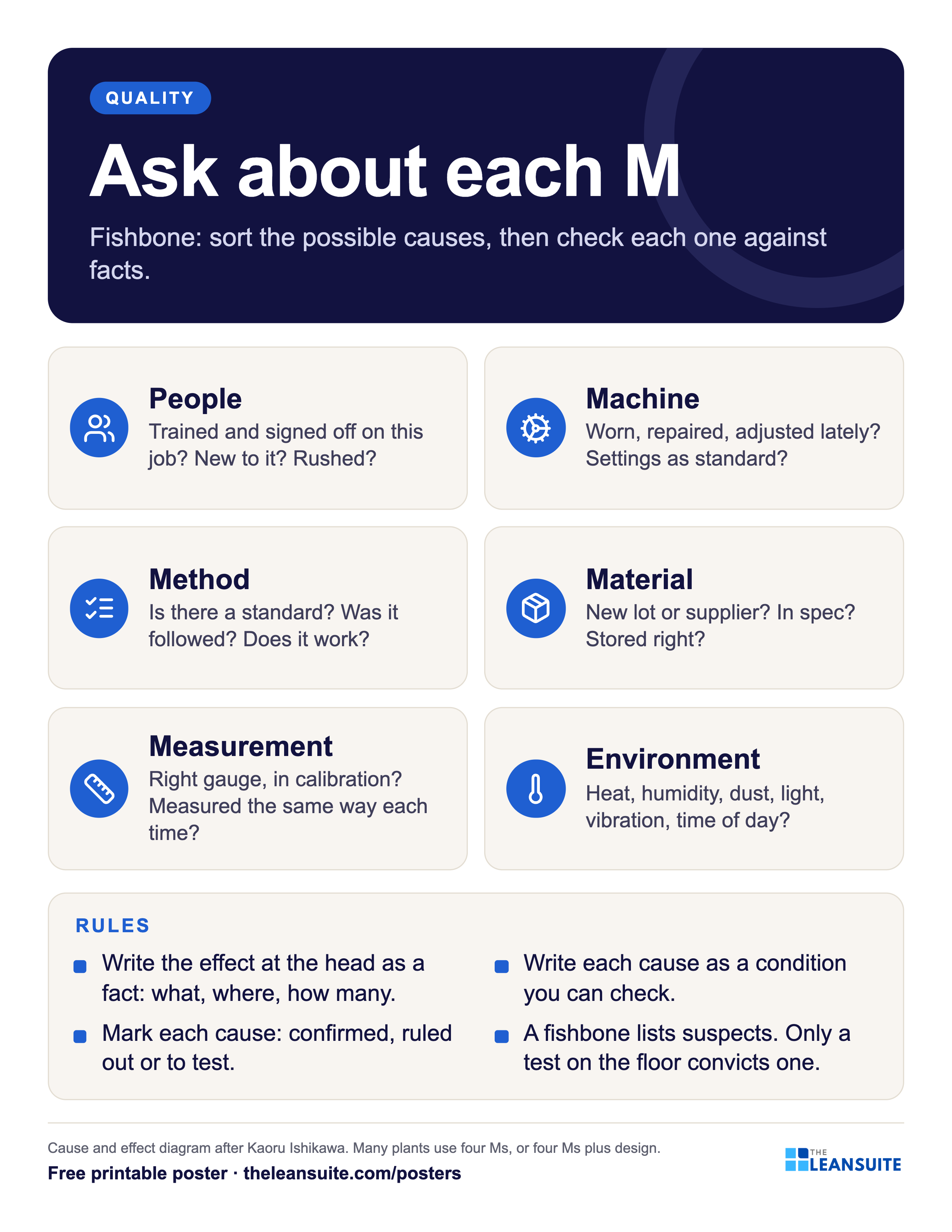
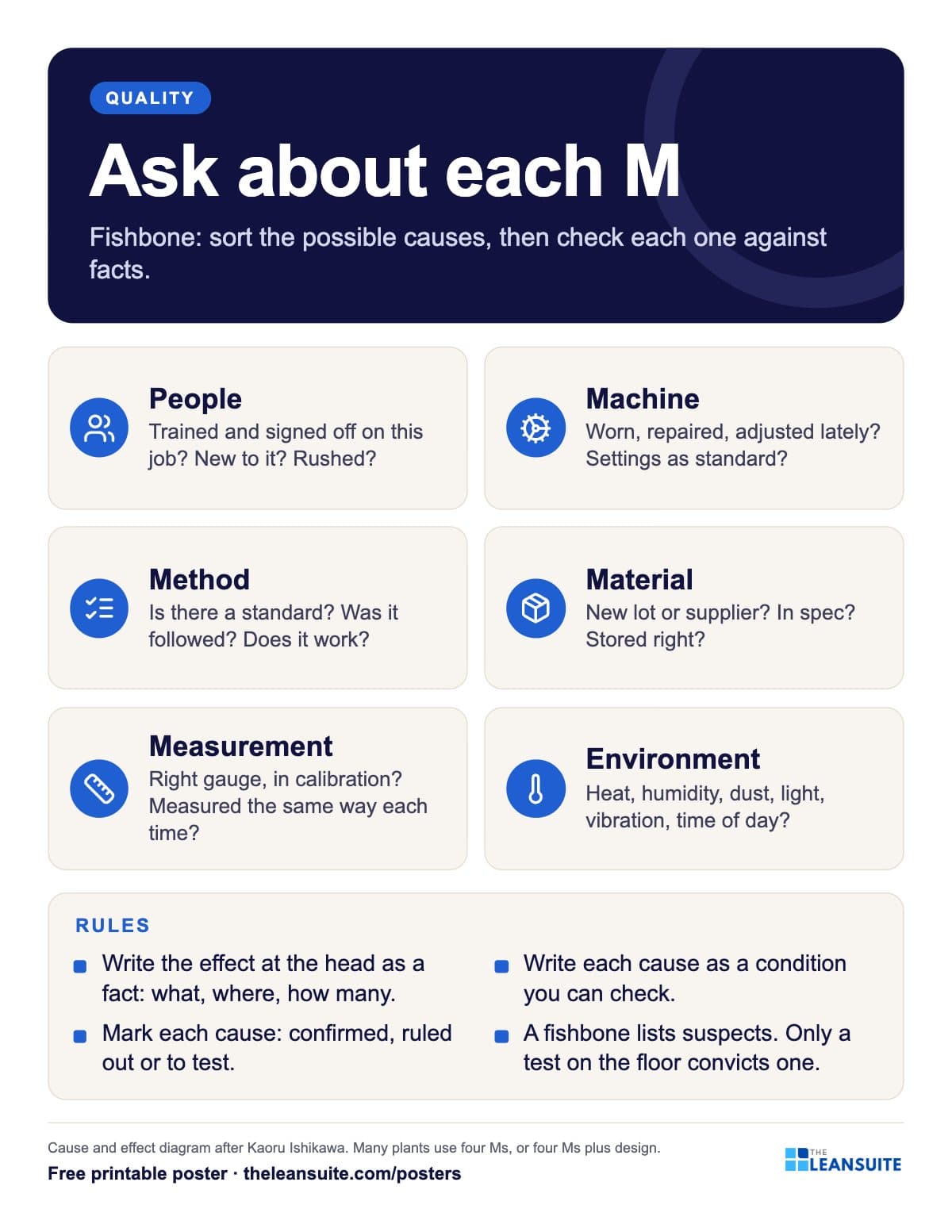 Six cards for people, machine, method, material, measurement and environment with questions, and four rules.
The words on the poster
Ask about each M
Fishbone: sort the possible causes, then check each one against facts.
- People Trained and signed off on this job? New to it? Rushed?
- Machine Worn, repaired, adjusted lately? Settings as standard?
- Method Is there a standard? Was it followed? Does it work?
- Material New lot or supplier? In spec? Stored right?
- Measurement Right gauge, in calibration? Measured the same way each time?
- Environment Heat, humidity, dust, light, vibration, time of day?
Rules
- Write the effect at the head as a fact: what, where, how many.
- Write each cause as a condition you can check.
- Mark each cause: confirmed, ruled out or to test.
- A fishbone lists suspects. Only a test on the floor convicts one.
Cause and effect diagram after Kaoru Ishikawa. Many plants use four Ms, or four Ms plus design.
On the floor
How to use it
Putting the Fishbone 6M questions poster to work
- 1
Put it next to the whiteboard or wall where the team draws its fishbones.
- 2
Go round the six cards in order so no bone is skipped.
- 3
After the session, mark each cause on the diagram: confirmed, ruled out or still to test.
- 4
Pair it with the free root cause analysis template, and the 5 whys template for the confirmed causes.
Which size to print
- 24 x 36 in or A2: a main wall or team board, read from a few metres away.
- 18 x 24 in or A3: a station or notice board. The A3 file also fits 11 x 17 in paper.
- Letter or A4: a clipboard, binder or handout, on any office printer.
Every PDF is vector, so it stays sharp at full size. Nothing runs to the edge of the page, so no bleed is needed.
Sources and notes
- Kaoru Ishikawa, Guide to Quality Control (Asian Productivity Organization, 1968; English edition 1976): the cause and effect diagram. Many plants use four Ms (people, machine, method, material), some add design.
Templates, decks and guides to go with it
- Root cause analysis training presentation: 5 whys and fishboneFree training deck: Define, contain, the 5 whys, the fishbone diagram and verifying the cause, in 18 slides with a team activity.
- Root cause analysis templateOne report from problem statement to proof: containment, evidence, analysis, verified causes, actions and the effectiveness check.
- 5 Whys templateA problem statement, a why chain that can branch, evidence for every answer, root causes and countermeasures that are checked.
- Is / is not analysis templateWhat, where, when and extent with is, is not, distinctions and changes, then each possible cause tested against every pair and ranked.
- Topic: Root cause analysis and problem solvingEvery guide we have on the subject, sorted.
More quality posters
All posters PDCA cycle poster
 5 whys poster
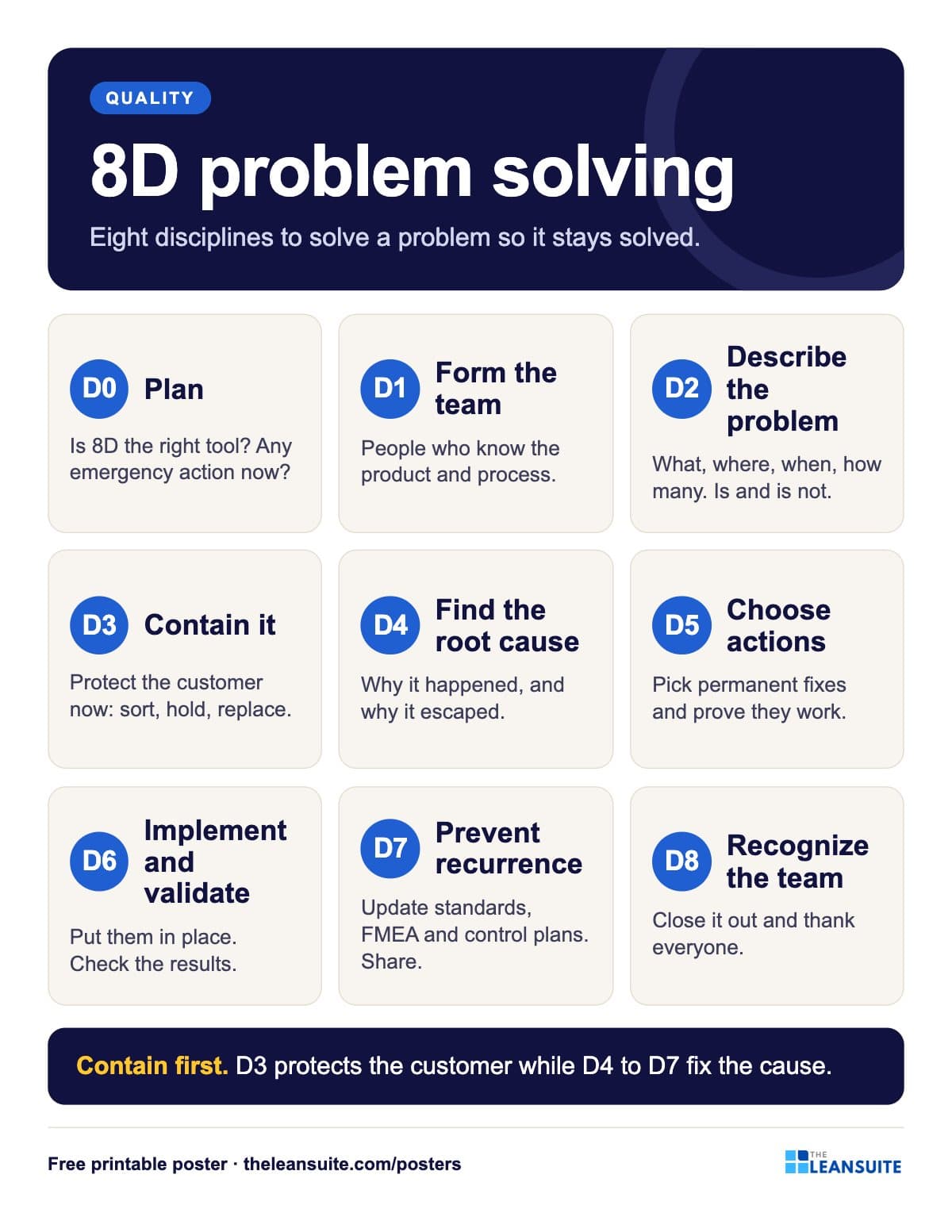 8D problem solving poster
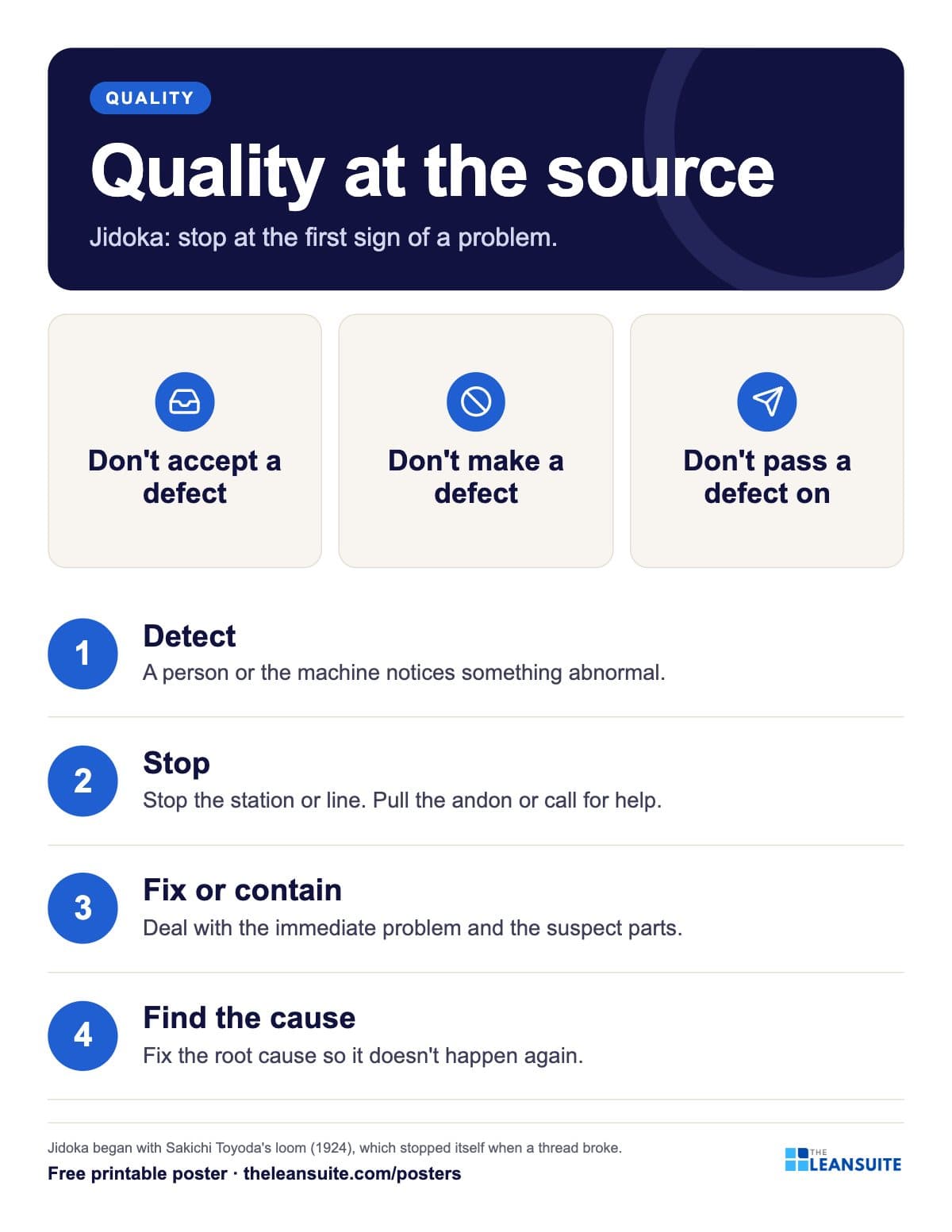 Jidoka and quality at the source poster
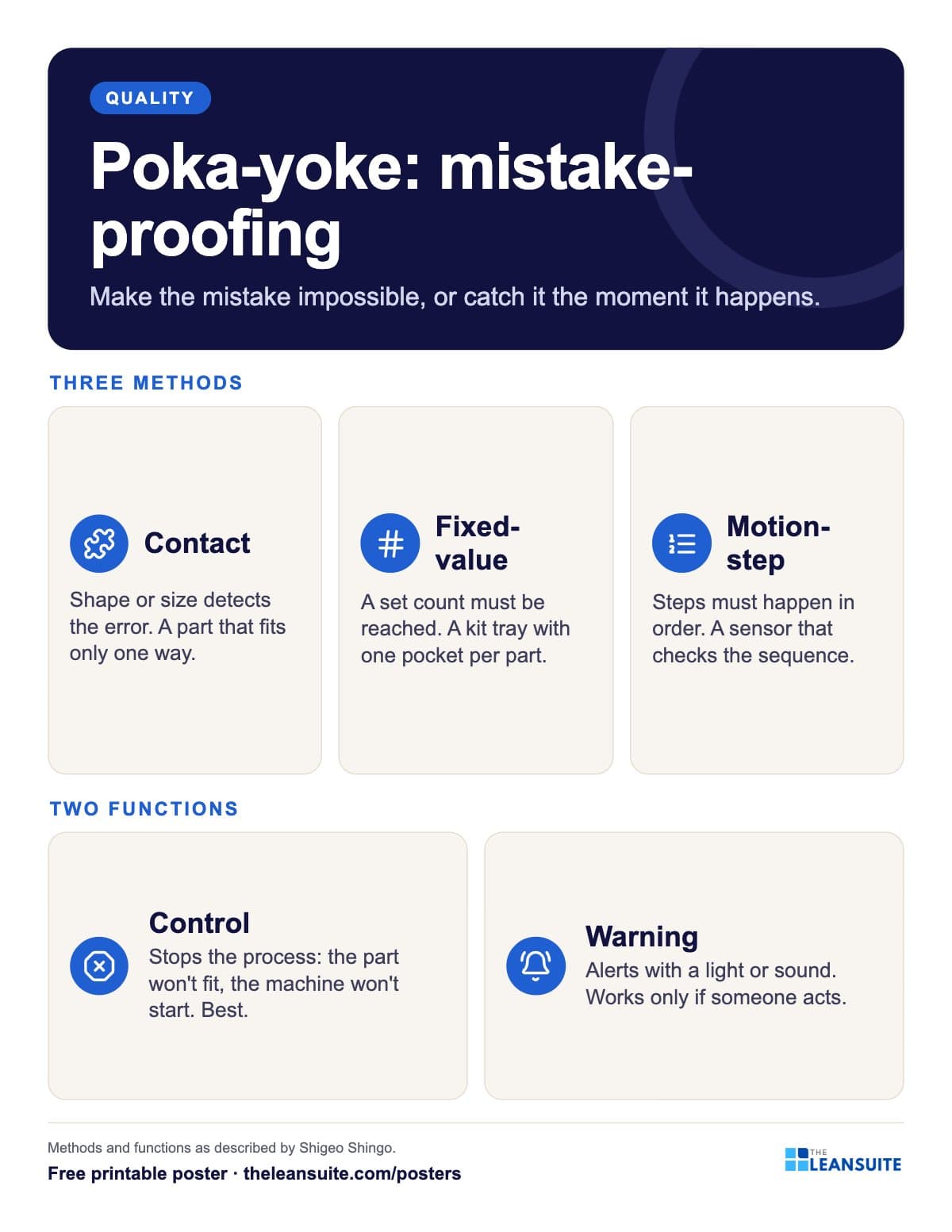 Poka-yoke types poster
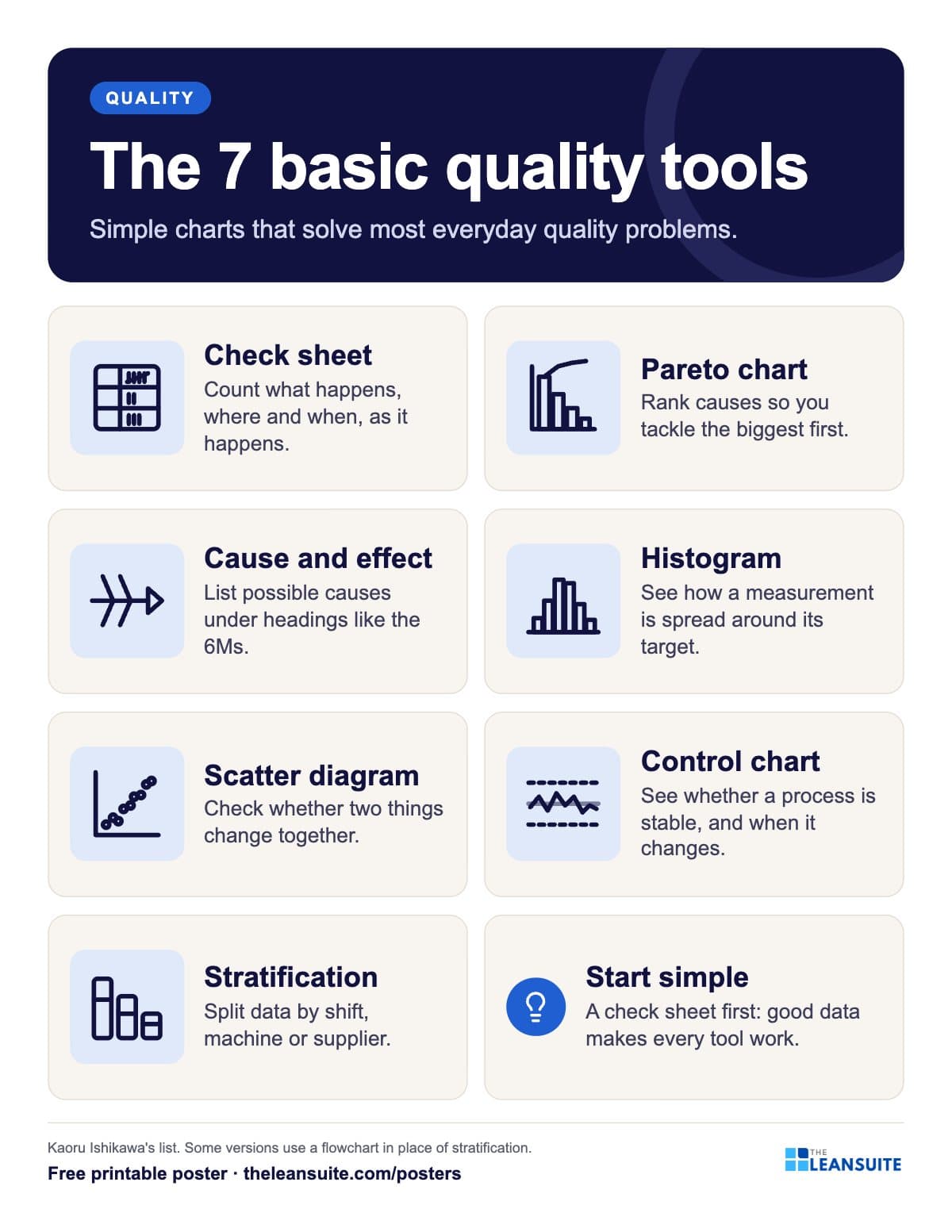 7 basic quality tools poster
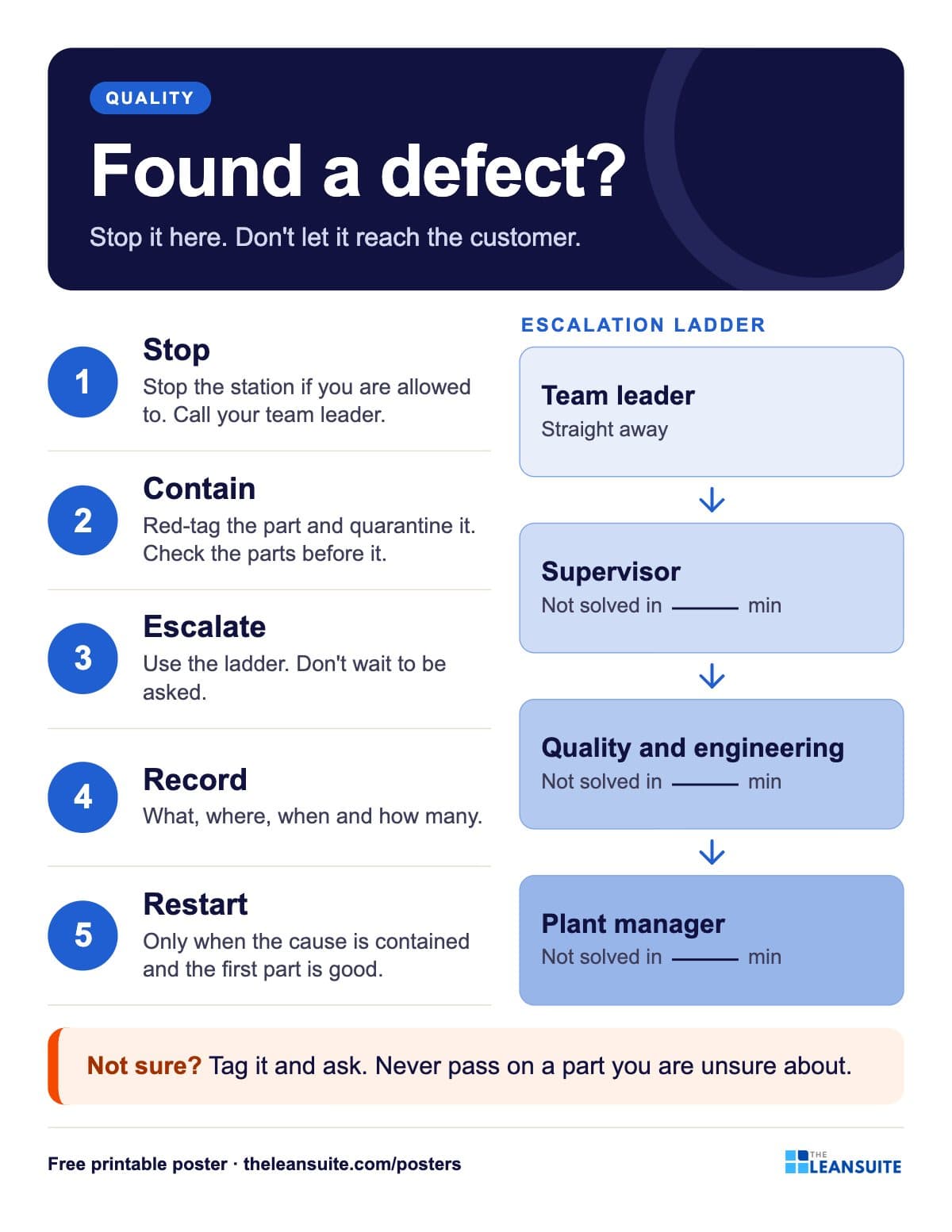 Defect escalation poster (red tag and stop the line)
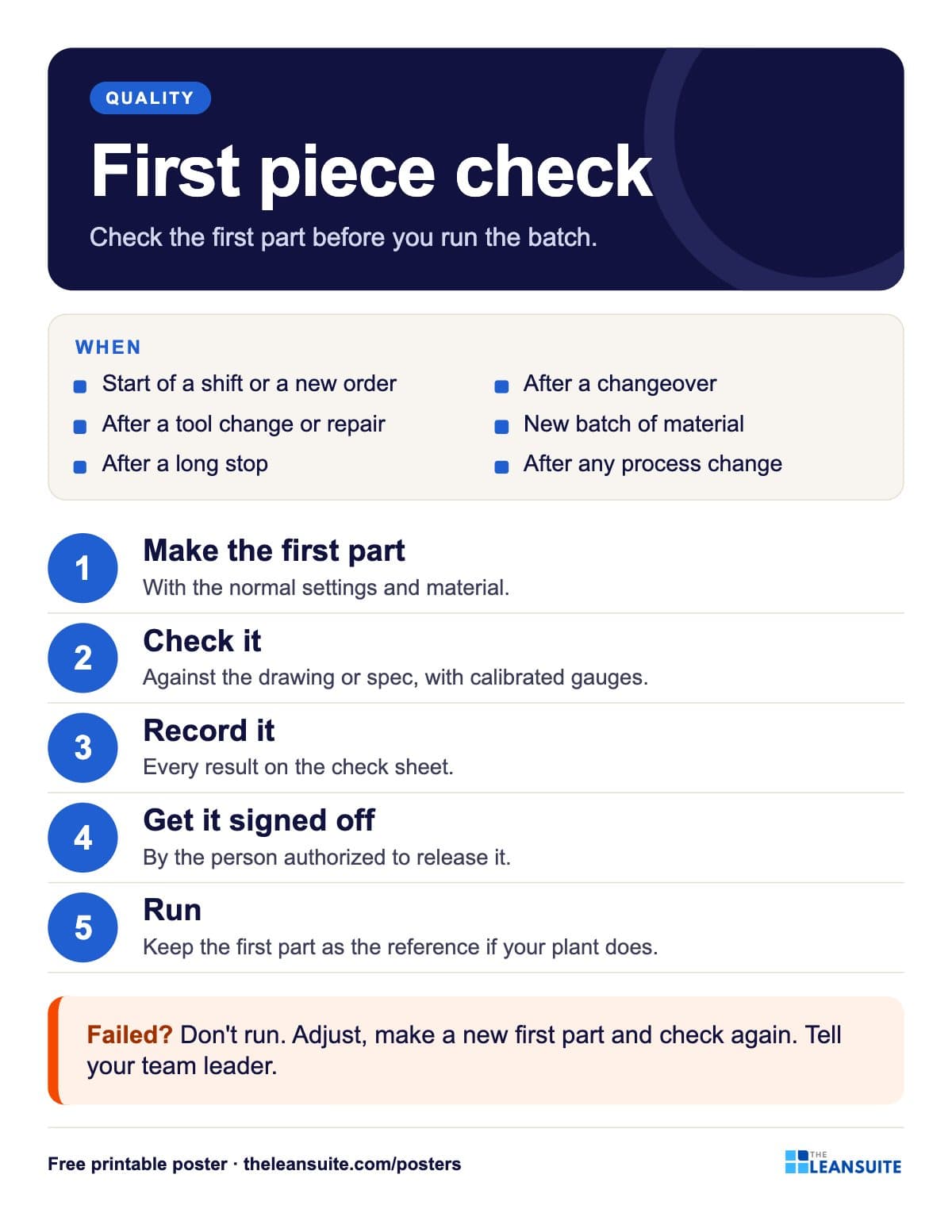 First piece (first article) check poster
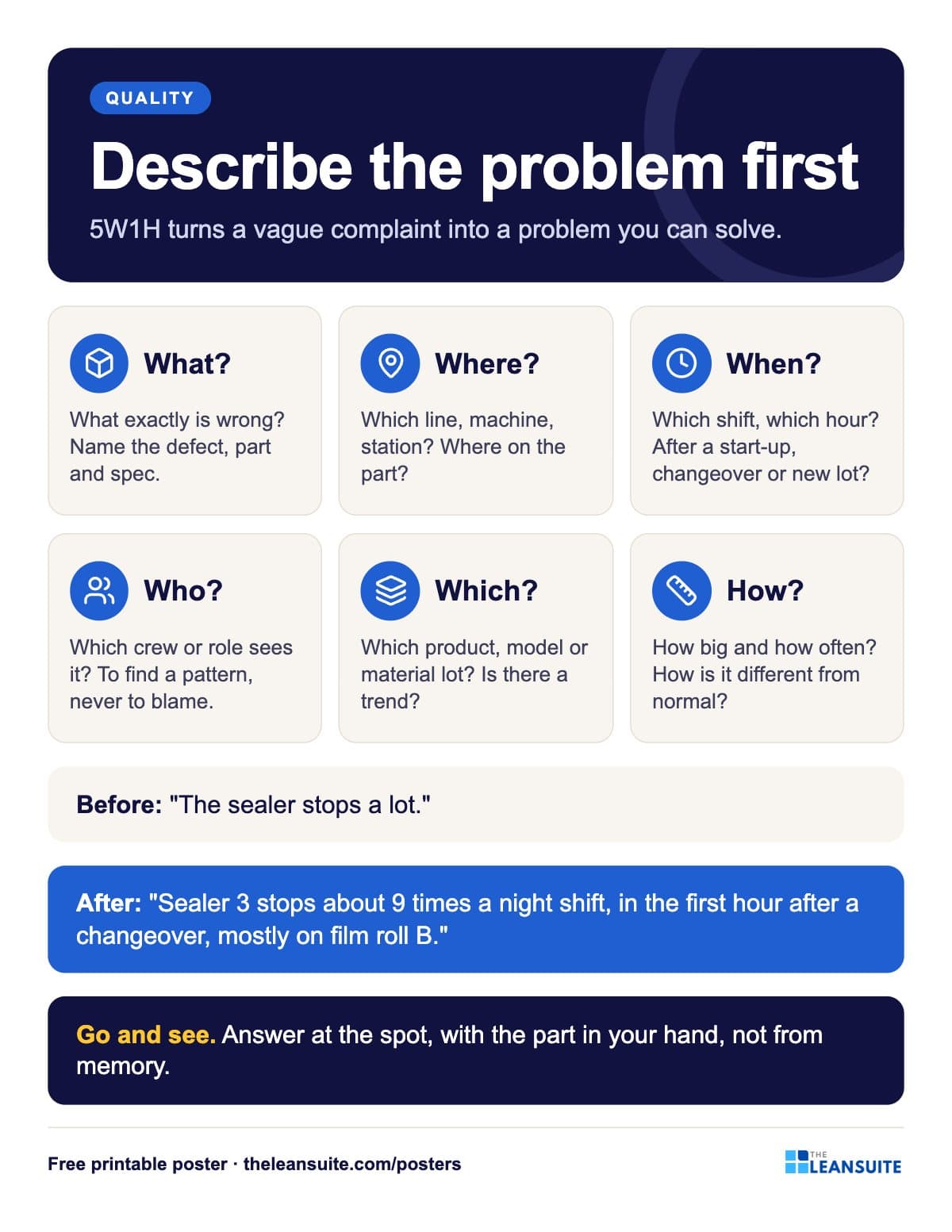 5W1H problem description poster
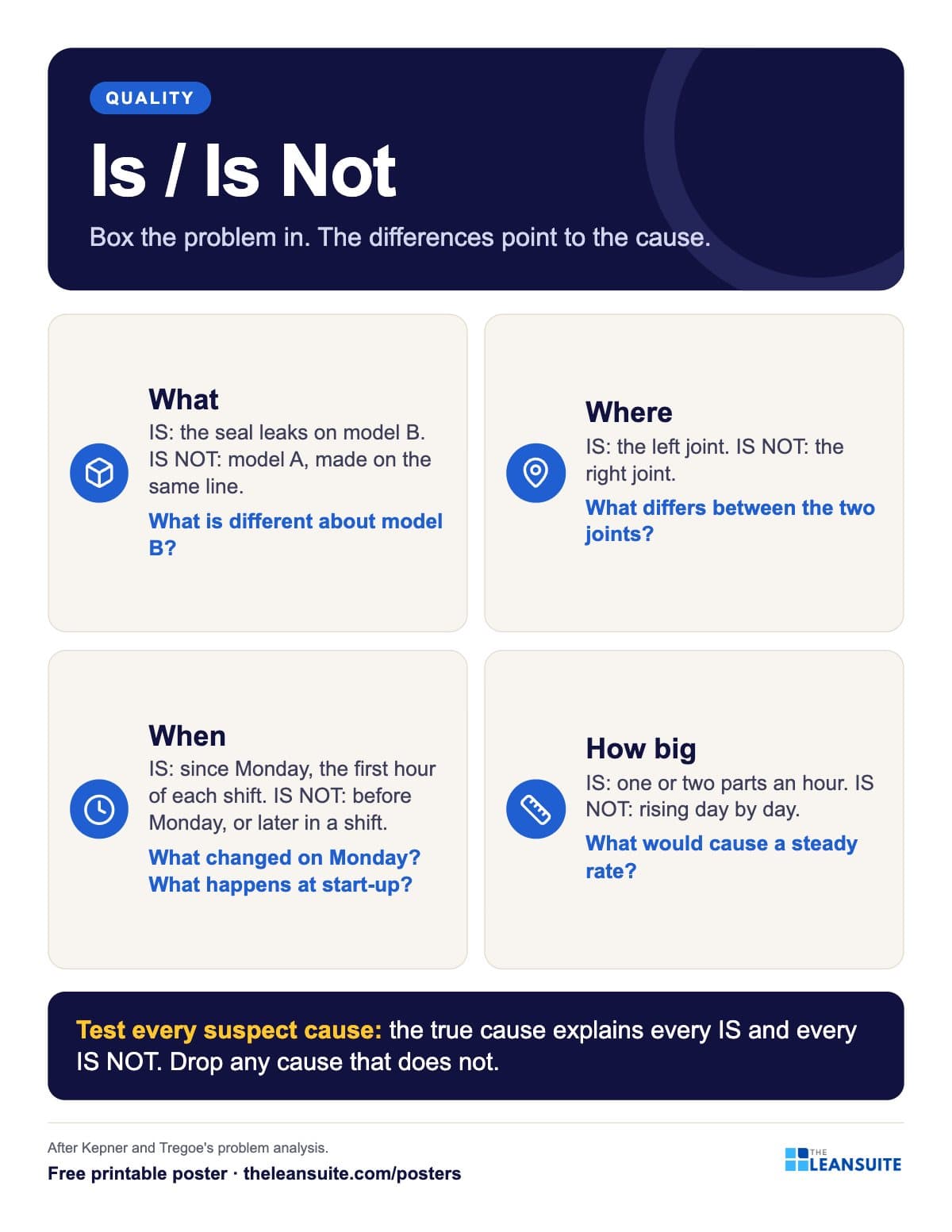 Is / Is Not analysis poster
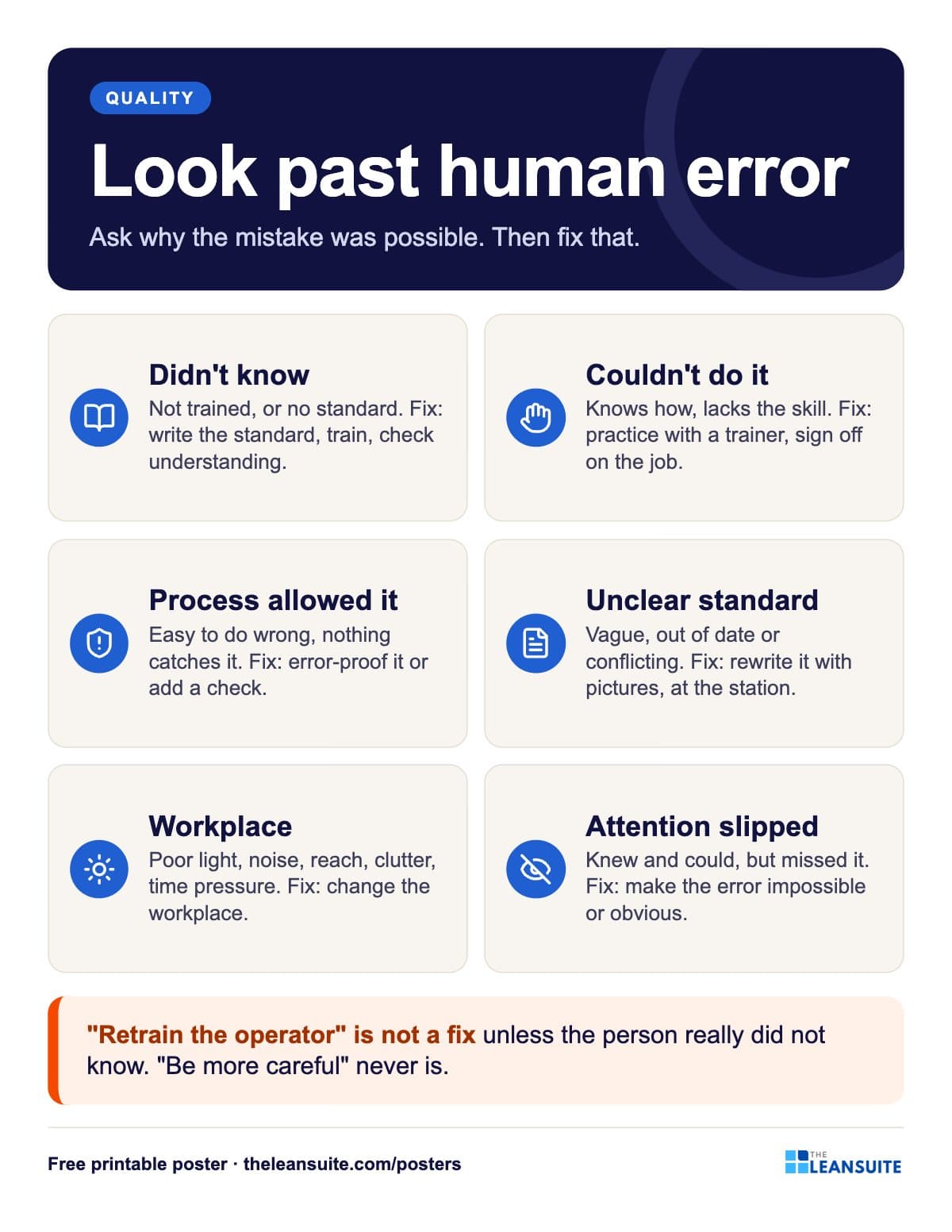 Human error root causes poster
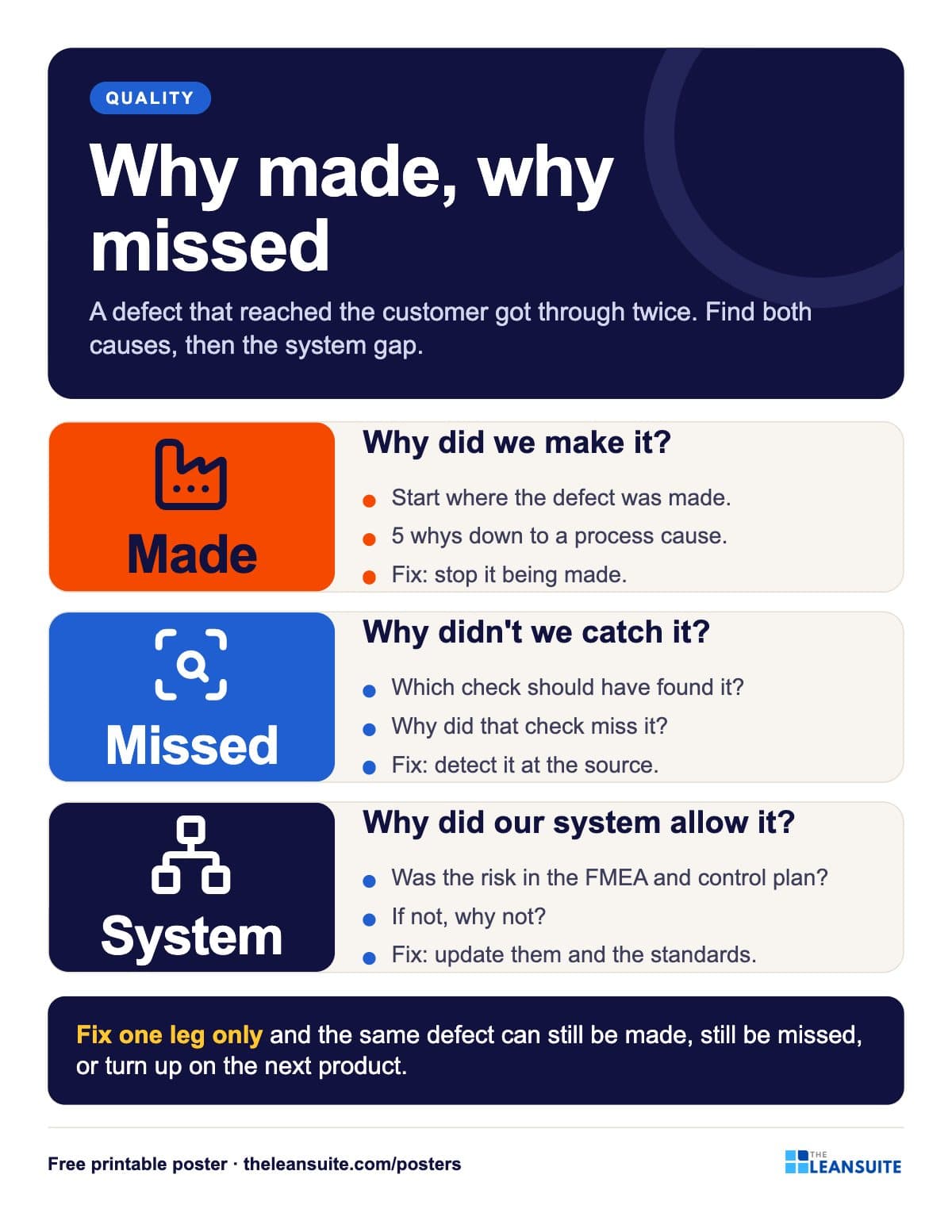 Why made, why missed poster
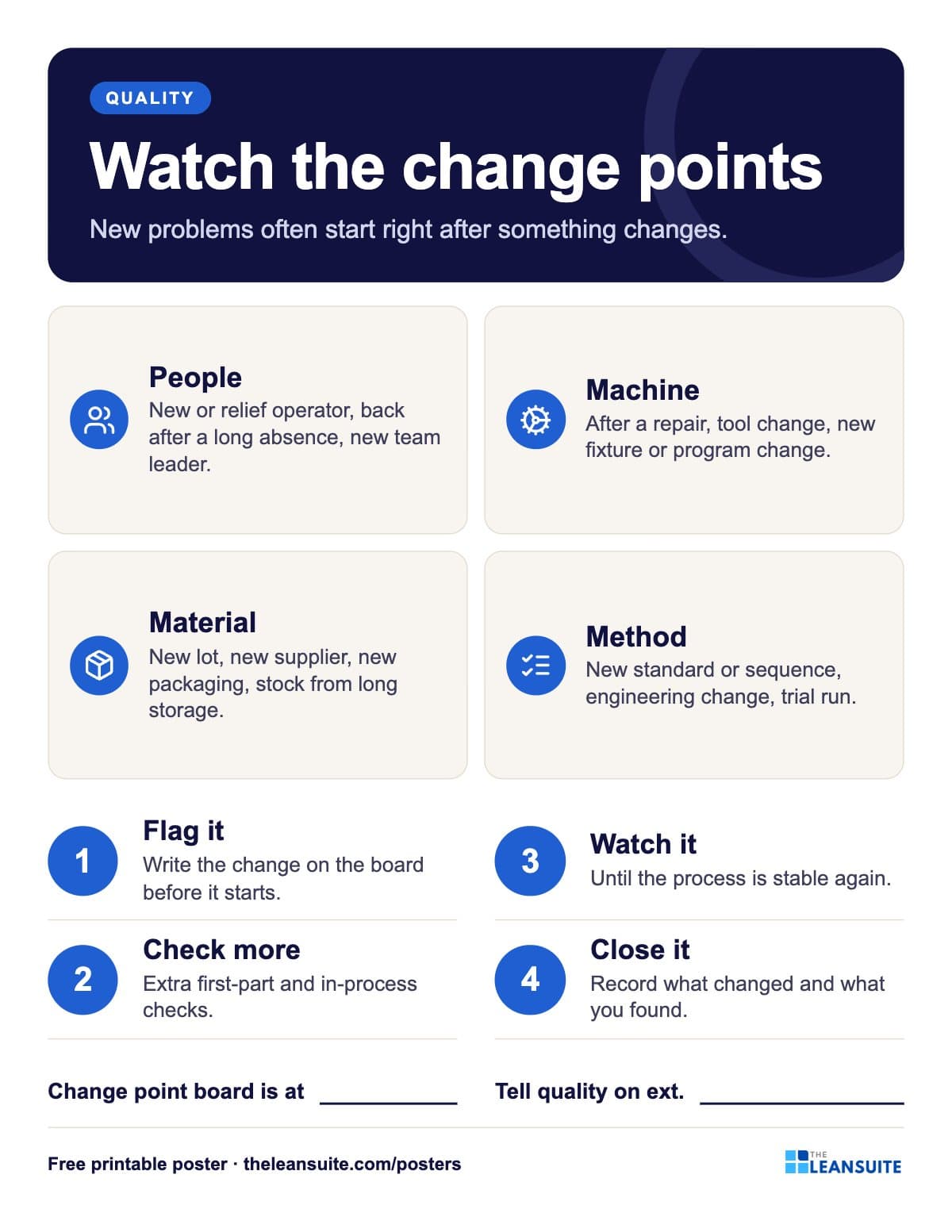 4M change points poster
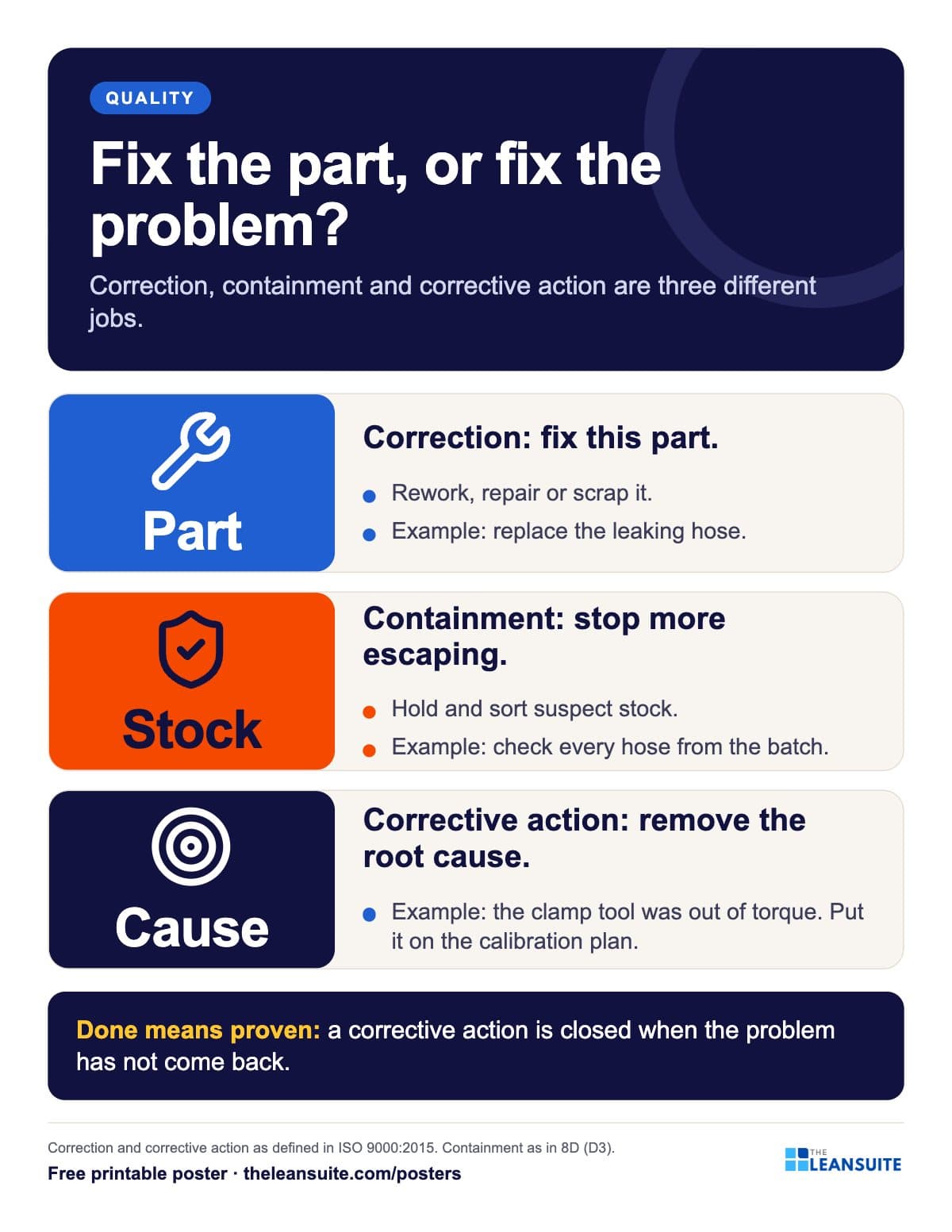 Correction vs corrective action poster
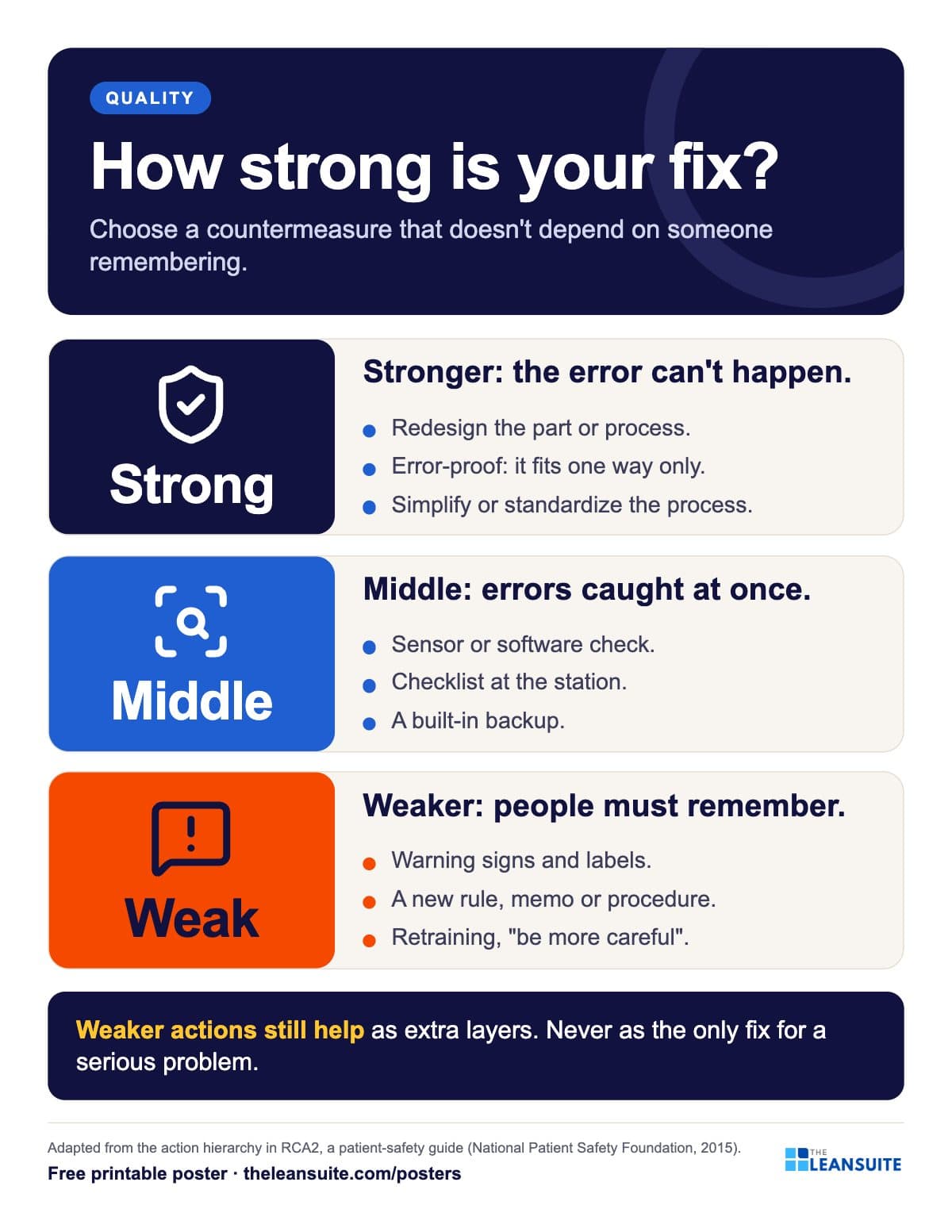 Strong and weak countermeasures poster
 Containment actions poster
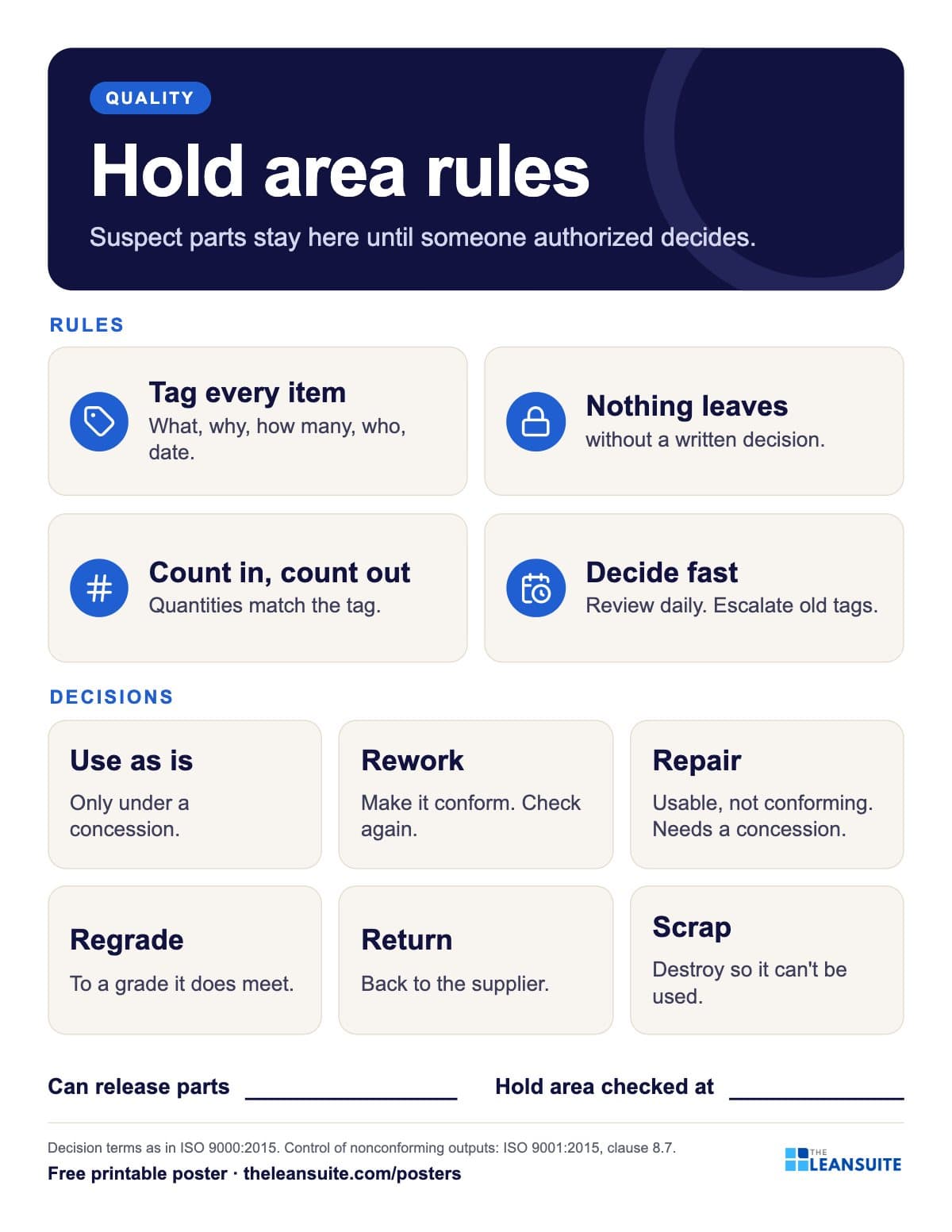 Hold area (quarantine) rules poster
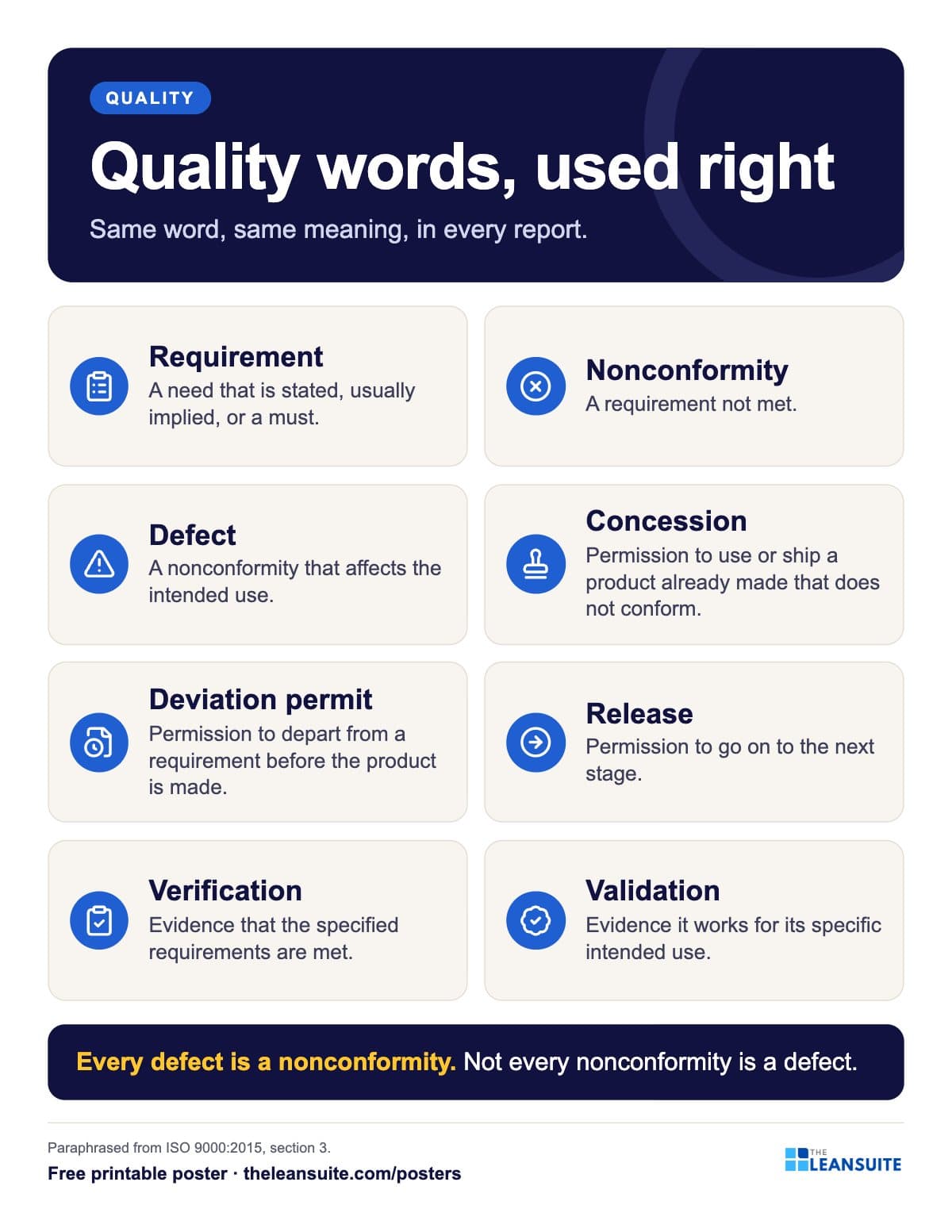 Quality terms poster (nonconformity, defect, concession)
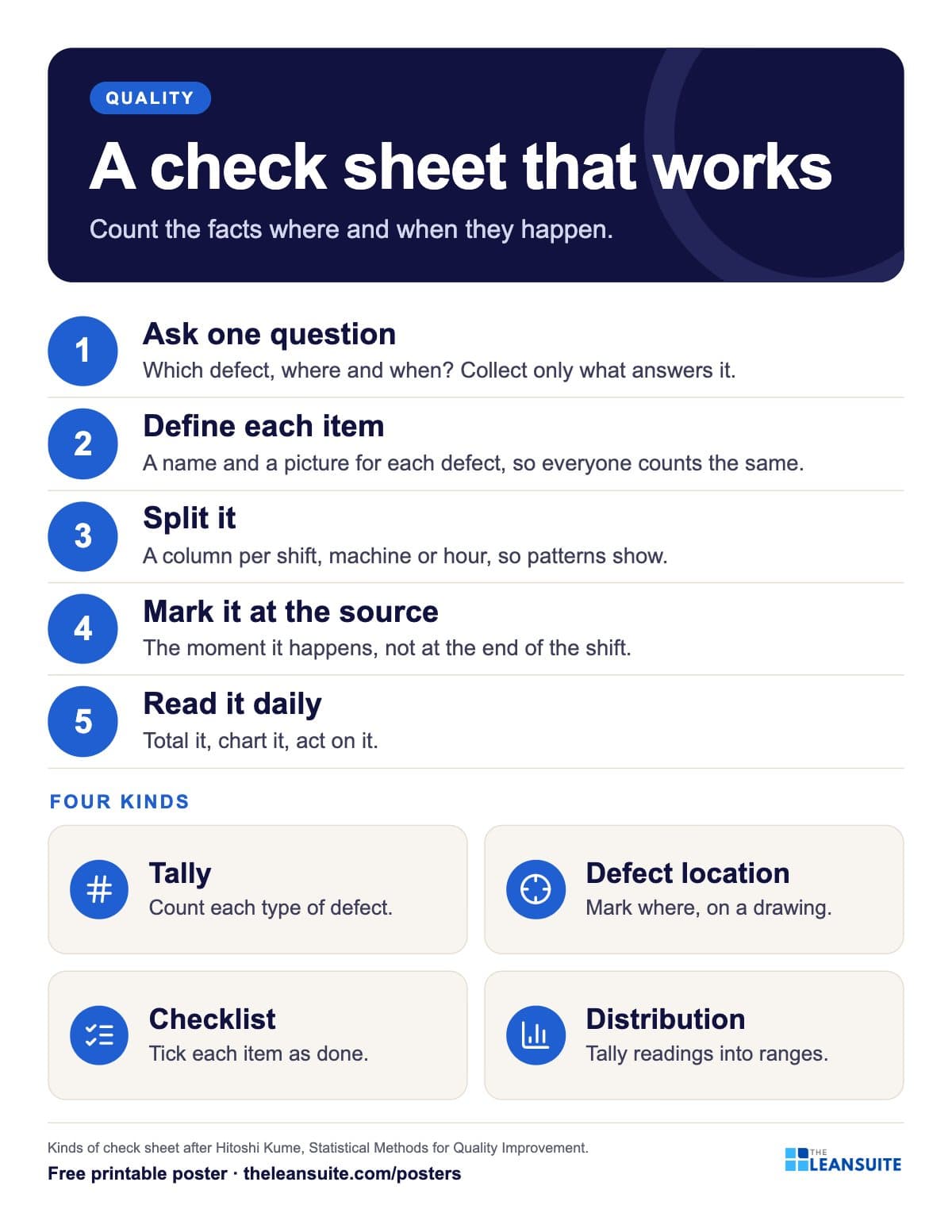 Check sheet poster
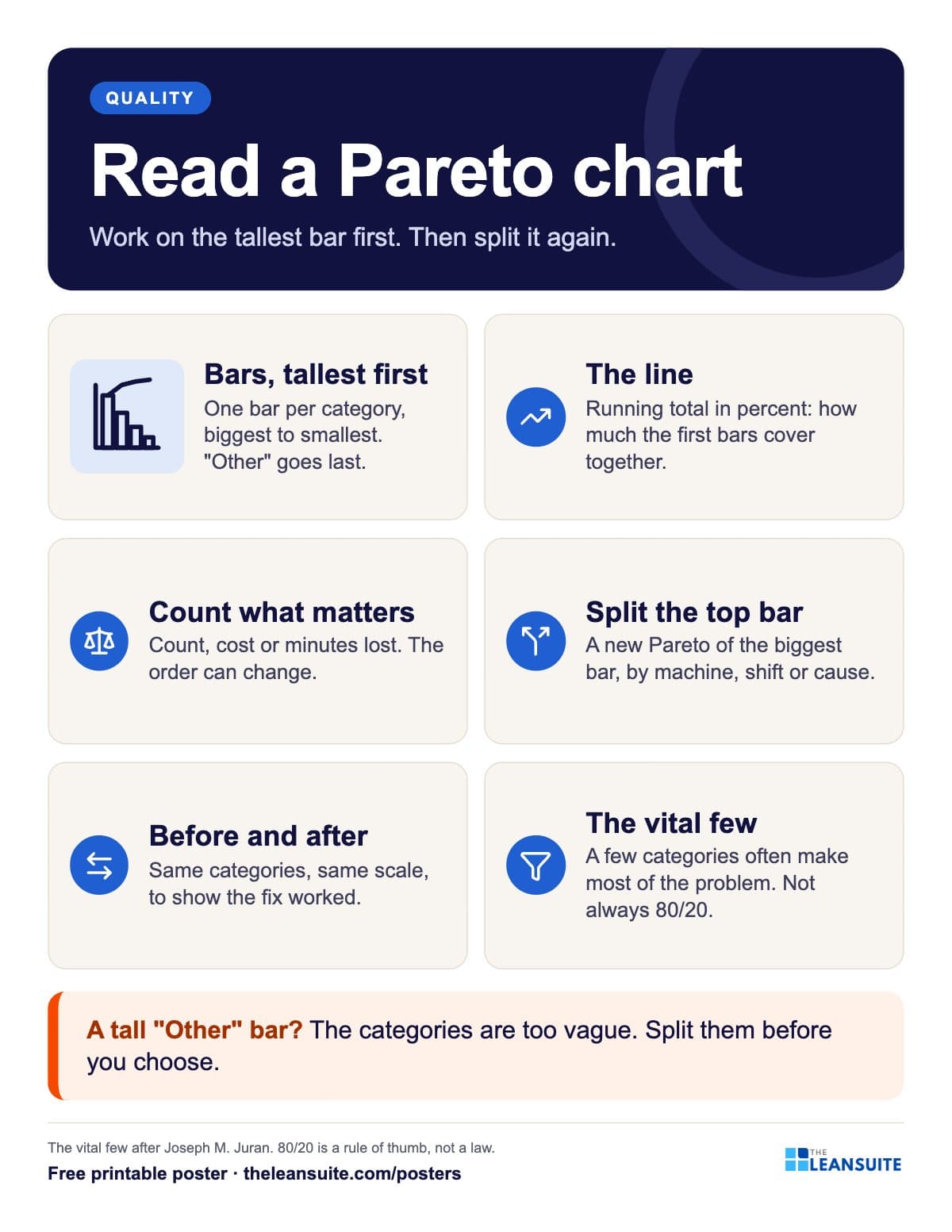 How to read a Pareto chart poster
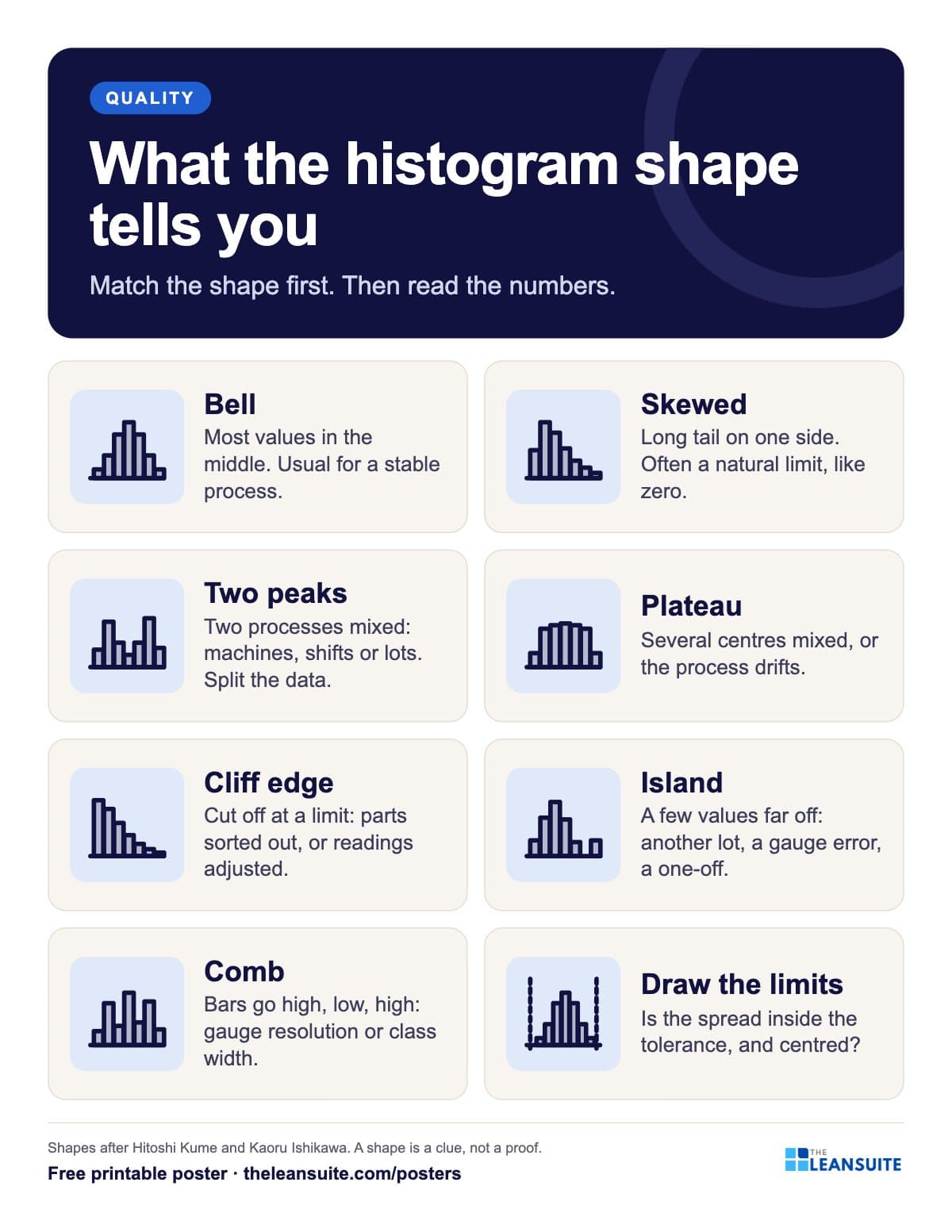 Histogram shapes poster
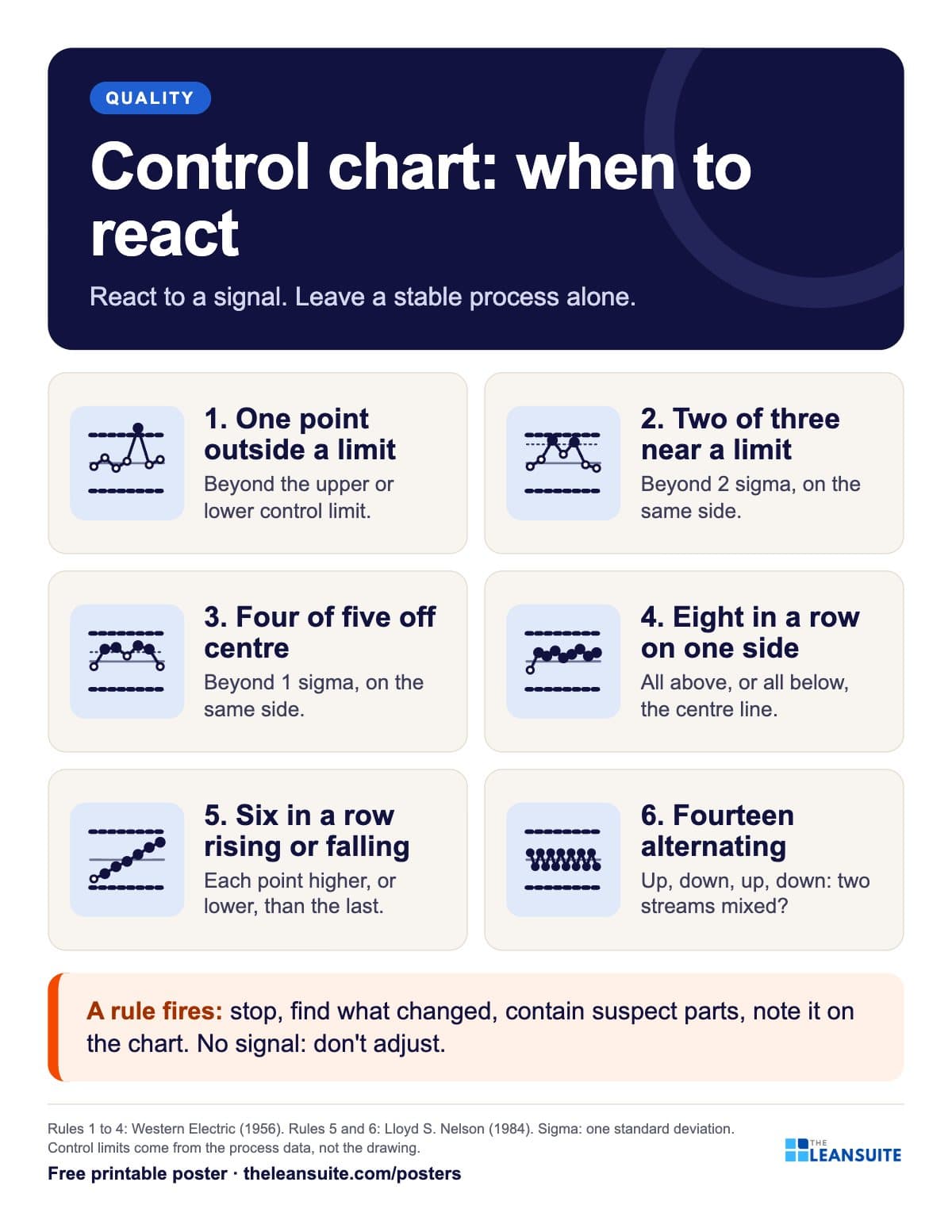 Control chart rules poster (when to react)
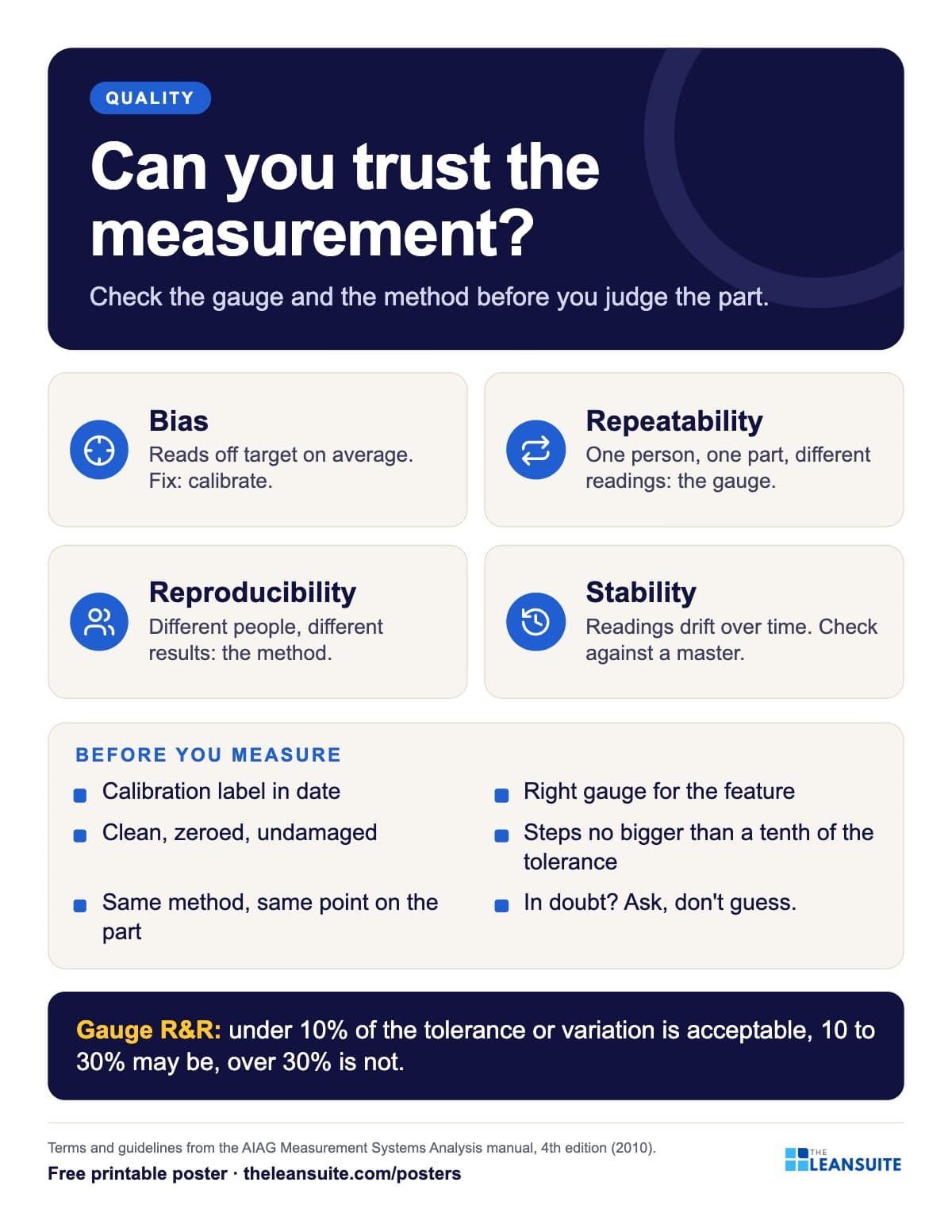 Measurement system basics poster
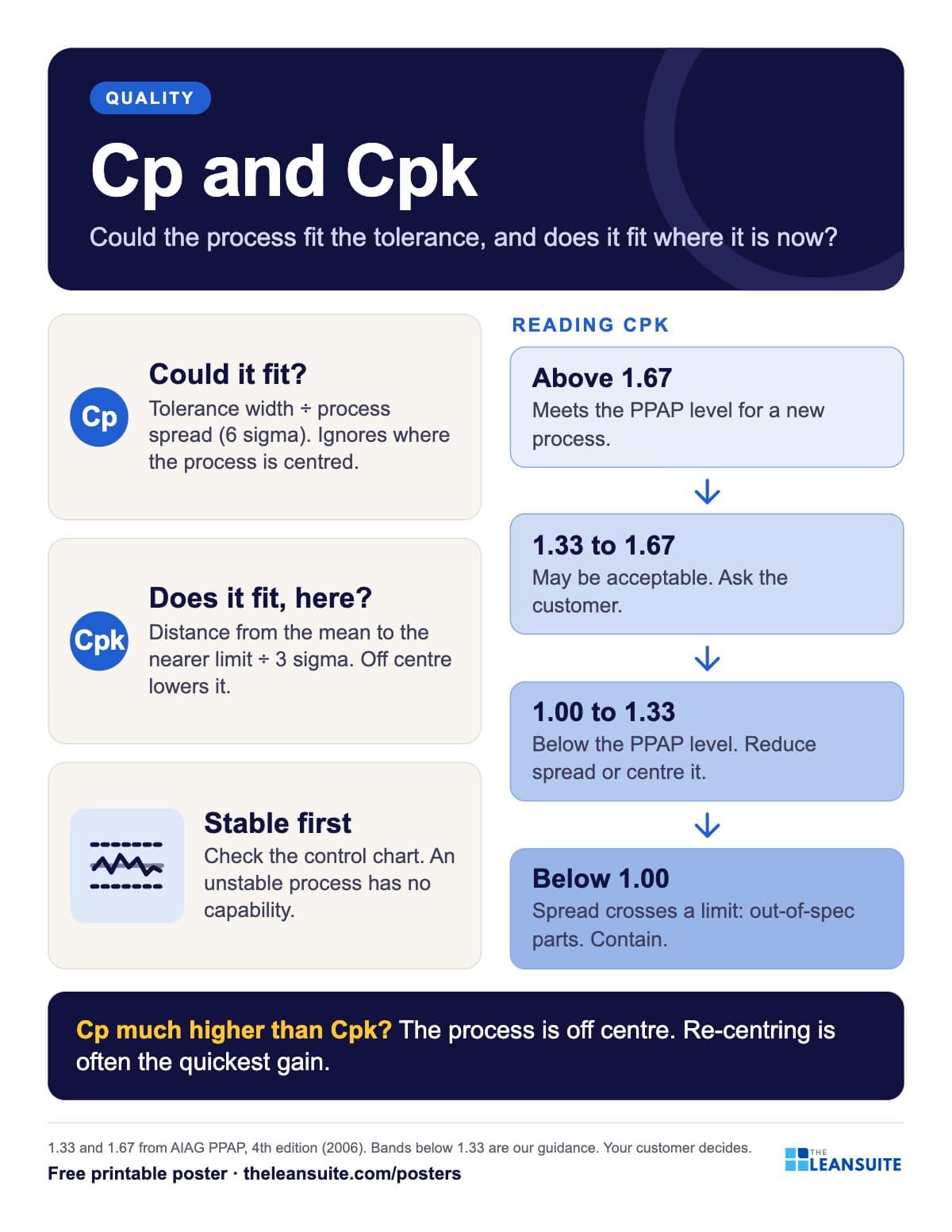 Cp and Cpk process capability poster
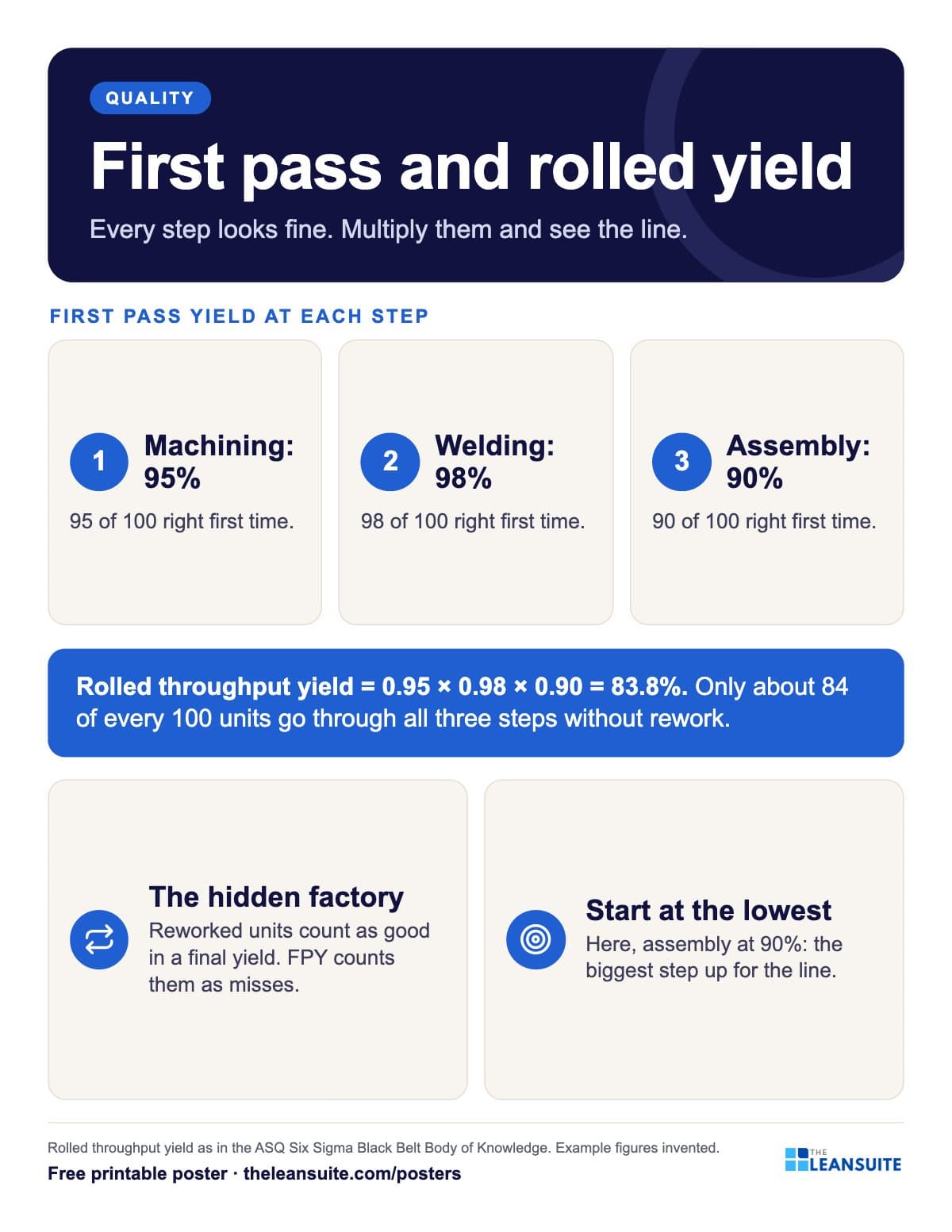 First pass yield and rolled throughput yield poster
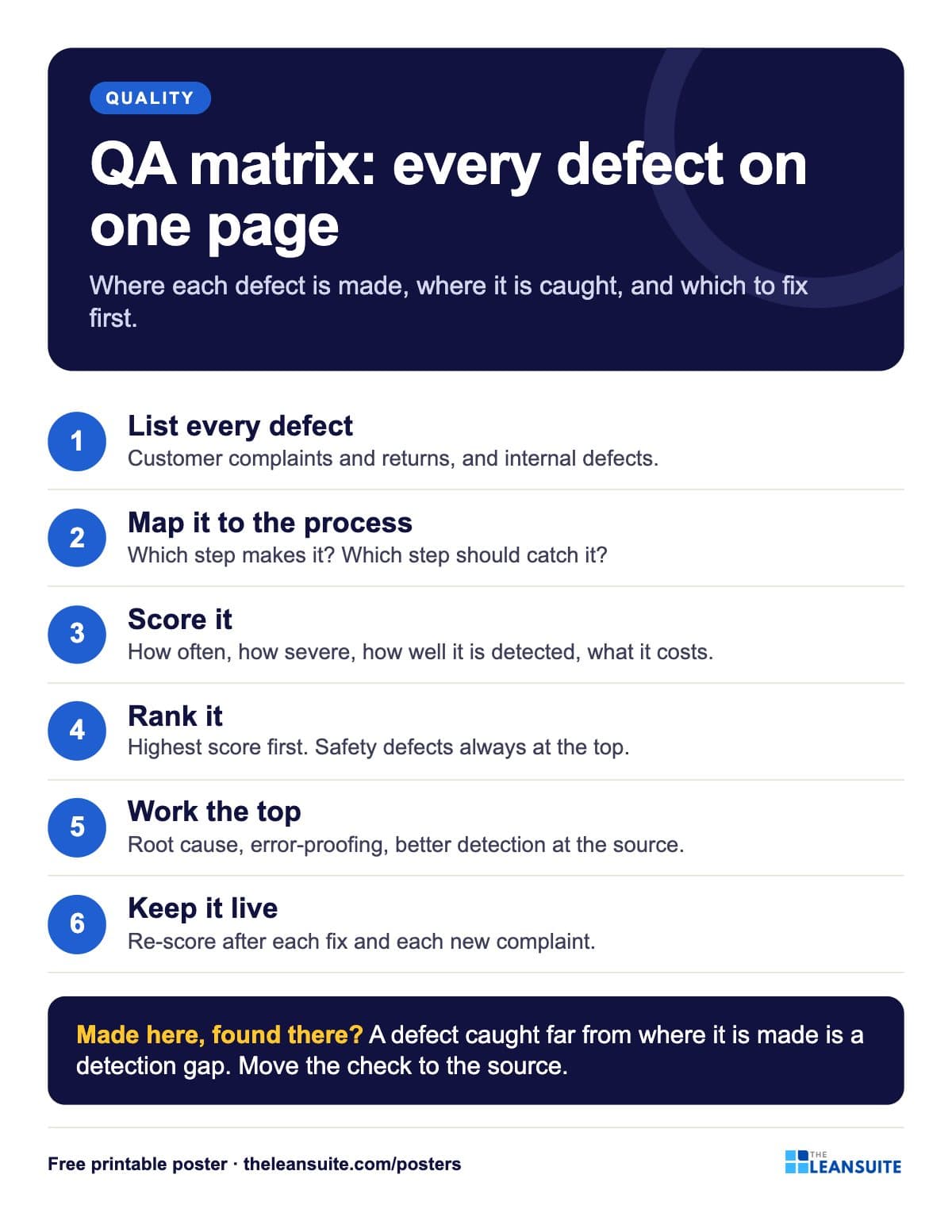 QA matrix poster
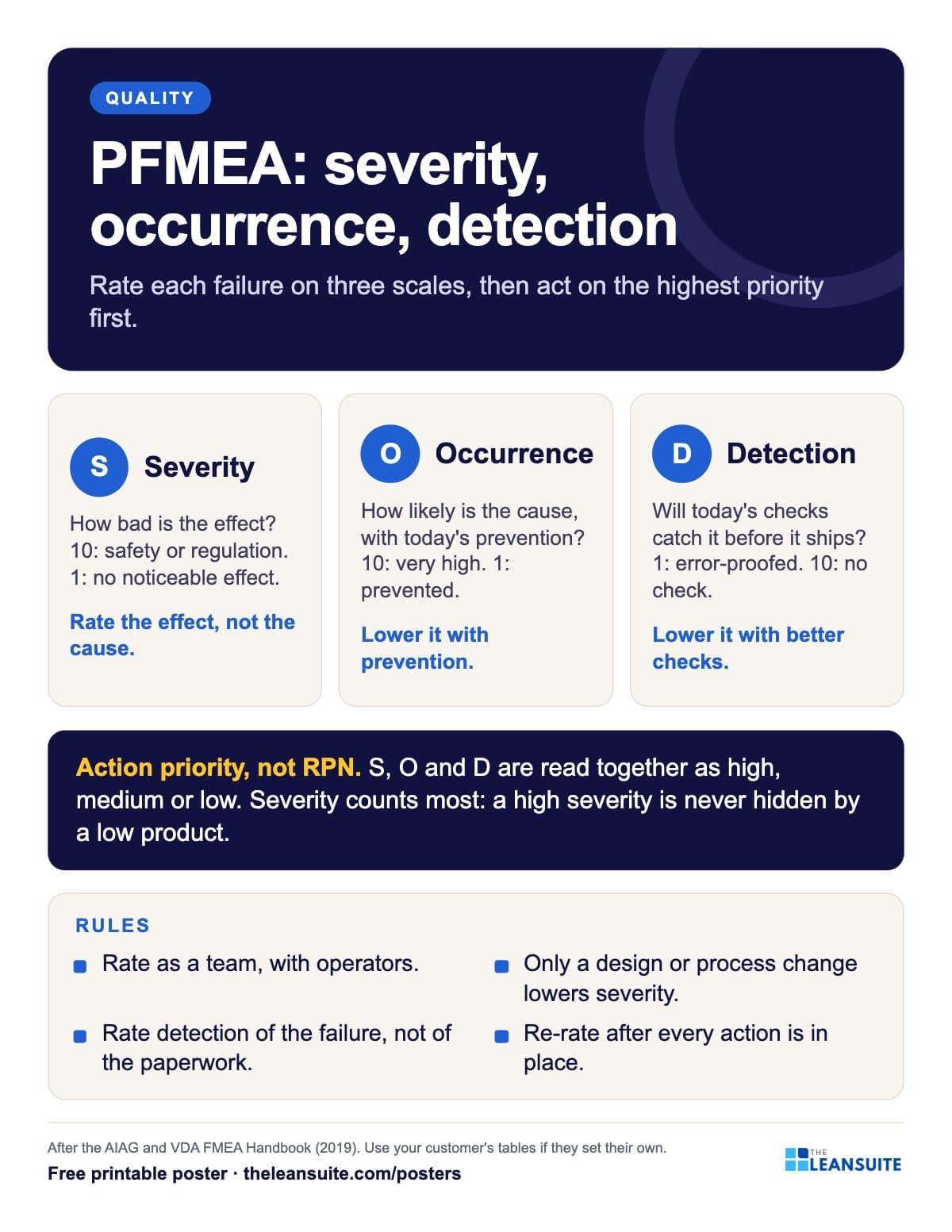 PFMEA severity, occurrence and detection poster
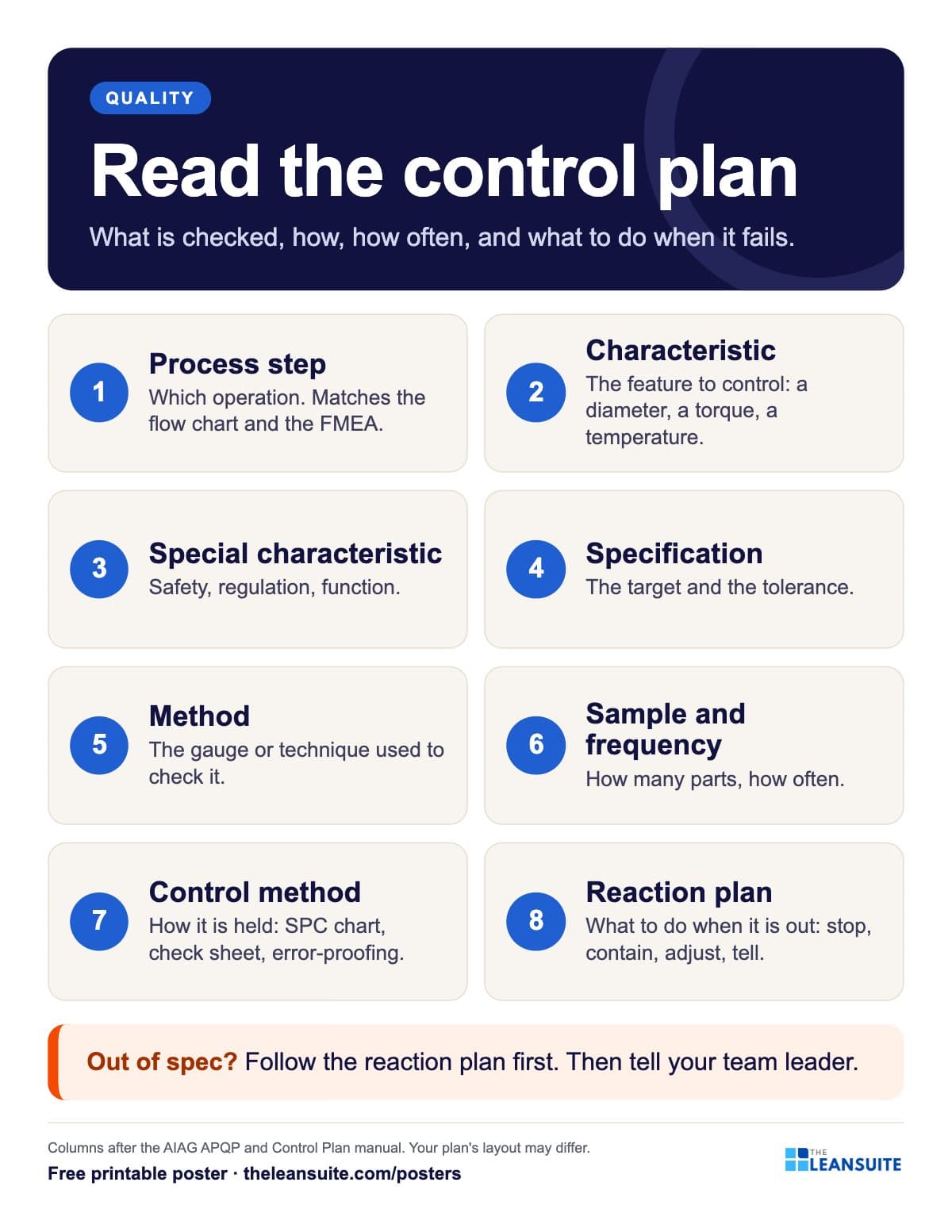 How to read a control plan poster
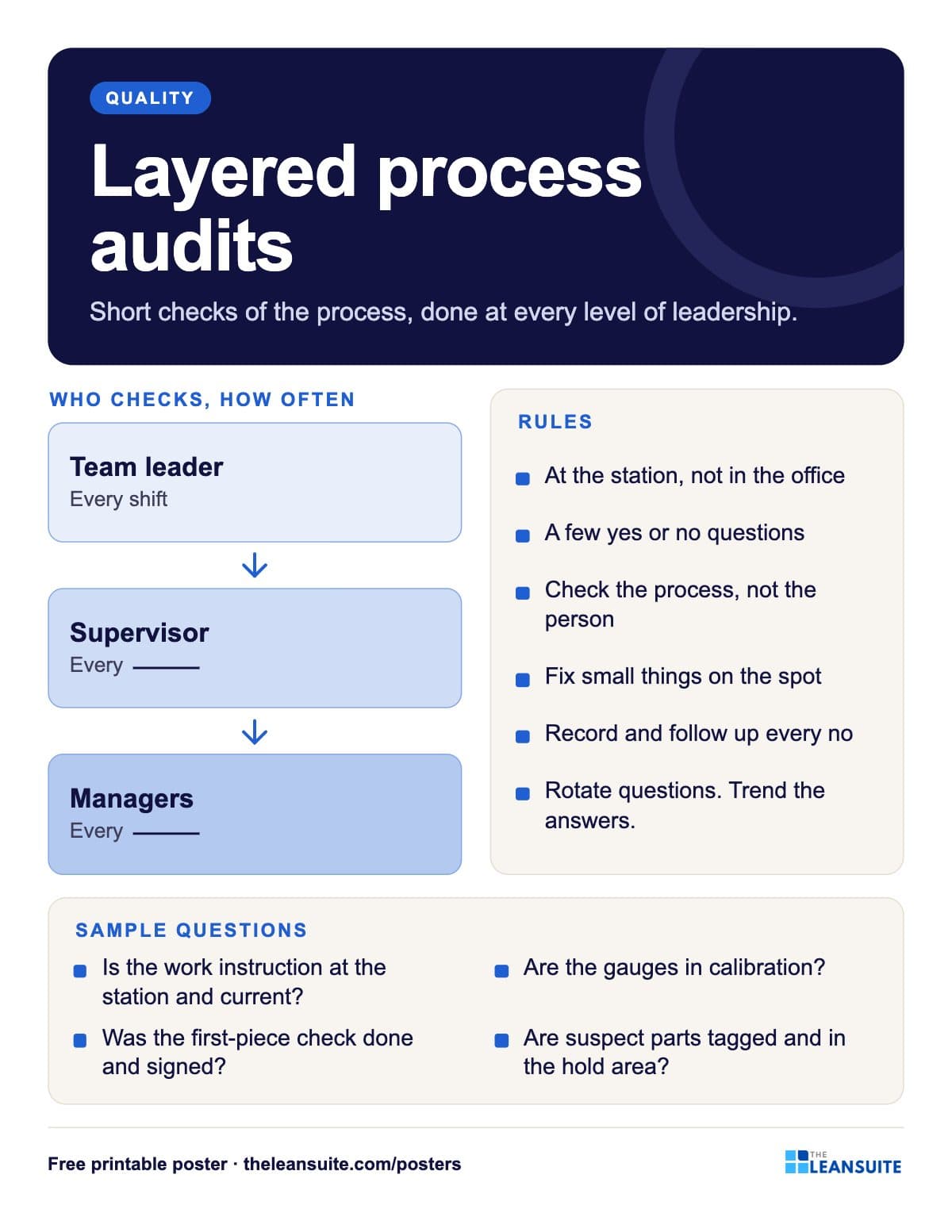 Layered process audit poster
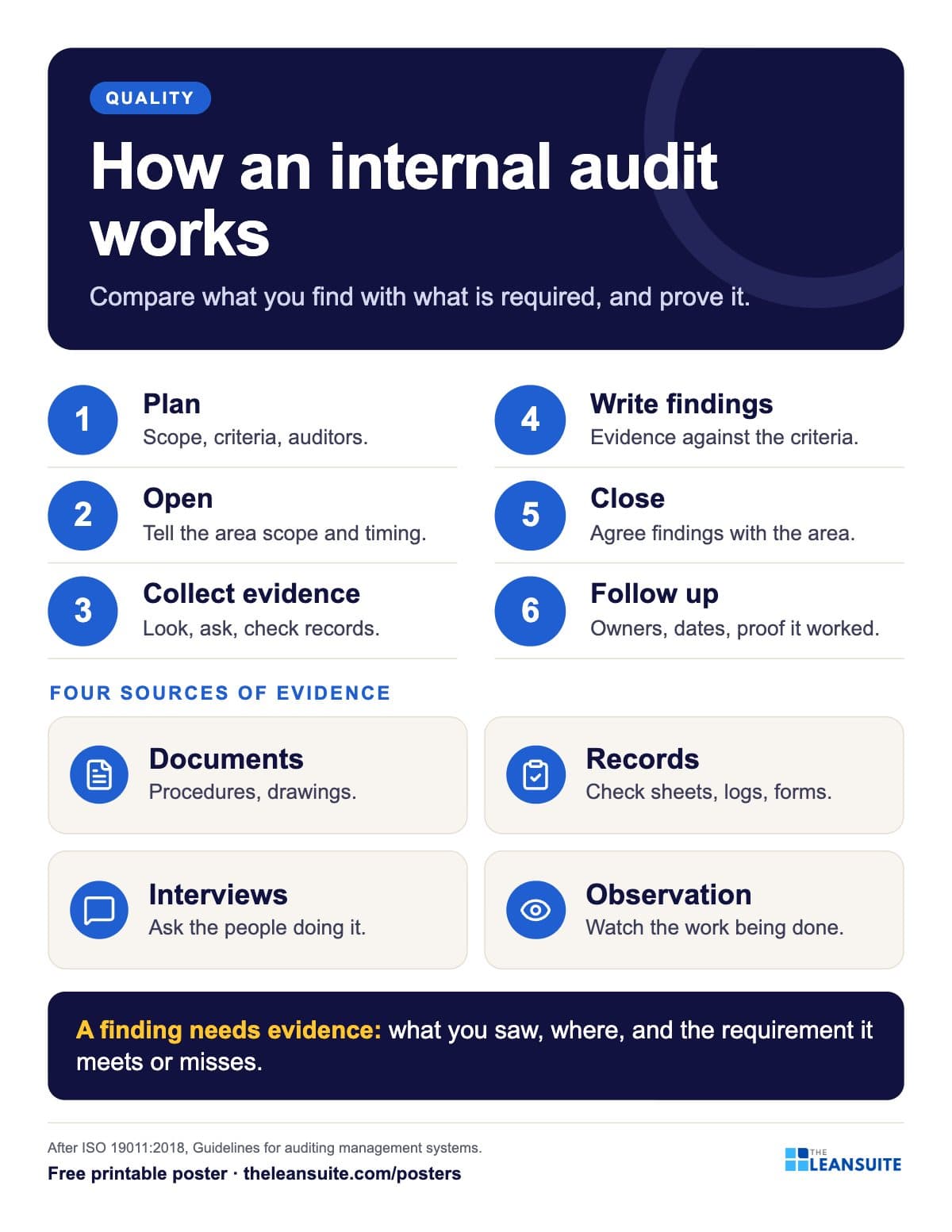 Internal audit steps poster
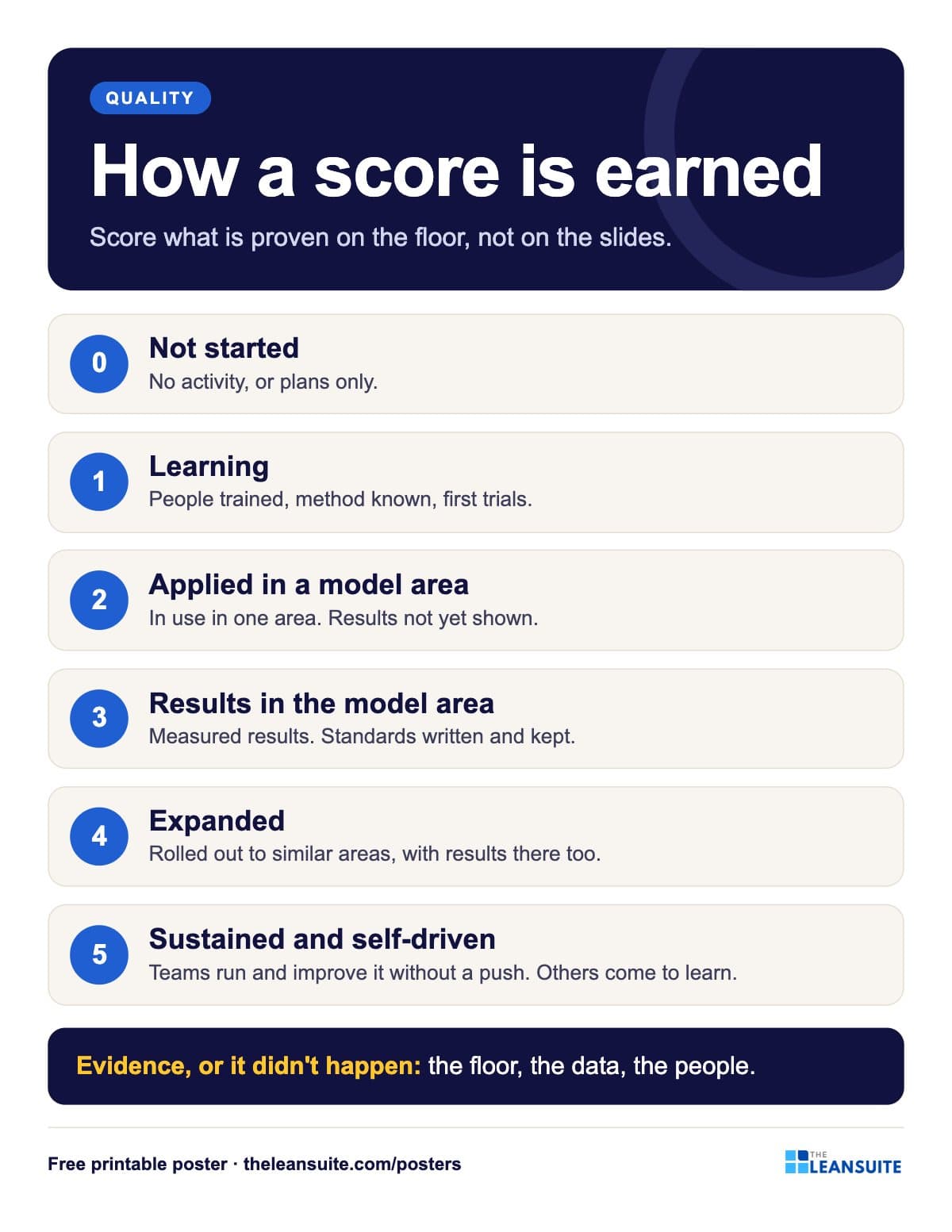 Audit score 0 to 5 poster
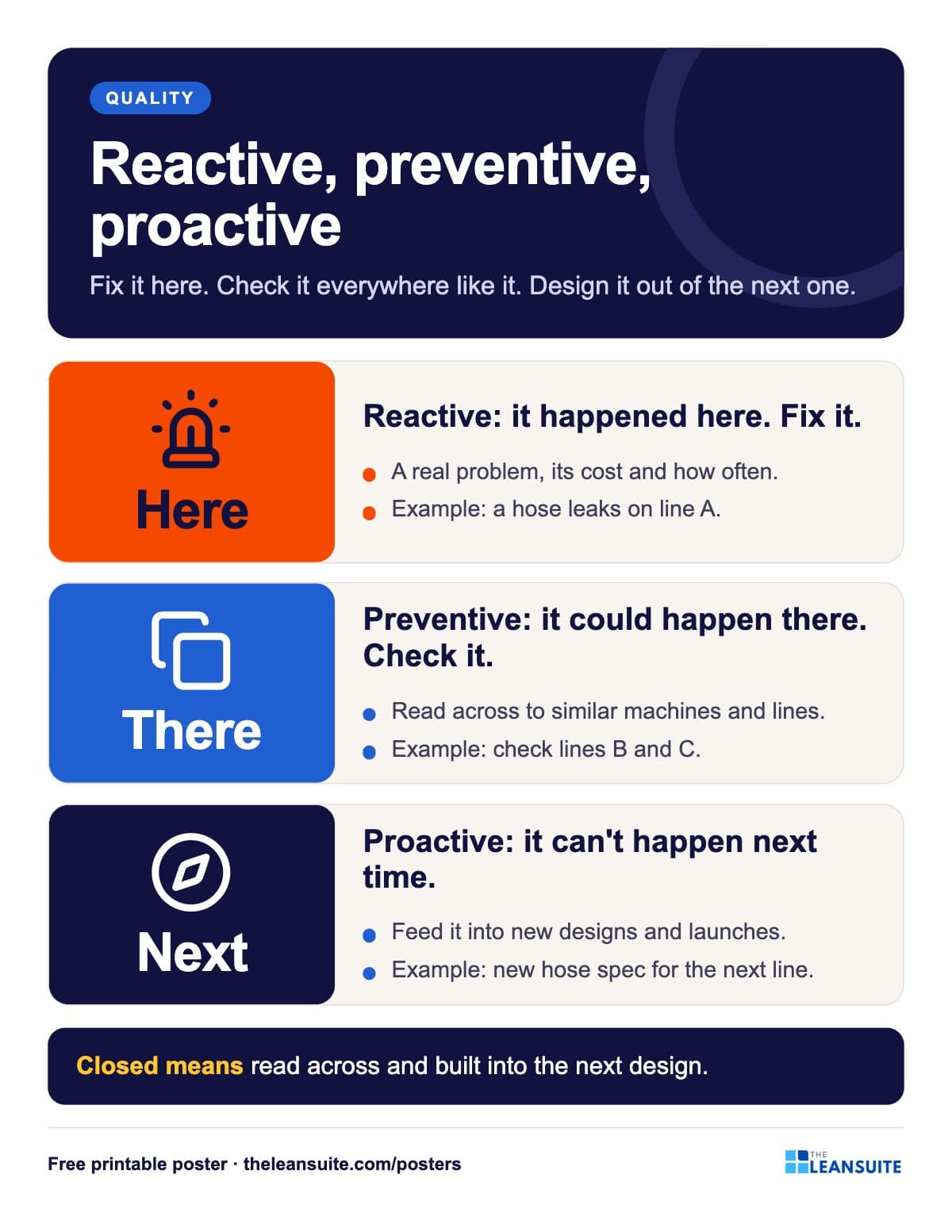 Reactive, preventive, proactive poster
A poster reminds. A routine makes it stick.
See how plants run their audits, improvements and follow-ups in LeanSuite, on a call built around your own problem.
Book a 45-minute demo