

Lean and CI poster
Updated · Free to print and share
Bottleneck five focusing steps poster
The bottleneck, or constraint, is the step that limits how much the whole line or plant can make. Eliyahu Goldratt's theory of constraints manages it in five focusing steps: identify the constraint, exploit it so it never loses time, subordinate every other step to its pace, raise its capacity only after that, and repeat when the constraint moves. This poster gives the five steps in plain words, with the line from The Goal that explains why they matter.
Download the poster
The PNG is free to download now. The print-ready vector PDFs open after a short form, once.
Free to print and share with your team. Enter your name and work email once to download.
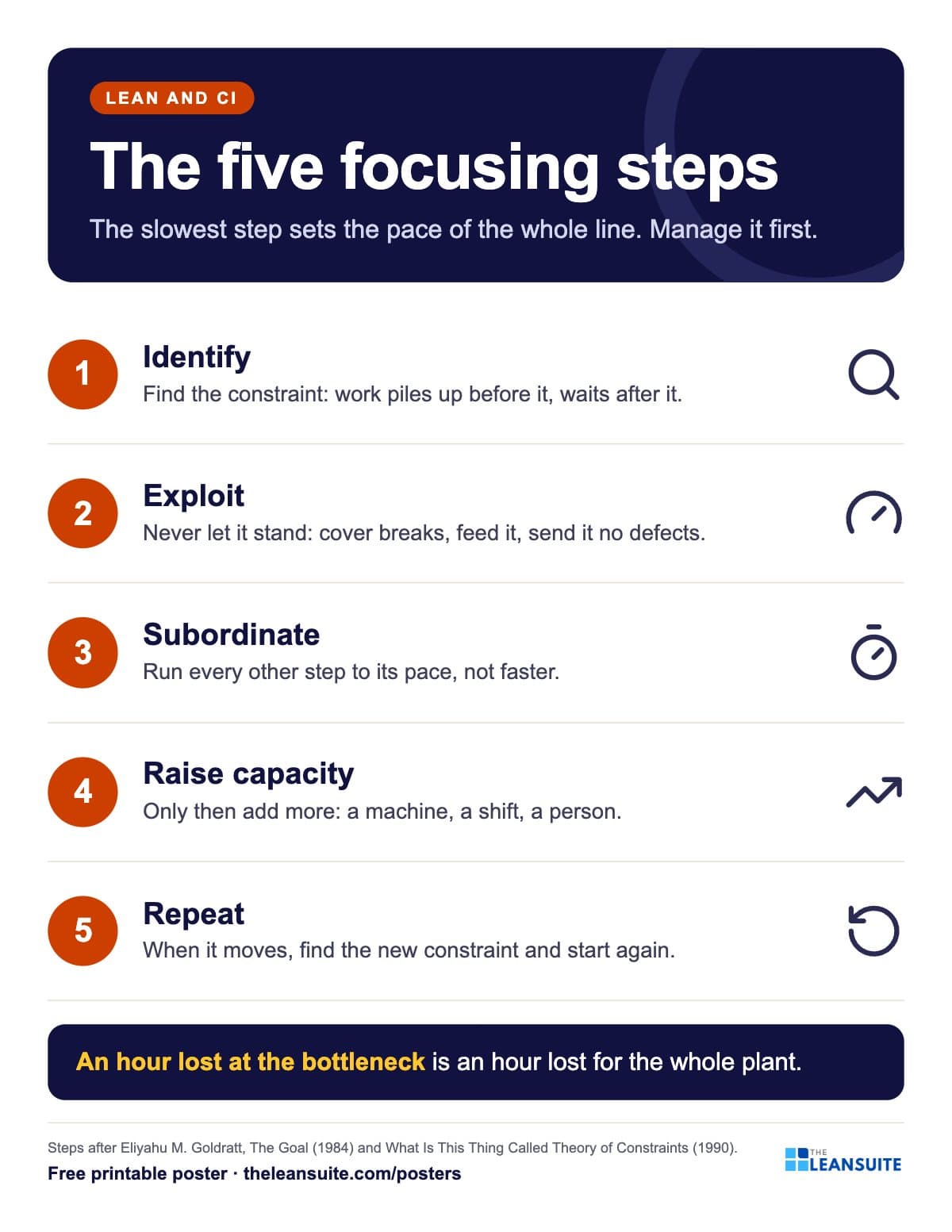 Five numbered steps from identify to repeat, each with an icon, and a band saying an hour lost there is lost for the whole plant.
The words on the poster
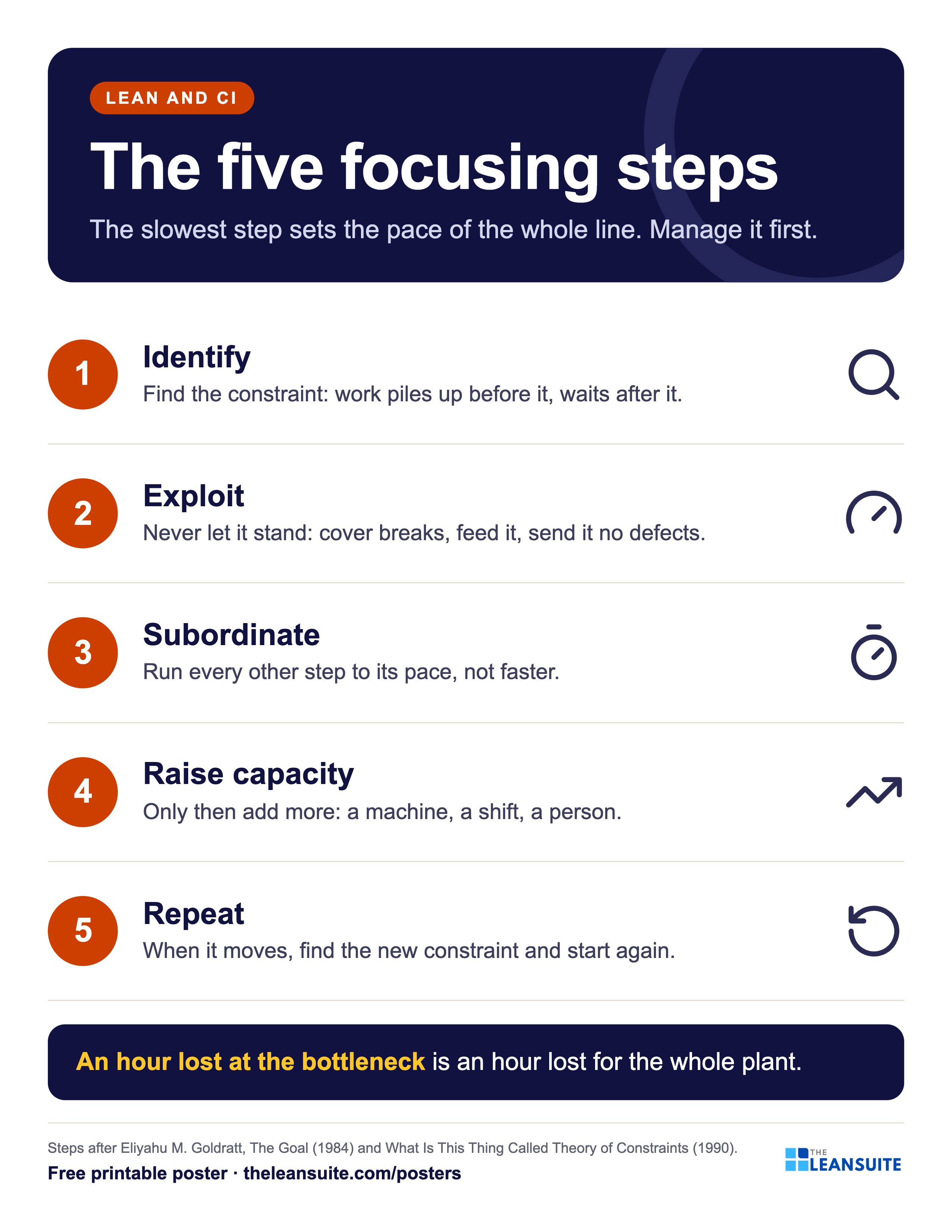
The five focusing steps
The slowest step sets the pace of the whole line. Manage it first.
- Identify Find the constraint: work piles up before it, waits after it.
- Exploit Never let it stand: cover breaks, feed it, send it no defects.
- Subordinate Run every other step to its pace, not faster.
- Raise capacity Only then add more: a machine, a shift, a person.
- Repeat When it moves, find the new constraint and start again.
- An hour lost at the bottleneck is an hour lost for the whole plant.
Steps after Eliyahu M. Goldratt, The Goal (1984) and What Is This Thing Called Theory of Constraints (1990).
On the floor
How to use it
Putting the Bottleneck five focusing steps poster to work
- 1
Put it at the bottleneck itself, so everyone knows why it gets cover at breaks.
- 2
Use step 2 in the daily meeting: what stopped the bottleneck yesterday?
- 3
Use step 3 to stop other steps building stock in front of it.
- 4
Pair it with the free bottleneck analysis worksheet and process capacity sheet.
Which size to print
- 24 x 36 in or A2: a main wall or team board, read from a few metres away.
- 18 x 24 in or A3: a station or notice board. The A3 file also fits 11 x 17 in paper.
- Letter or A4: a clipboard, binder or handout, on any office printer.
Every PDF is vector, so it stays sharp at full size. Nothing runs to the edge of the page, so no bleed is needed.
Sources and notes
- Eliyahu M. Goldratt and Jeff Cox, The Goal: A Process of Ongoing Improvement (North River Press, 1984).
- Eliyahu M. Goldratt, What Is This Thing Called Theory of Constraints and How Should It Be Implemented? (North River Press, 1990): the five focusing steps.
Templates, decks and guides to go with it
- Bottleneck analysis worksheetEffective capacity per station from cycle time, parallel units, availability and yield, the bottleneck, takt and utilization, a queue cross-check and the five focusing steps.
- Process capacity sheet templateEach machine in a part's routing with manual, auto and tool change time, its capacity per shift, and the step that limits the cell against demand.
- Time study sheetTime each element over 10 cycles and work out the average, lowest repeatable and standard time. Excel does the sums.
- Topic: Value stream mapping and flowEvery guide we have on the subject, sorted.
More lean and ci posters
All posters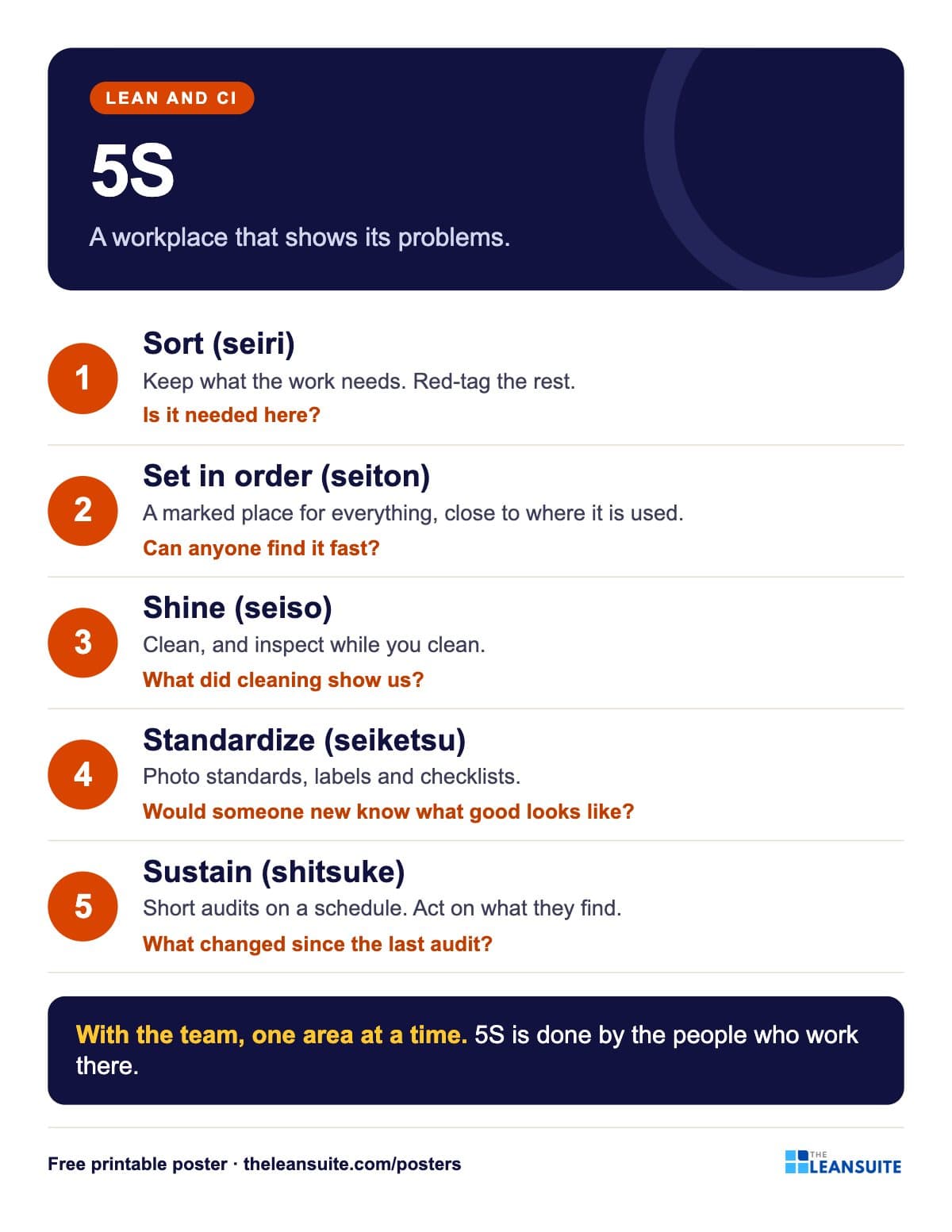 5S poster
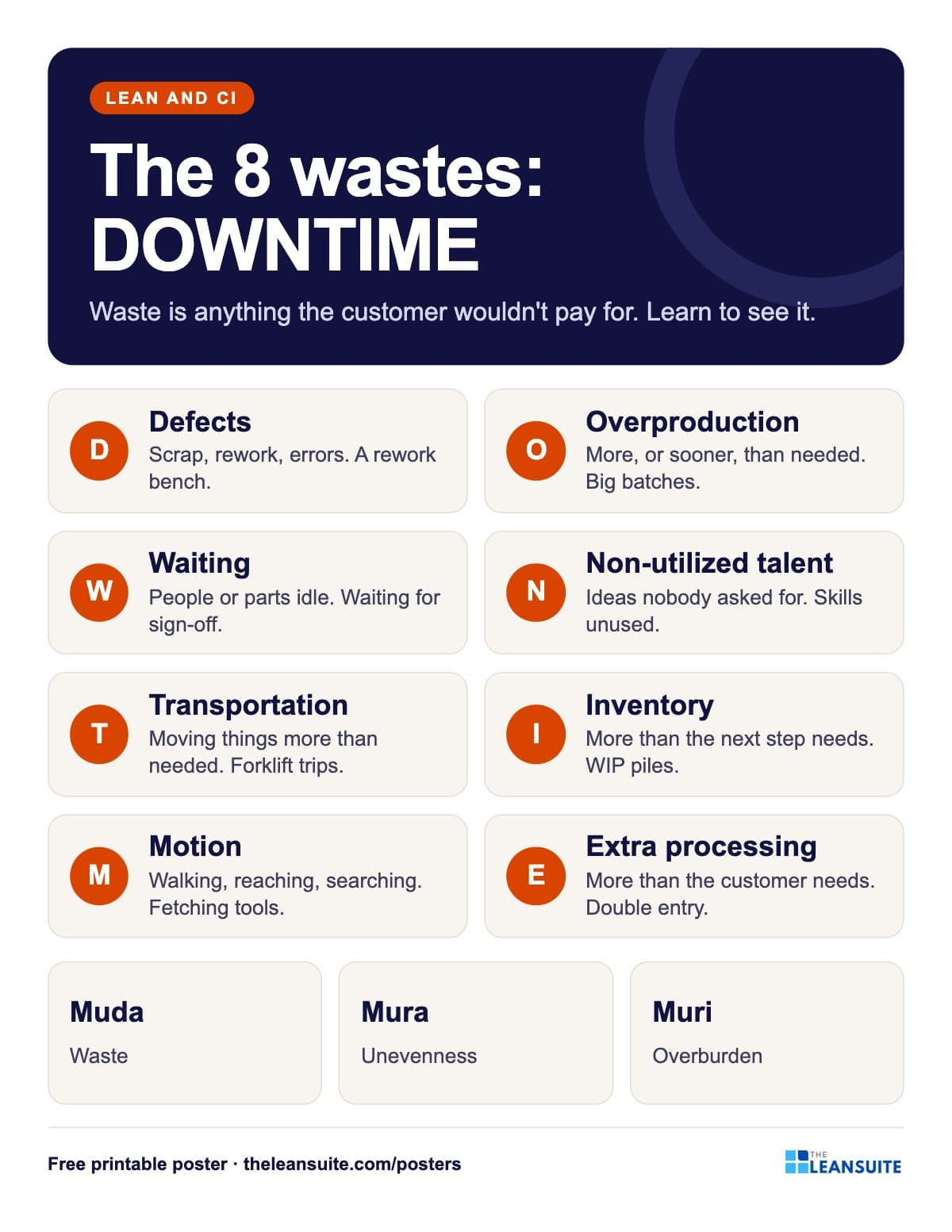 8 wastes of lean poster (DOWNTIME)
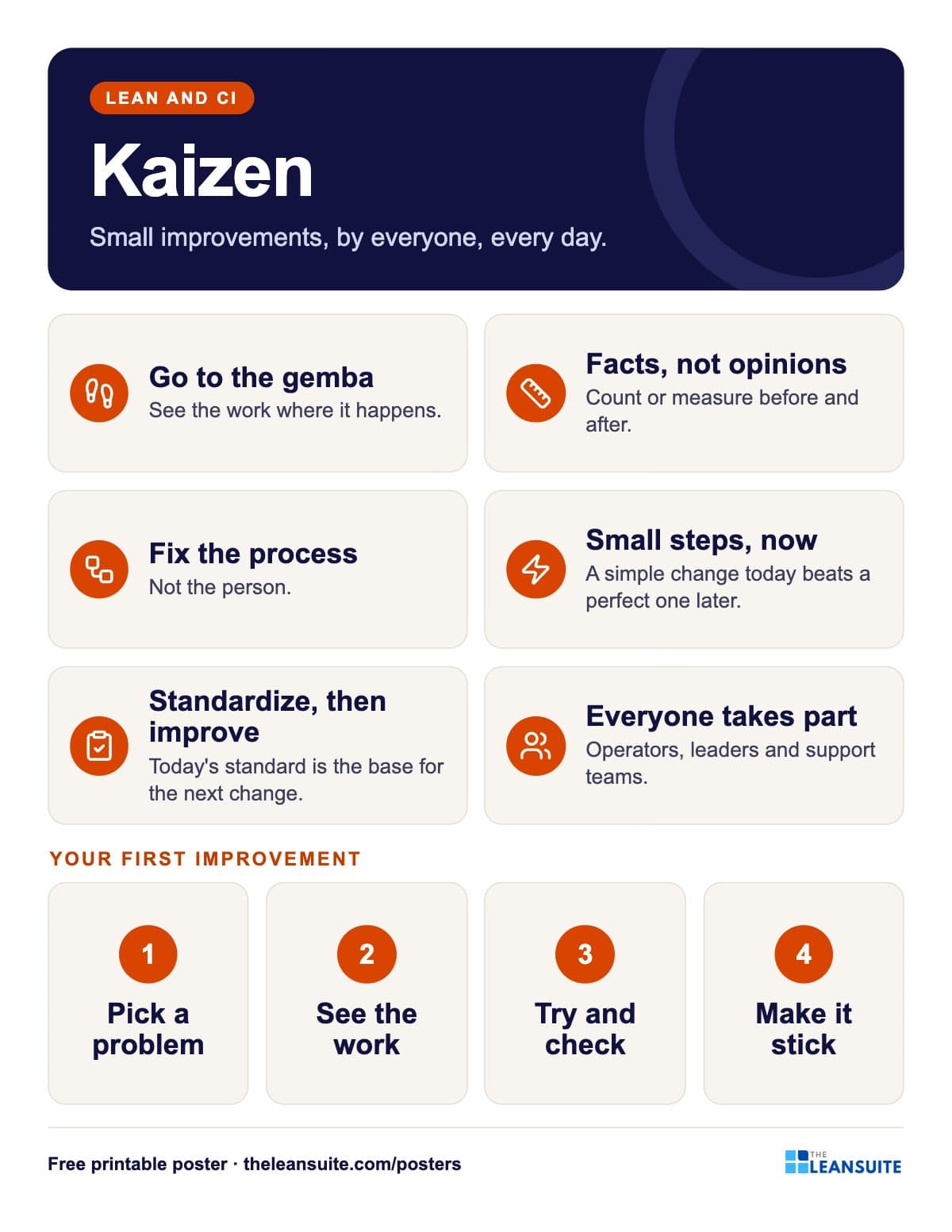 Kaizen principles poster
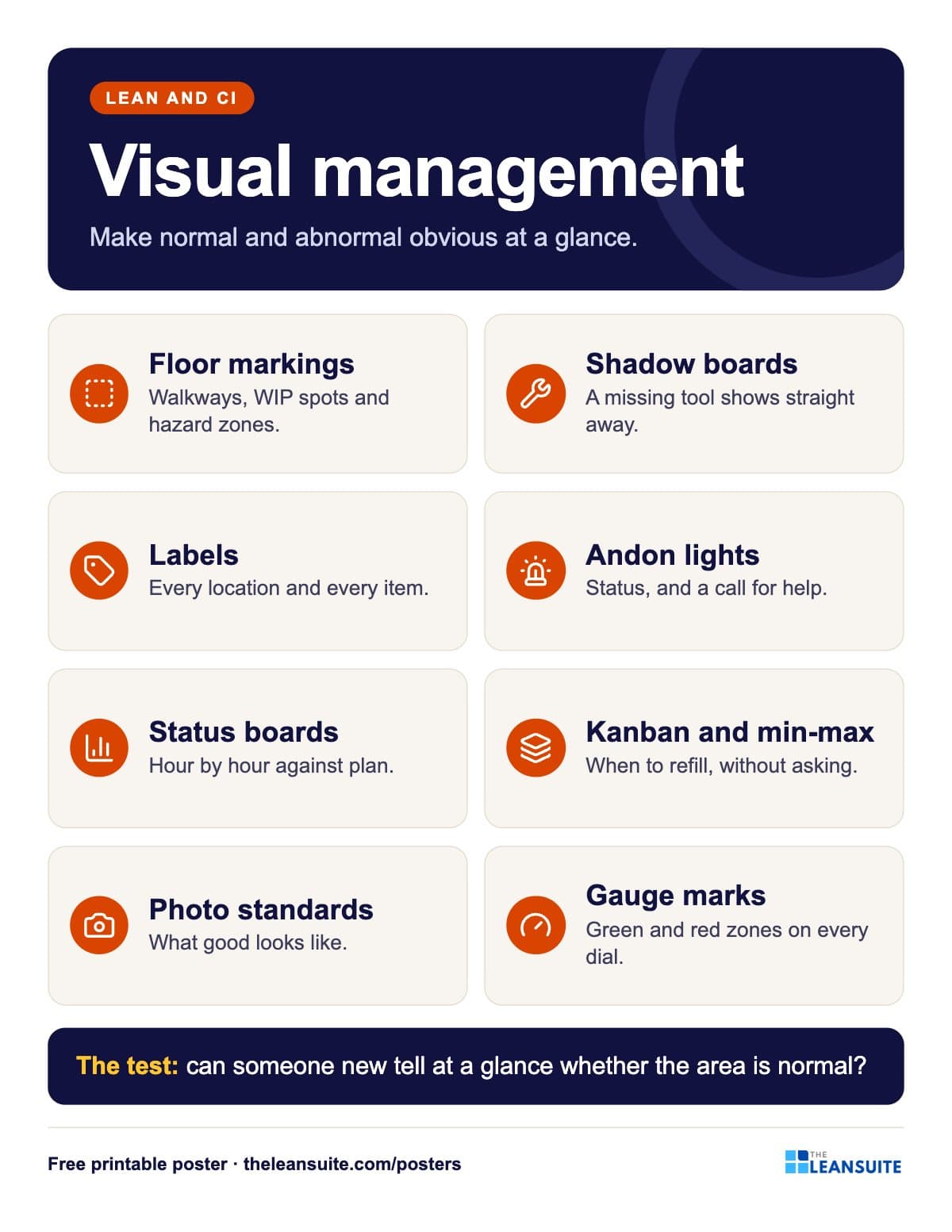 Visual management poster
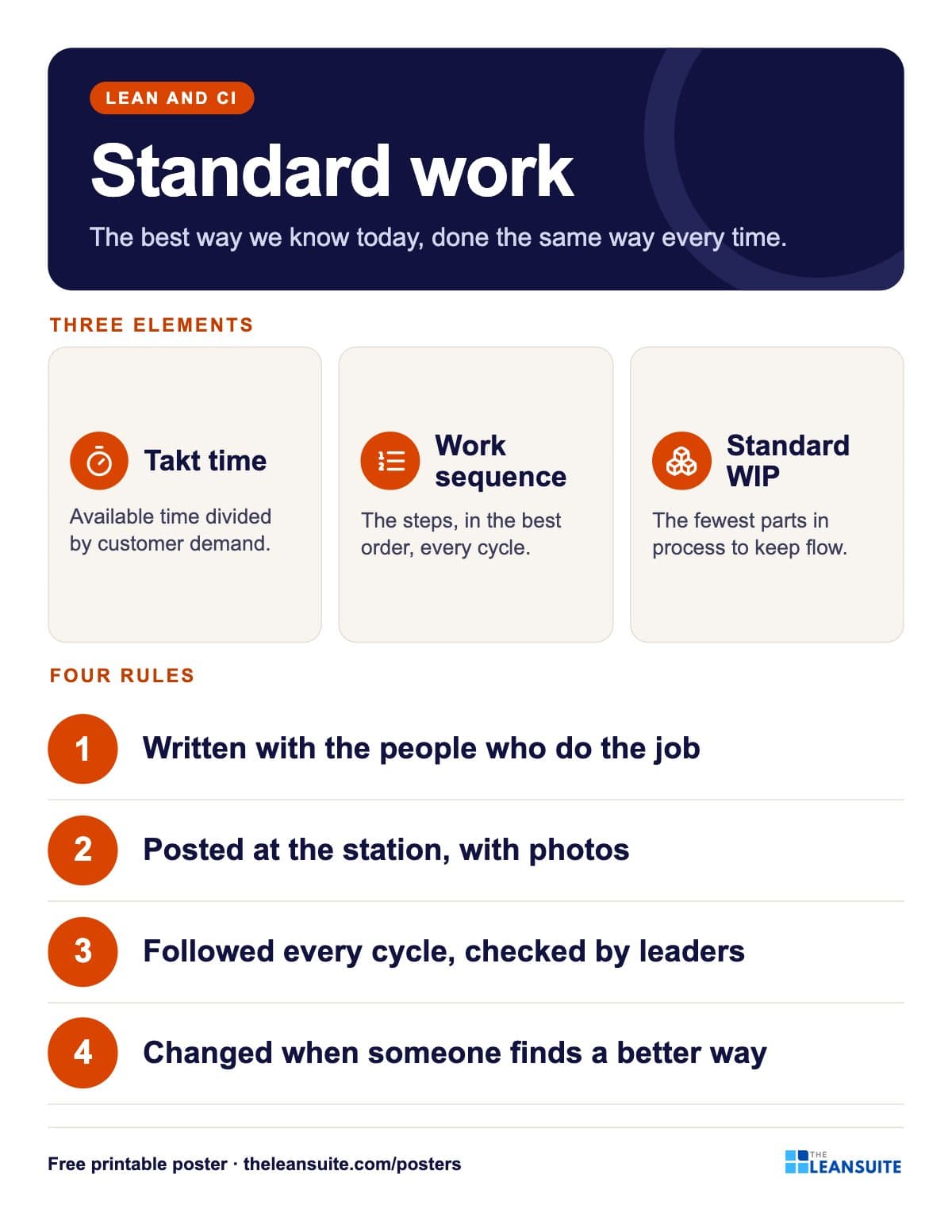 Standard work poster
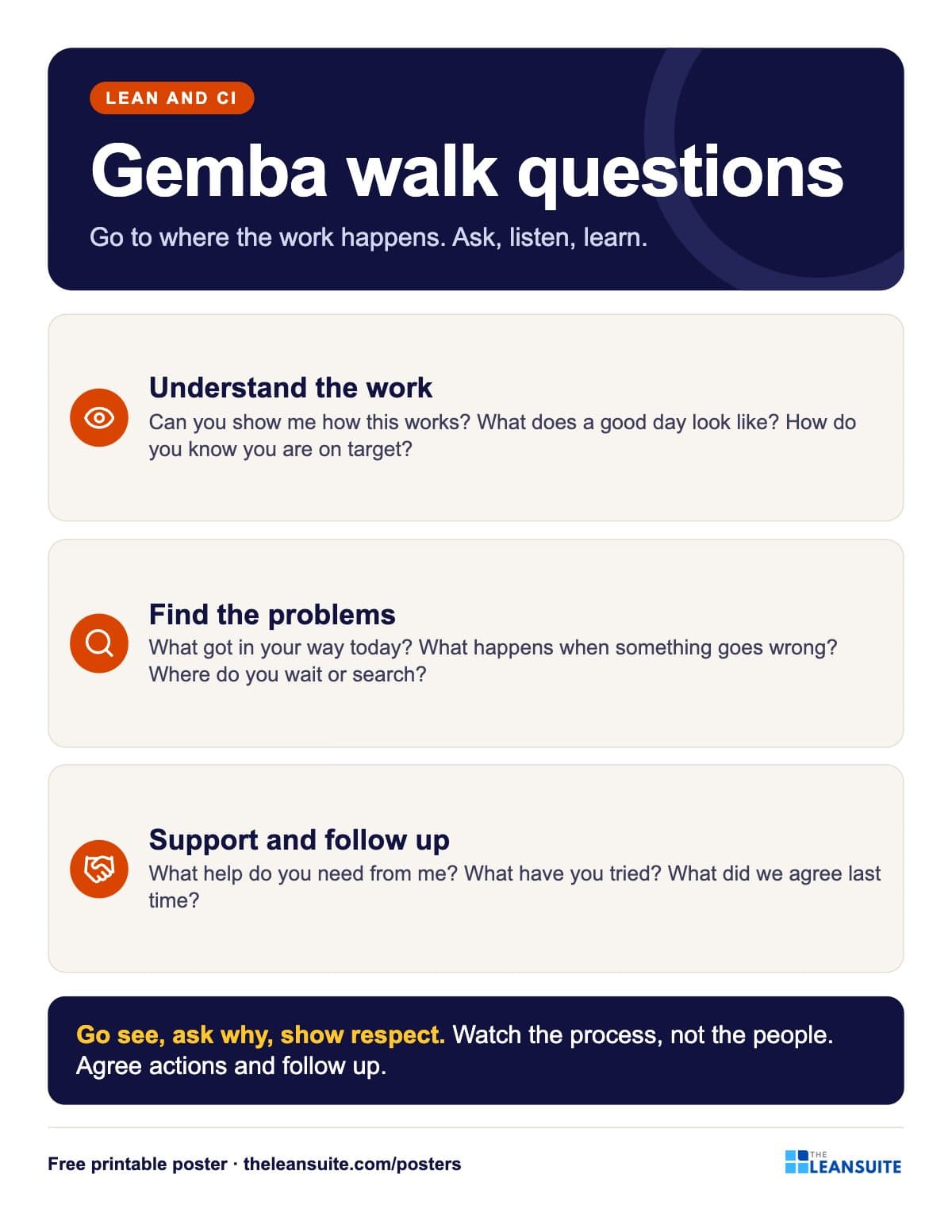 Gemba walk questions poster
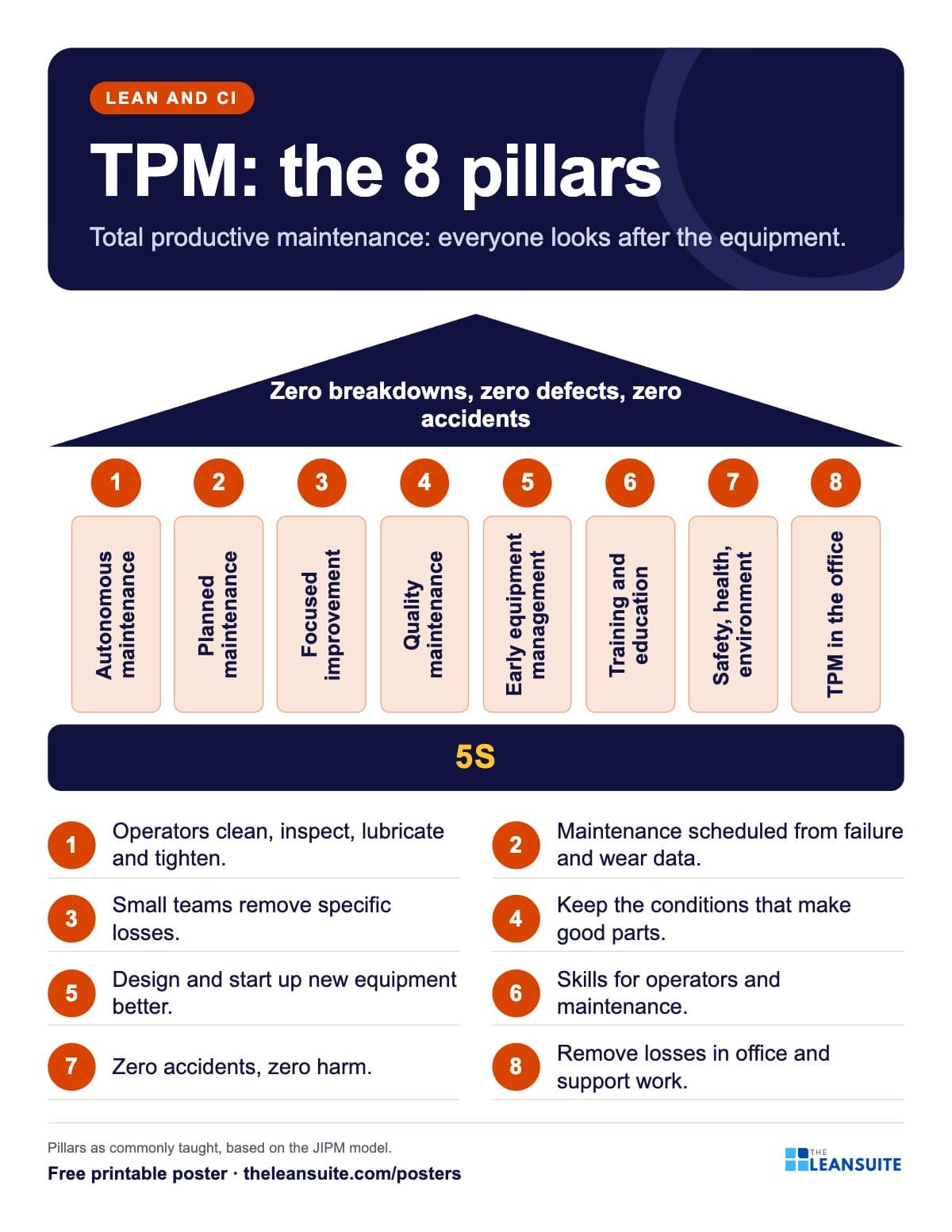 TPM 8 pillars poster
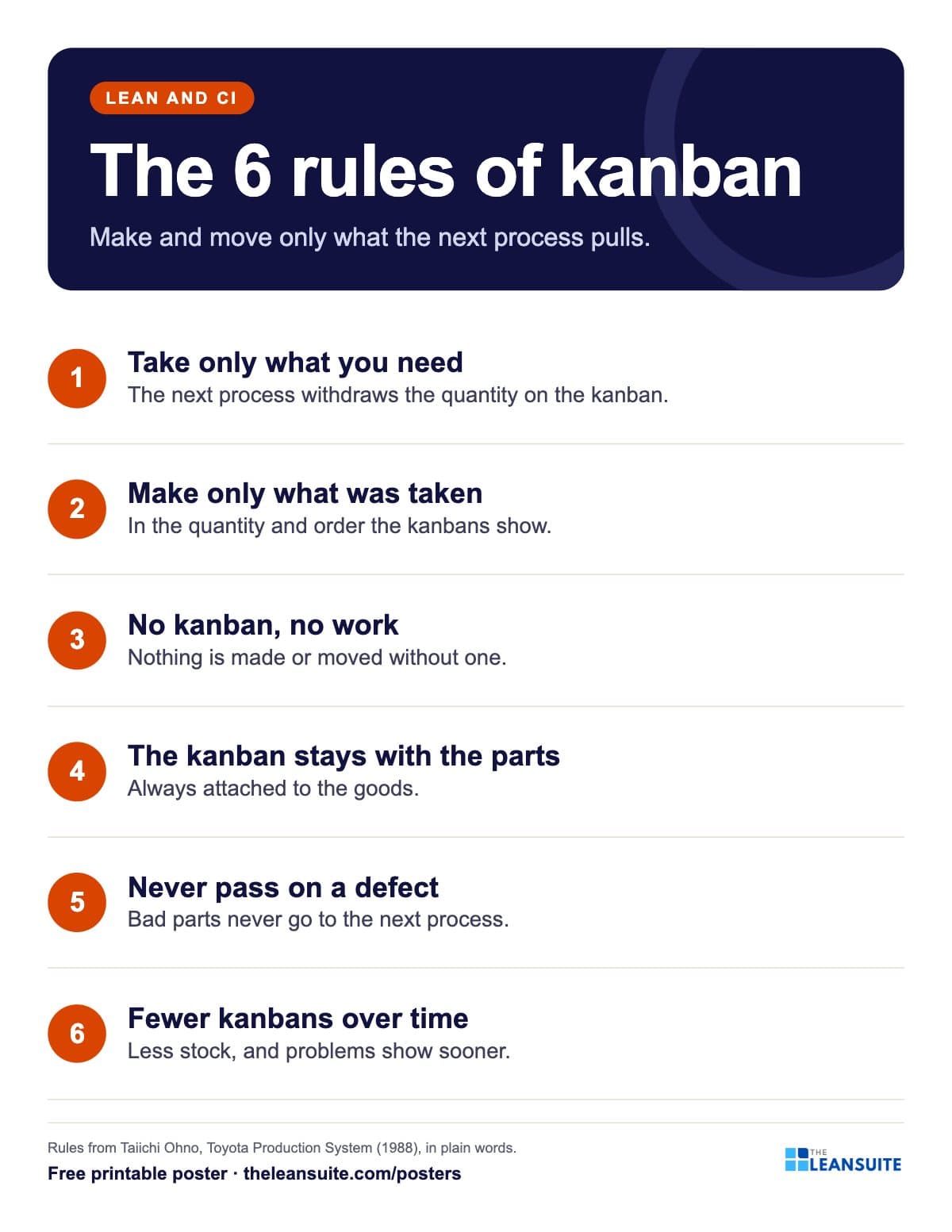 Kanban rules poster
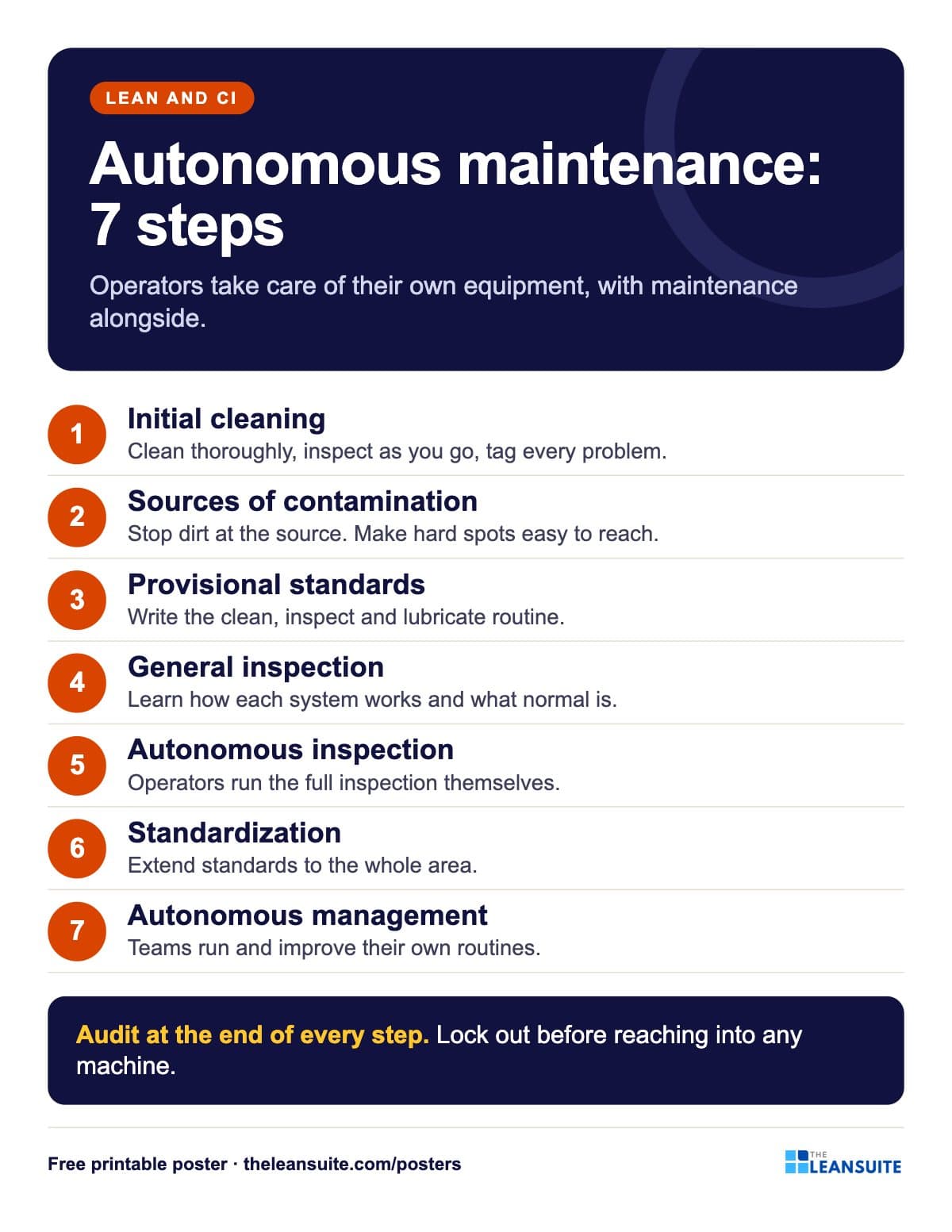 Autonomous maintenance 7 steps poster
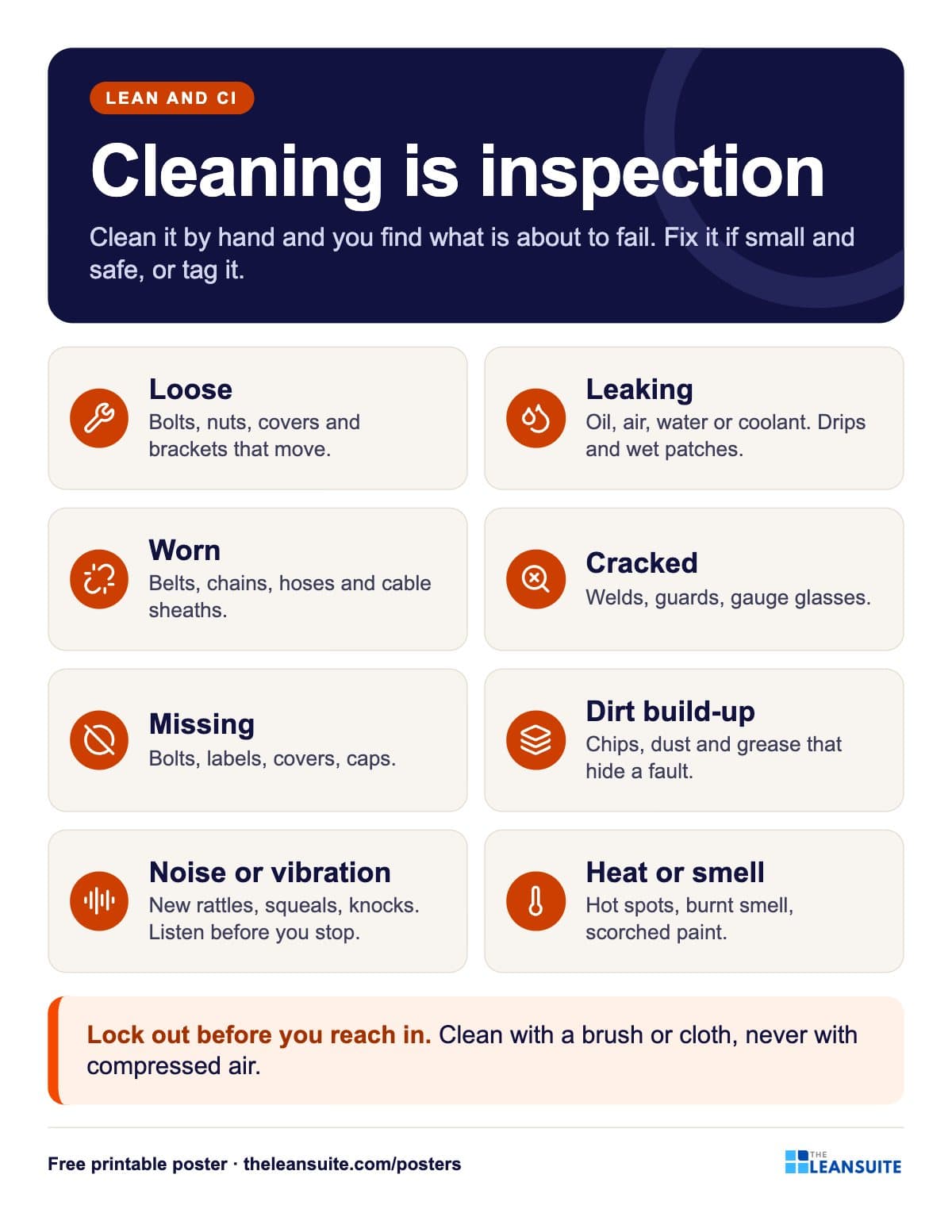 Cleaning is inspection poster
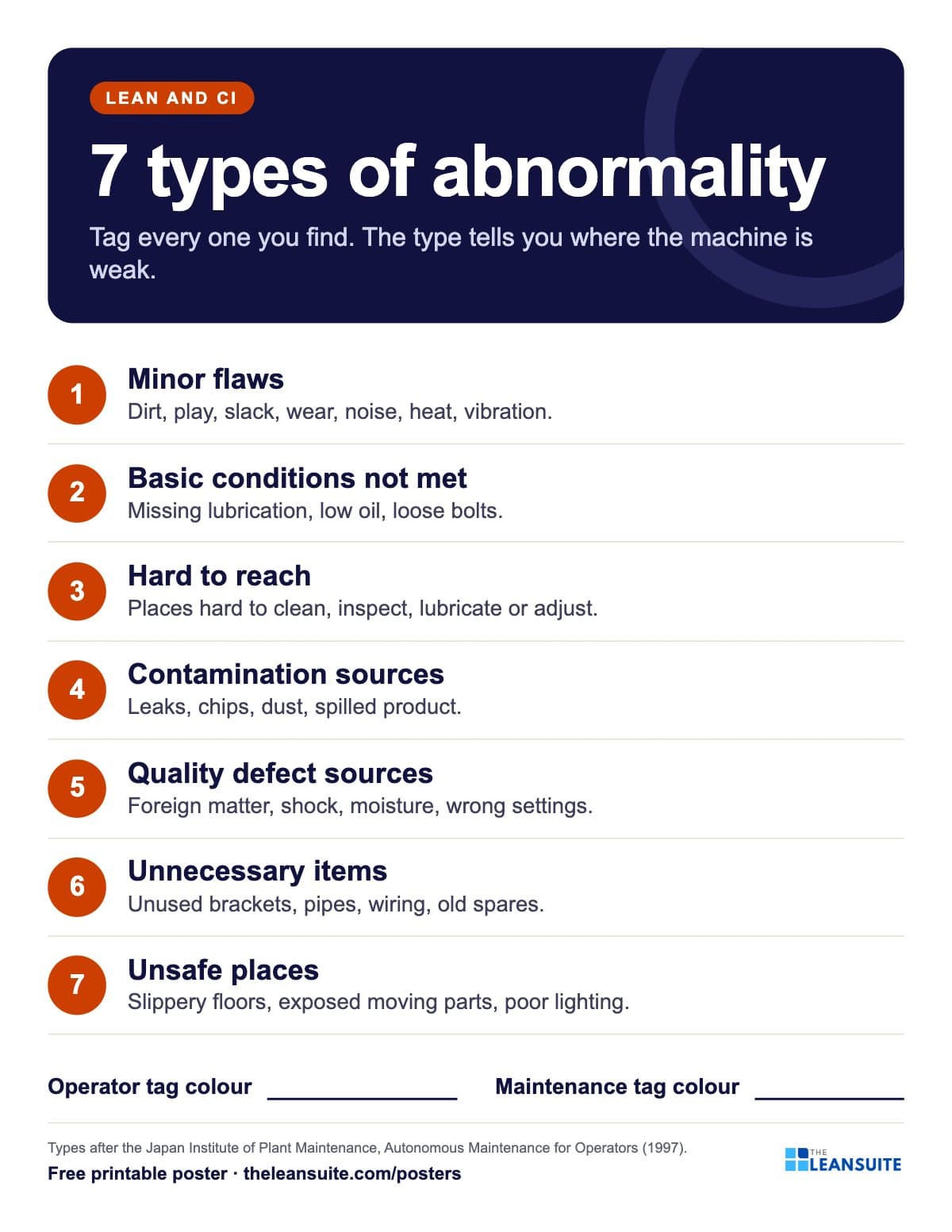 7 types of abnormality poster (TPM tags)
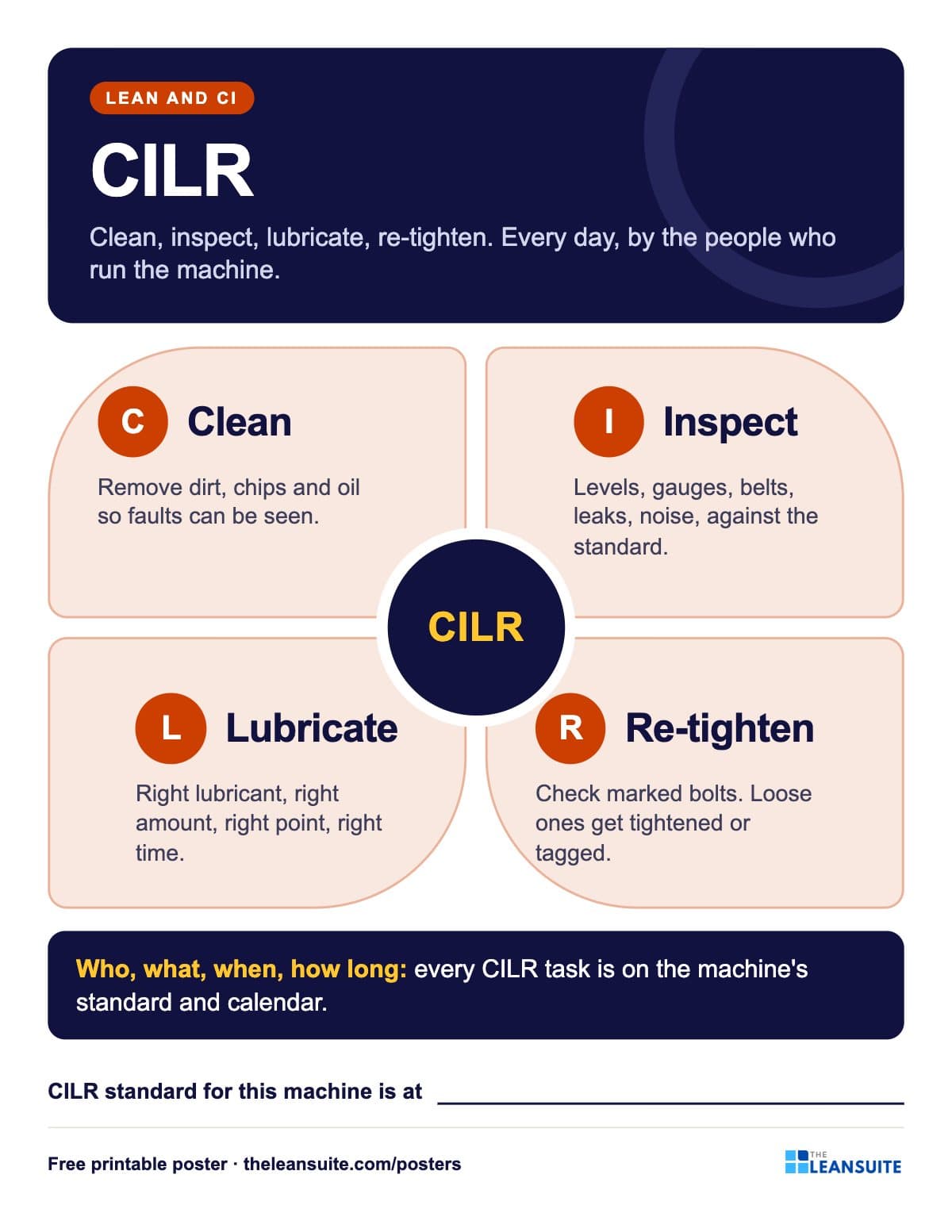 CILR poster: clean, inspect, lubricate, re-tighten
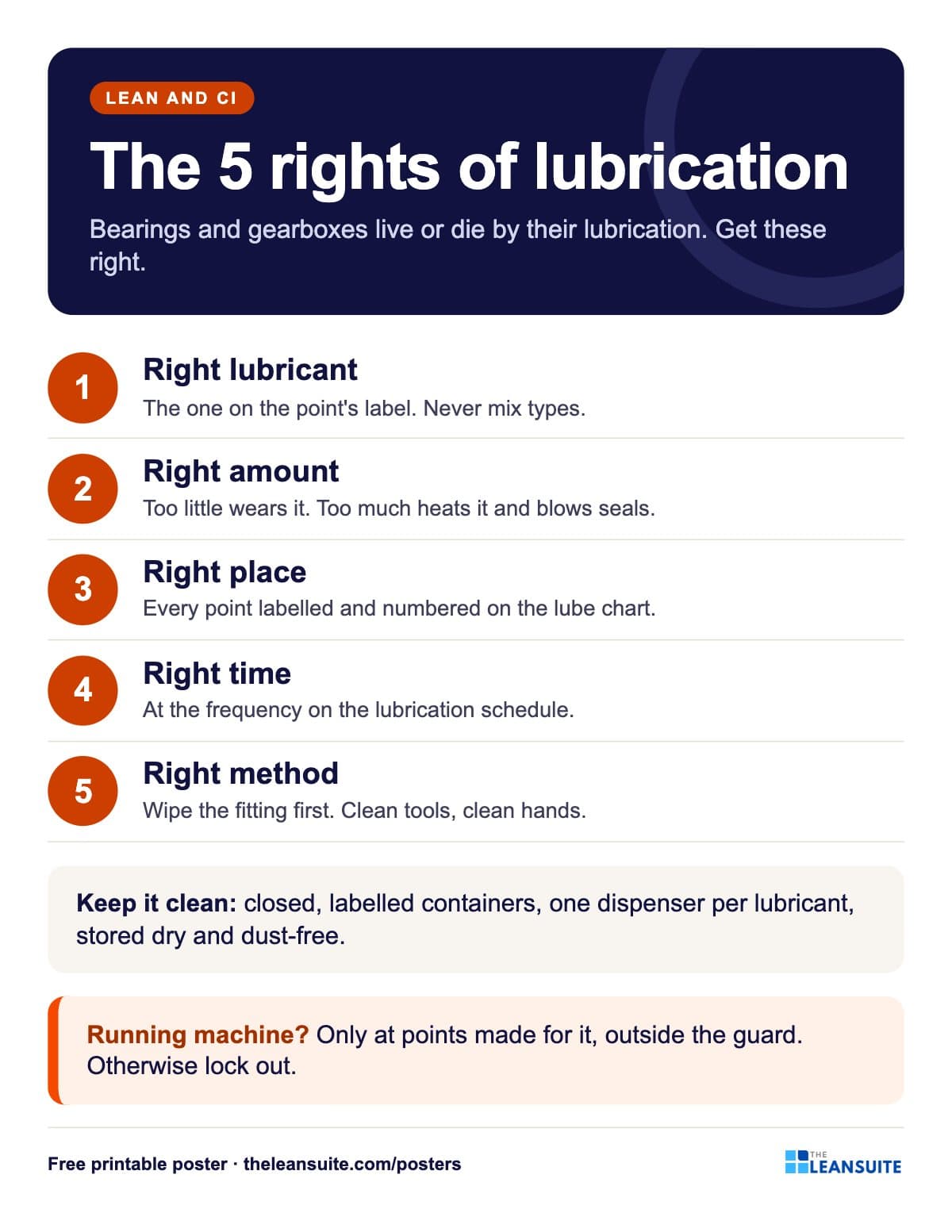 Lubrication basics poster: the five rights
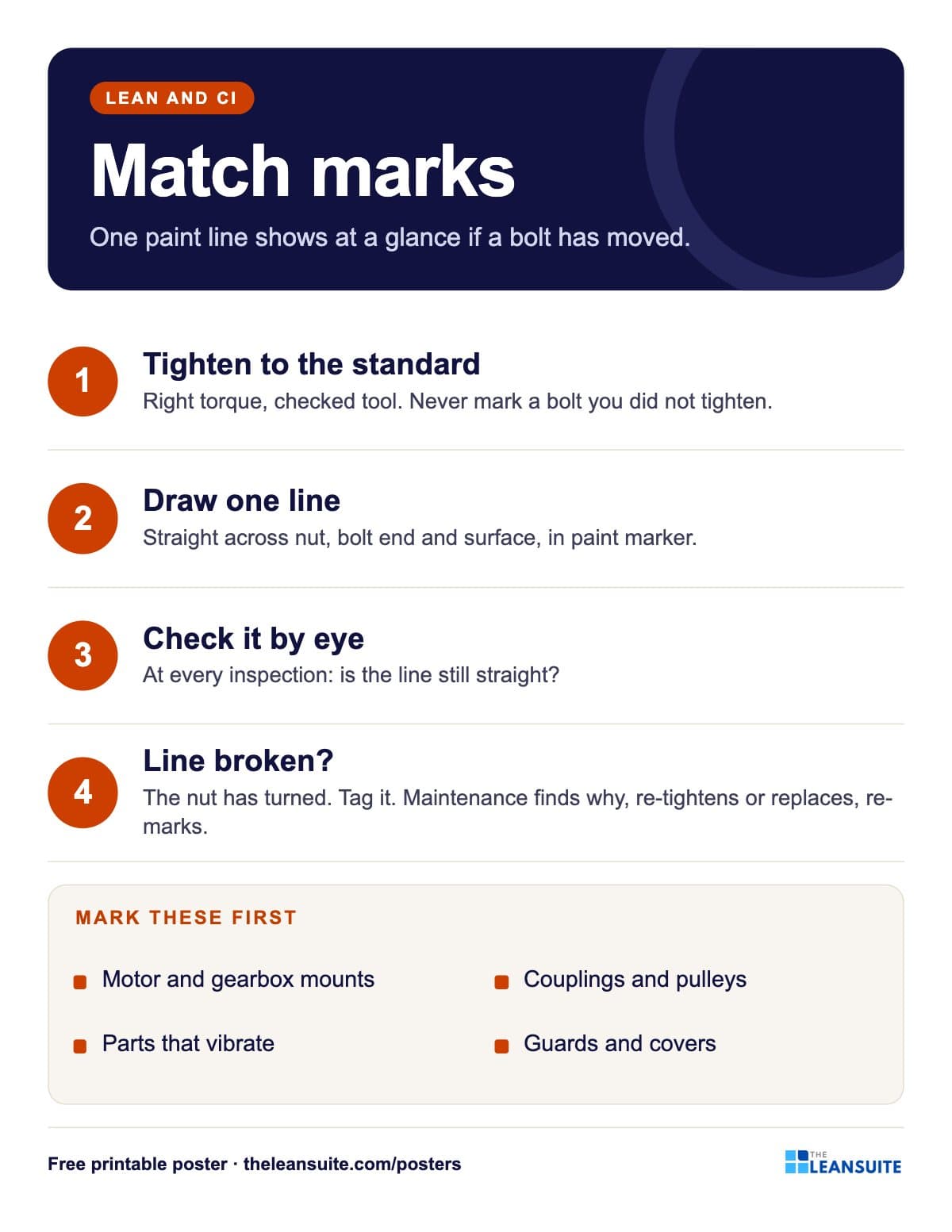 Bolt match marks poster
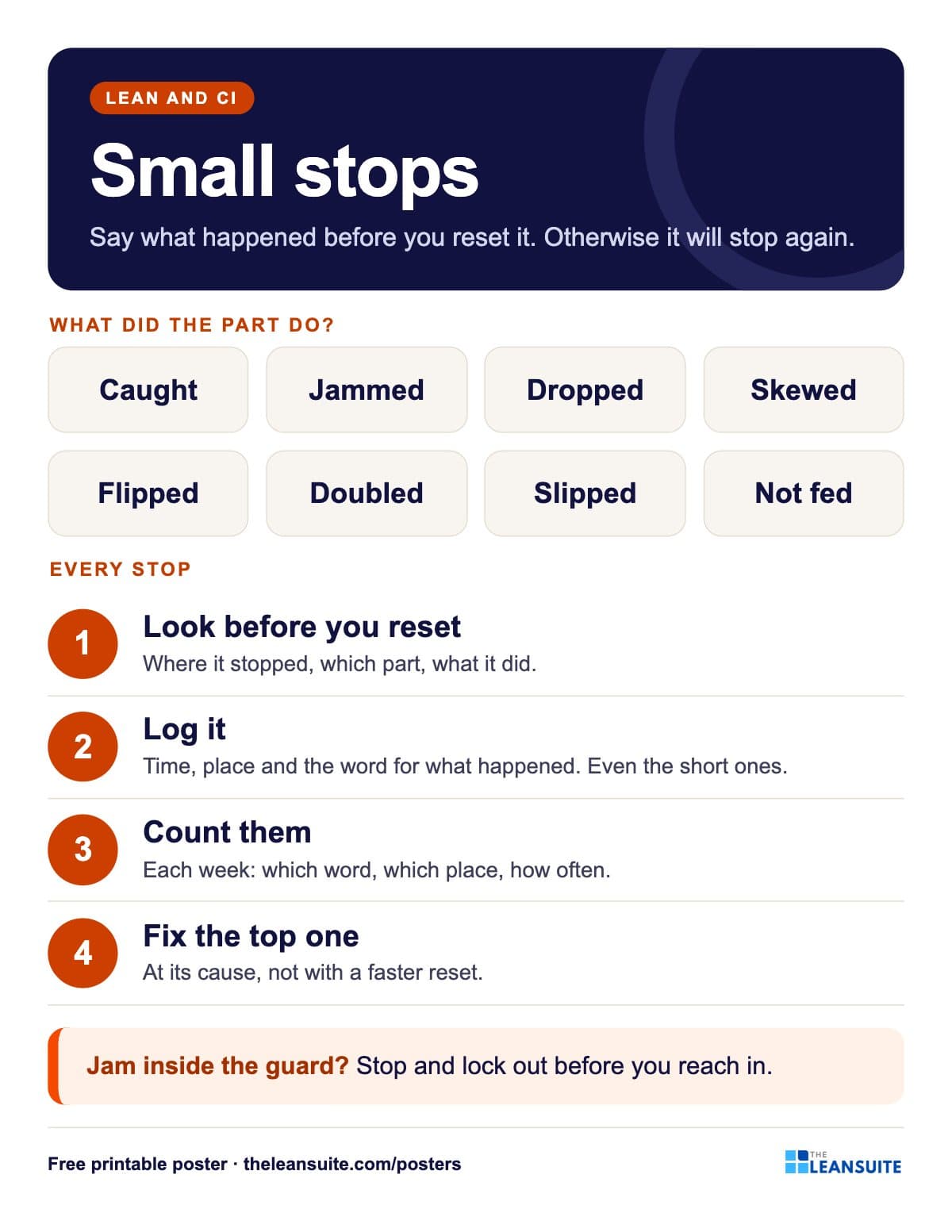 Small stops poster
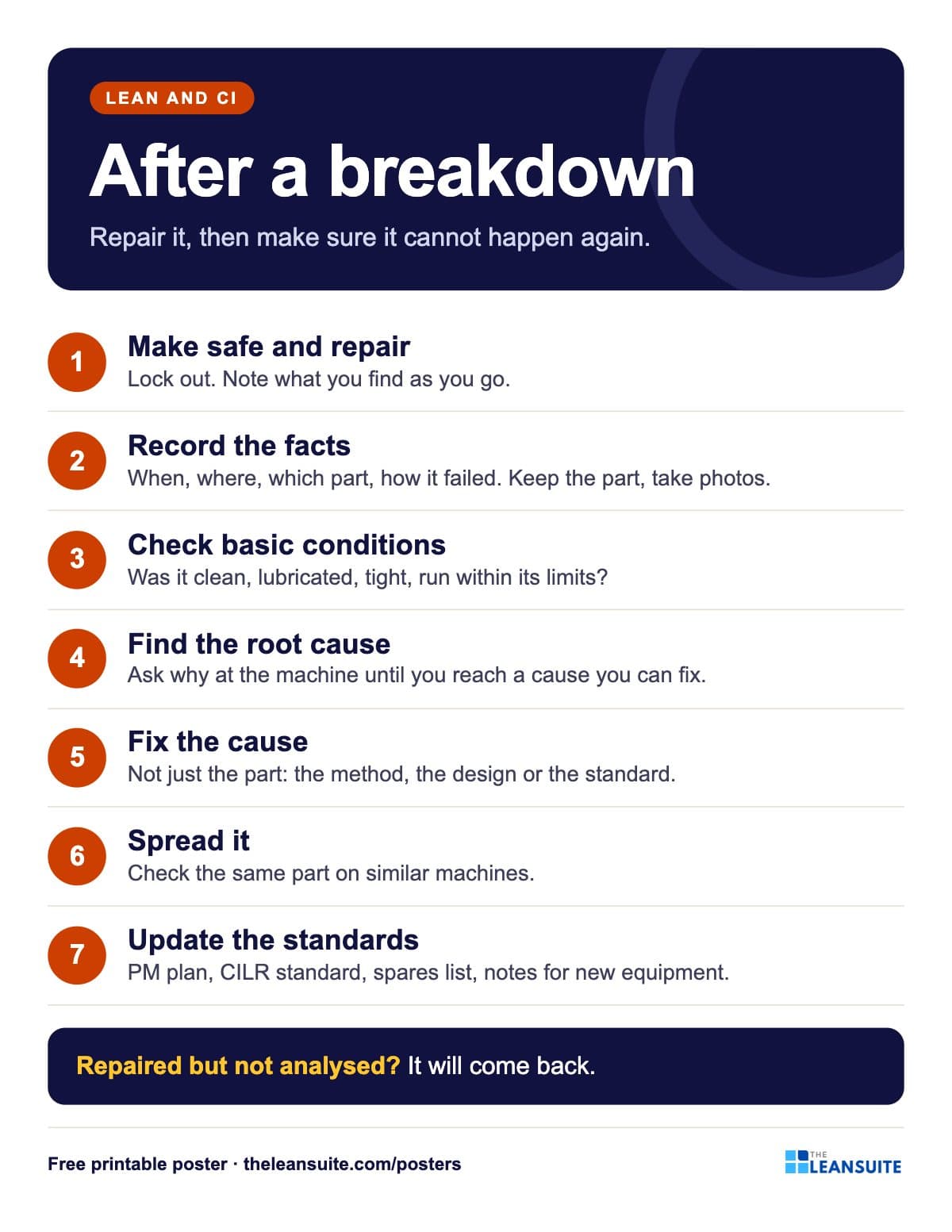 Breakdown analysis poster
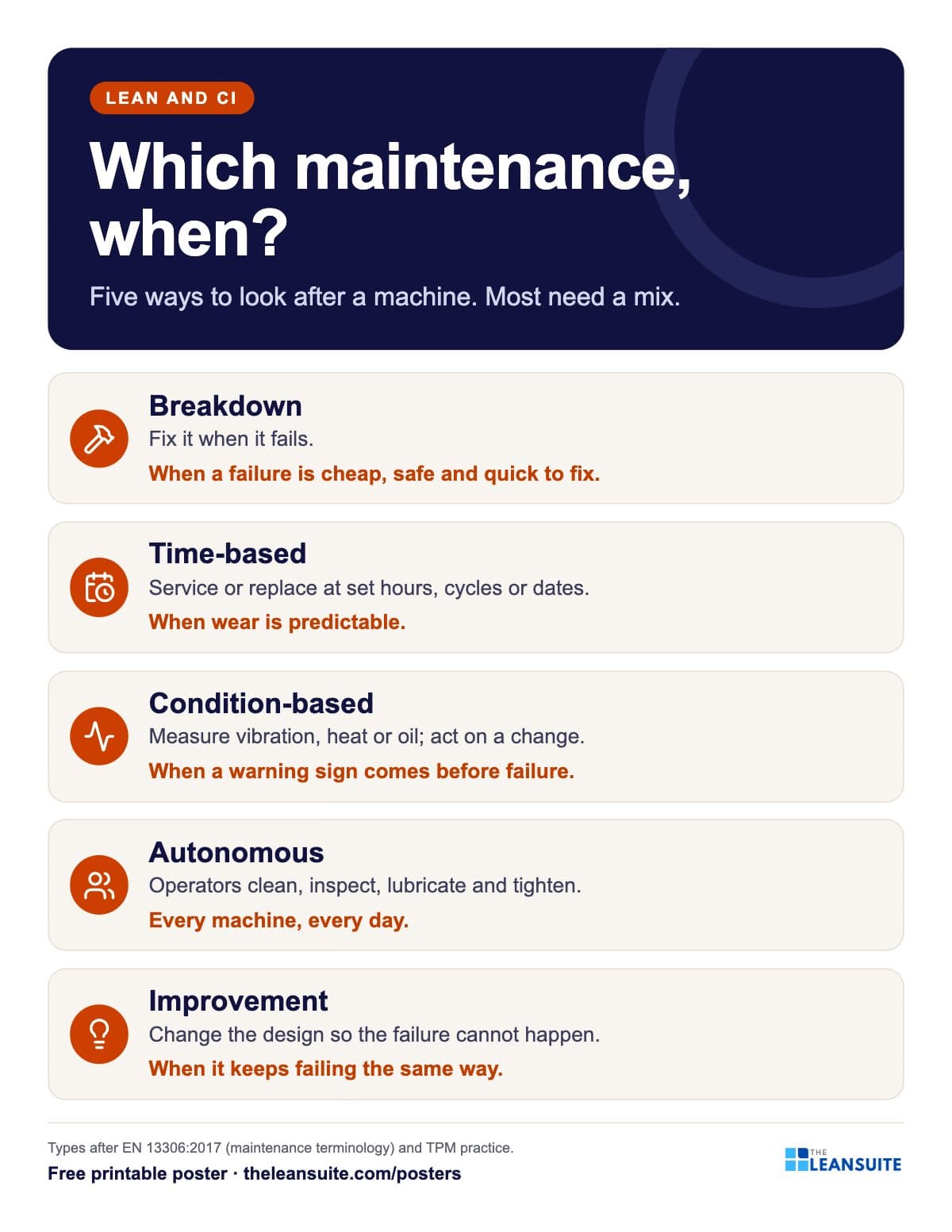 Types of maintenance poster
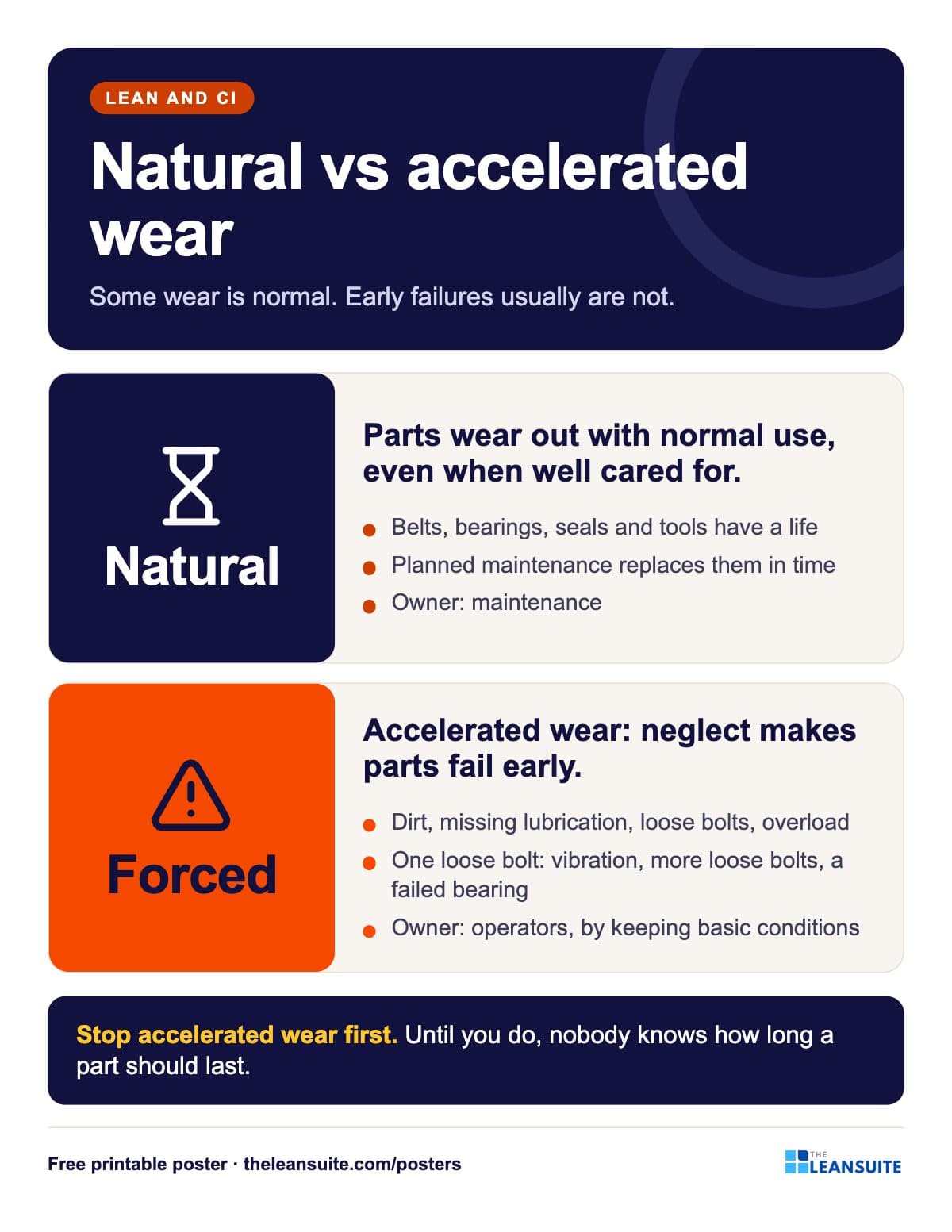 Natural vs accelerated wear poster
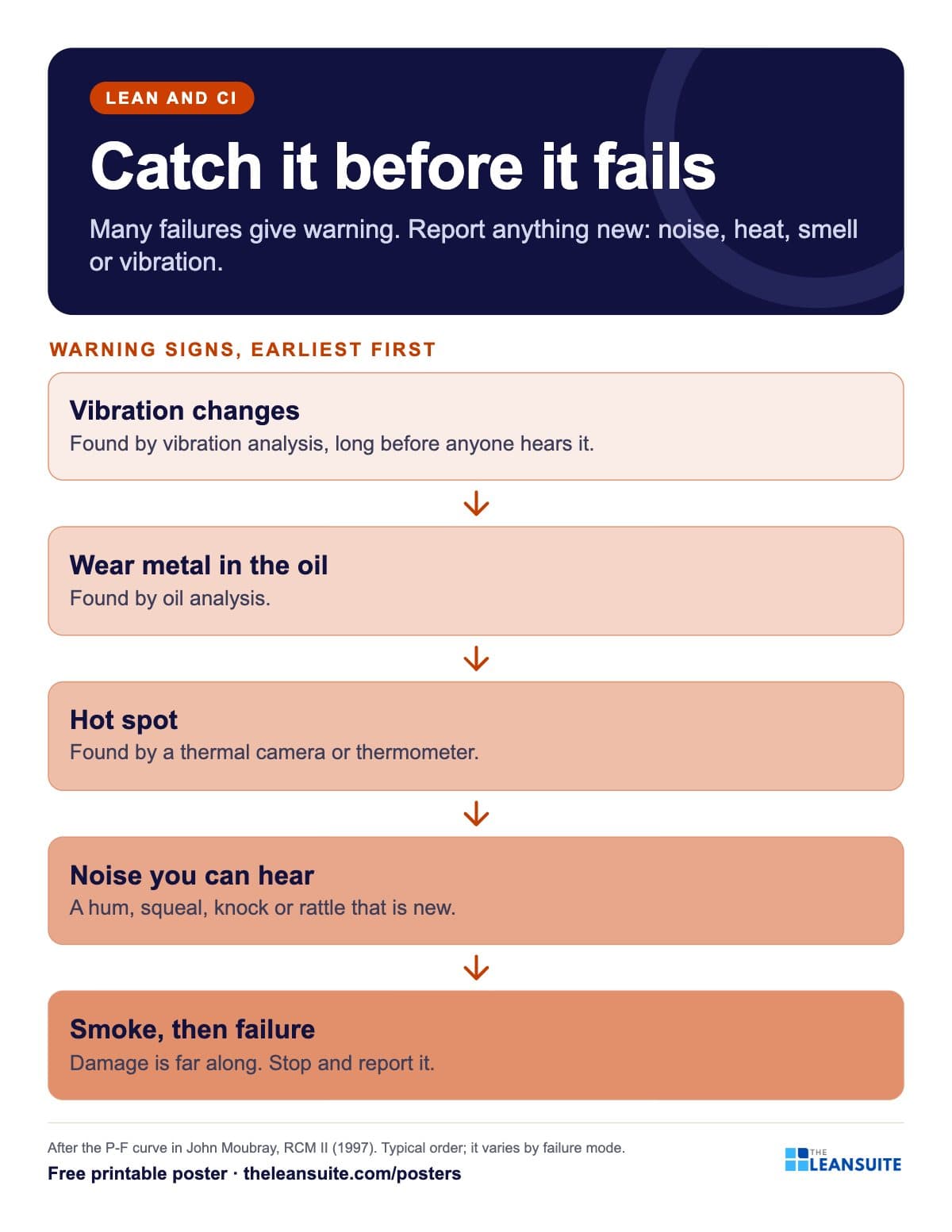 Failure warning signs poster (P-F curve)
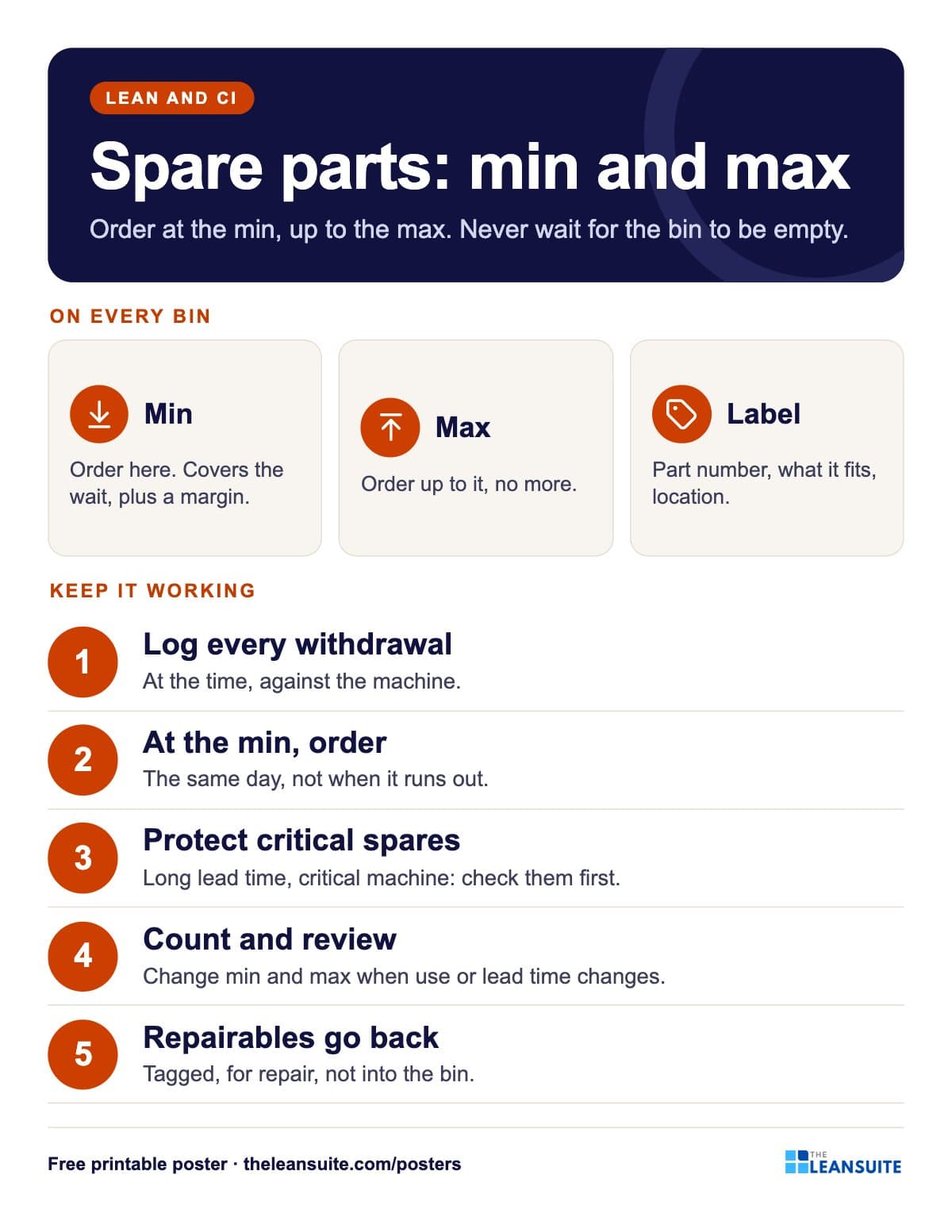 Spare parts min/max poster
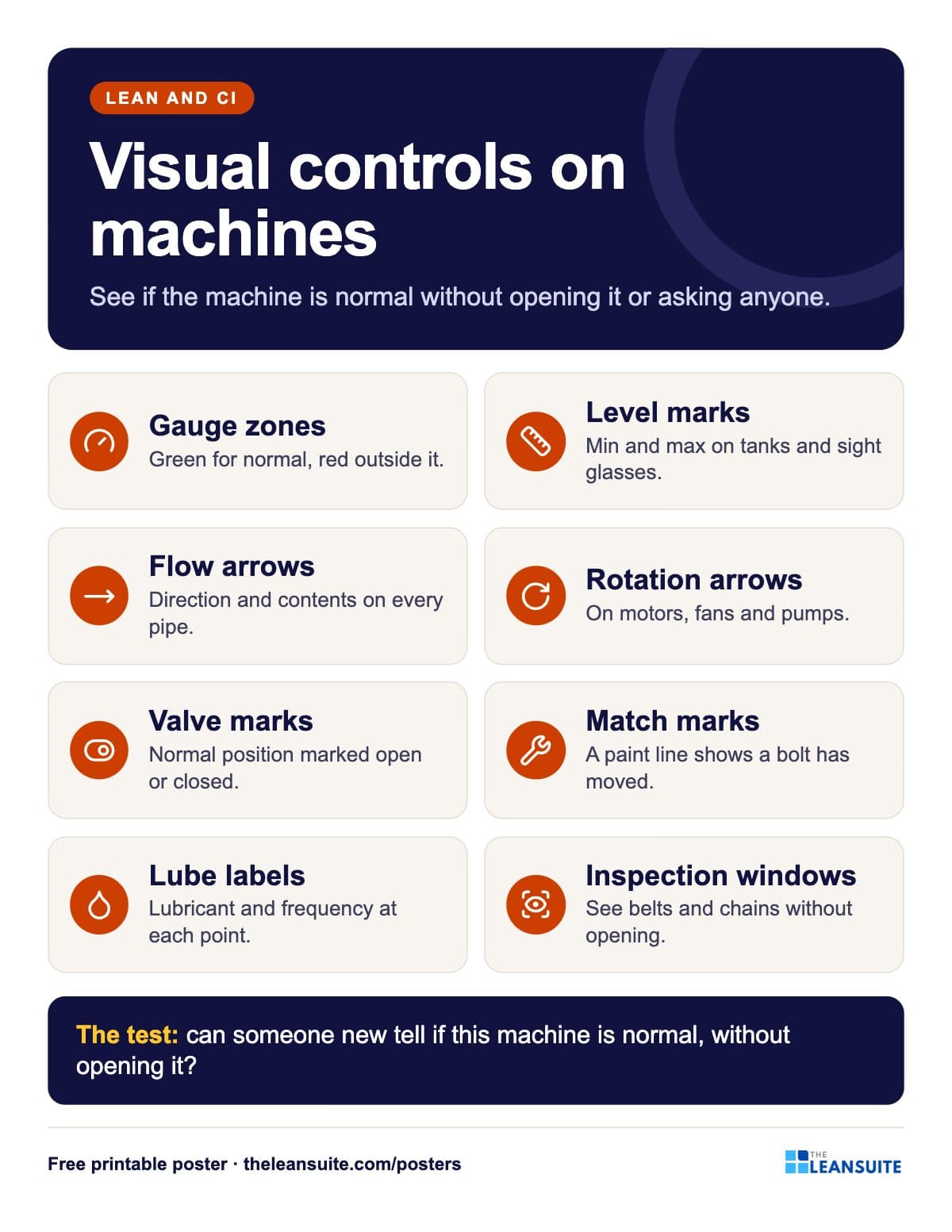 Machine visual controls poster
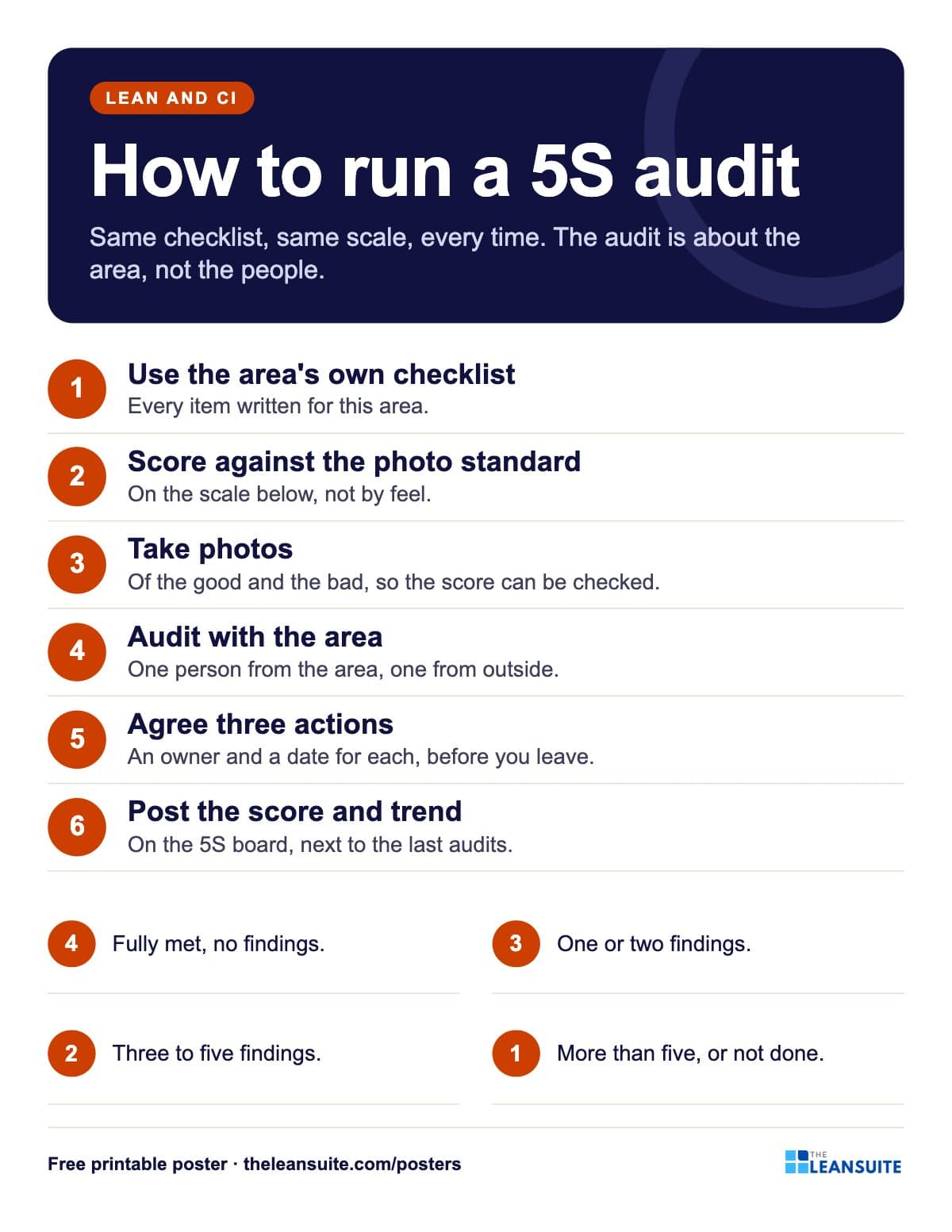 How to run a 5S audit poster
 Red tag event poster
 Shadow board poster
 Floor marking colours poster
 Set in order poster: where, what, how many
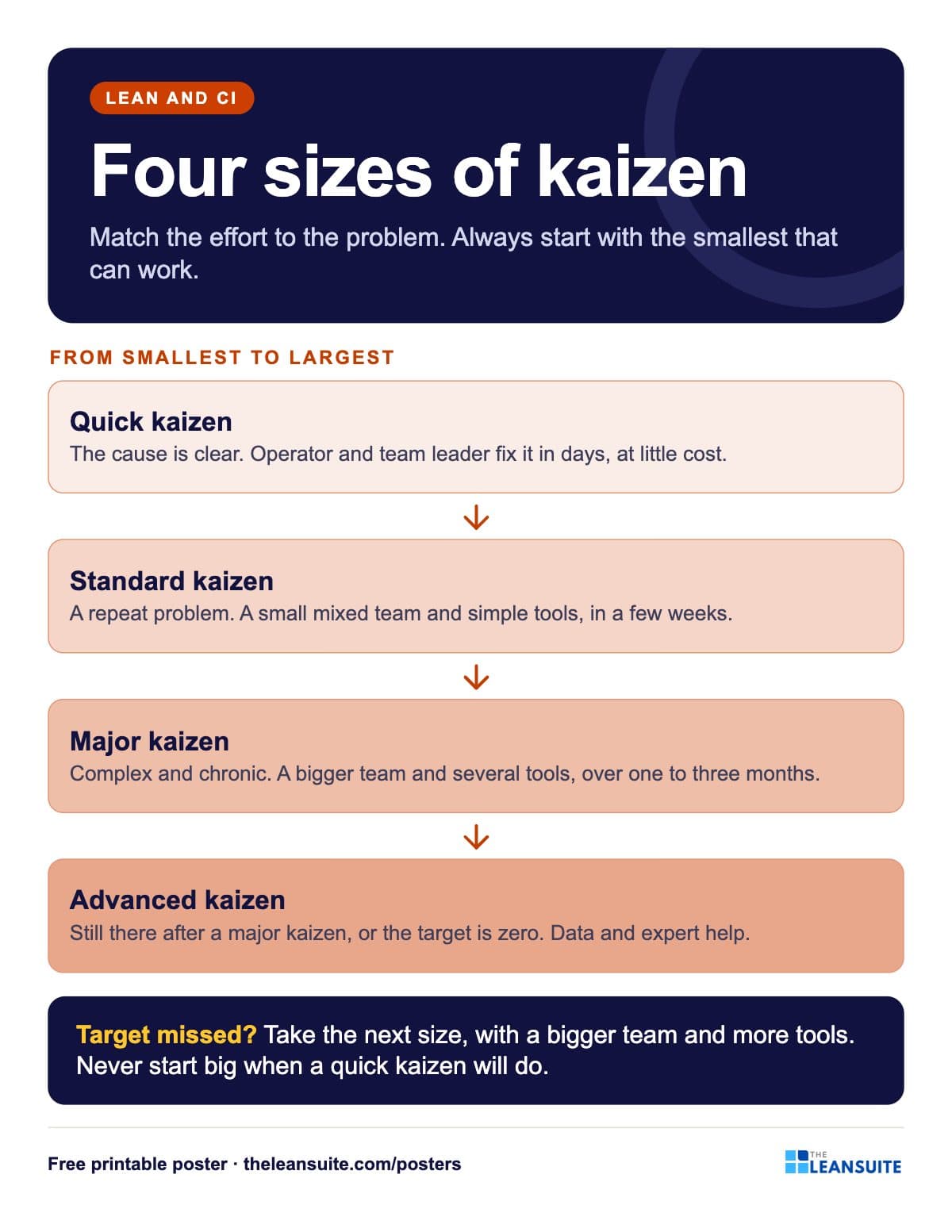 Kaizen sizes poster
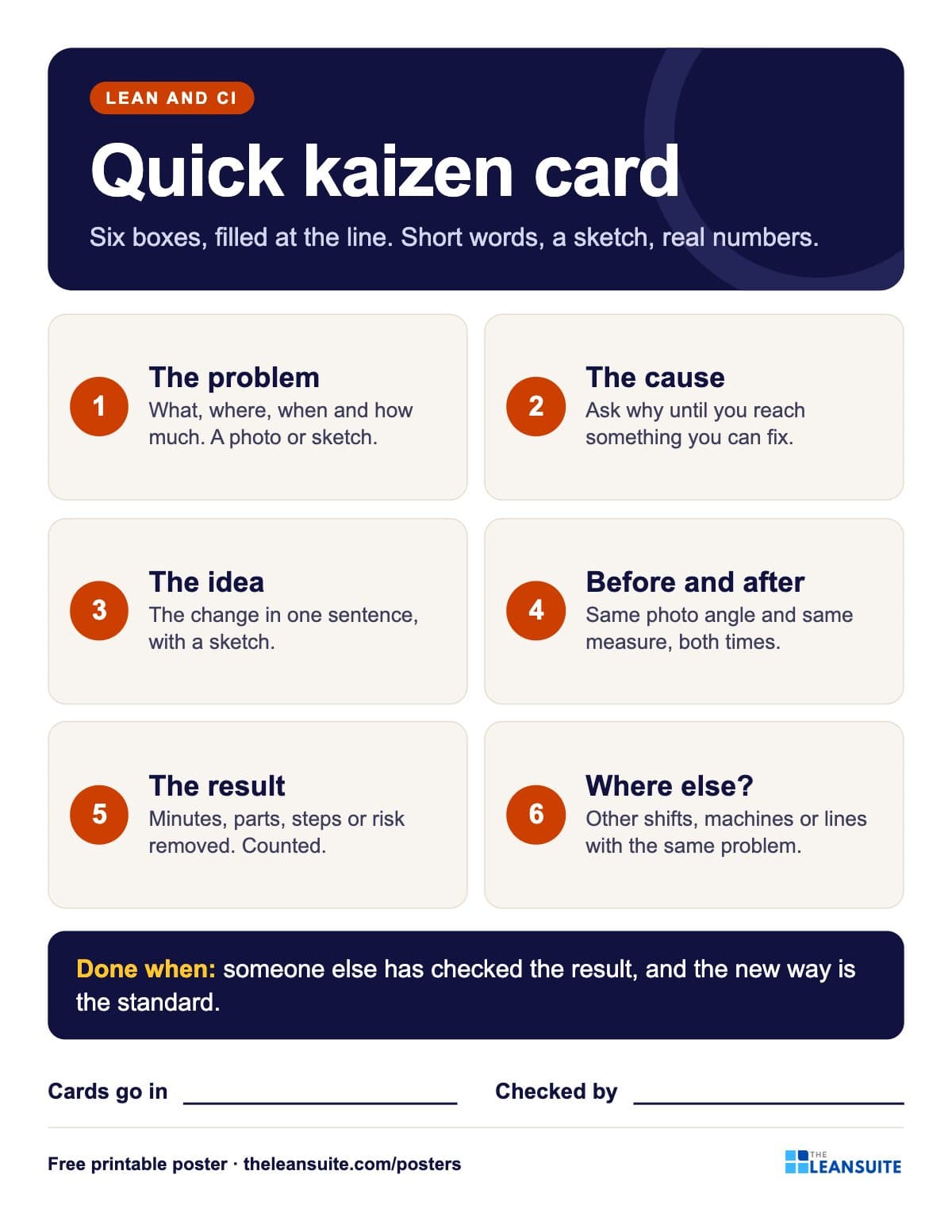 Quick kaizen card poster
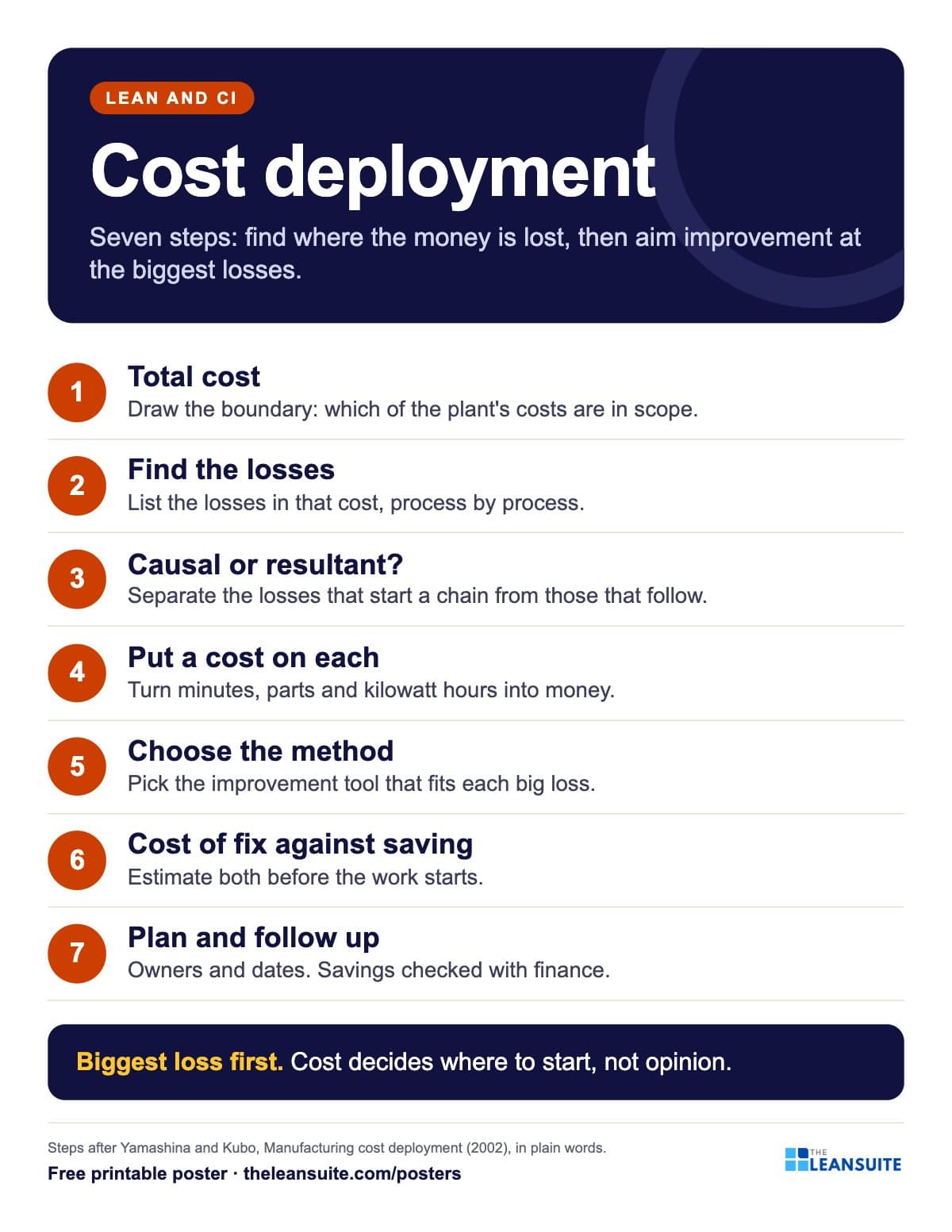 Cost deployment 7 steps poster
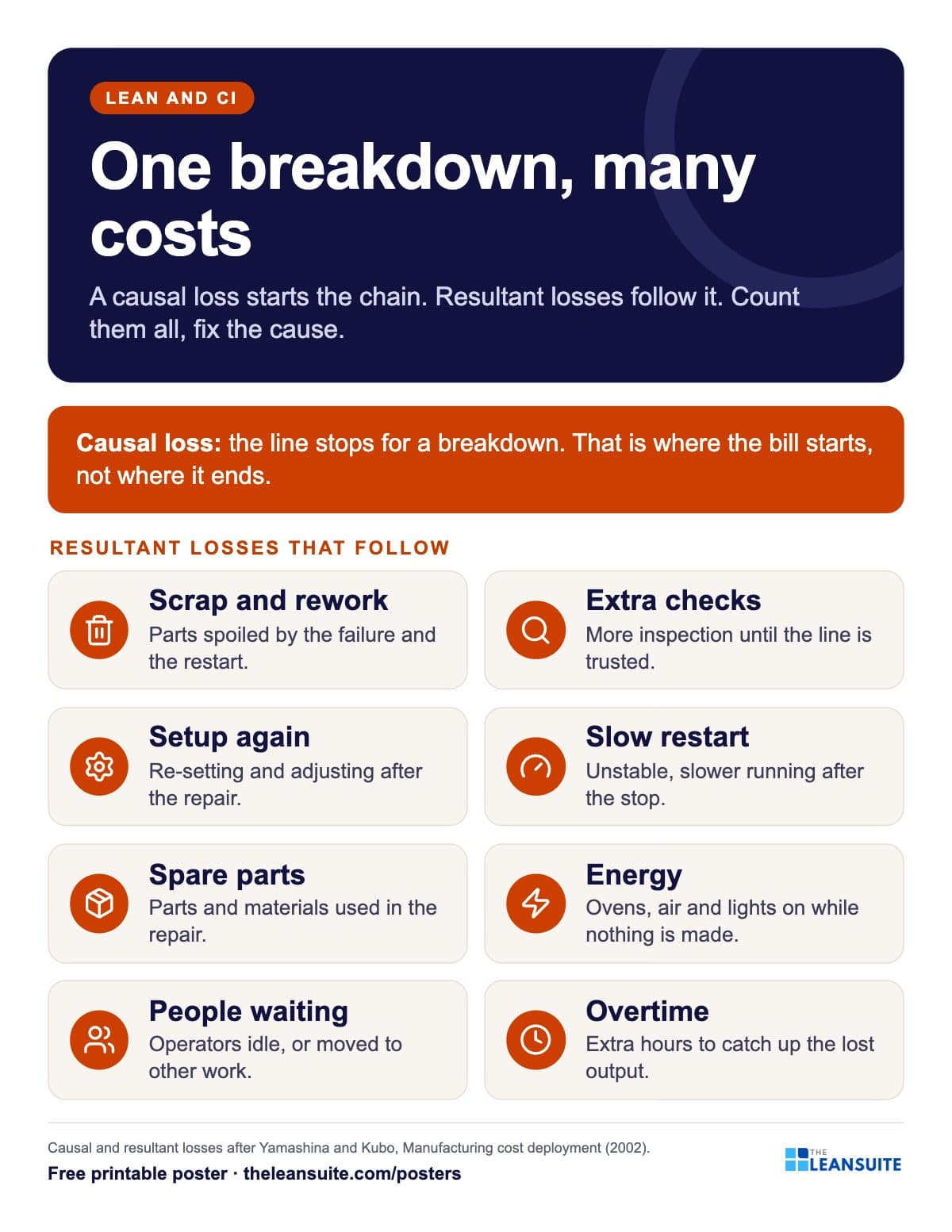 Causal and resultant losses poster
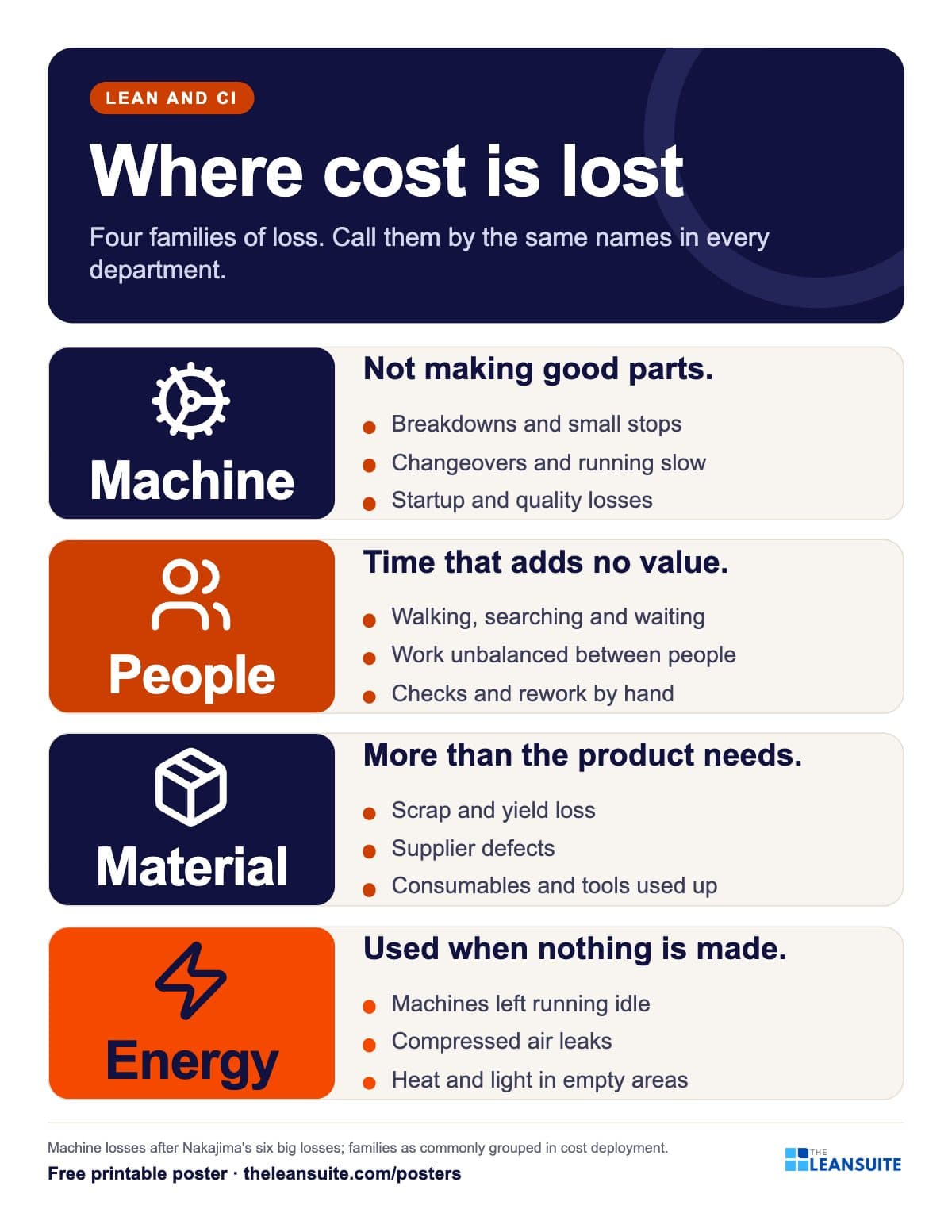 Four loss families poster
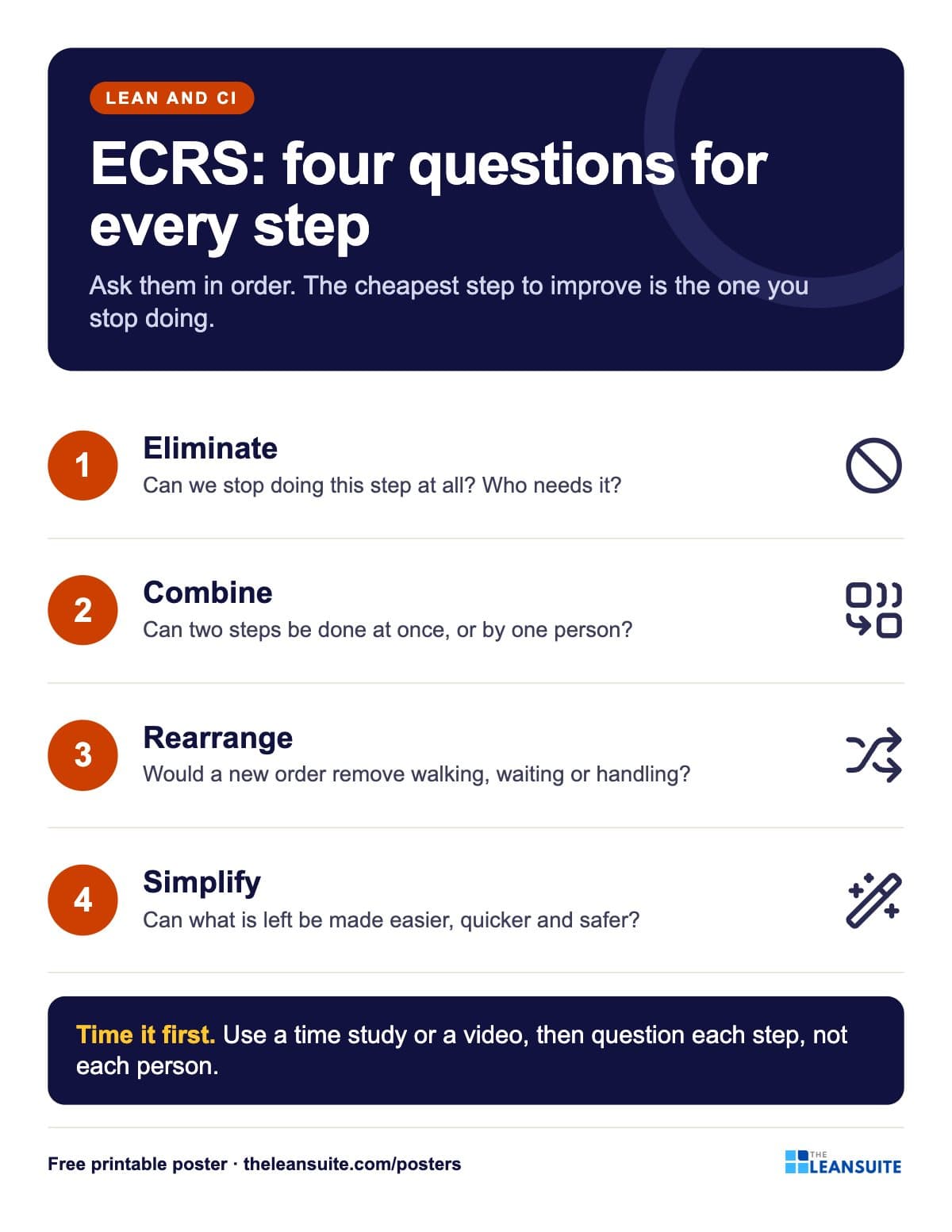 ECRS poster
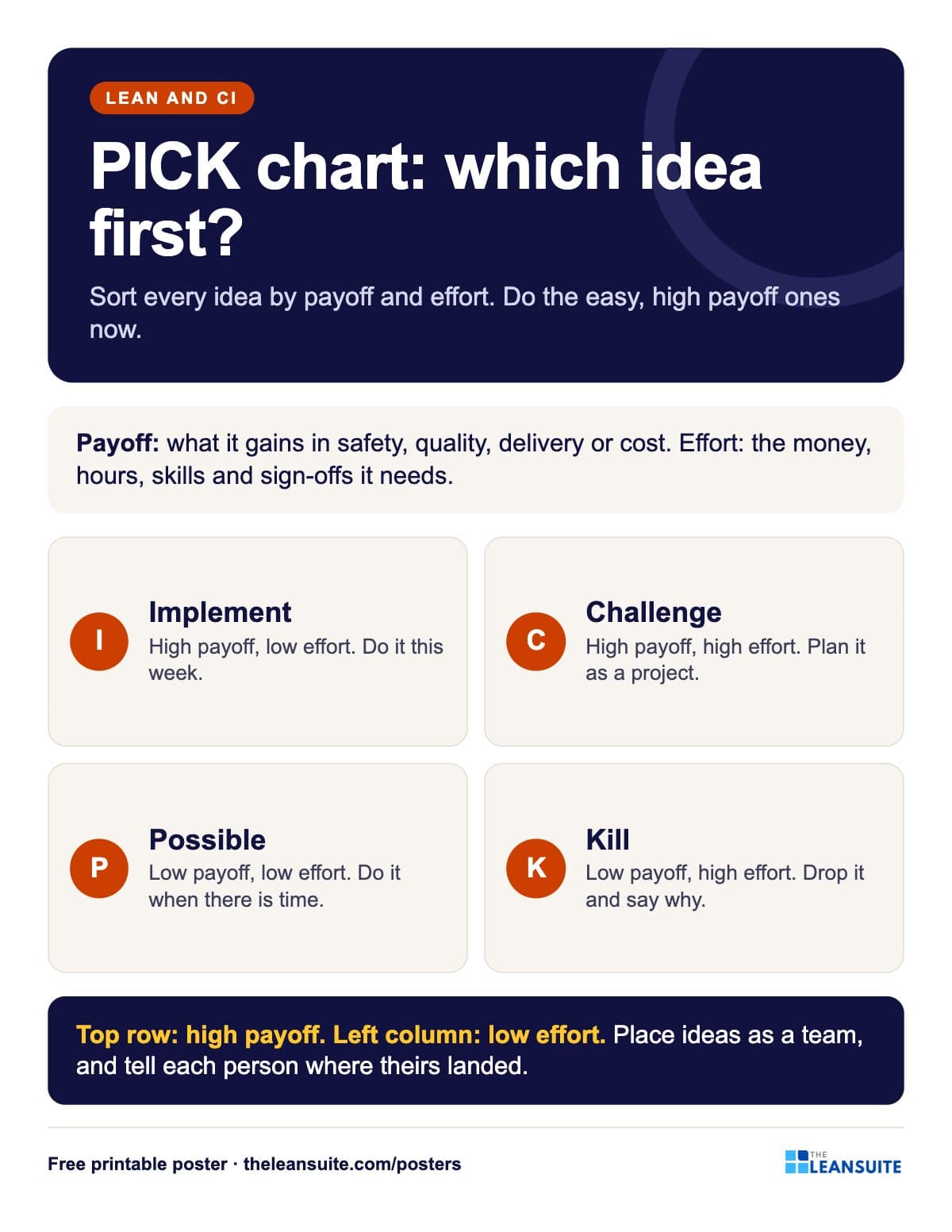 PICK chart poster
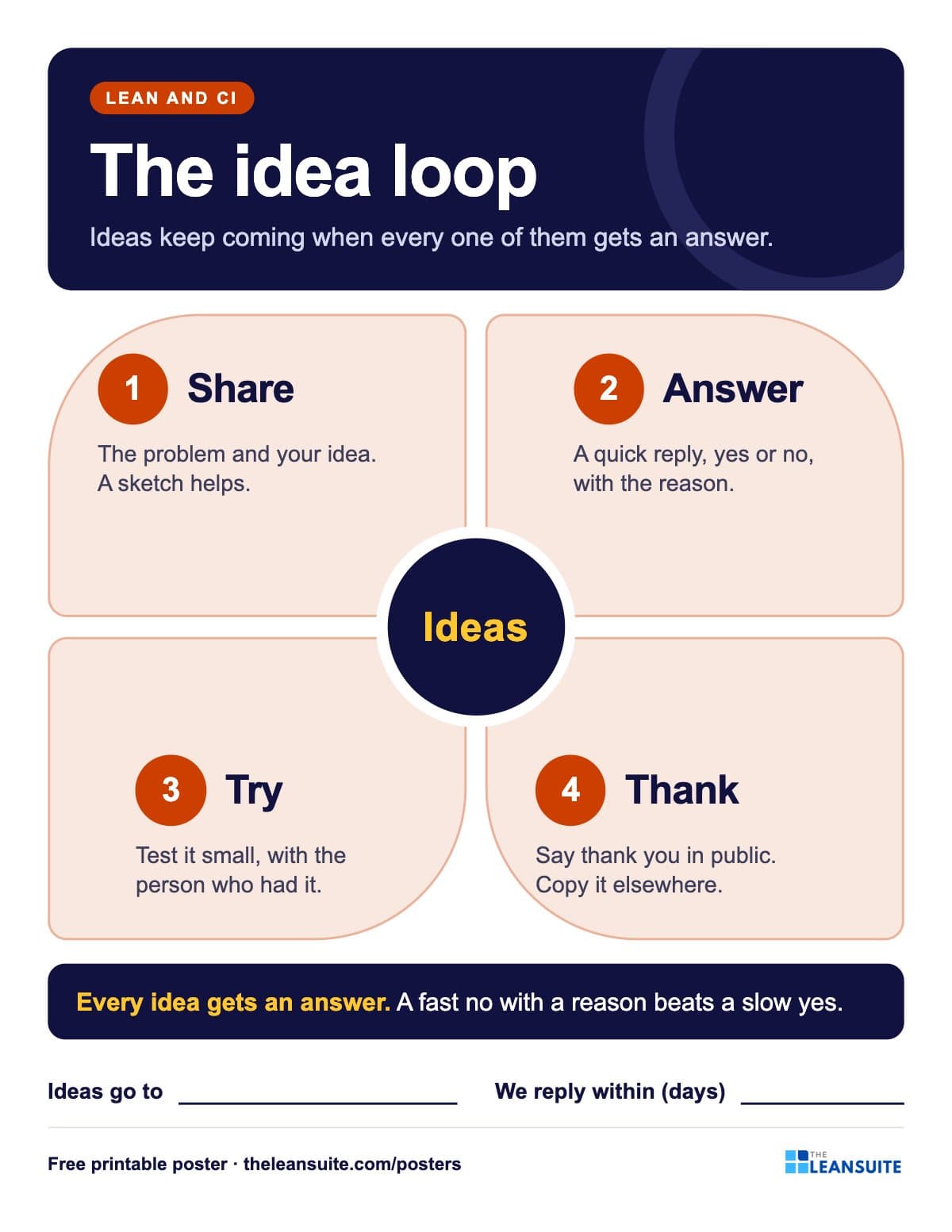 Suggestion system poster
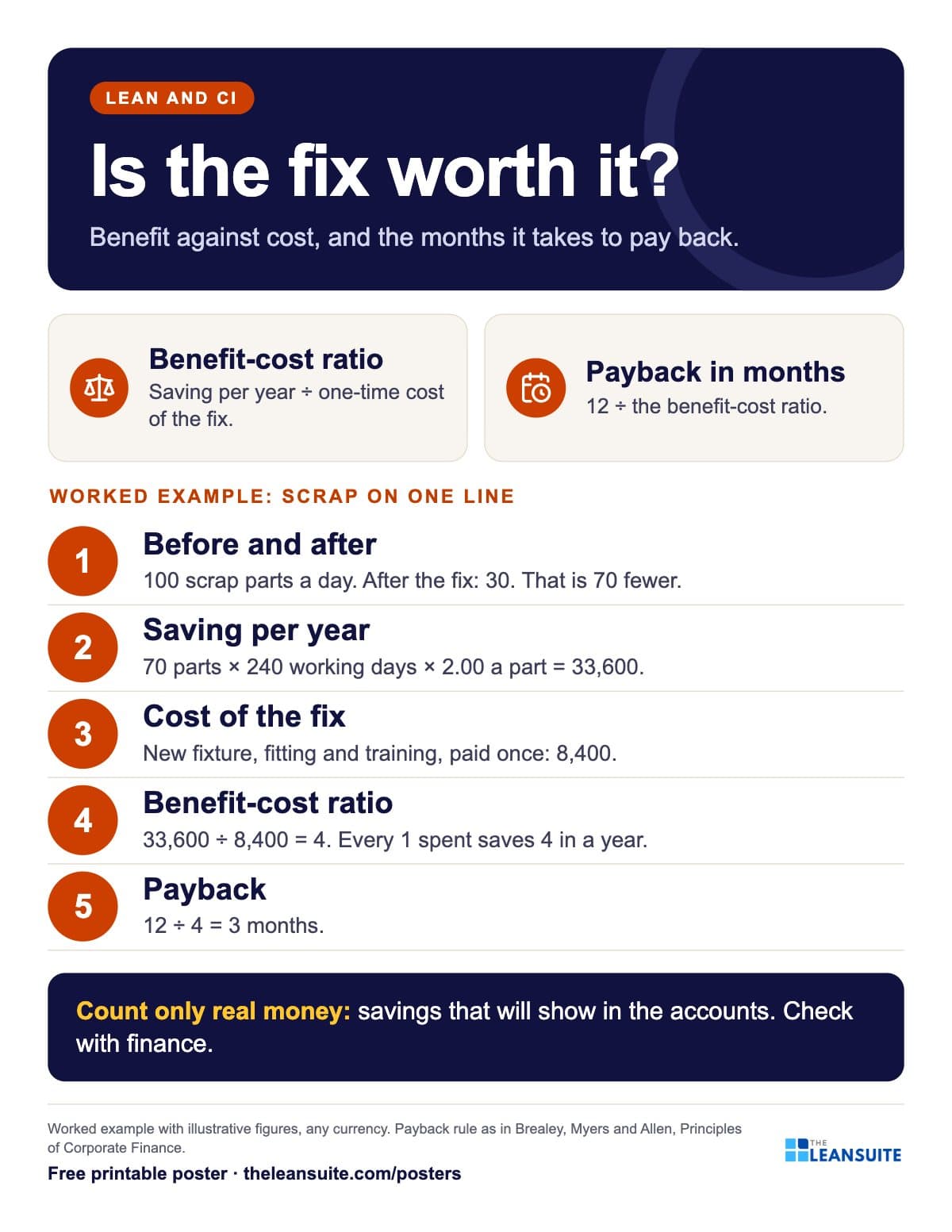 Benefit-cost ratio and payback poster
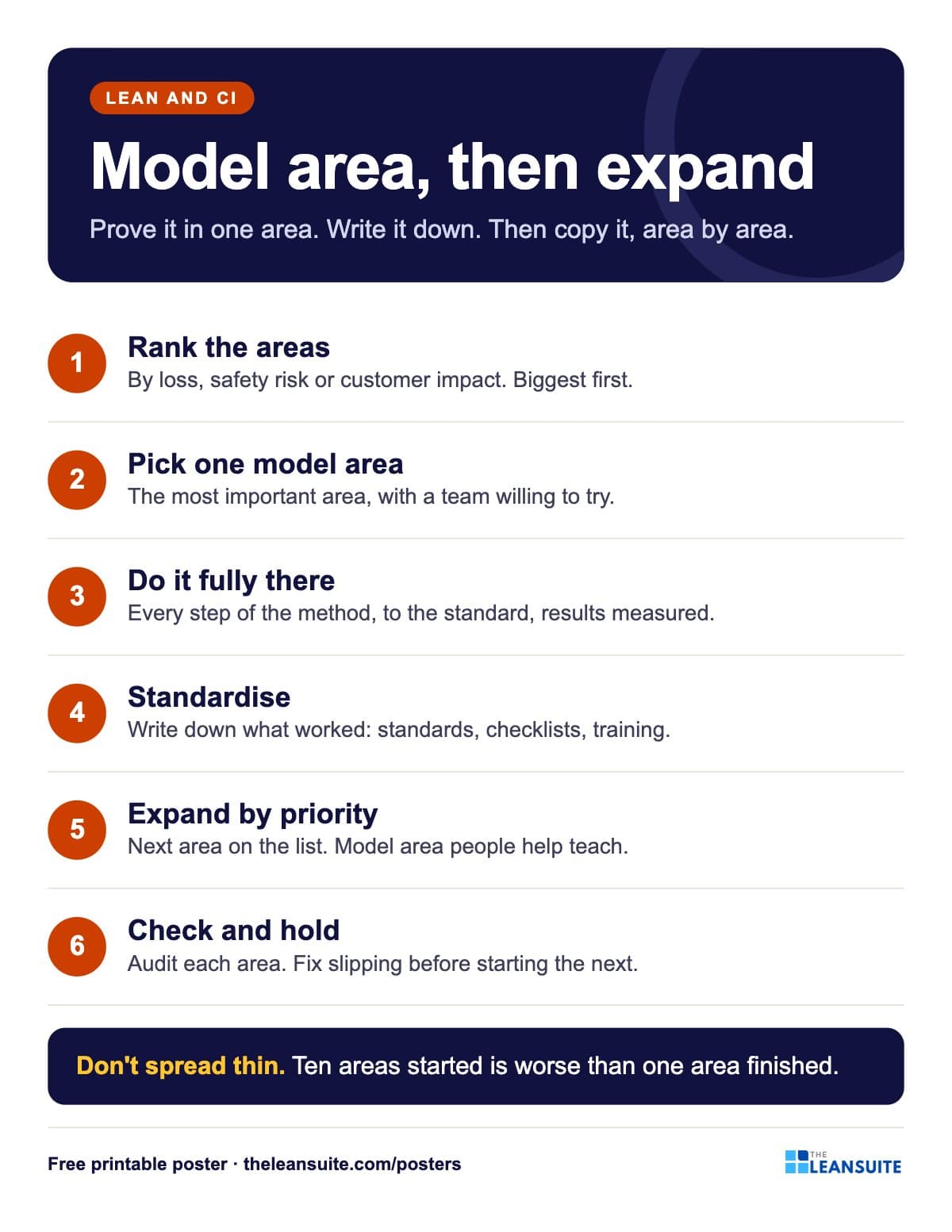 Model area and expansion poster
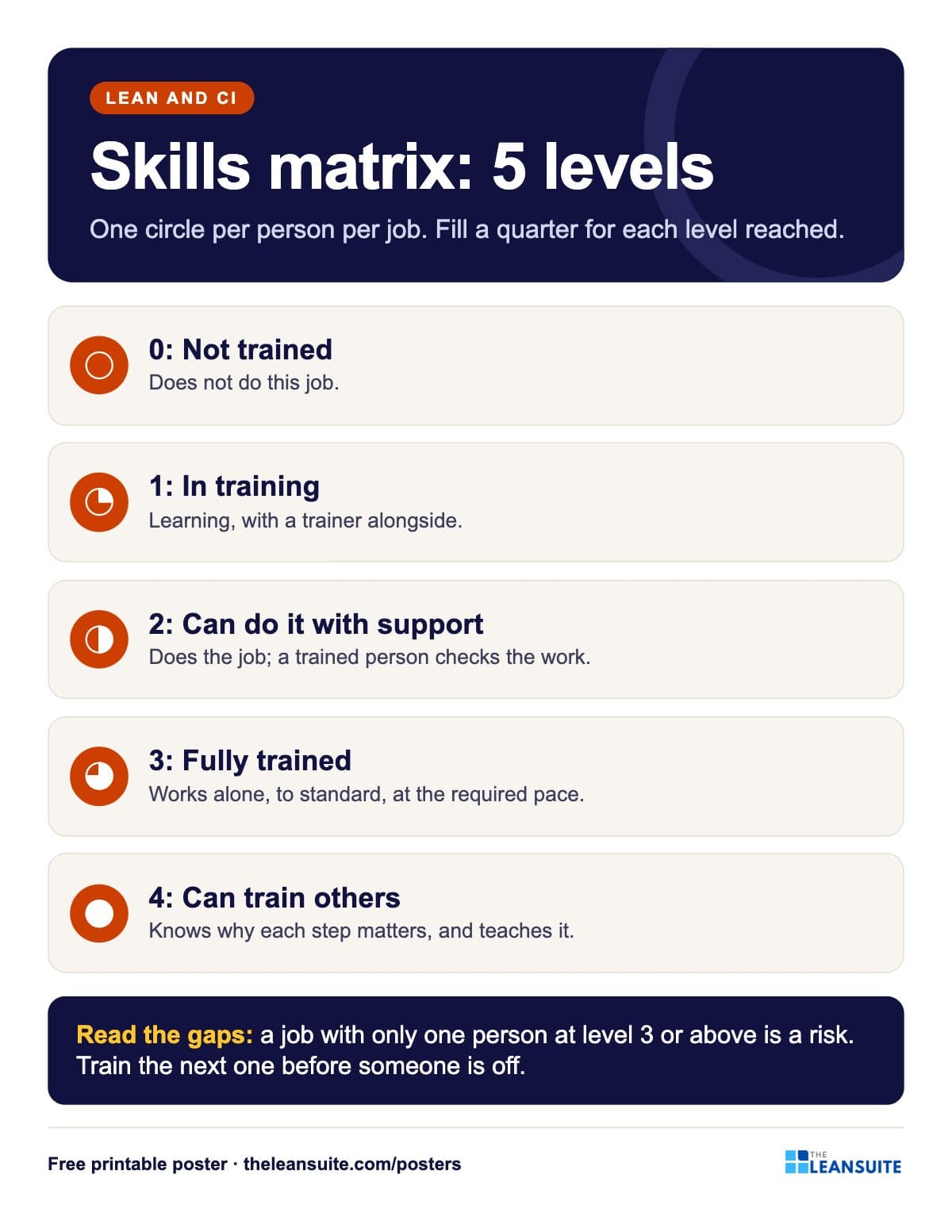 Skills matrix levels poster
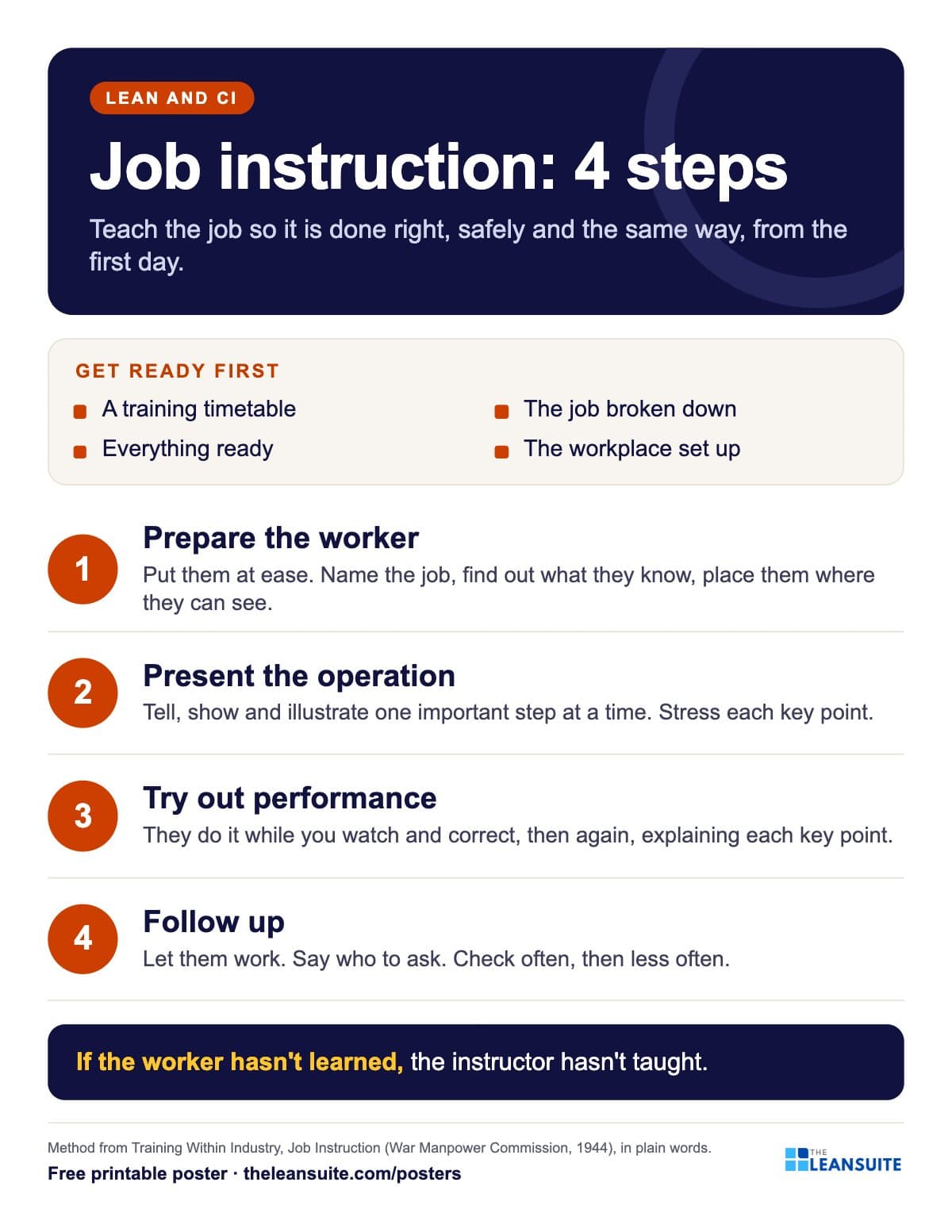 Job instruction 4 steps poster
 One-point lesson poster
 Learn, use, teach, inspect poster
 Leader standard work poster
 Tiered meetings poster
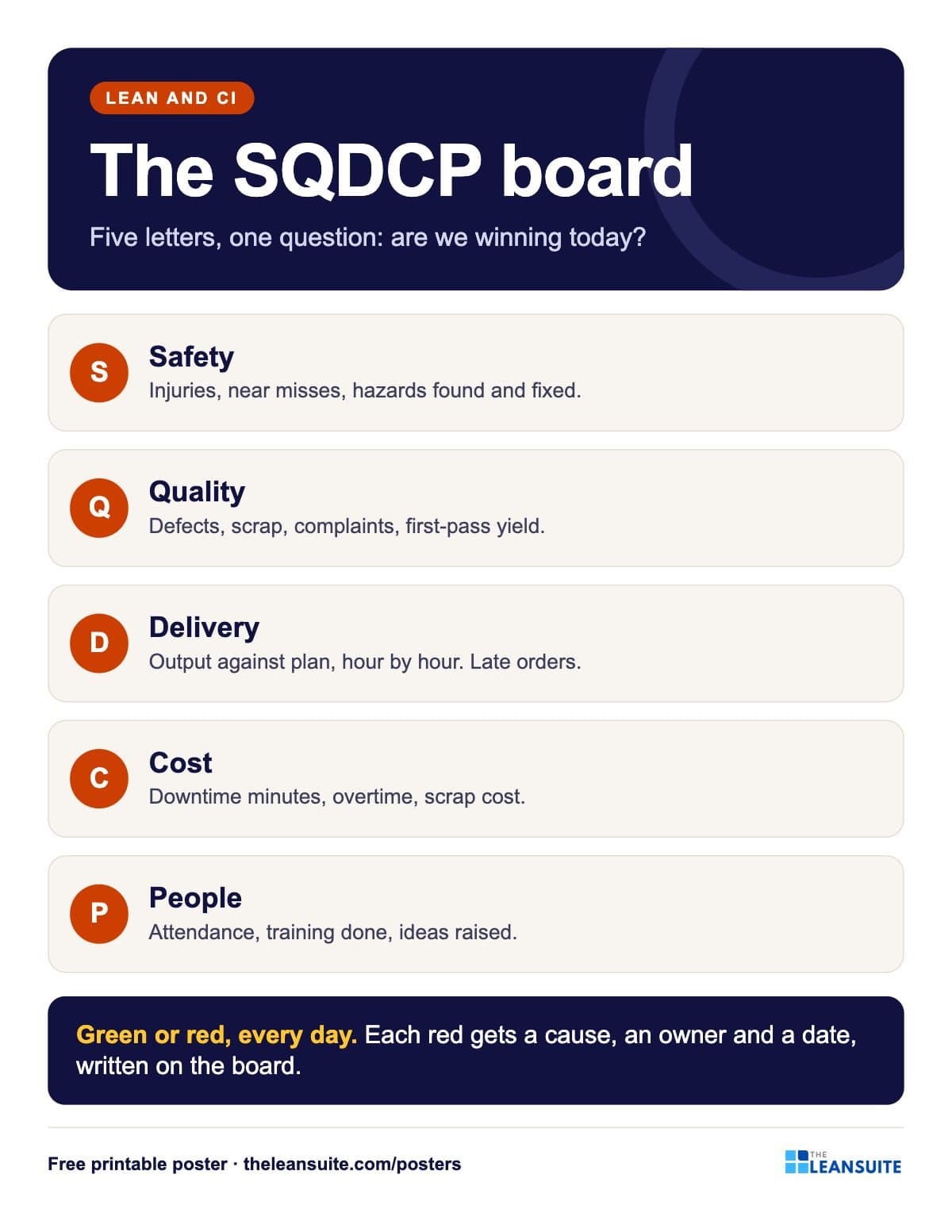 SQDCP board poster
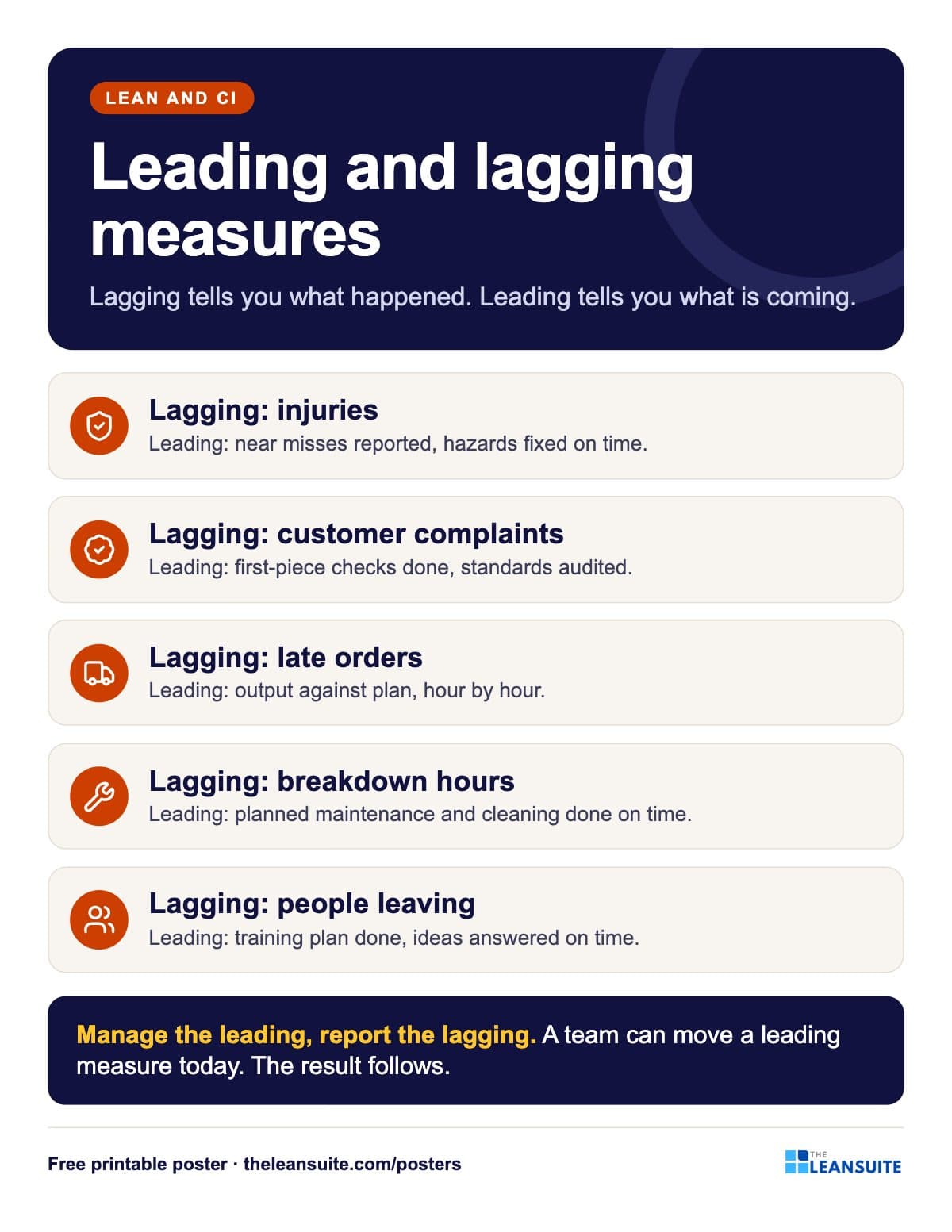 Leading and lagging indicators poster
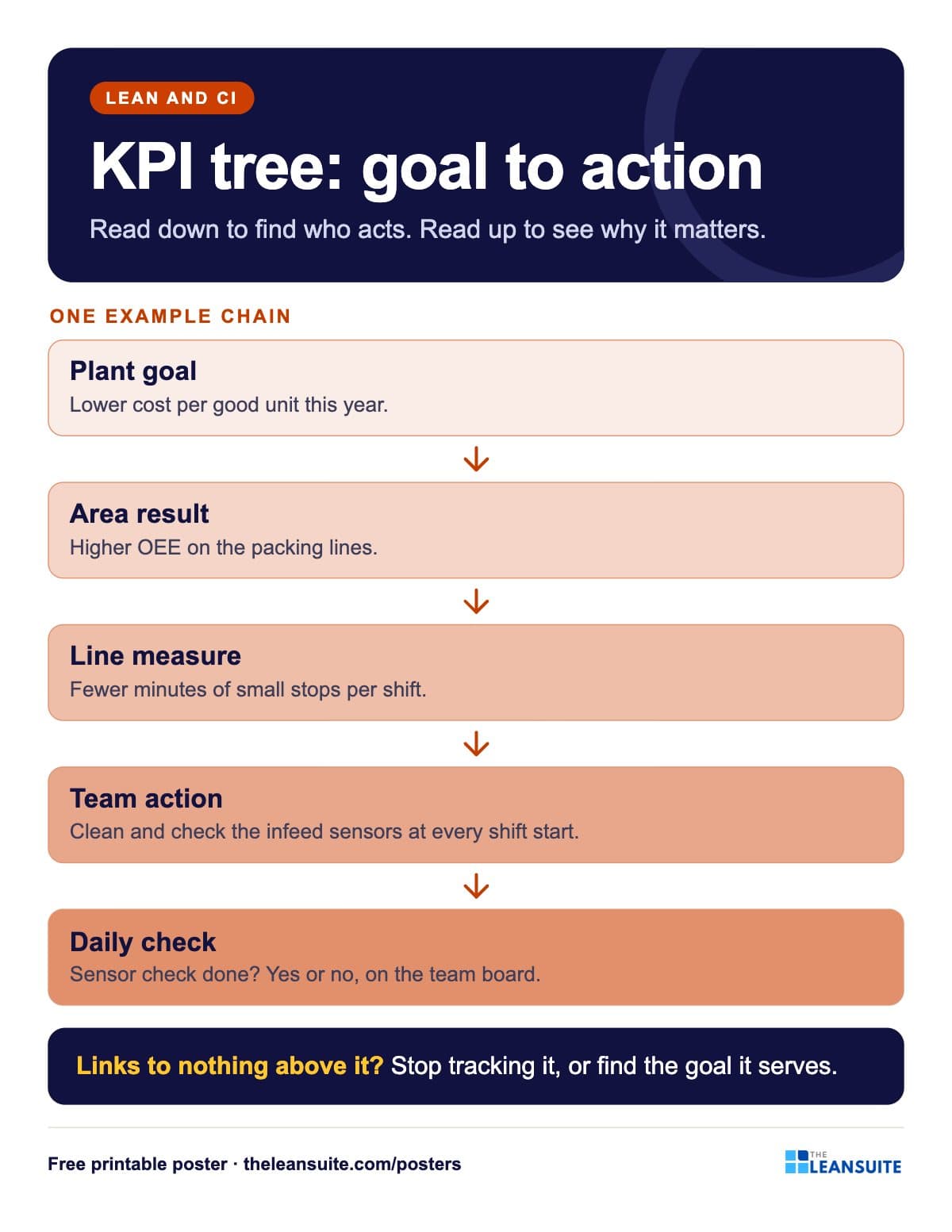 KPI tree poster
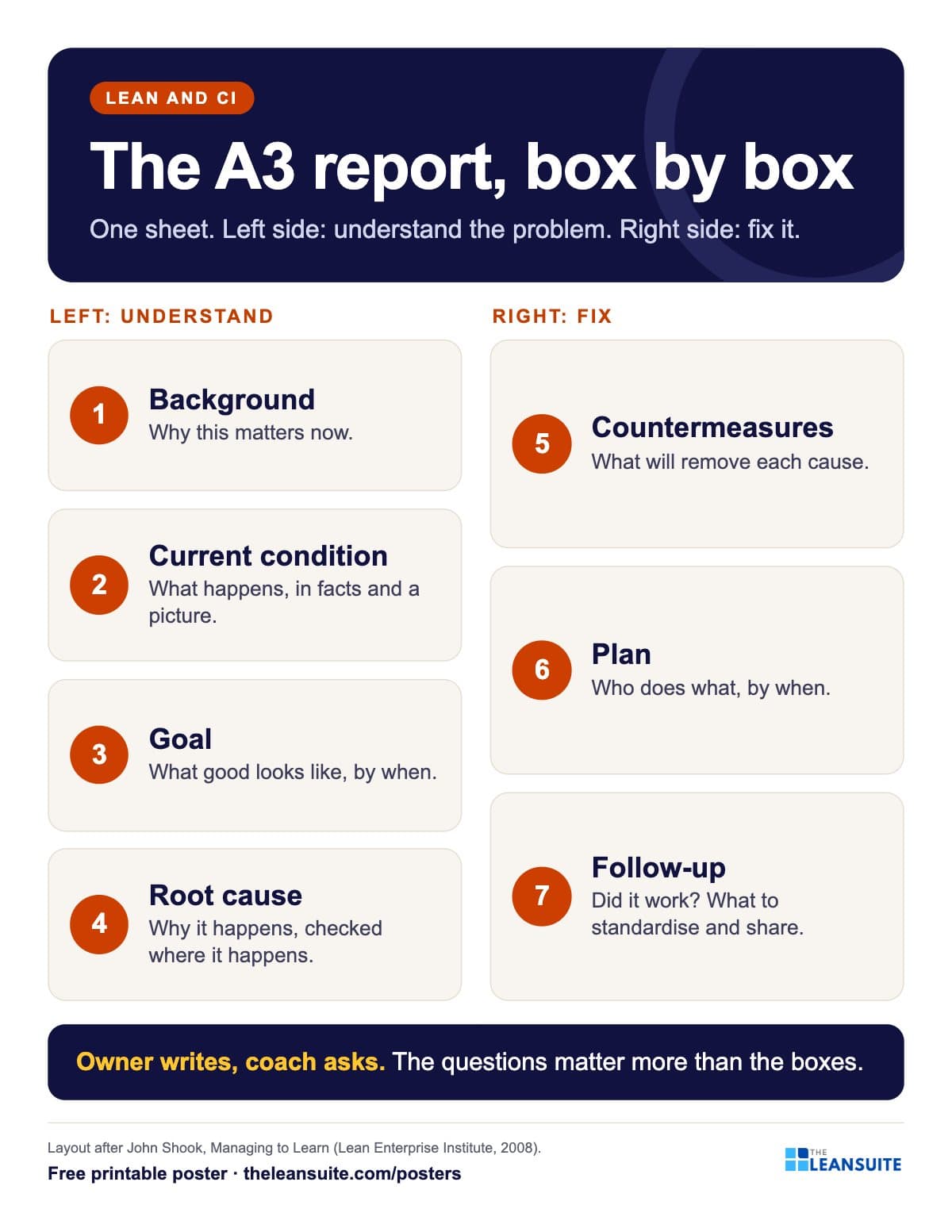 A3 report layout poster
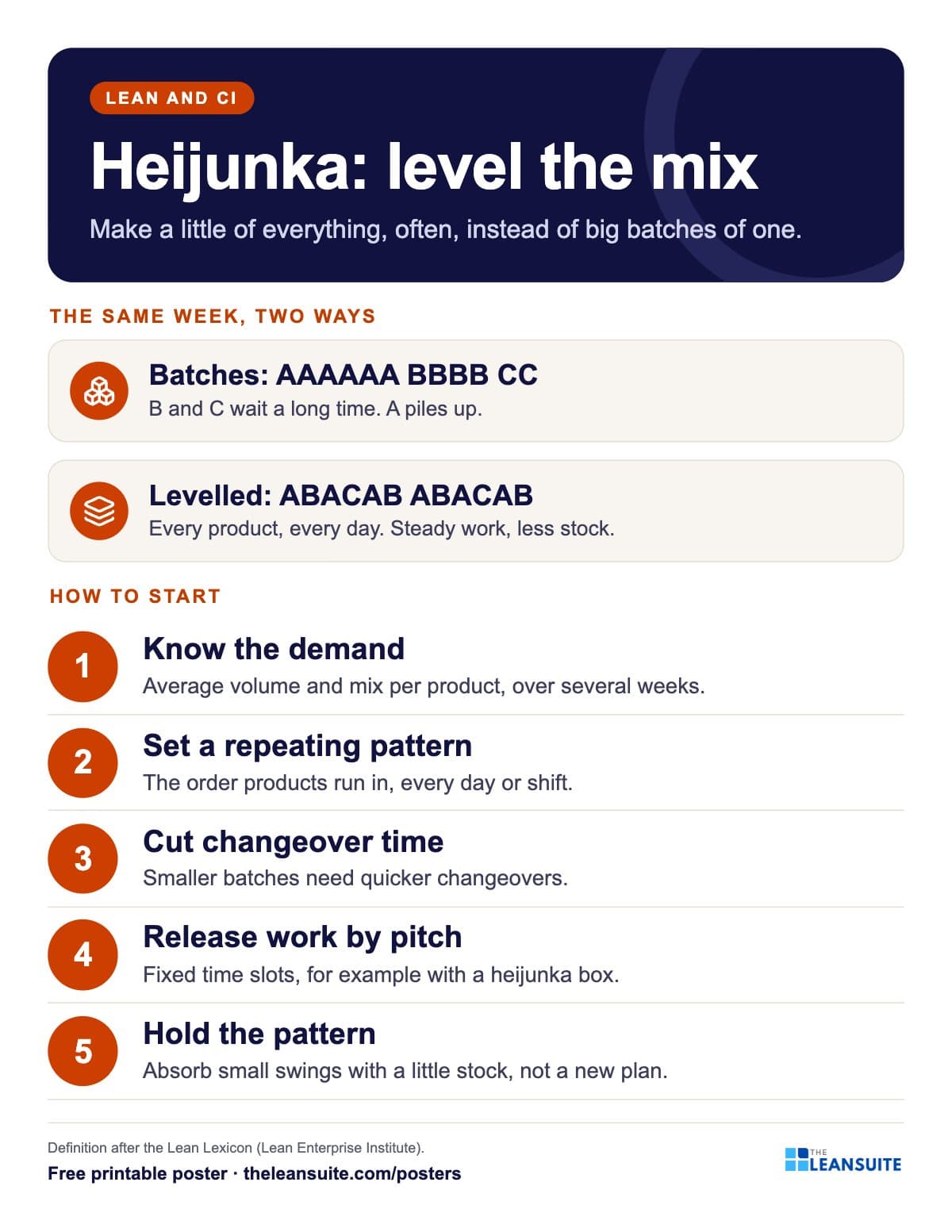 Heijunka production levelling poster
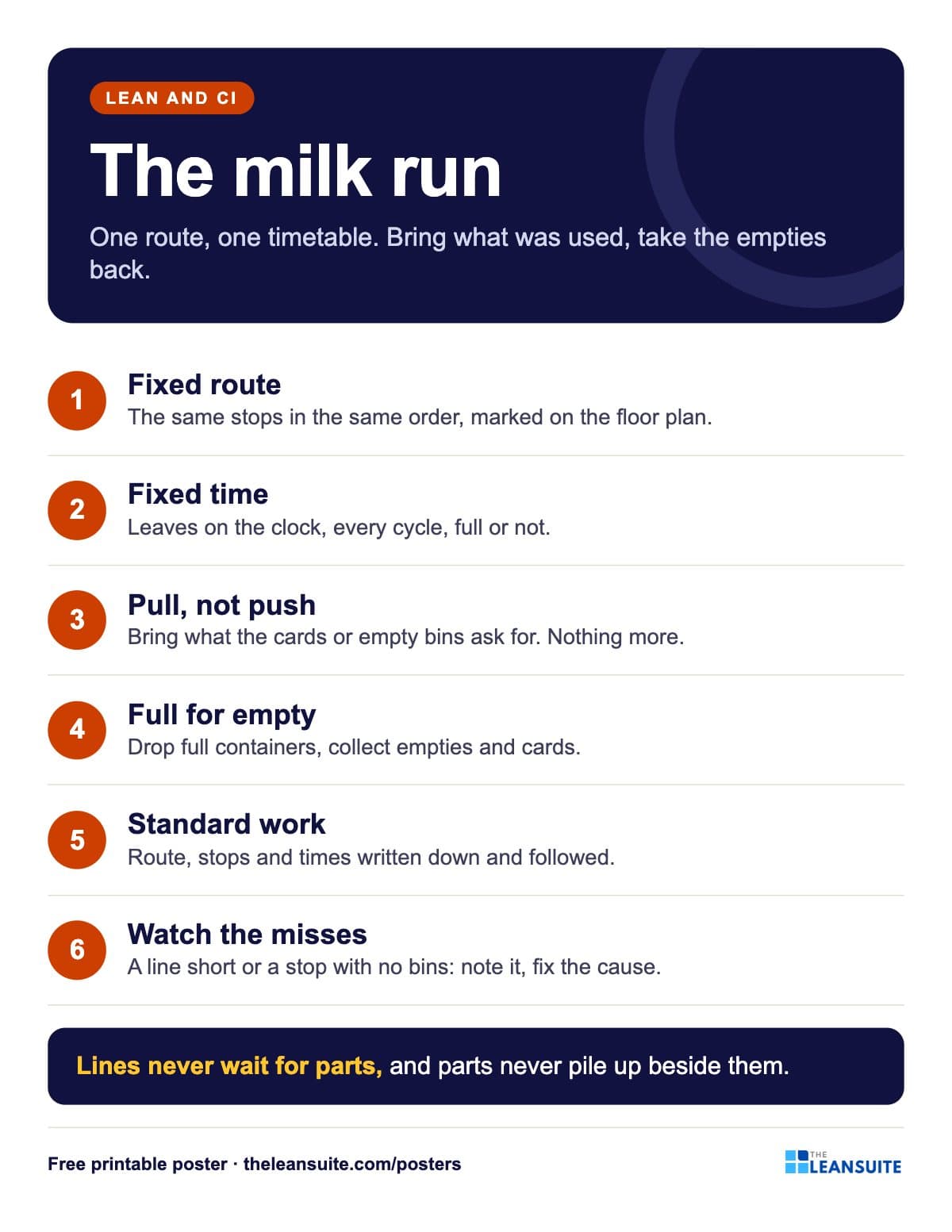 Milk run poster
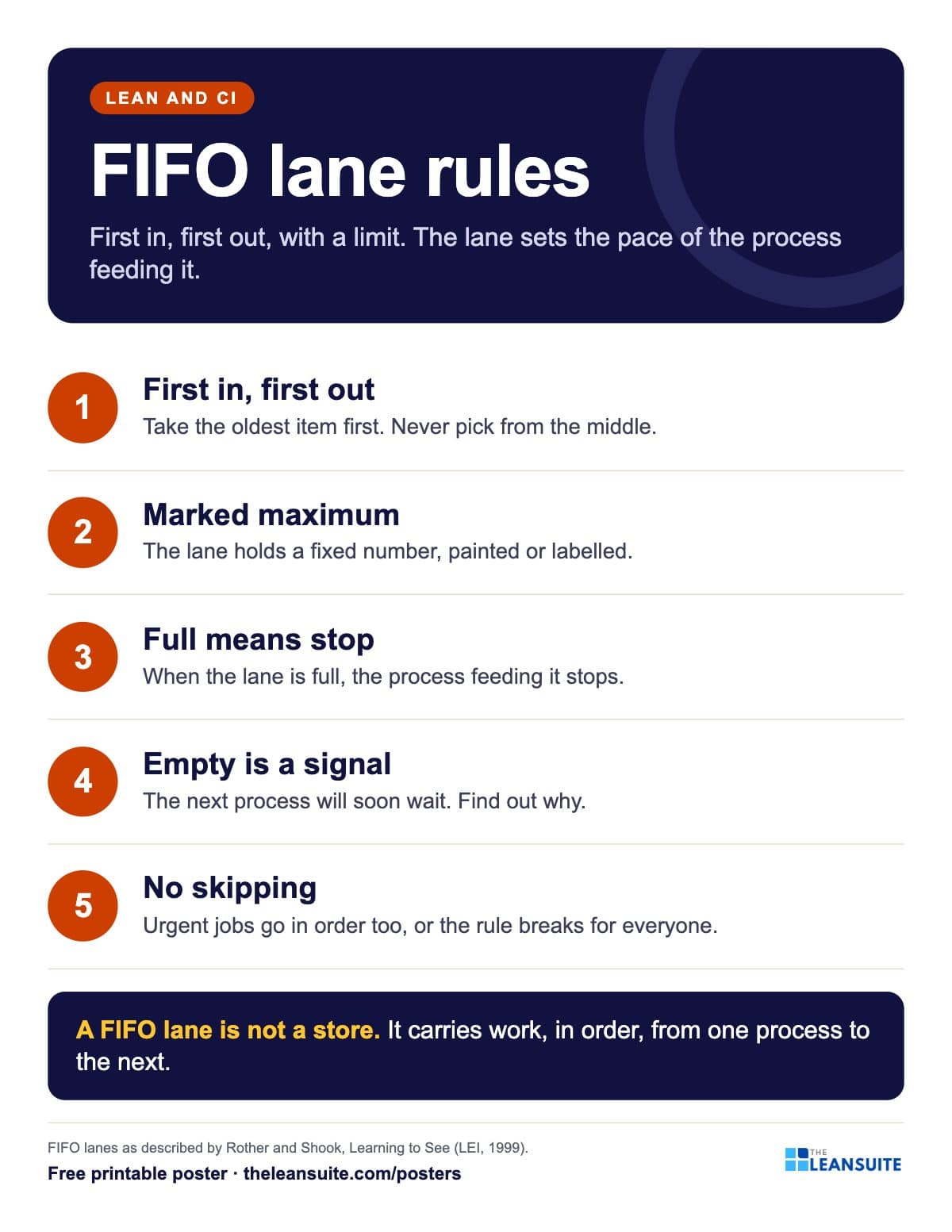 FIFO lane rules poster
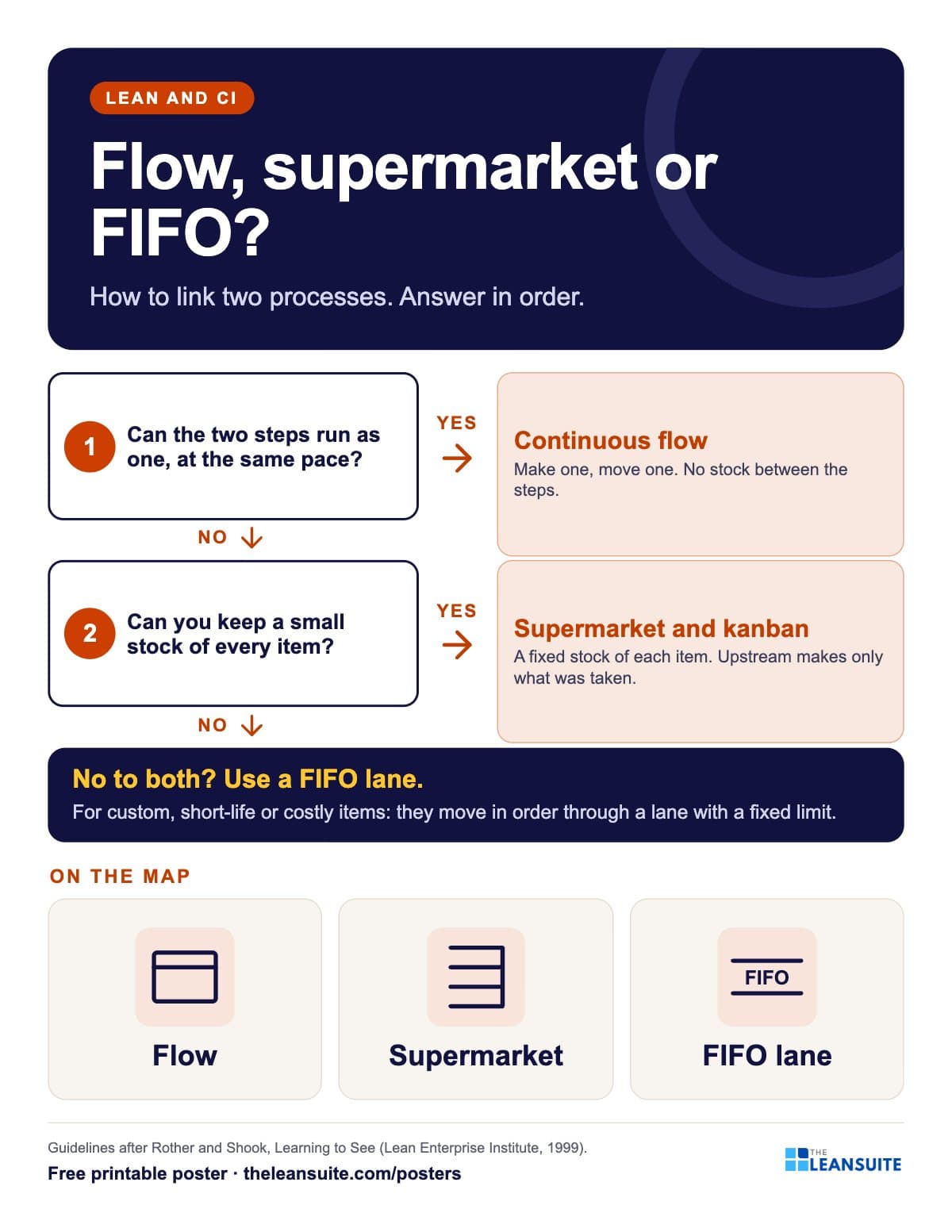 Flow, supermarket or FIFO lane poster
 Value stream map symbols poster
A poster reminds. A routine makes it stick.
See how plants run their audits, improvements and follow-ups in LeanSuite, on a call built around your own problem.
Book a 45-minute demo