

Lean and CI poster
Updated · Free to print and share
Natural vs accelerated wear poster
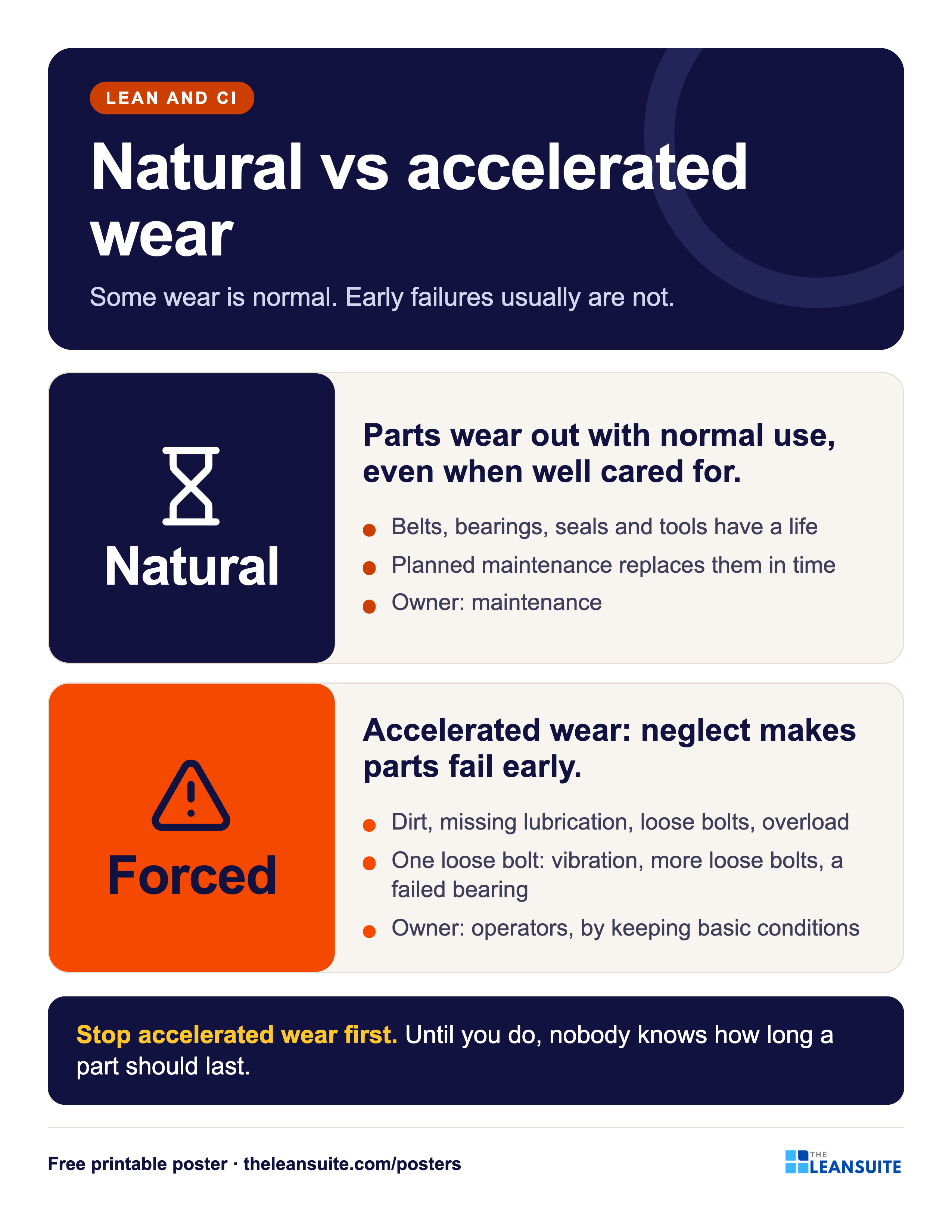
Every machine wears, but not all wear is natural. Natural wear is what happens with normal use when the machine is well cared for, and planned maintenance replaces those parts in time. Accelerated (forced) wear comes from neglect: dirt, missing lubrication, loose bolts, running past limits. It makes parts fail long before their time, and it is stopped by operators keeping basic conditions. This poster sets the two side by side.
Download the poster
The PNG is free to download now. The print-ready vector PDFs open after a short form, once.
Free to print and share with your team. Enter your name and work email once to download.
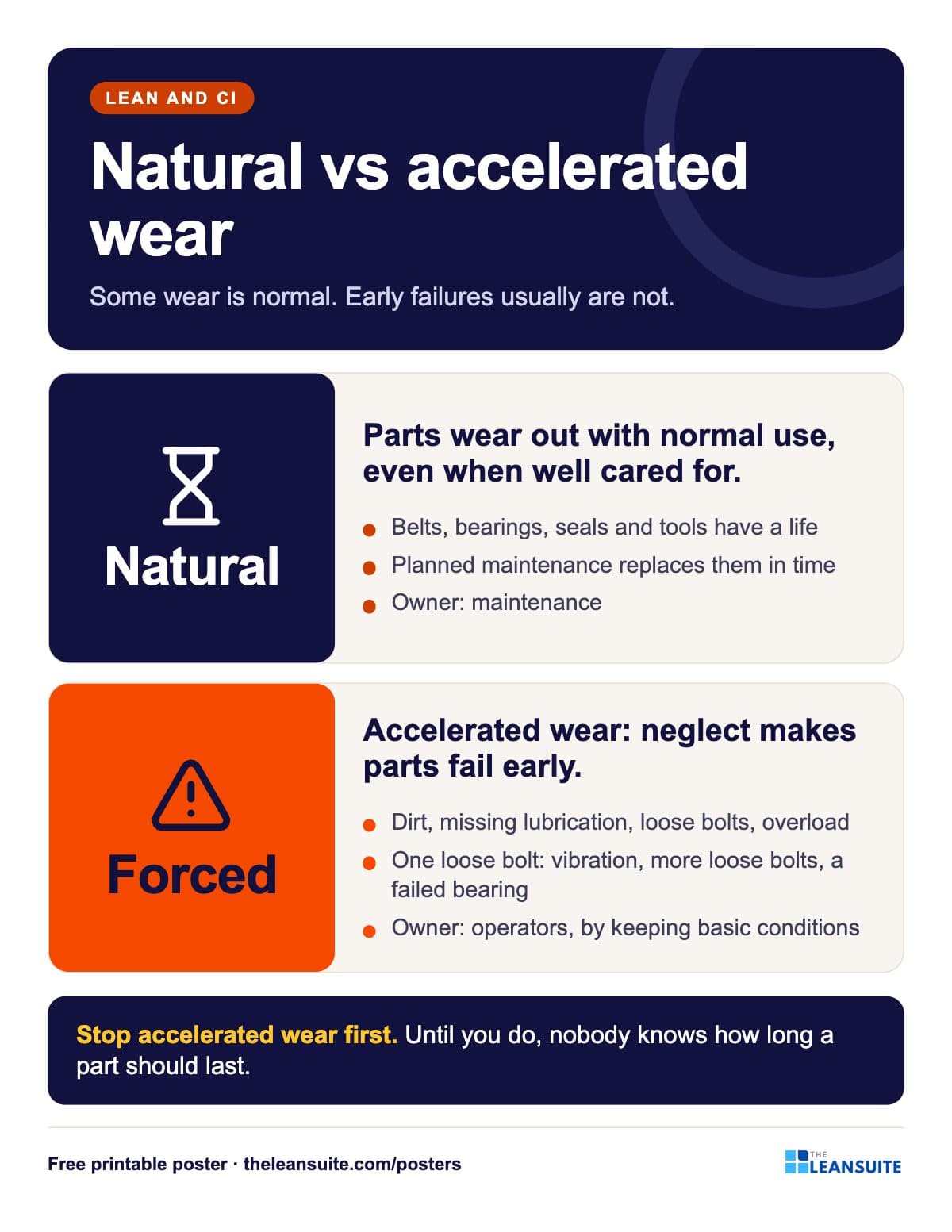 Two panels, natural wear owned by maintenance and accelerated wear owned by operators, with a loose bolt example.
The words on the poster
Natural vs accelerated wear
Some wear is normal. Early failures usually are not.
- Natural Parts wear out with normal use, even when well cared for. Belts, bearings, seals and tools have a life Planned maintenance replaces them in time Owner: maintenance
- Forced Accelerated wear: neglect makes parts fail early. Dirt, missing lubrication, loose bolts, overload One loose bolt: vibration, more loose bolts, a failed bearing Owner: operators, by keeping basic conditions
- Stop accelerated wear first. Until you do, nobody knows how long a part should last.
On the floor
How to use it
Putting the Natural vs accelerated wear poster to work
- 1
Put it in the TPM room and use it to explain why operators and maintenance each own part of the machine.
- 2
When a part fails early, ask which kind of wear it was before deciding the fix.
- 3
Use the bottom band when someone wants to set PM intervals on a machine that is still dirty and loose.
- 4
Pair it with the CILR poster and the free autonomous maintenance checklist.
Which size to print
- 24 x 36 in or A2: a main wall or team board, read from a few metres away.
- 18 x 24 in or A3: a station or notice board. The A3 file also fits 11 x 17 in paper.
- Letter or A4: a clipboard, binder or handout, on any office printer.
Every PDF is vector, so it stays sharp at full size. Nothing runs to the edge of the page, so no bleed is needed.
Sources and notes
- Seiichi Nakajima, Introduction to TPM: Total Productive Maintenance (Productivity Press, 1988).
- Japan Institute of Plant Maintenance (ed.), Autonomous Maintenance for Operators (Productivity Press, 1997), and TPM for Every Operator (Productivity Press, 1996).
Templates, decks and guides to go with it
- TPM training presentation: the 8 pillarsFree training deck: What TPM is, the six big losses, OEE and the 8 pillars, in 19 slides with a loss-spotting activity.
- Autonomous maintenance training presentation: the 7 stepsFree training deck: The 7 steps of jishu hozen, who does what and how step audits work, in 19 slides with notes and a quiz.
- Autonomous maintenance (CILR) checklist20 clean, inspect, lubricate and retighten checks with a box per day, an abnormality log and sign-off.
- Preventive maintenance checklist templateA PM checklist per machine with readings and sign-off, and a PM schedule that works out the next due date.
- Machine history record templateOne record per machine: components and their life, every breakdown and repair with cost, MTBF and MTTR, and a repair-or-extend check.
- Topic: TPM and maintenanceEvery guide we have on the subject, sorted.
More lean and ci posters
All posters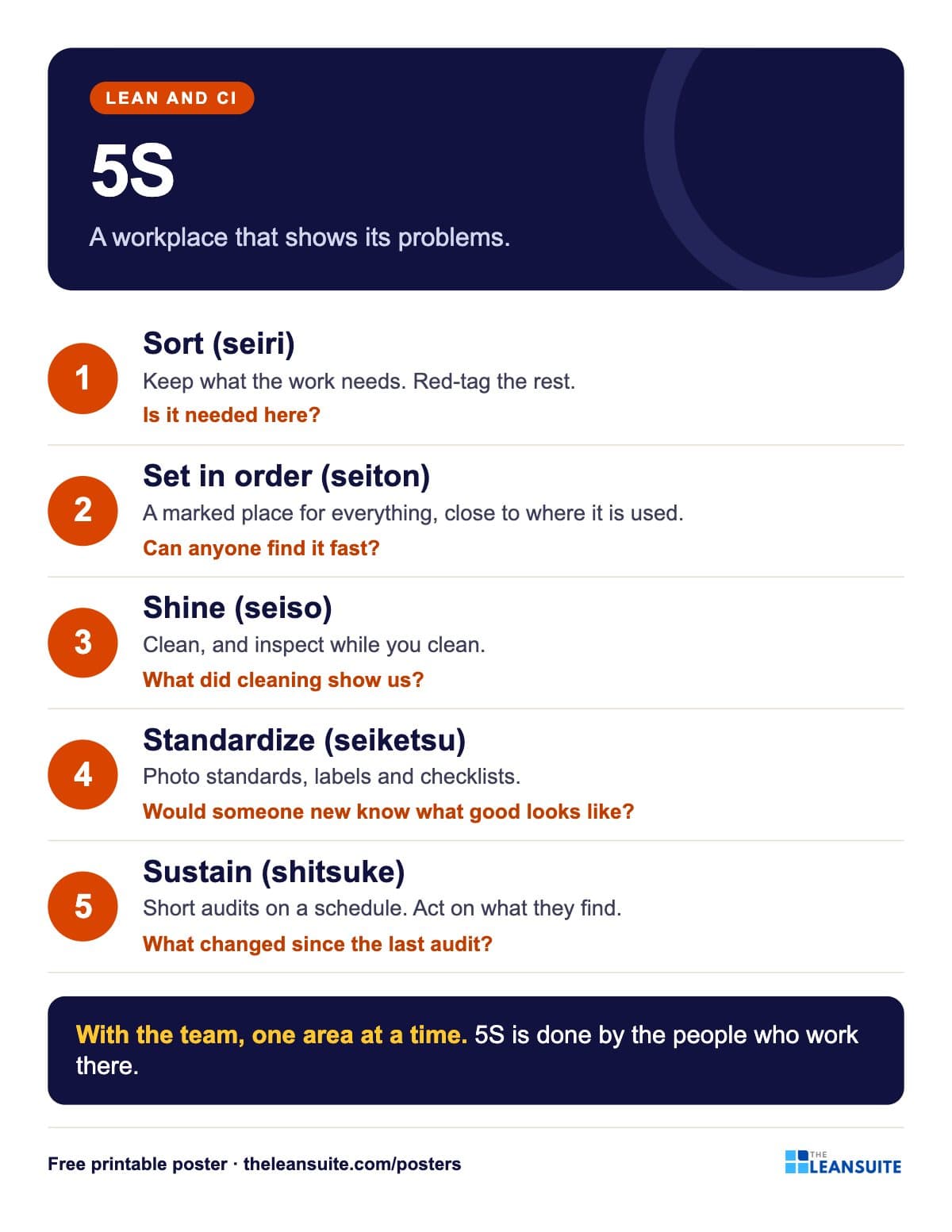 5S poster
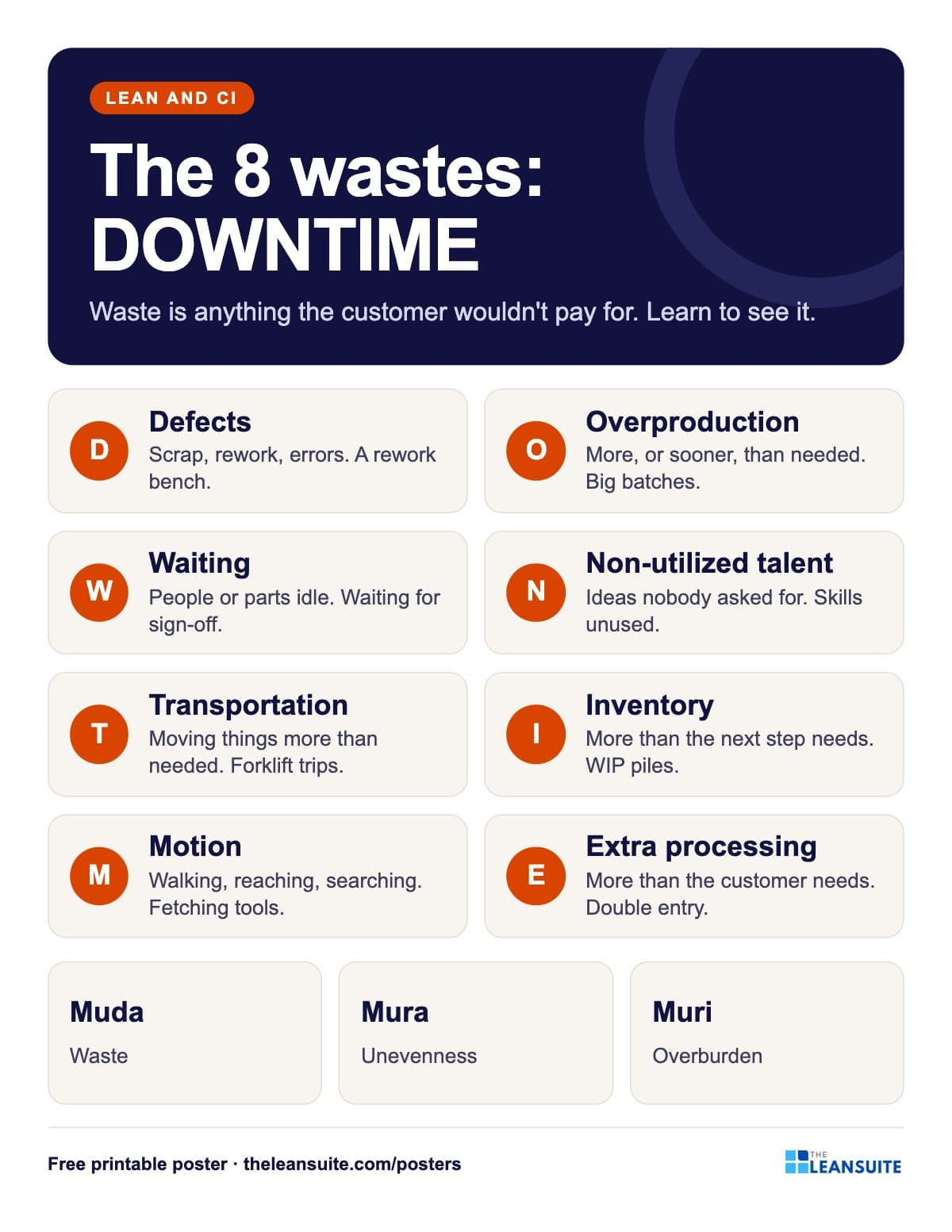 8 wastes of lean poster (DOWNTIME)
 Kaizen principles poster
 Visual management poster
 Standard work poster
 Gemba walk questions poster
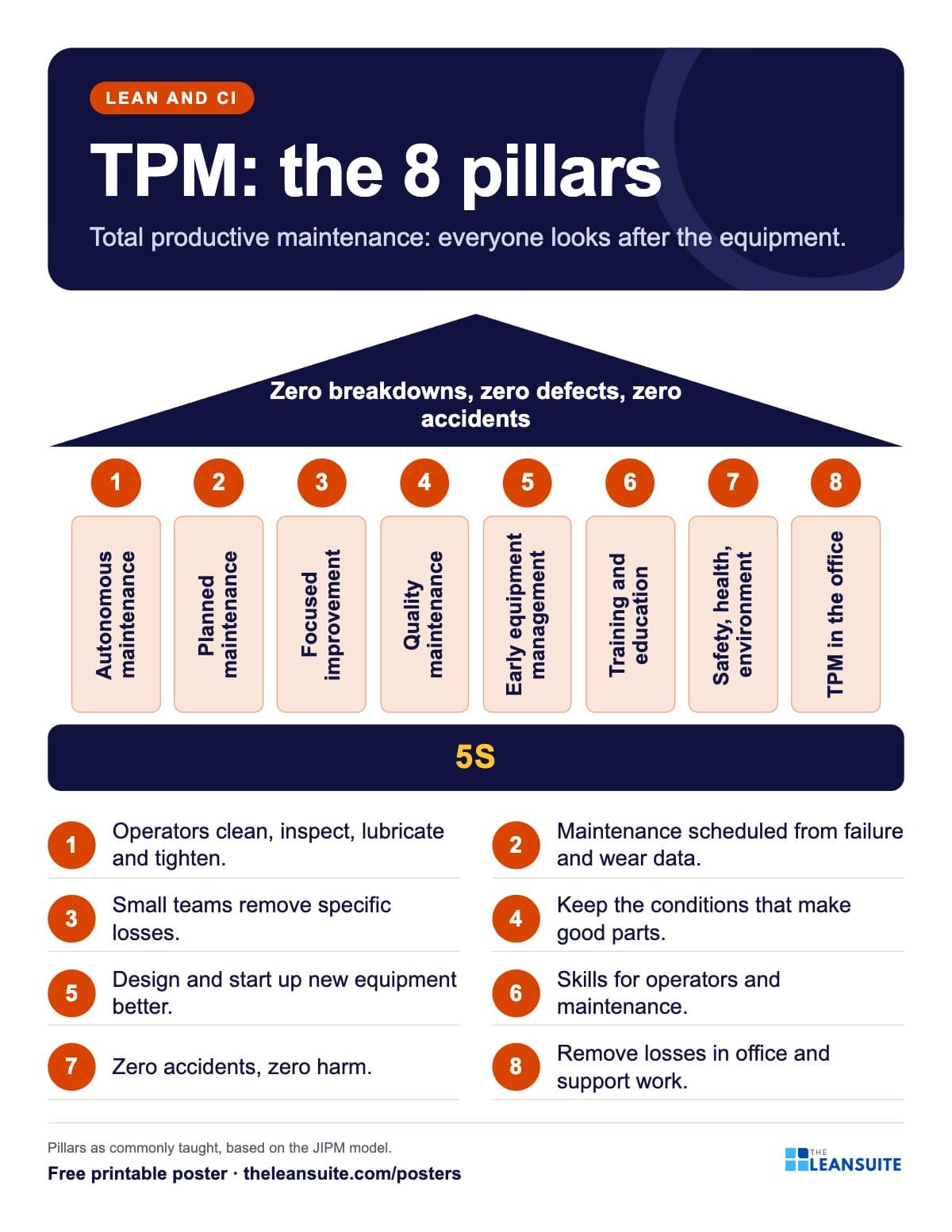 TPM 8 pillars poster
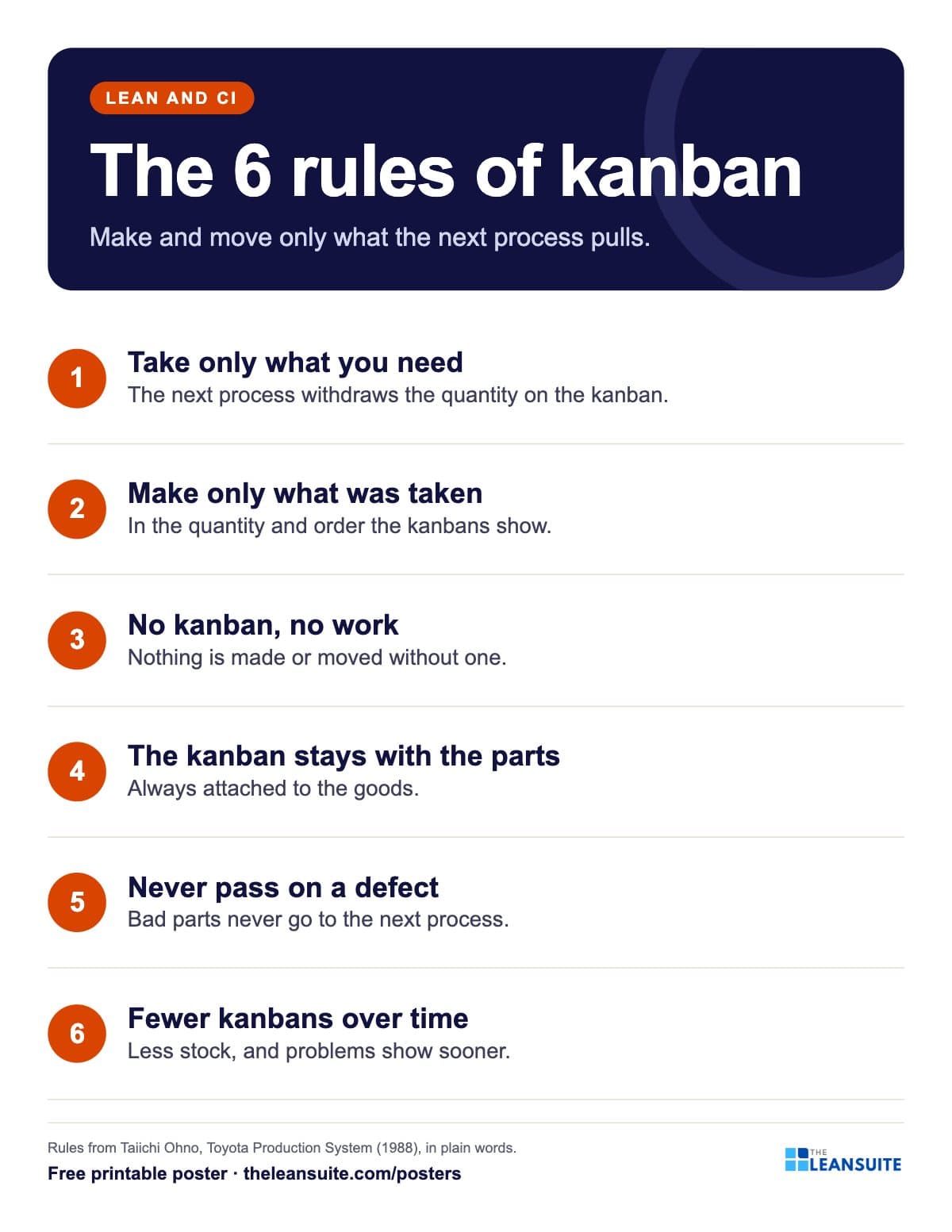 Kanban rules poster
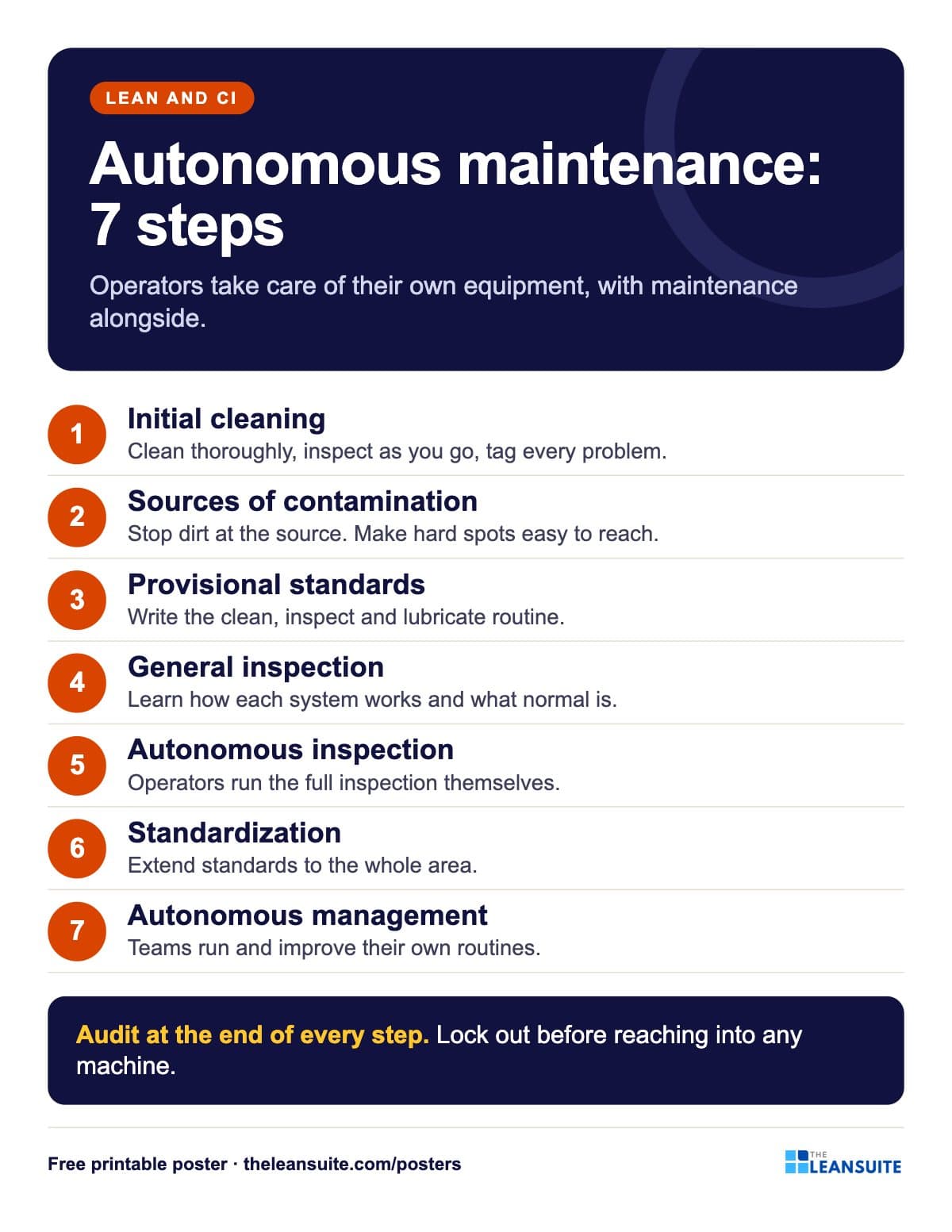 Autonomous maintenance 7 steps poster
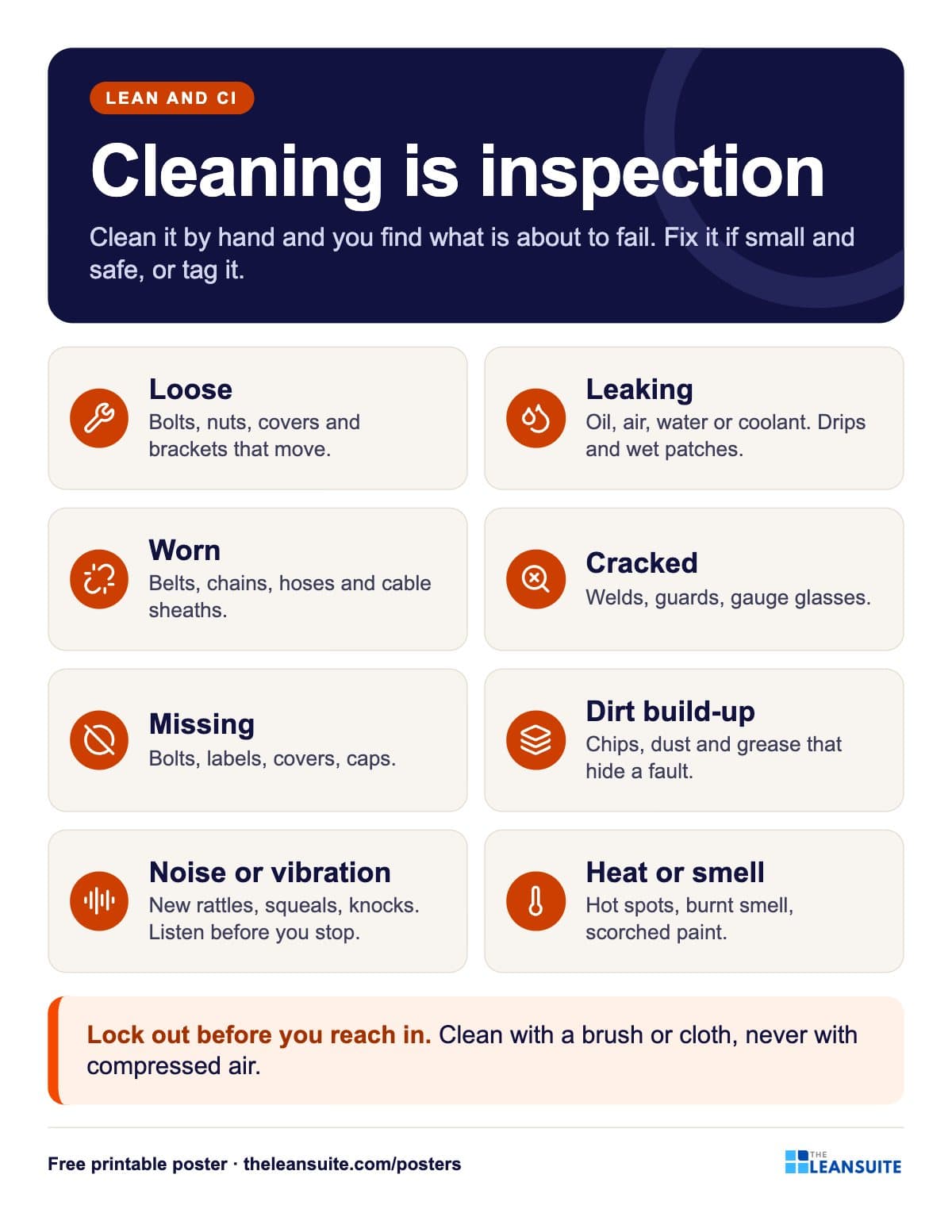 Cleaning is inspection poster
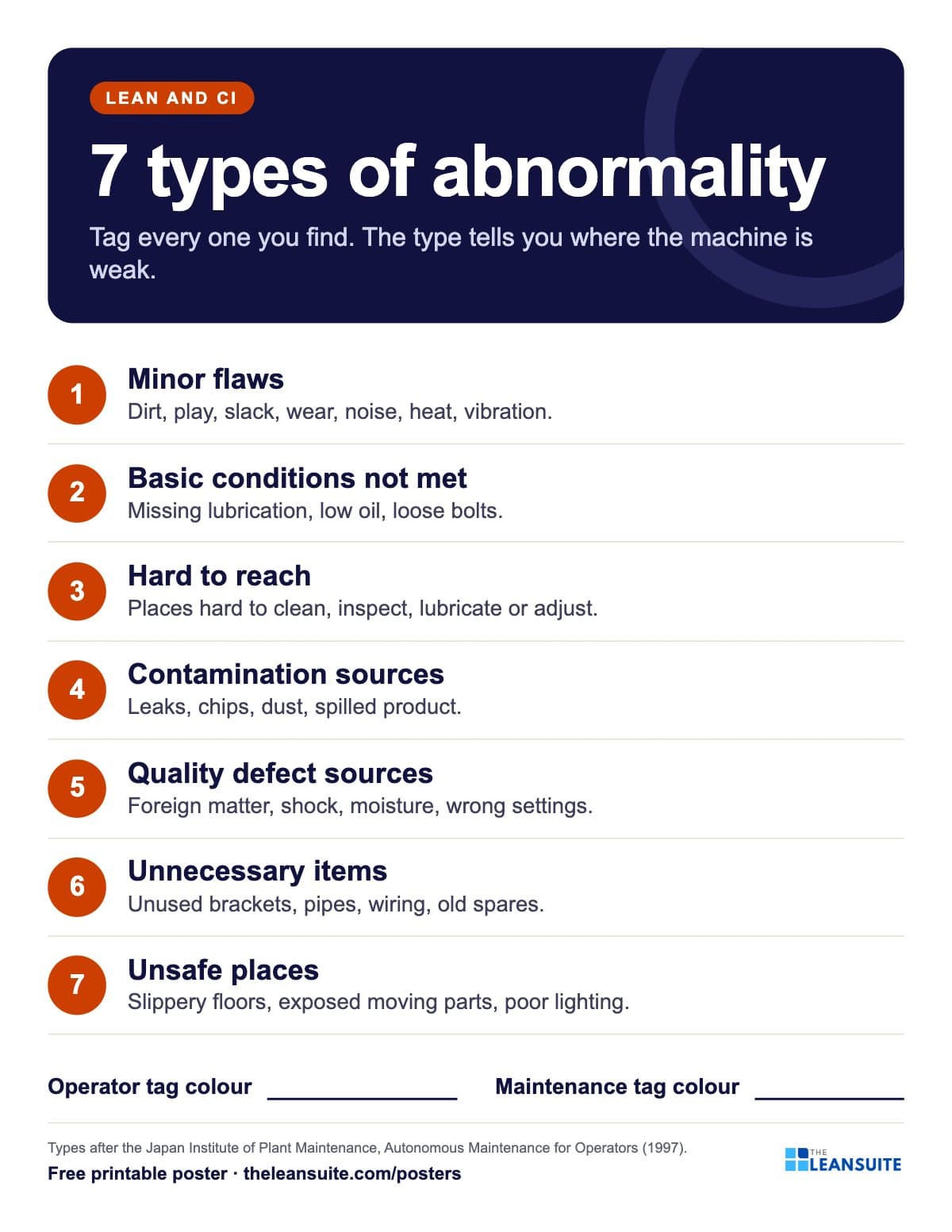 7 types of abnormality poster (TPM tags)
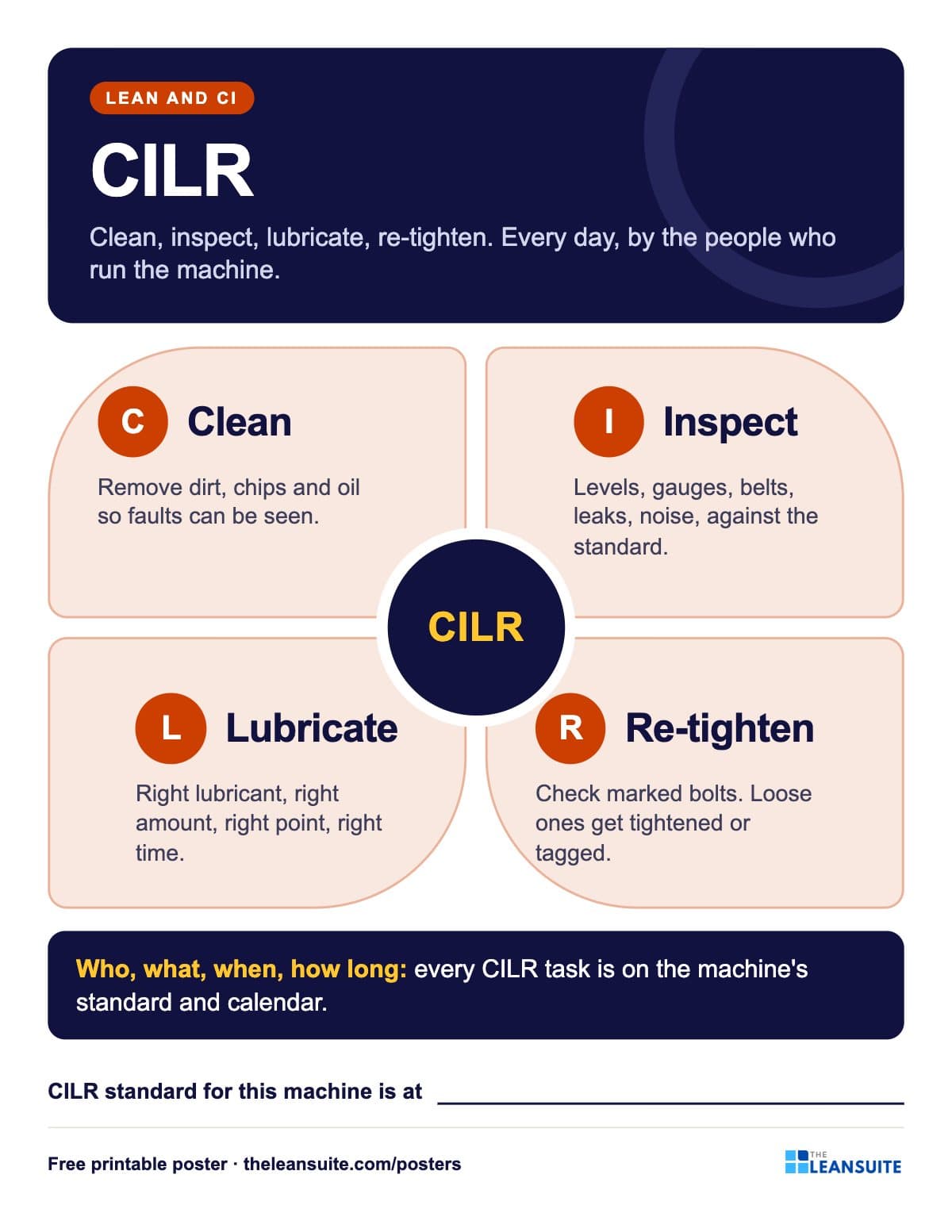 CILR poster: clean, inspect, lubricate, re-tighten
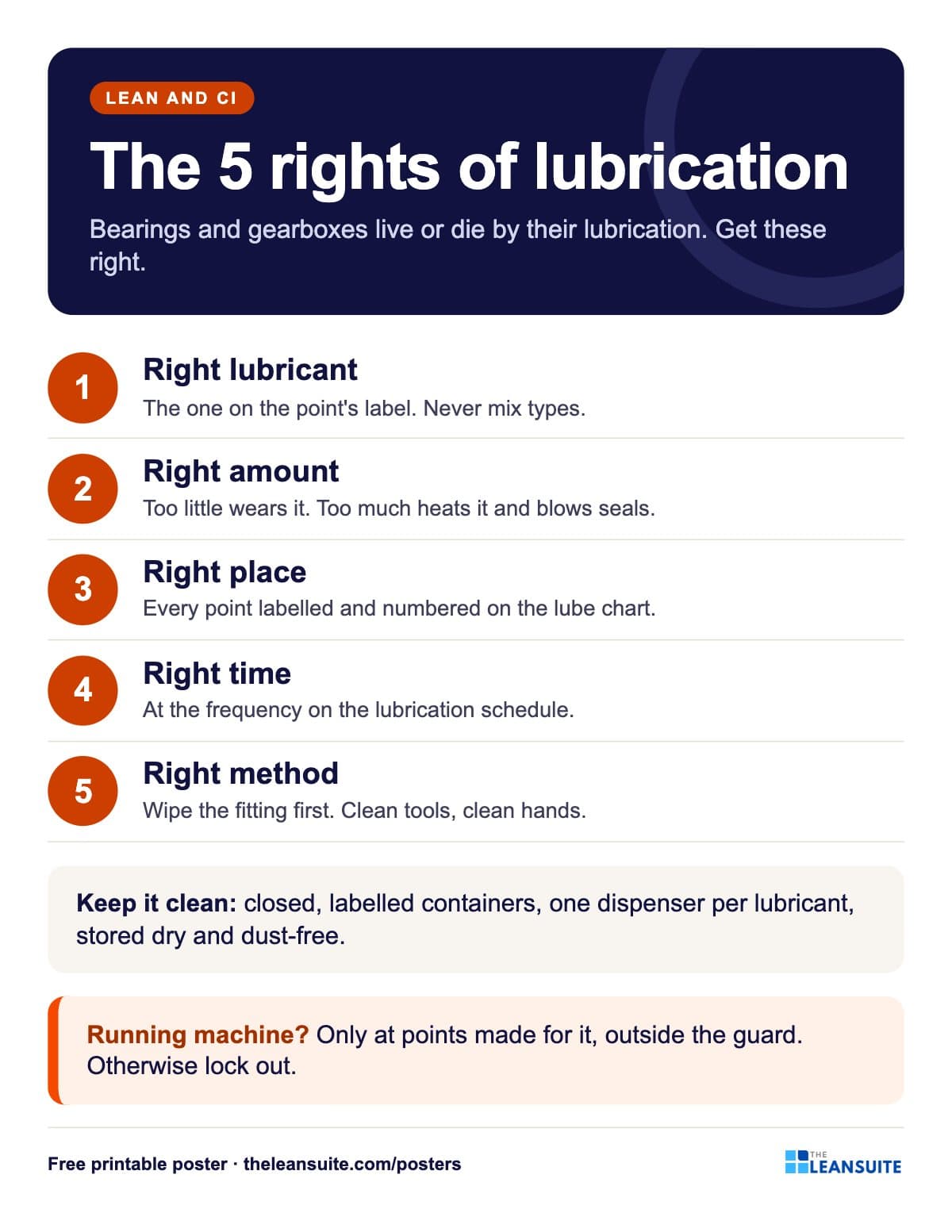 Lubrication basics poster: the five rights
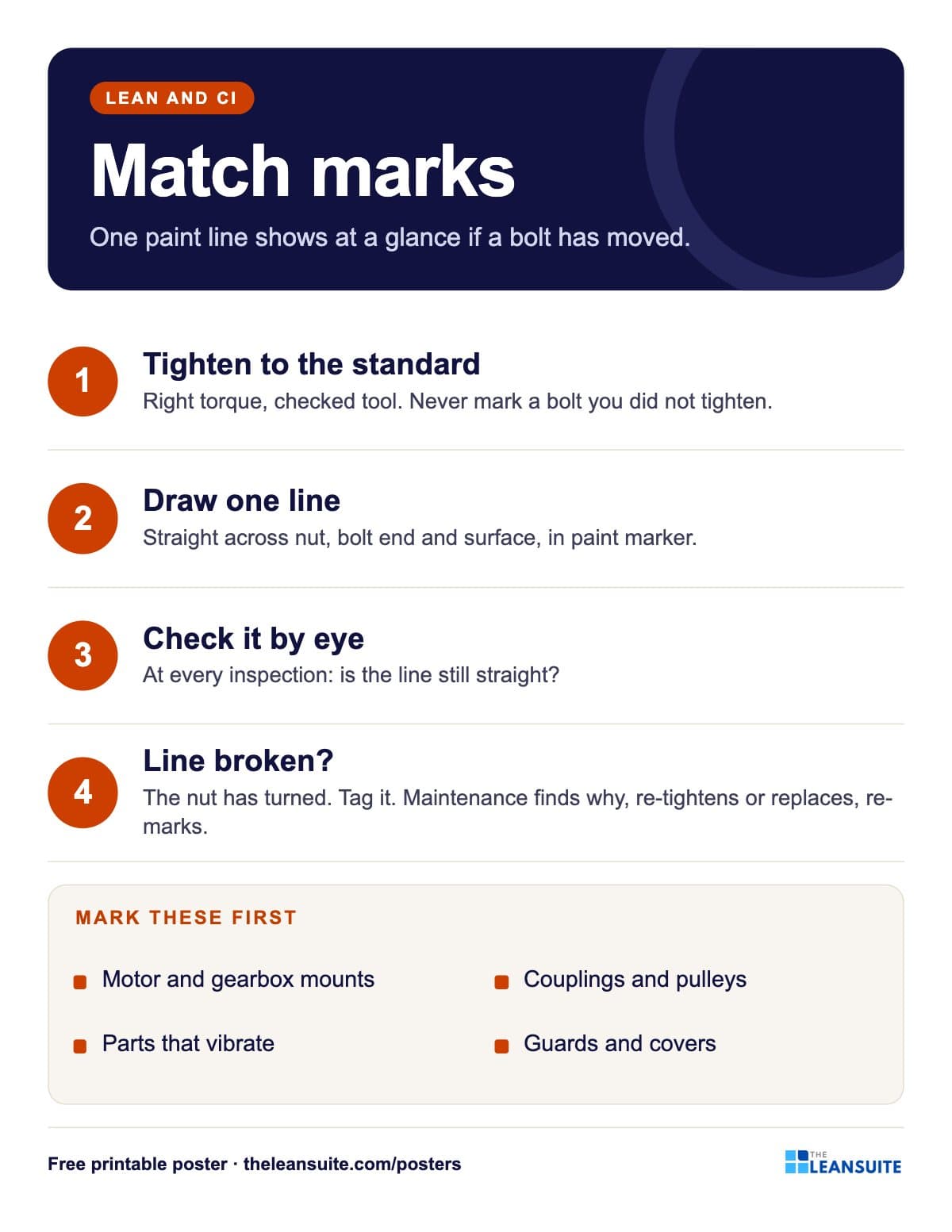 Bolt match marks poster
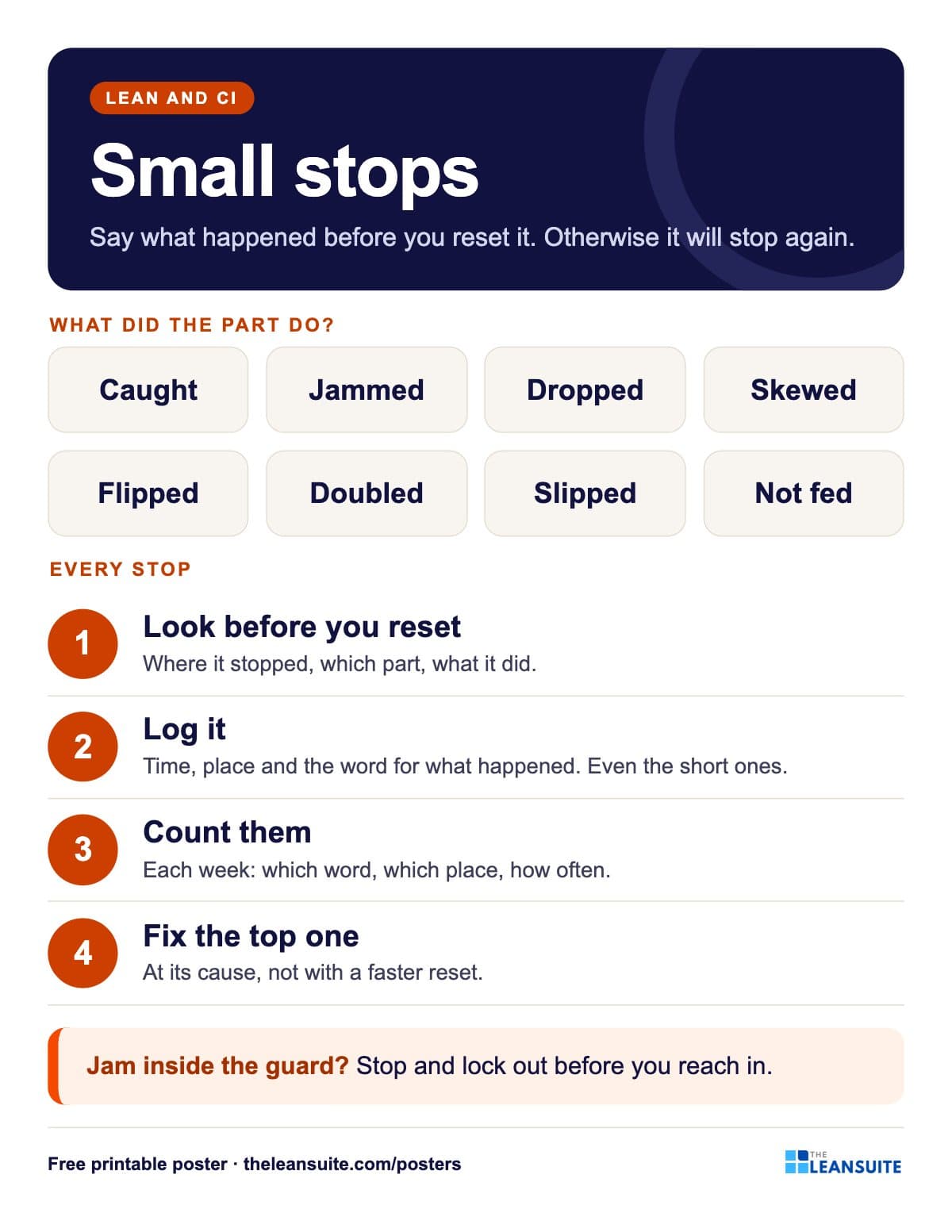 Small stops poster
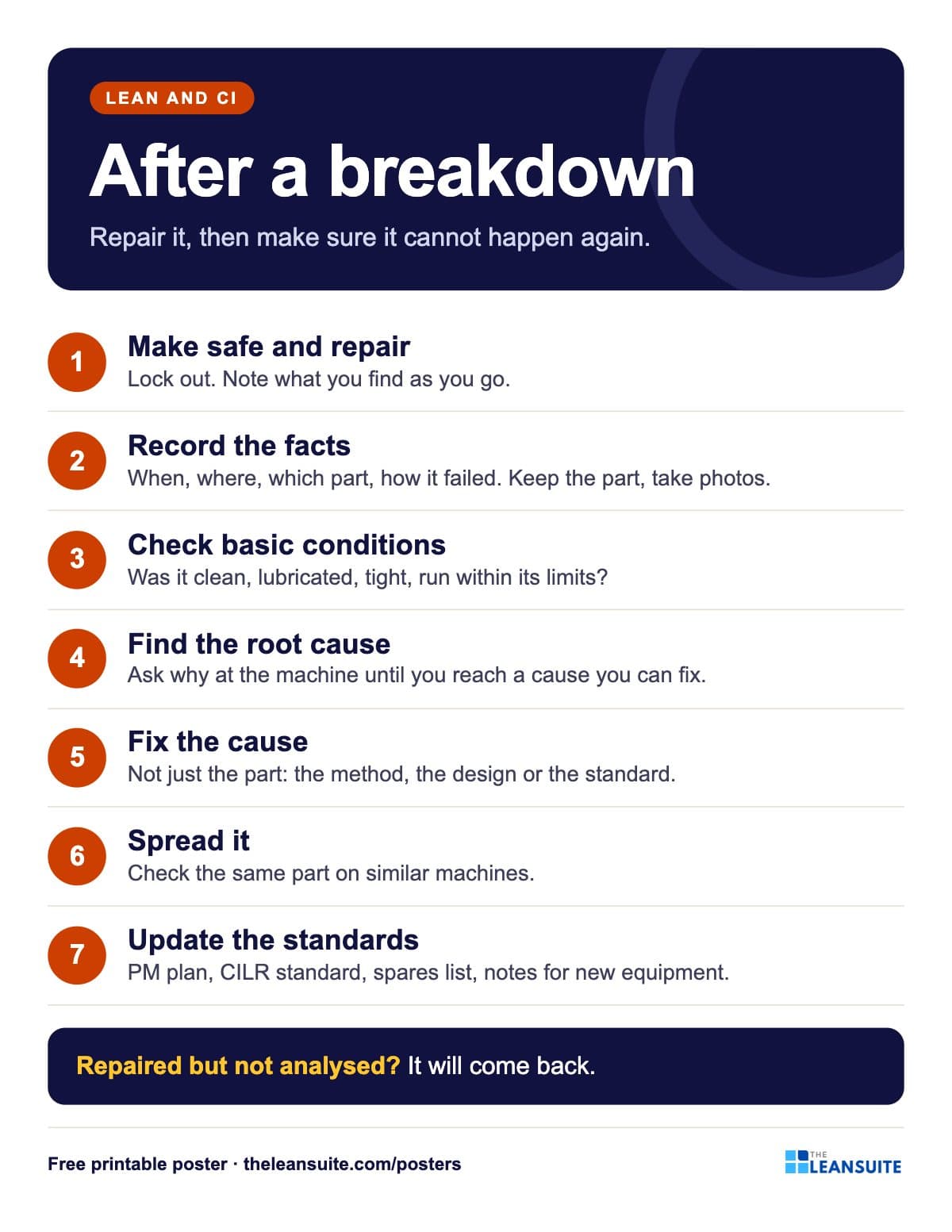 Breakdown analysis poster
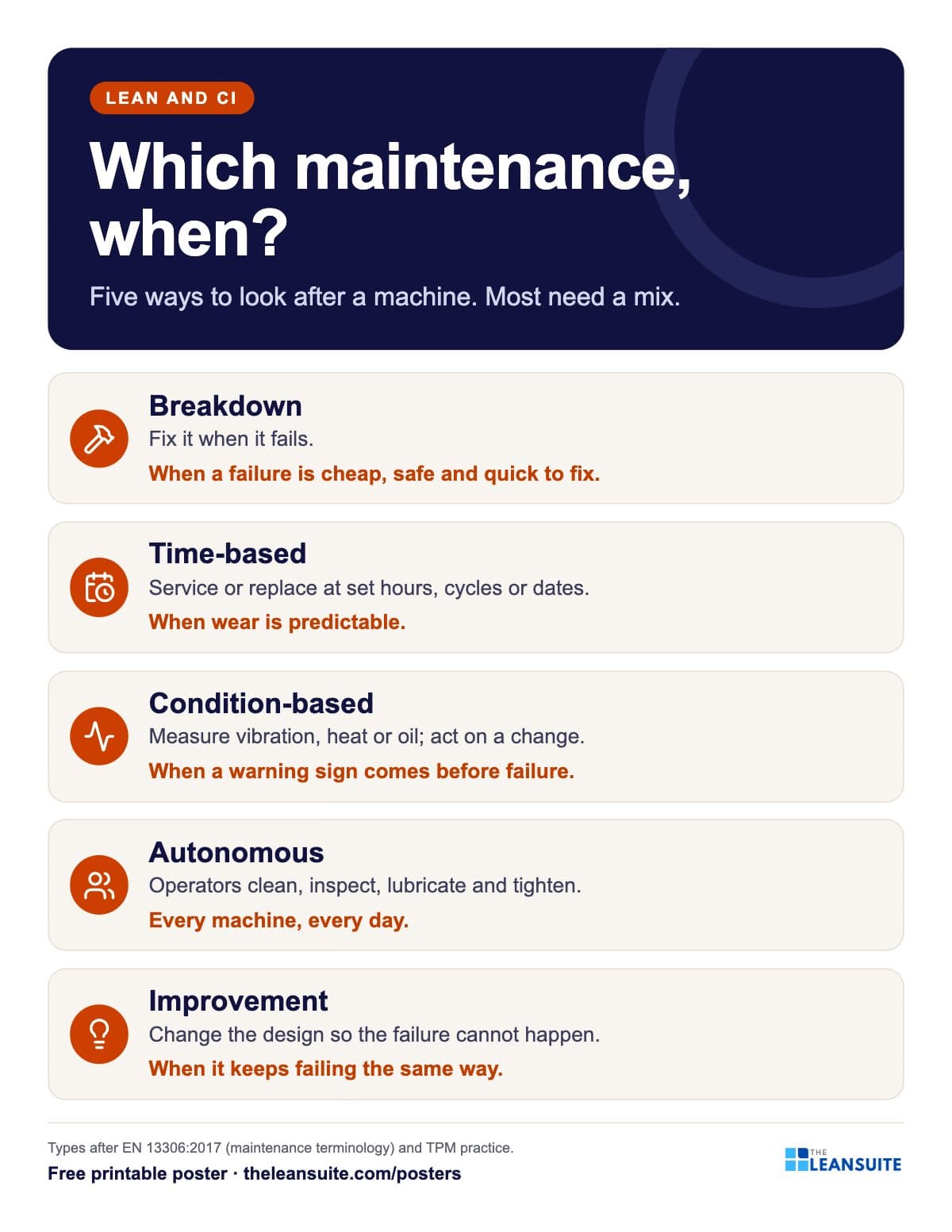 Types of maintenance poster
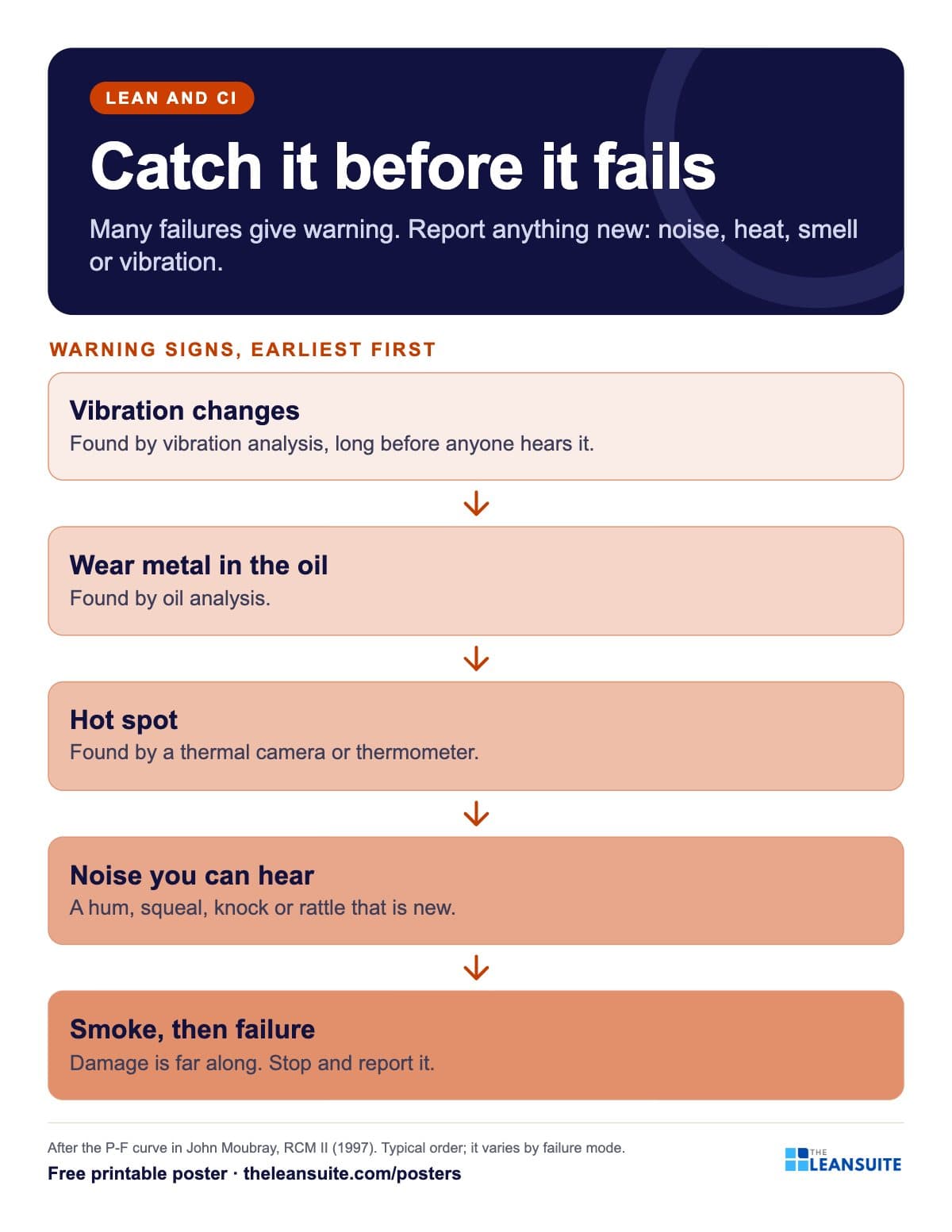 Failure warning signs poster (P-F curve)
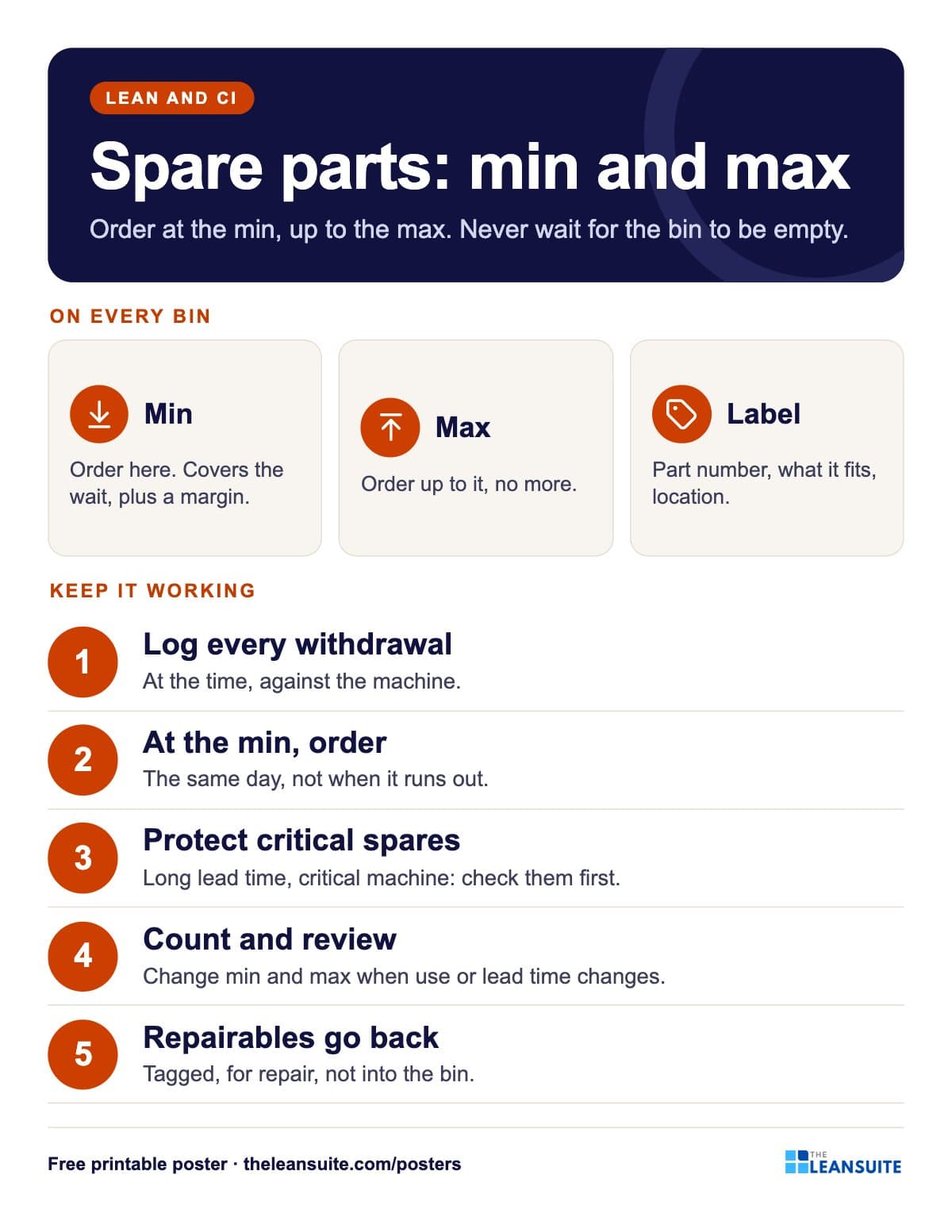 Spare parts min/max poster
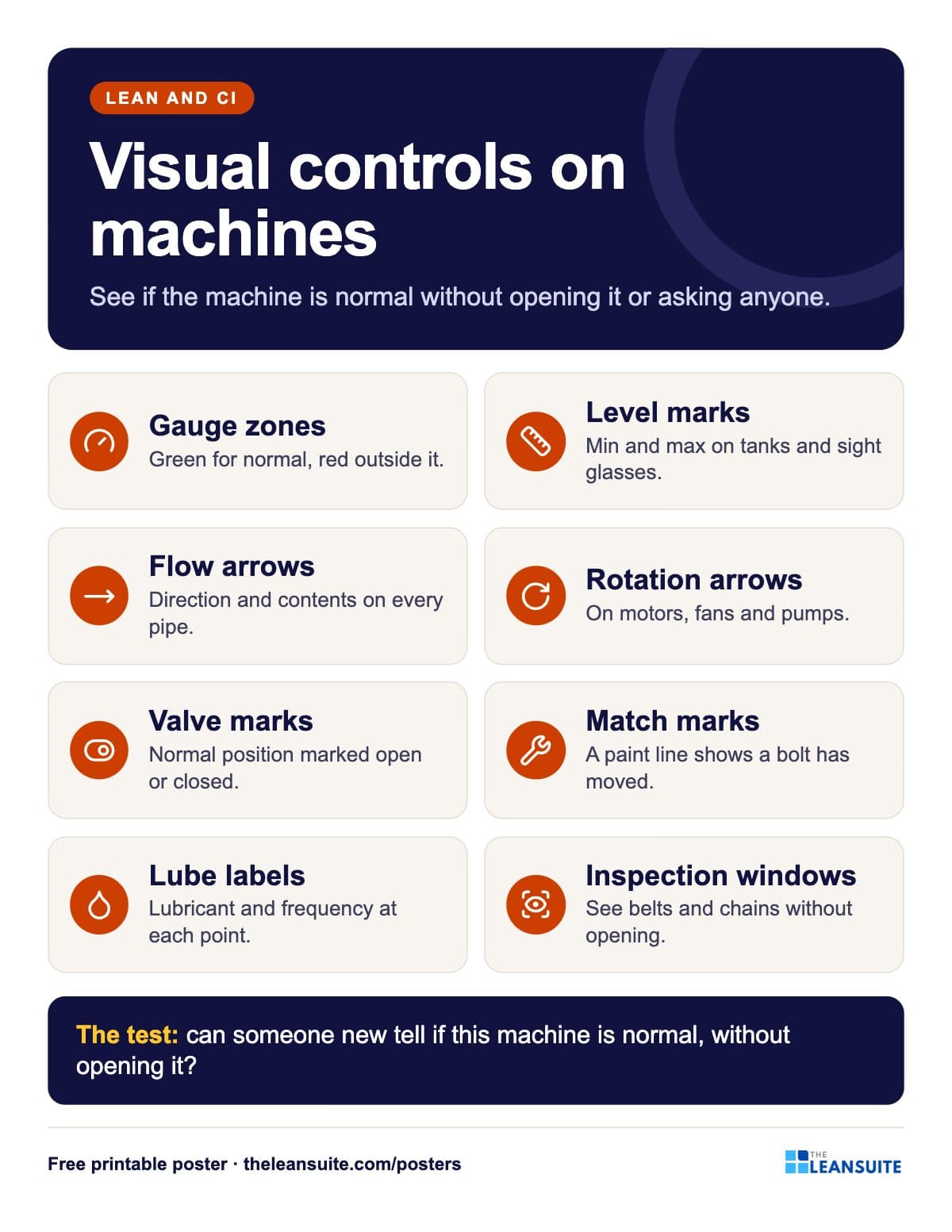 Machine visual controls poster
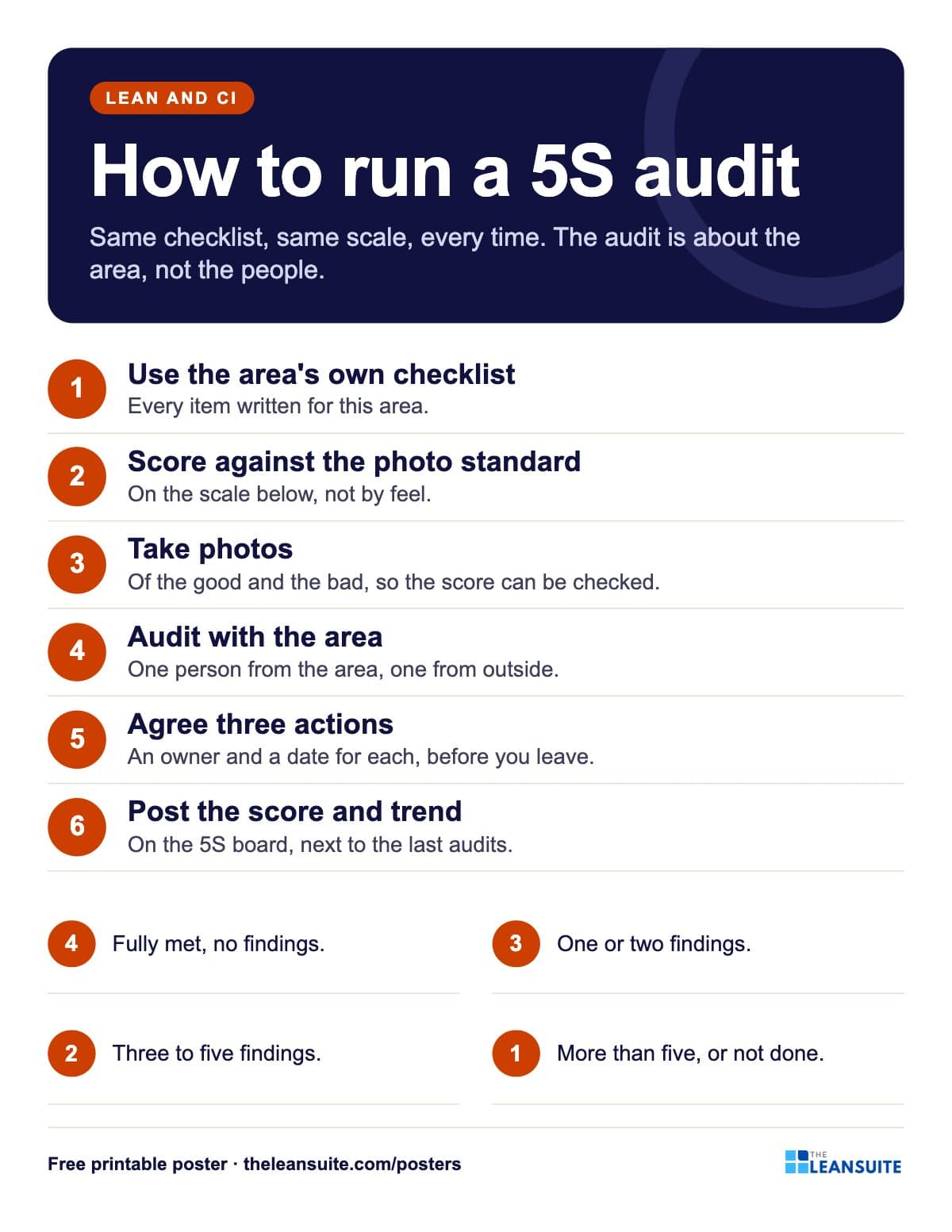 How to run a 5S audit poster
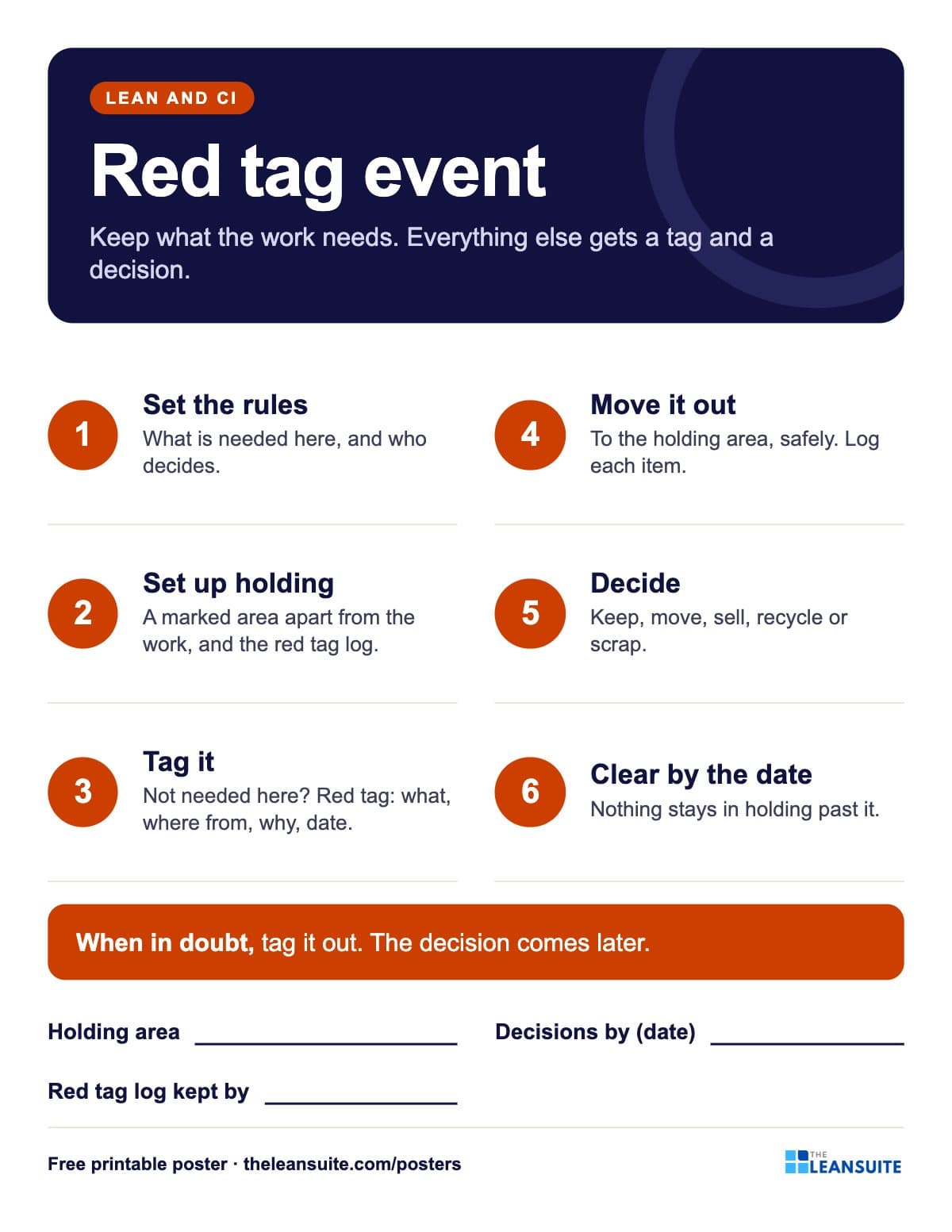 Red tag event poster
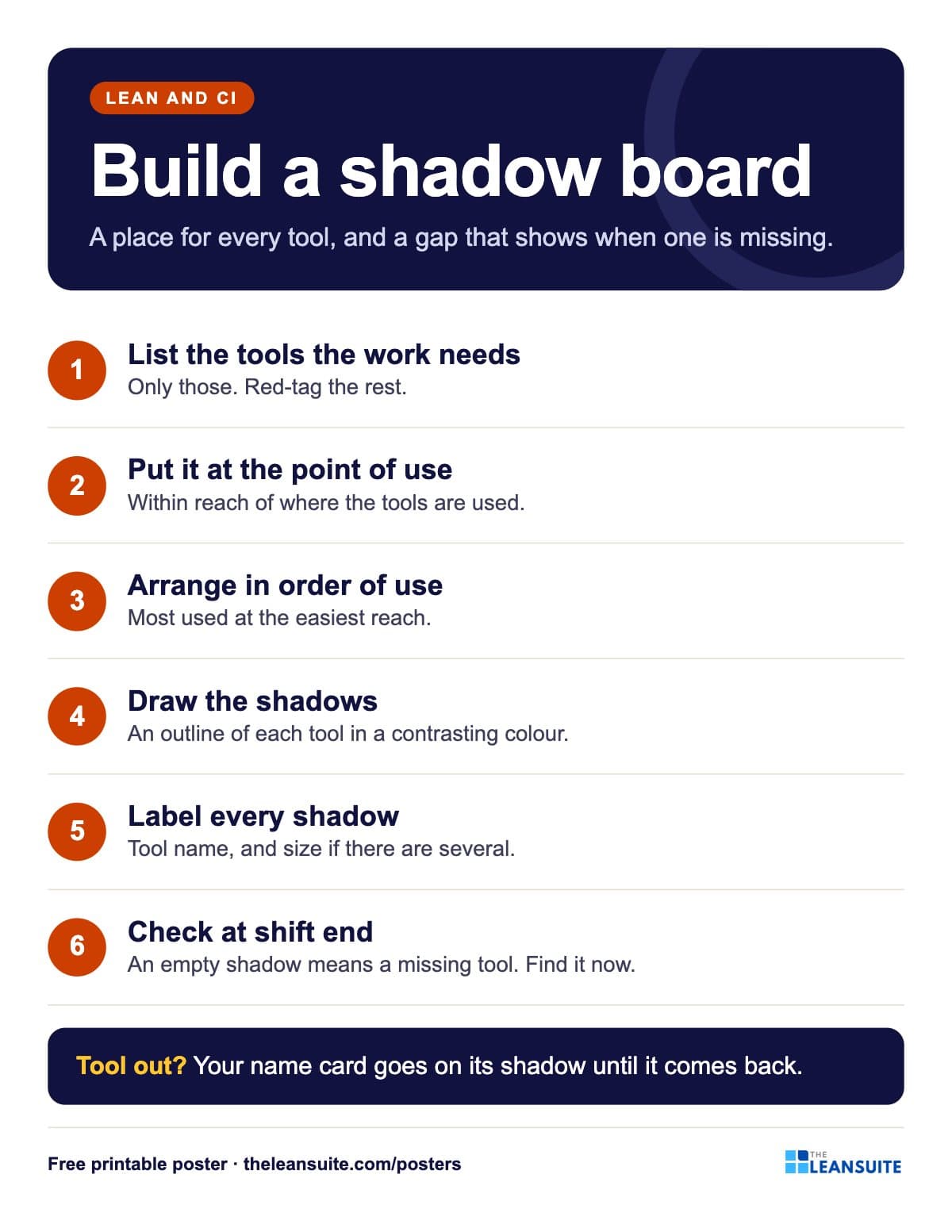 Shadow board poster
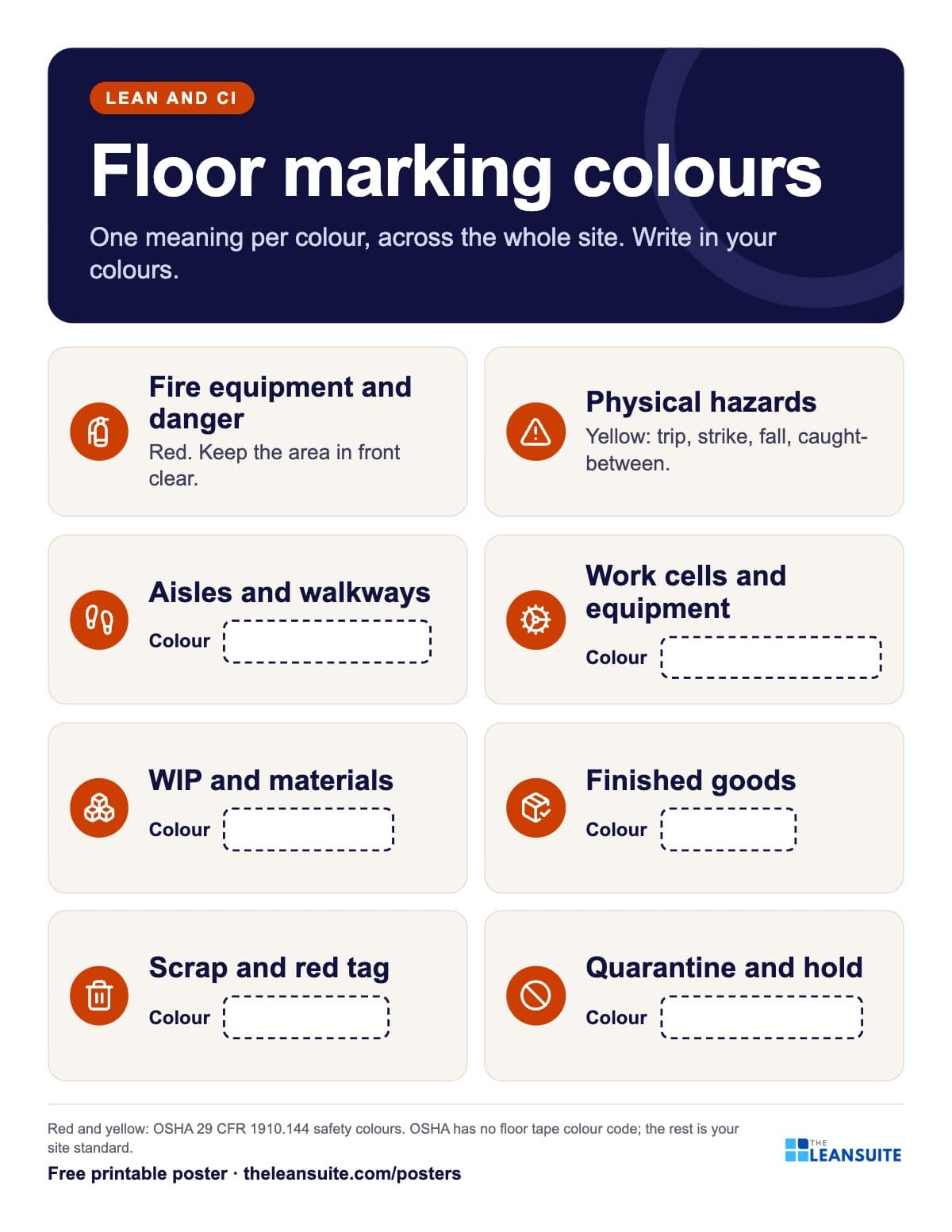 Floor marking colours poster
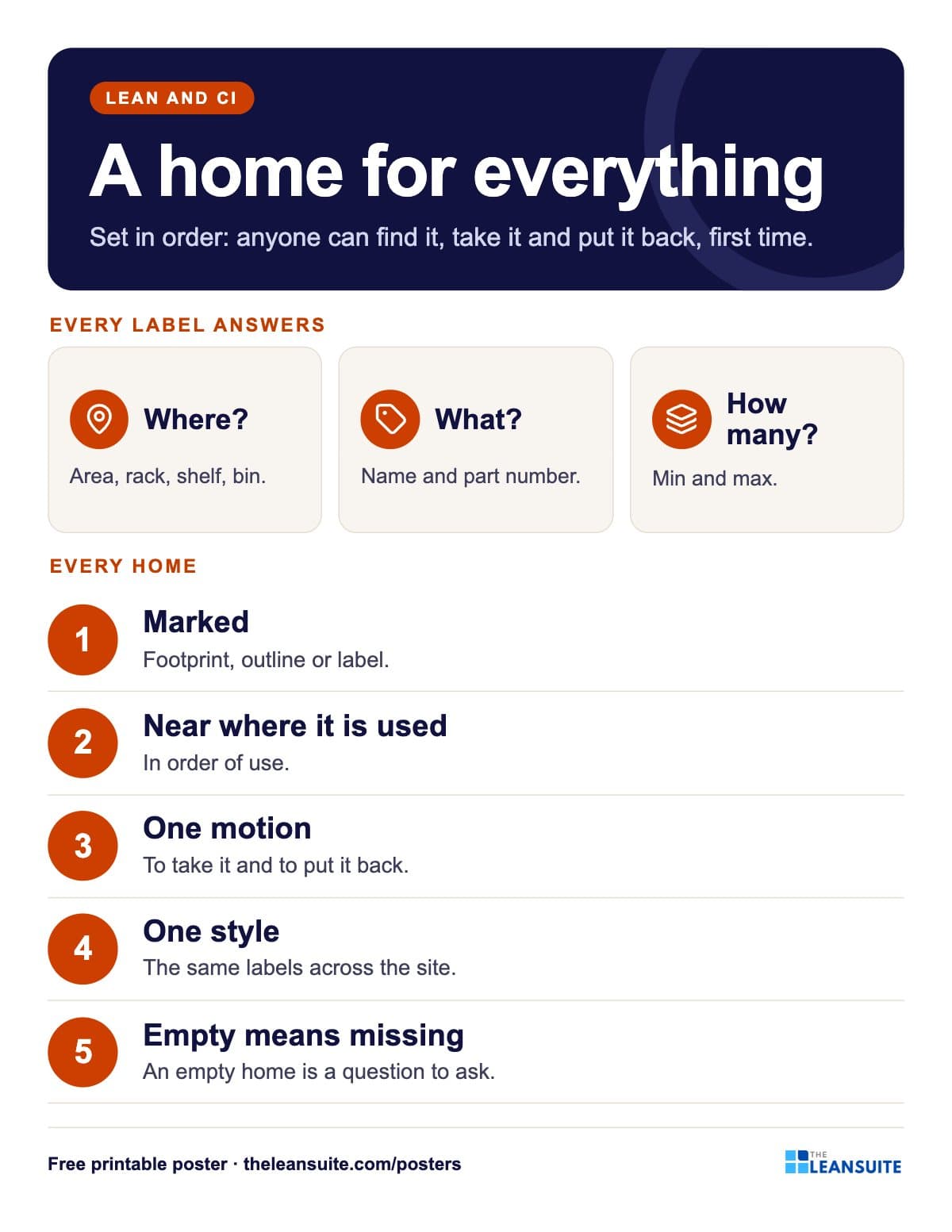 Set in order poster: where, what, how many
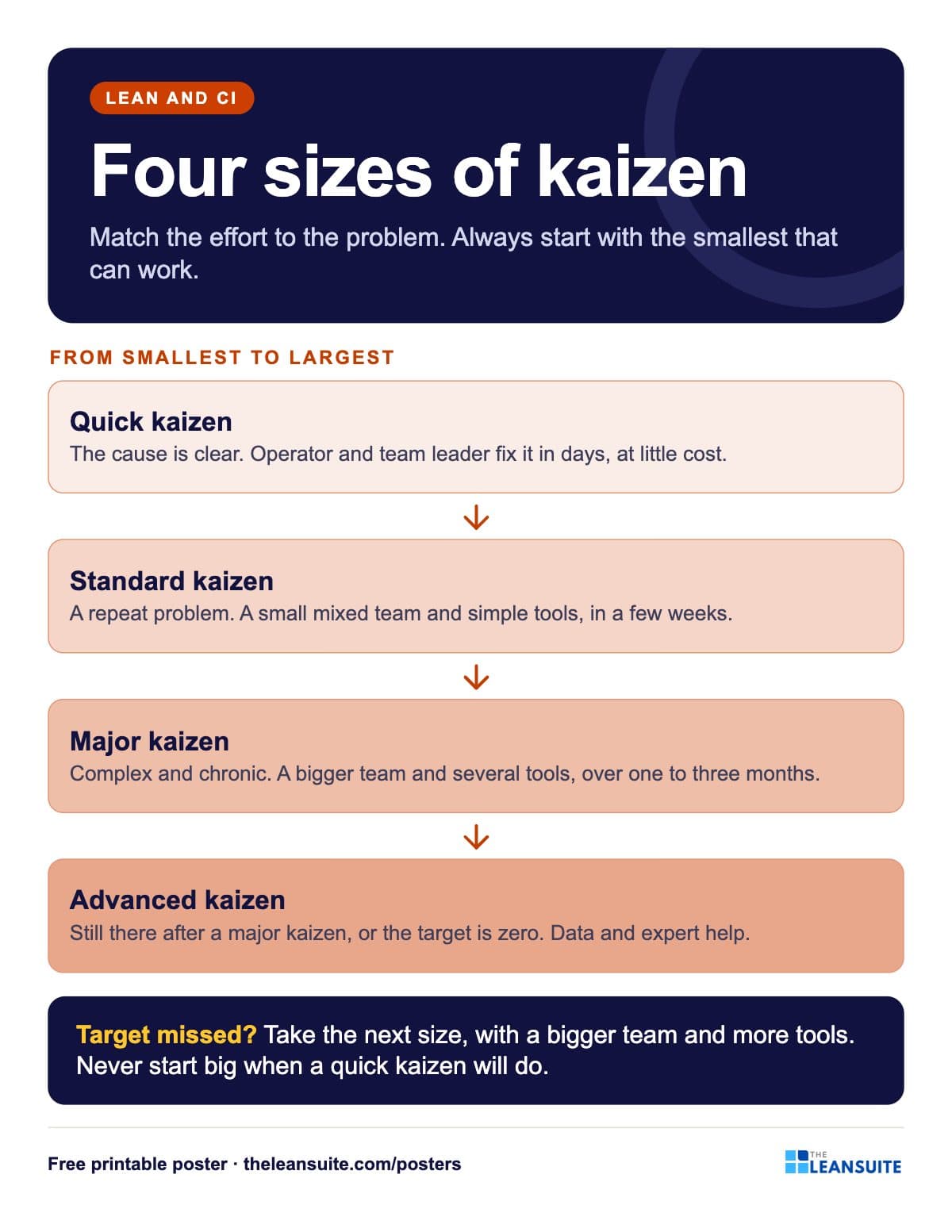 Kaizen sizes poster
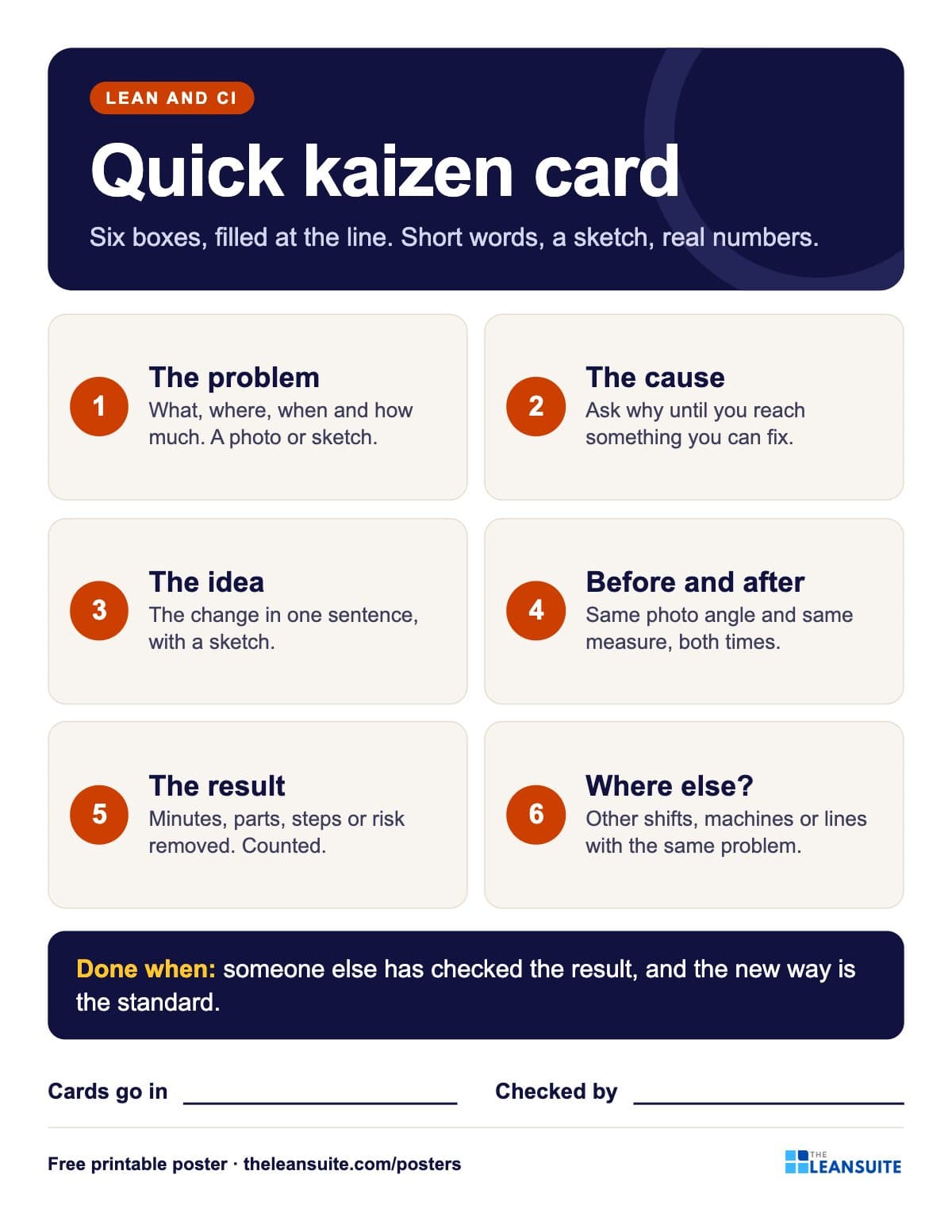 Quick kaizen card poster
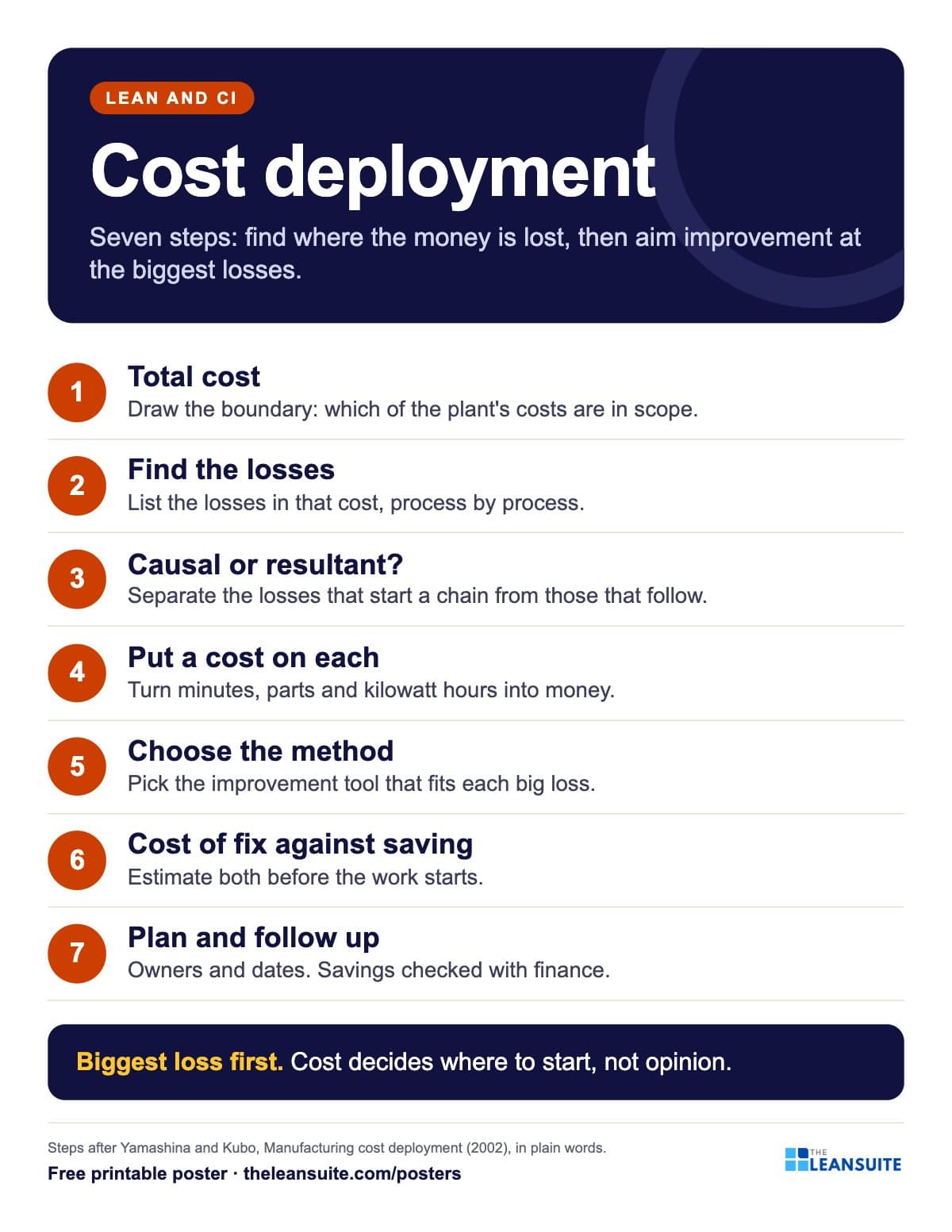 Cost deployment 7 steps poster
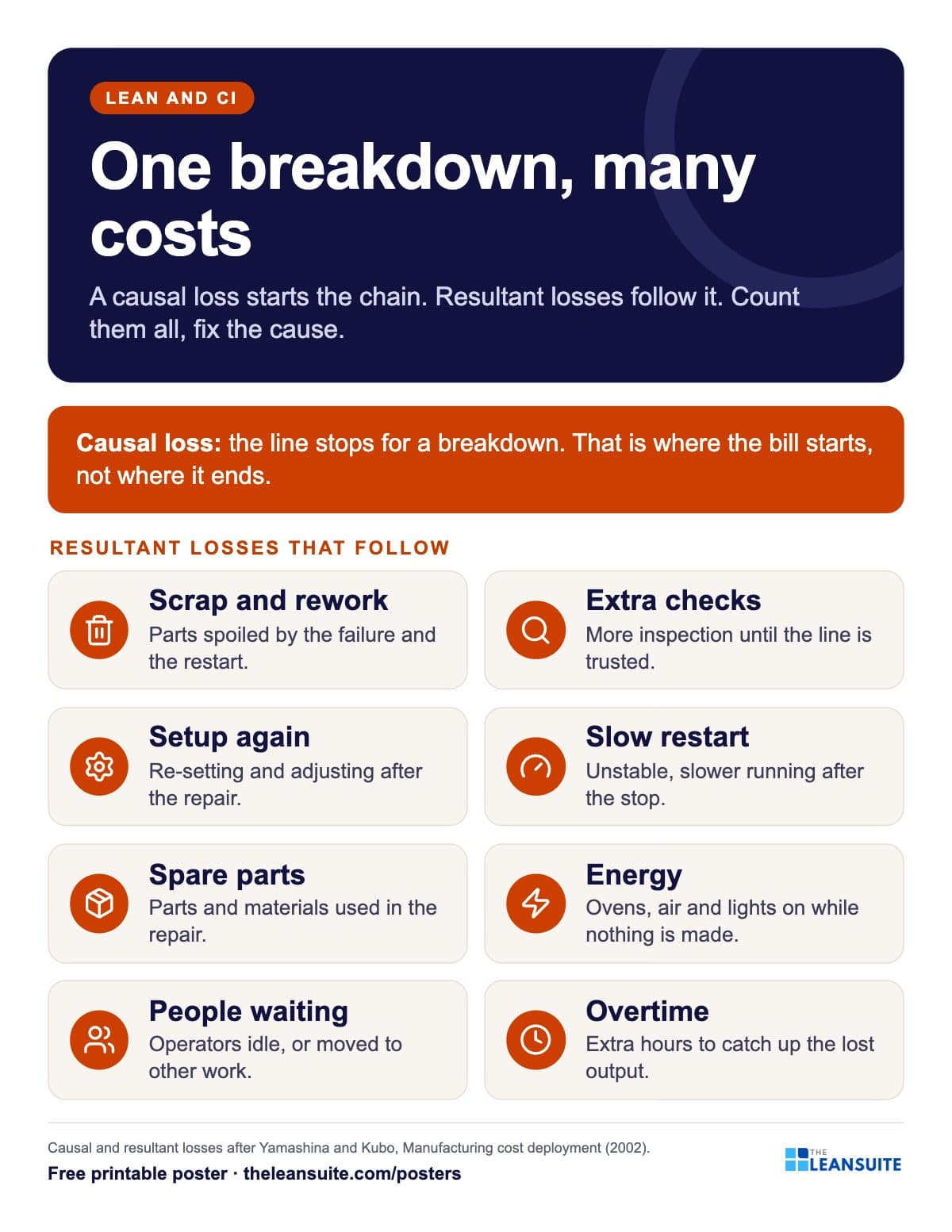 Causal and resultant losses poster
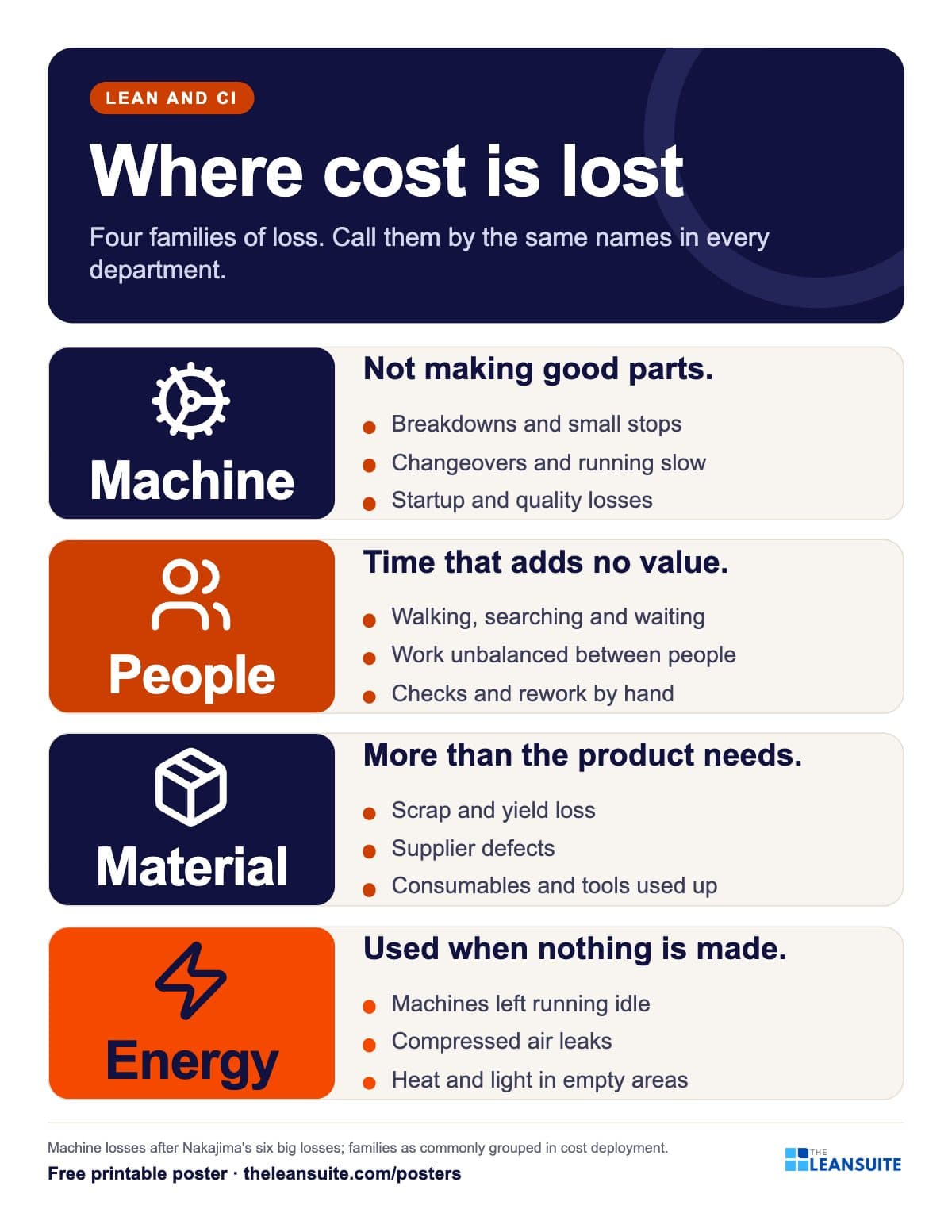 Four loss families poster
 ECRS poster
 PICK chart poster
 Suggestion system poster
 Benefit-cost ratio and payback poster
 Model area and expansion poster
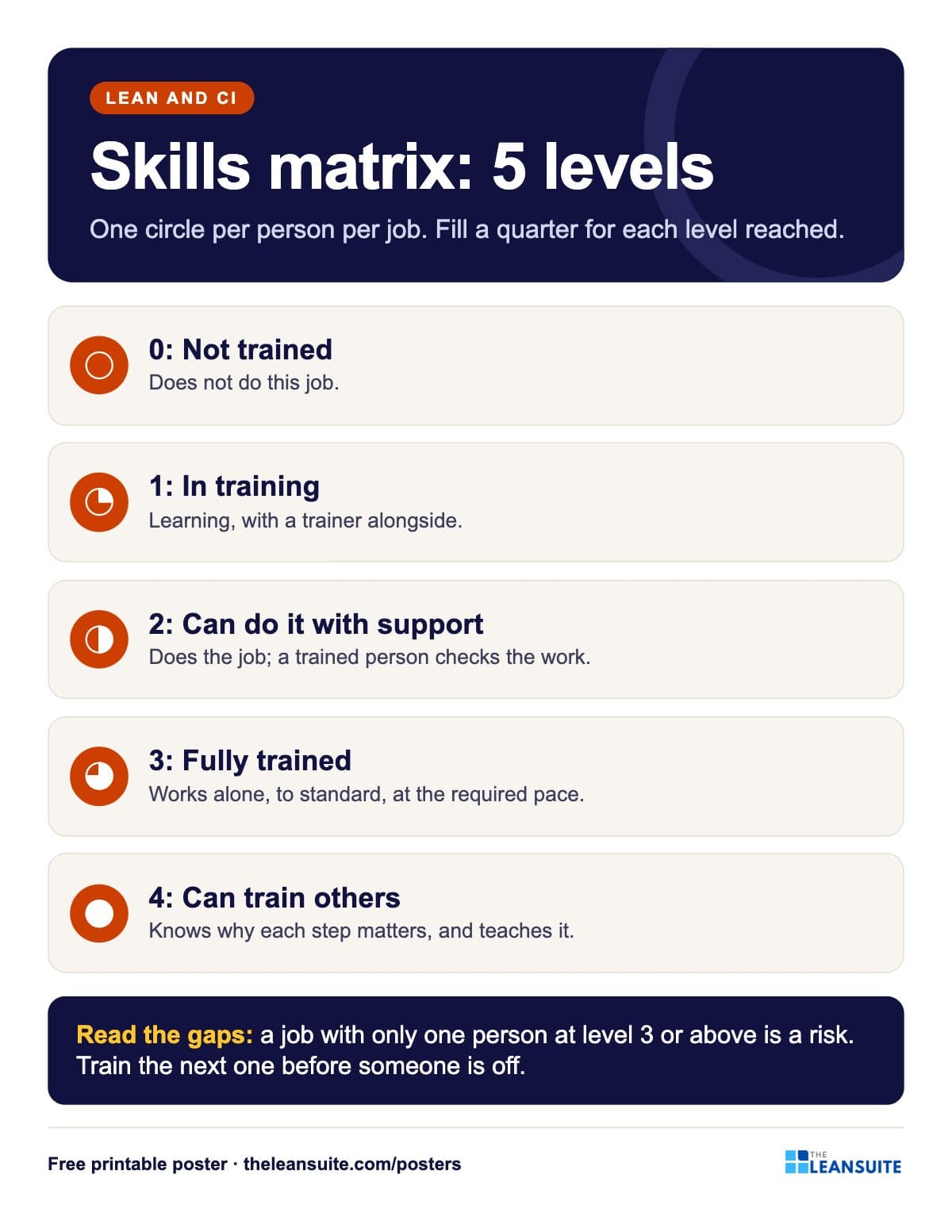 Skills matrix levels poster
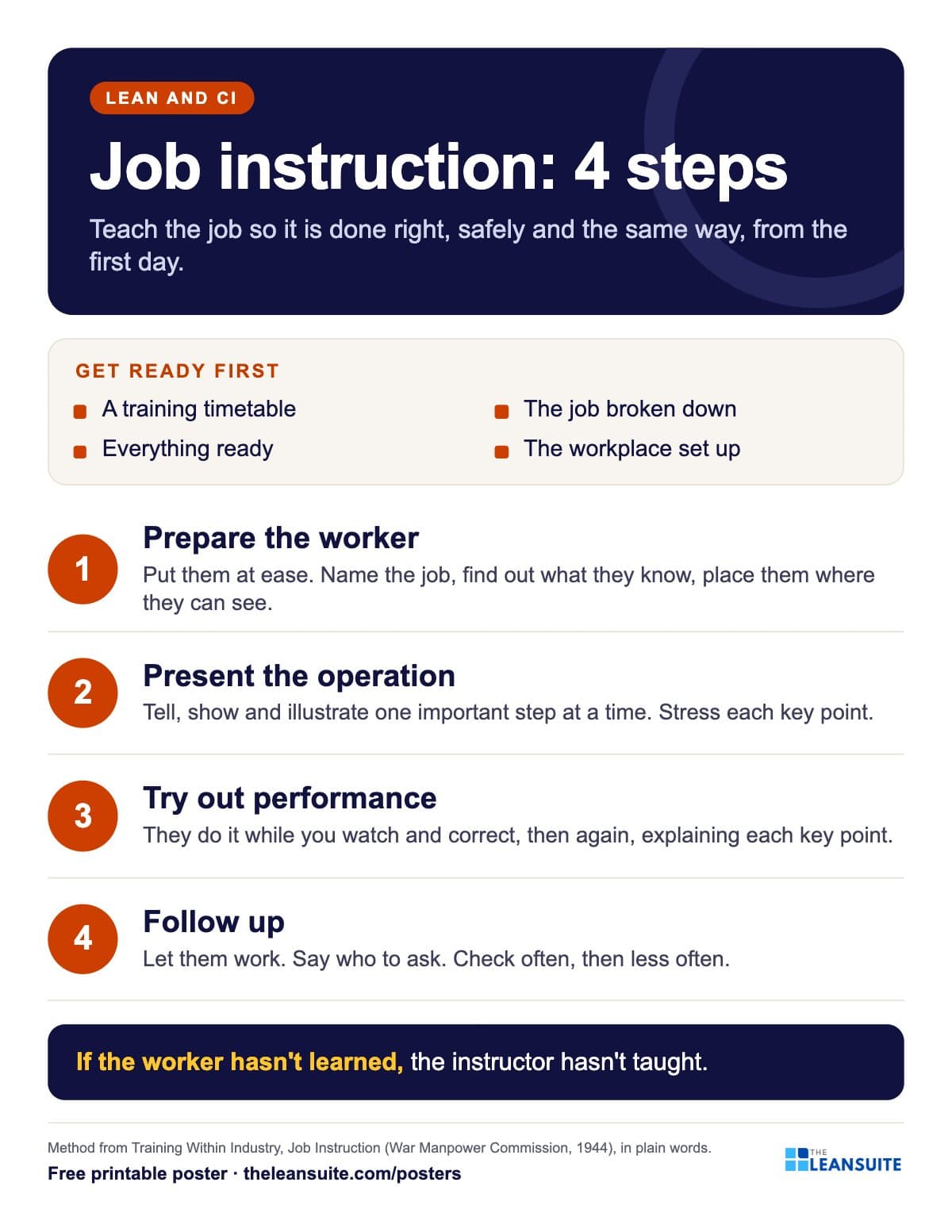 Job instruction 4 steps poster
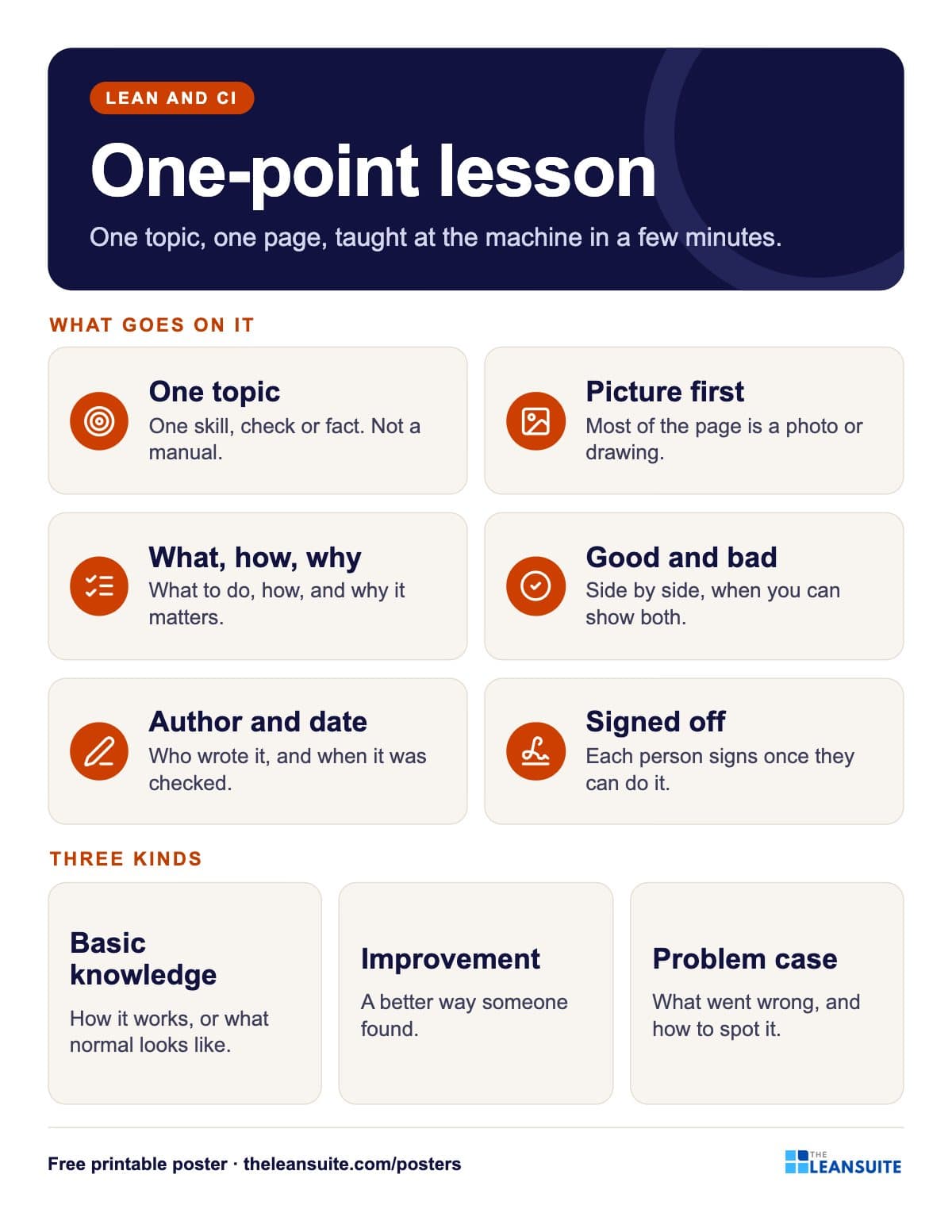 One-point lesson poster
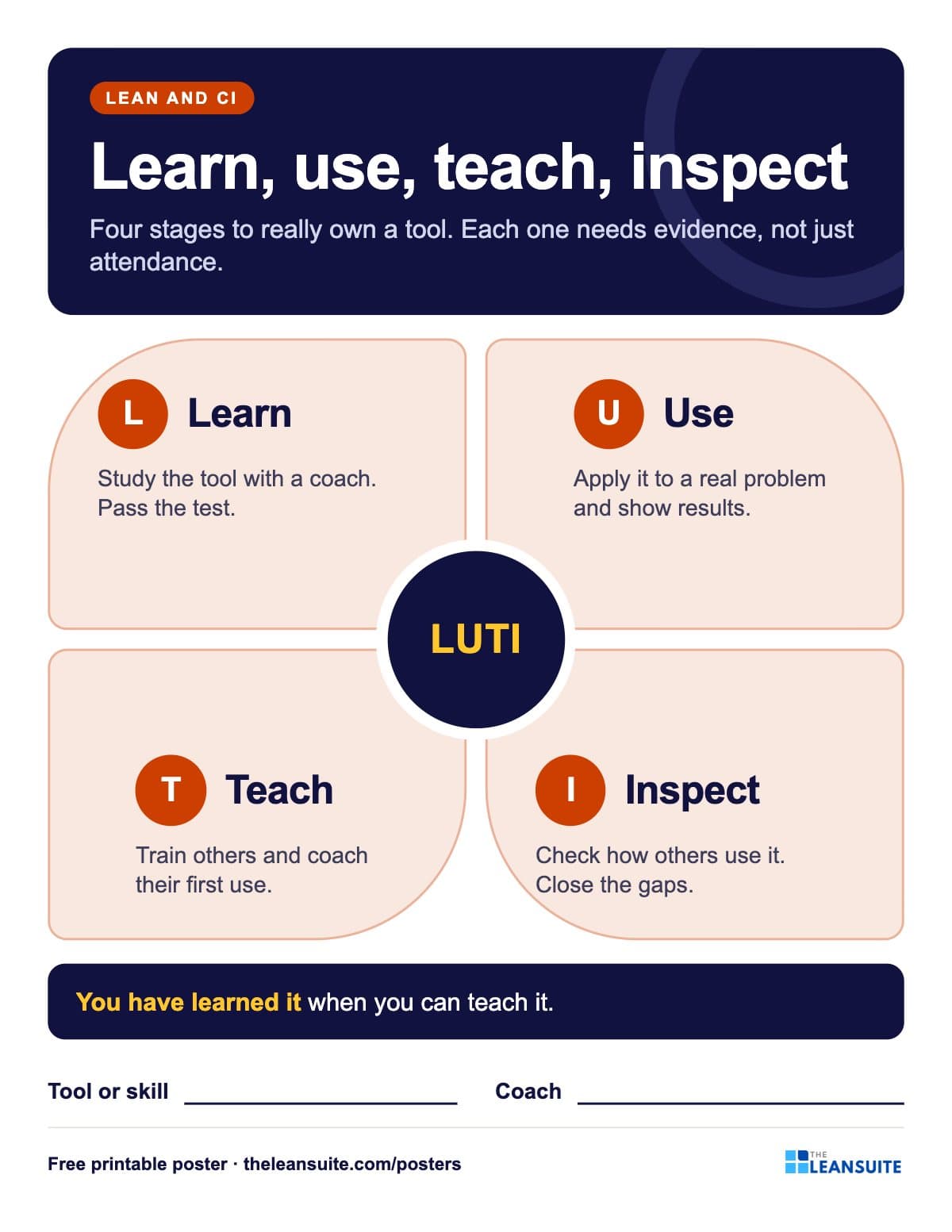 Learn, use, teach, inspect poster
 Leader standard work poster
 Tiered meetings poster
 SQDCP board poster
 Leading and lagging indicators poster
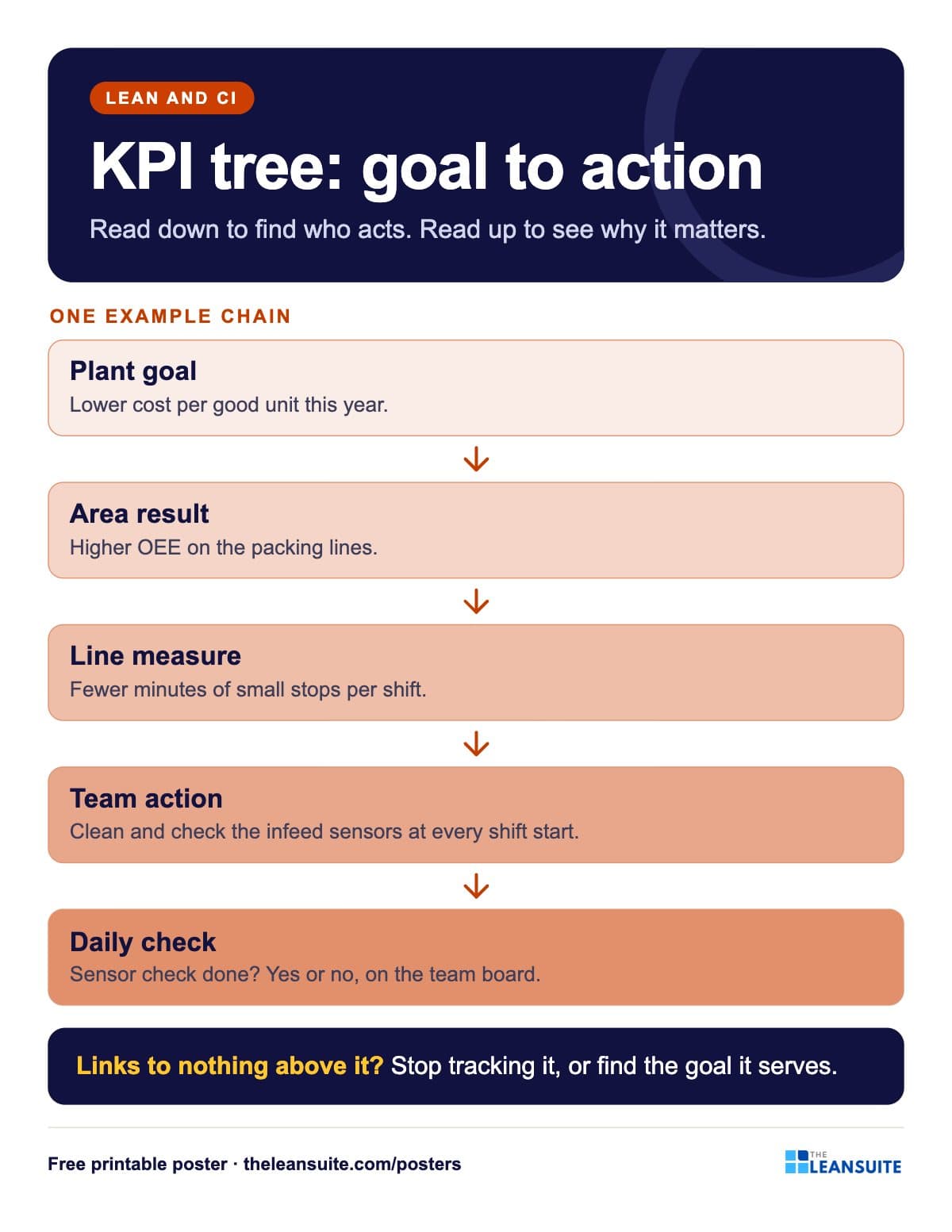 KPI tree poster
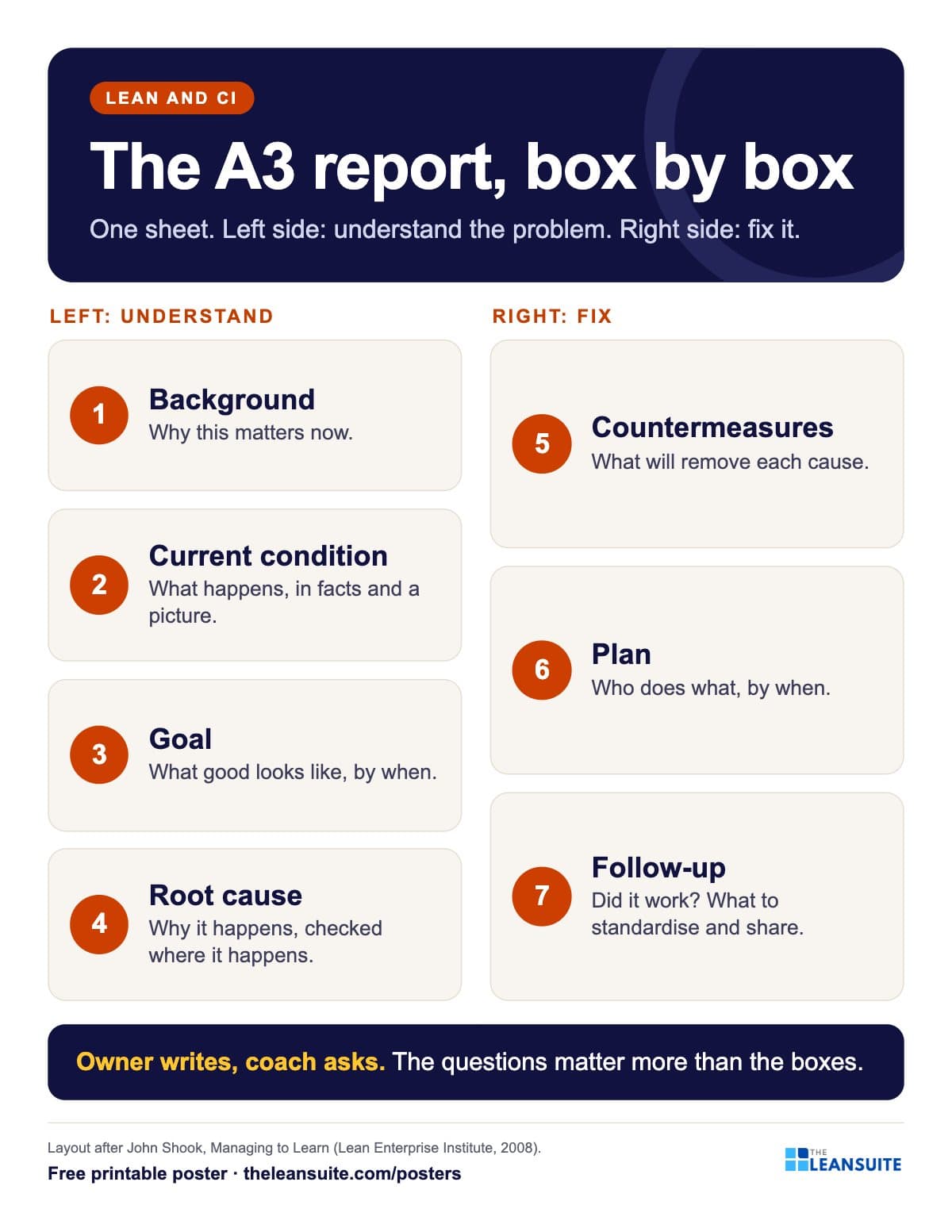 A3 report layout poster
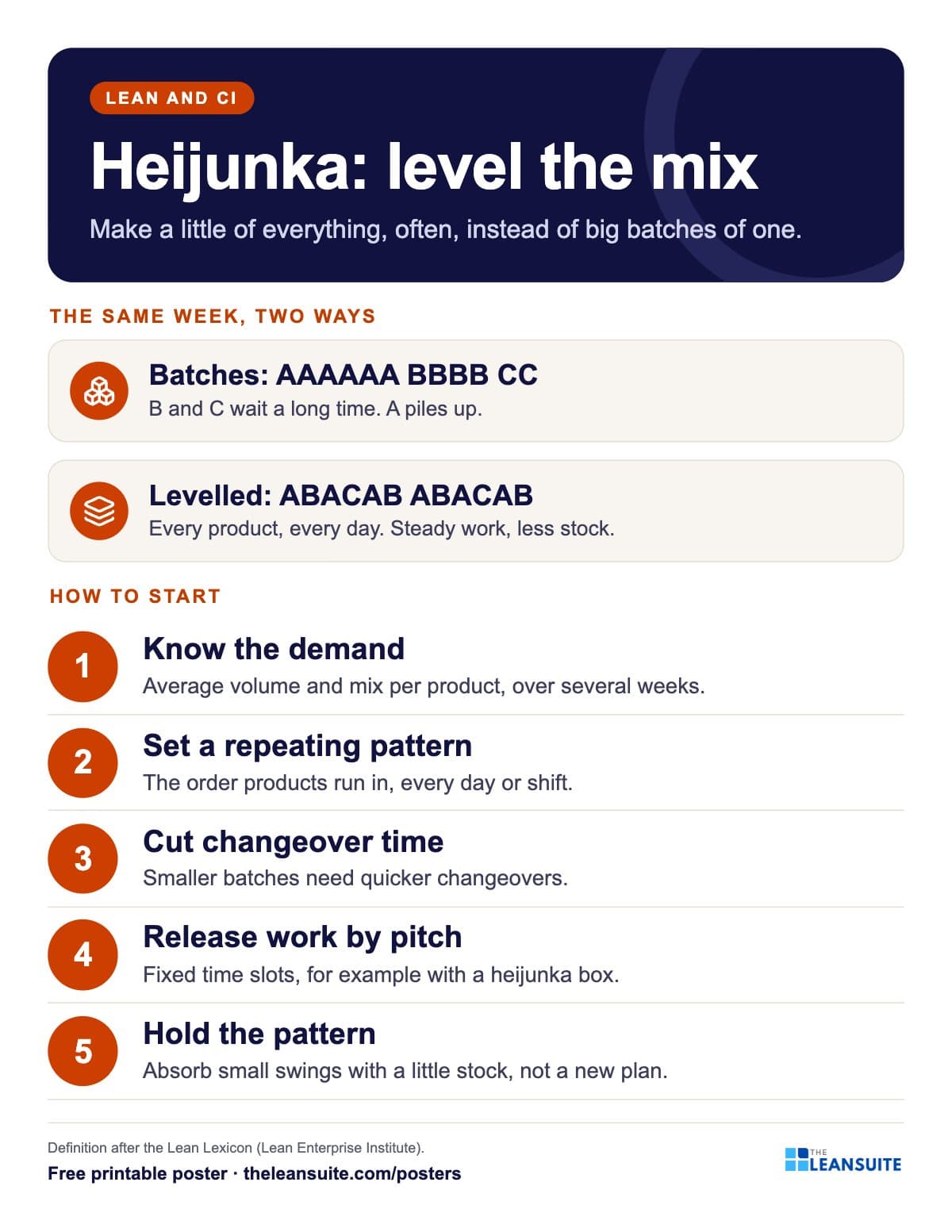 Heijunka production levelling poster
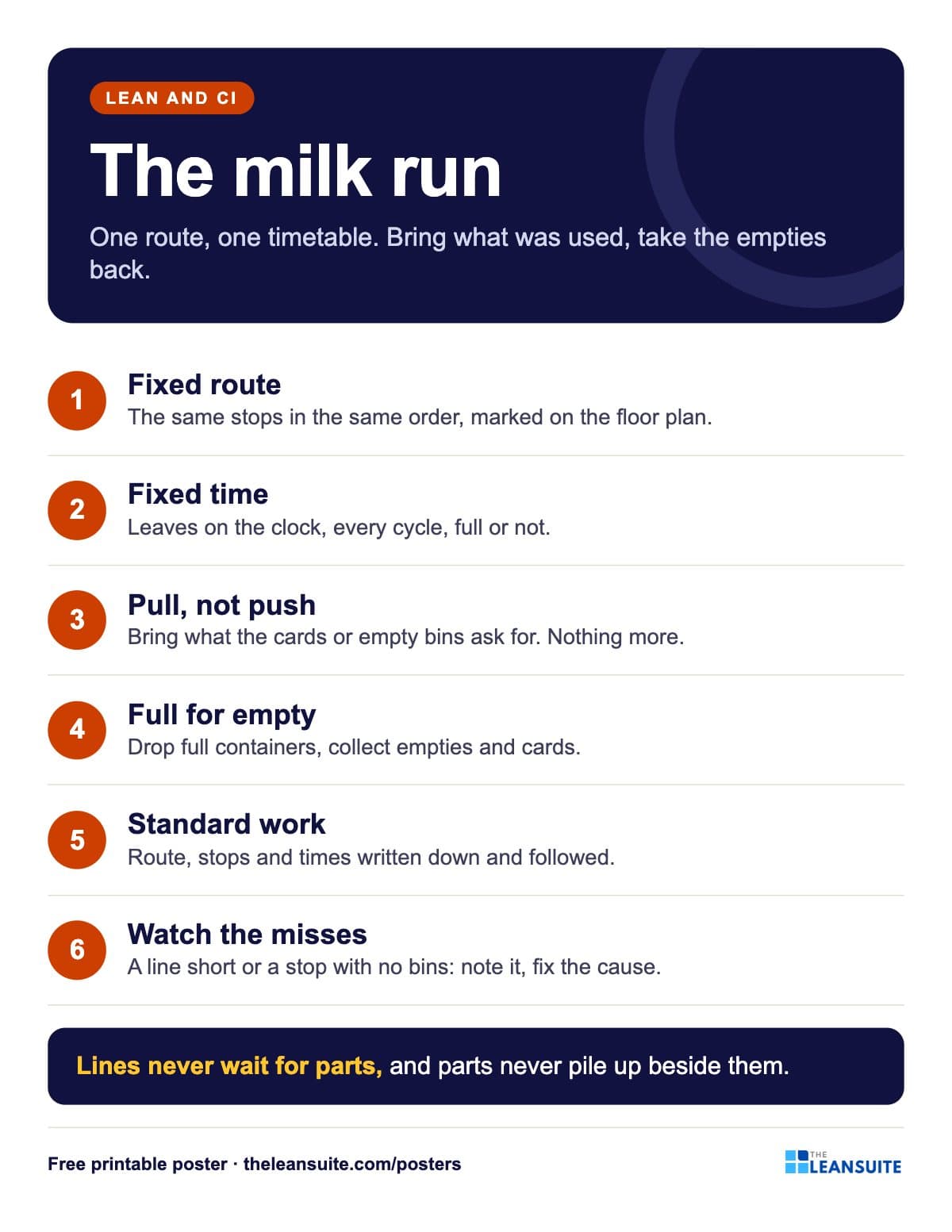 Milk run poster
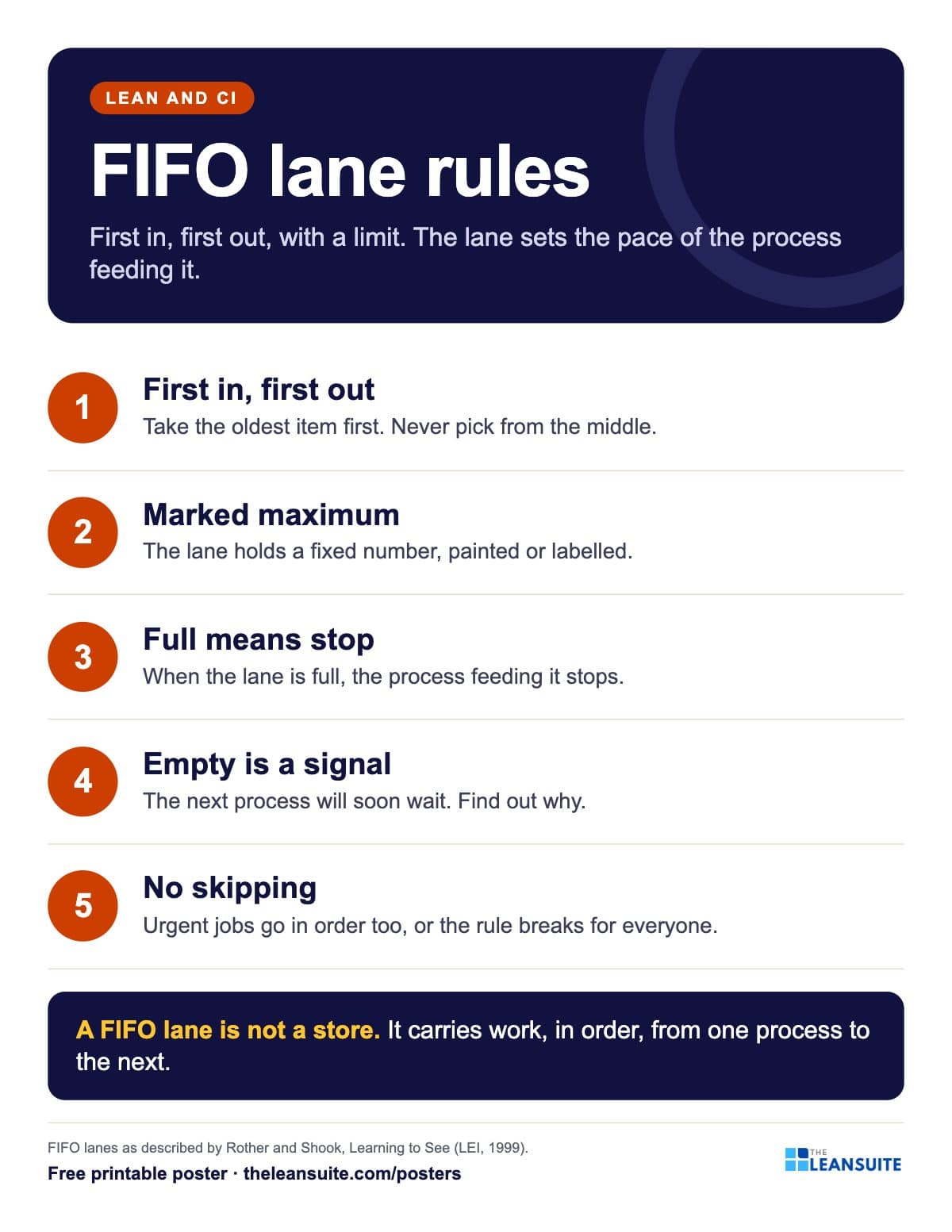 FIFO lane rules poster
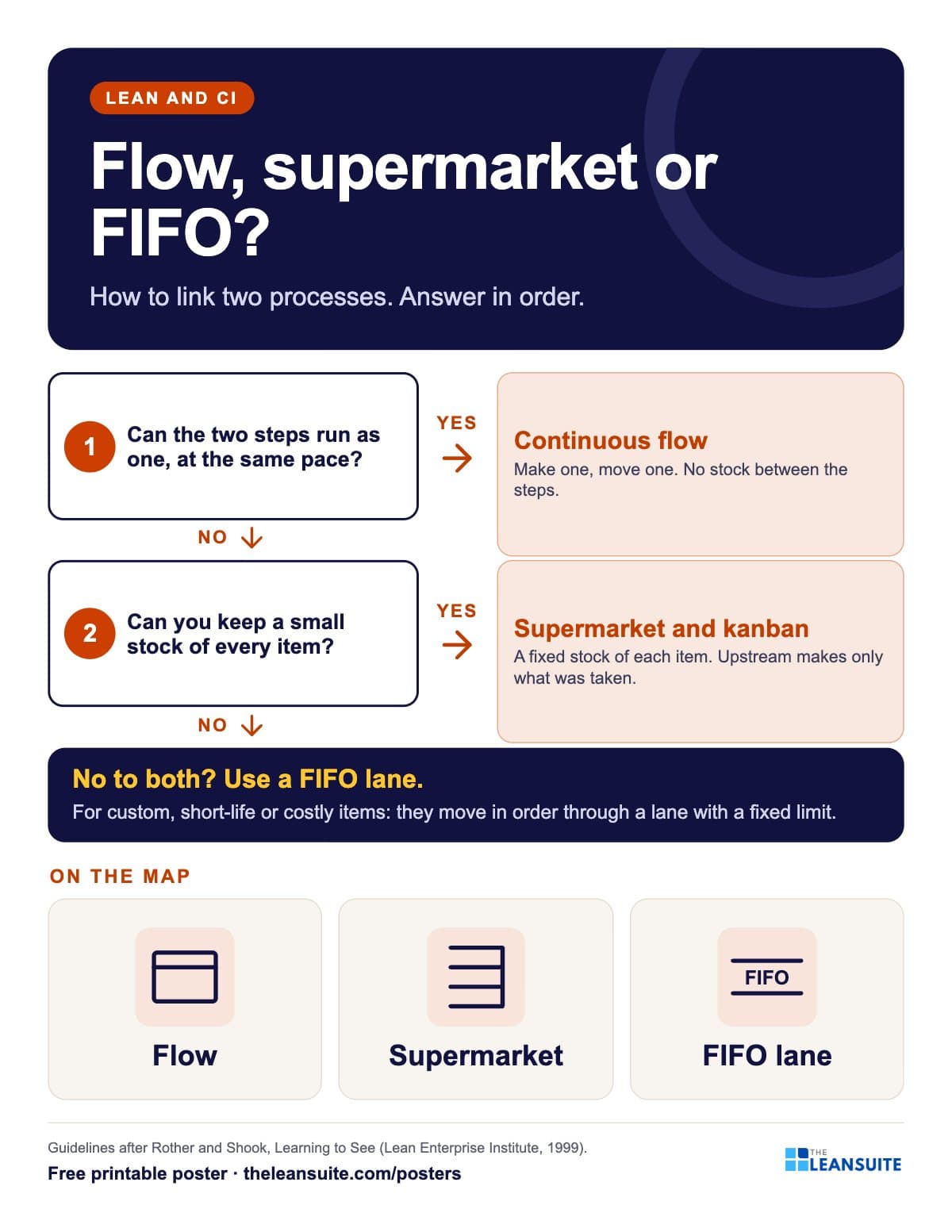 Flow, supermarket or FIFO lane poster
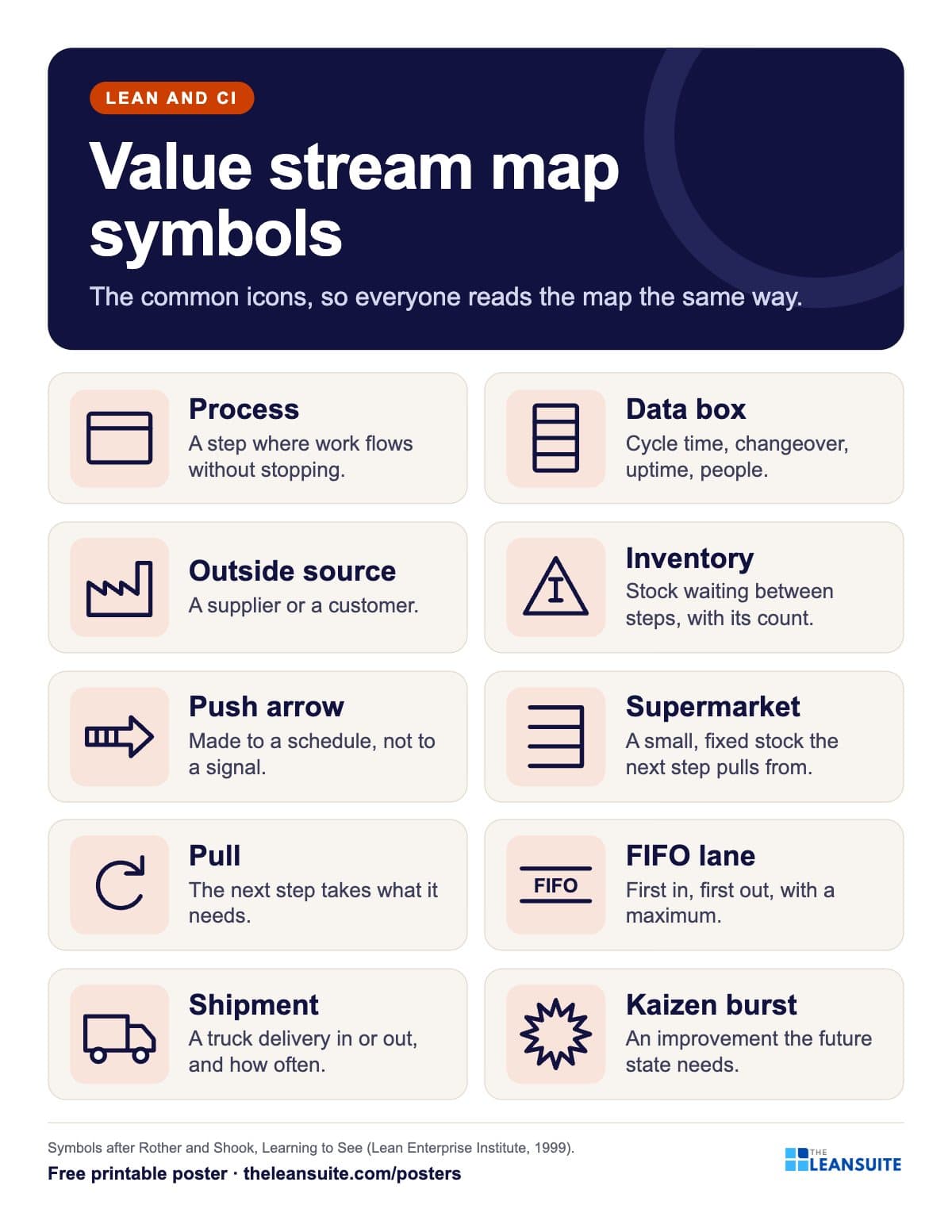 Value stream map symbols poster
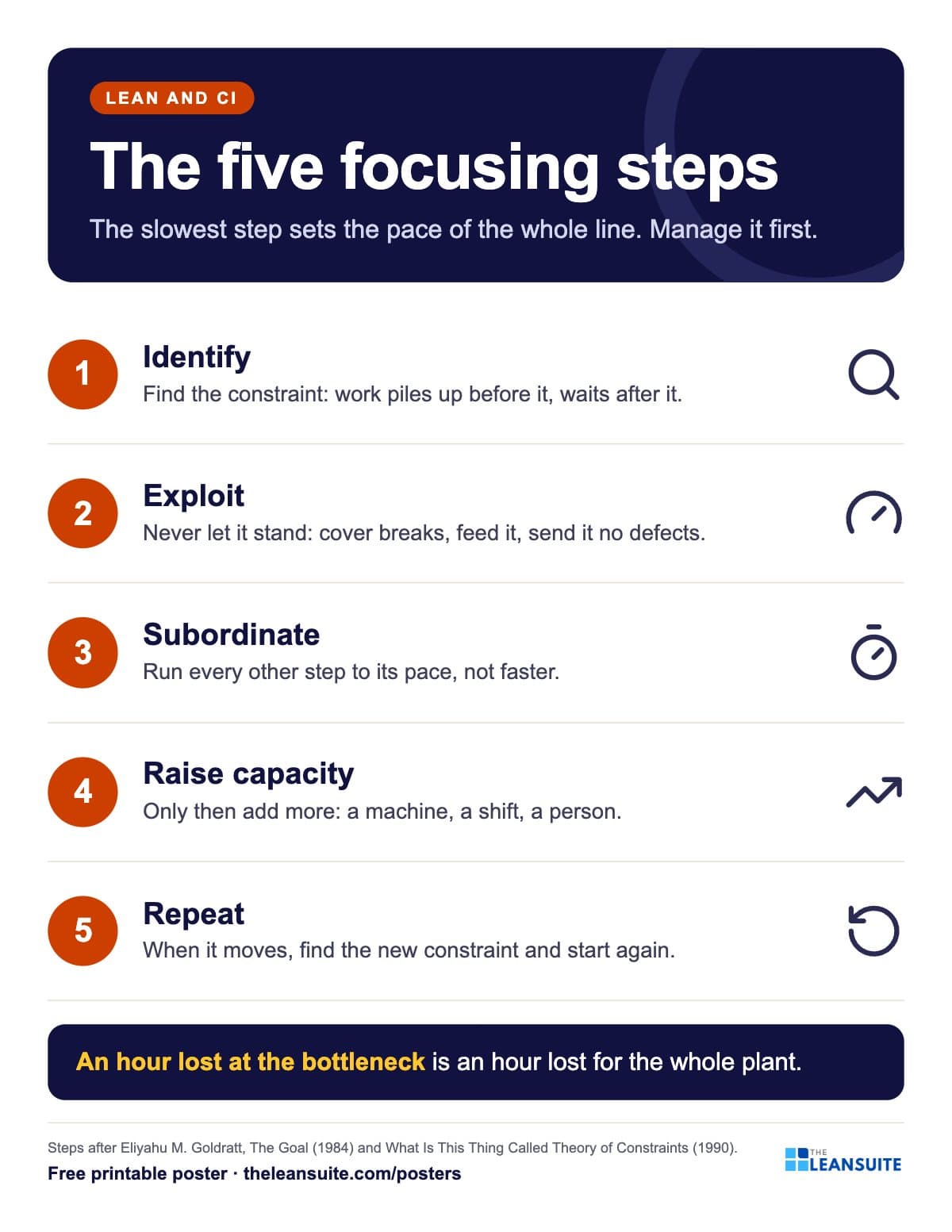 Bottleneck five focusing steps poster
A poster reminds. A routine makes it stick.
See how plants run their audits, improvements and follow-ups in LeanSuite, on a call built around your own problem.
Book a 45-minute demo