

Lean and CI poster
Updated · Free to print and share
How to write an OKR poster
An OKR is one objective, the change a team wants to make in words, and three to five key results, the numbers that will show it has happened, graded at the end of the cycle. Most weak OKRs fail the same few tests: the objective is a number, the key results are tasks, nobody owns them, or they measure something the team never sees. This poster gives six checks to run before an OKR is agreed, and a filled example from a filling line, so a team leader can write one in twenty minutes at the board.
Download the poster
The PNG is free to download now. The print-ready vector PDFs open after a short form, once.
Free to print and share with your team. Enter your name and work email once to download.
 Six numbered checks from one objective to saying why it matters, and a band with a worked example on filling line changeovers labelled as sample data.
The words on the poster
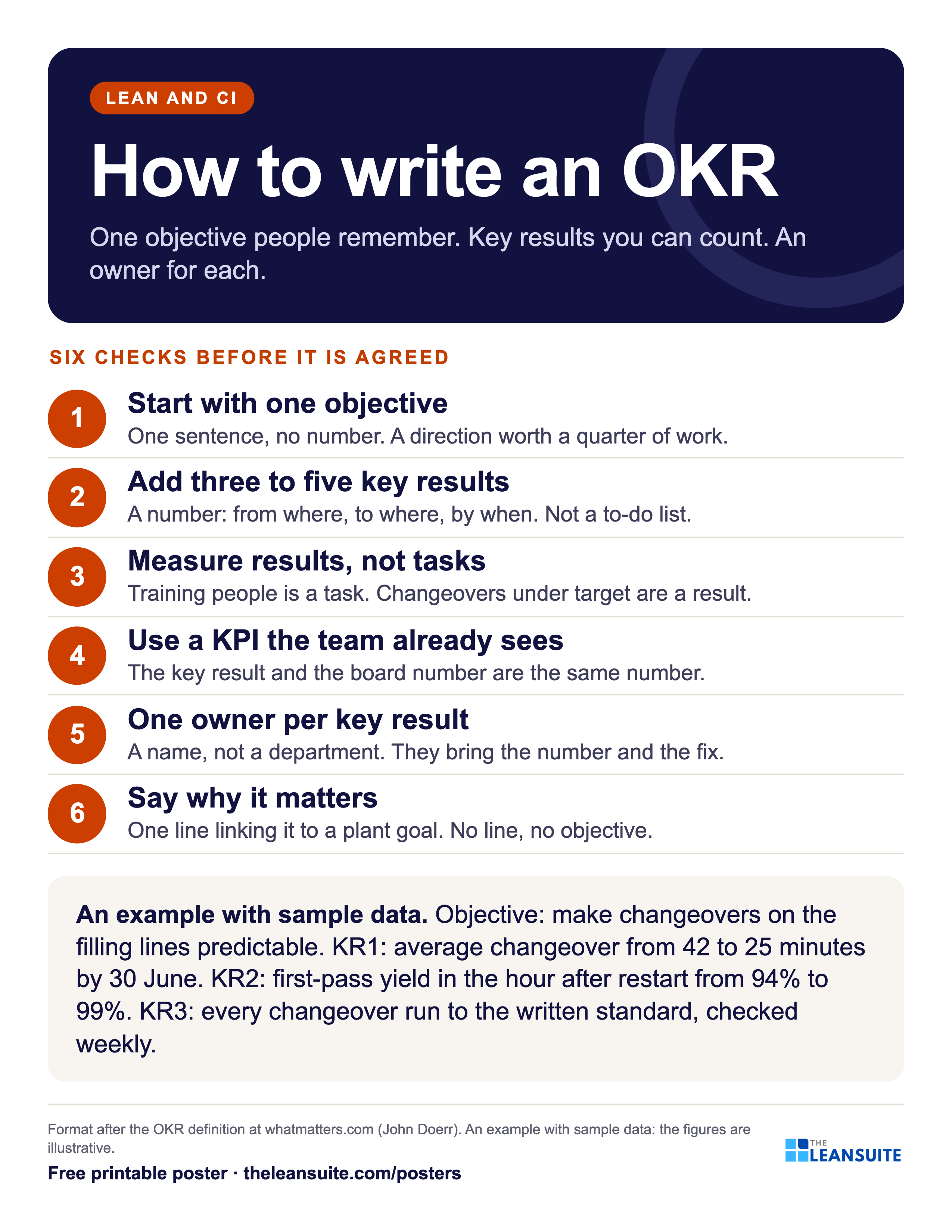
How to write an OKR
One objective people remember. Key results you can count. An owner for each.
Six checks before it is agreed
- Start with one objective One sentence, no number. A direction worth a quarter of work.
- Add three to five key results A number: from where, to where, by when. Not a to-do list.
- Measure results, not tasks Training people is a task. Changeovers under target are a result.
- Use a KPI the team already sees The key result and the board number are the same number.
- One owner per key result A name, not a department. They bring the number and the fix.
- Say why it matters One line linking it to a plant goal. No line, no objective.
- An example with sample data. Objective: make changeovers on the filling lines predictable. KR1: average changeover from 42 to 25 minutes by 30 June. KR2: first-pass yield in the hour after restart from 94% to 99%. KR3: every changeover run to the written standard, checked weekly.
Format after the OKR definition at whatmatters.com (John Doerr). An example with sample data: the figures are illustrative.
On the floor
How to use it
Putting the How to write an OKR poster to work
- 1
Put it where the team sets its quarterly goals, next to the board that carries the KPIs.
- 2
Run a new OKR down the six checks before it is agreed. Rewrite any key result that names a task instead of a result.
- 3
Use the example to show the difference between a key result and a KPI: the key result is the KPI with a target and a date.
- 4
Pair it with the free SMART goals template and the manufacturing KPI dashboard template.
Which size to print
- 24 x 36 in or A2: a main wall or team board, read from a few metres away.
- 18 x 24 in or A3: a station or notice board. The A3 file also fits 11 x 17 in paper.
- Letter or A4: a clipboard, binder or handout, on any office printer.
Every PDF is vector, so it stays sharp at full size. Nothing runs to the edge of the page, so no bleed is needed.
Sources and notes
The example is invented and internally consistent; your own figures come from your board. The six checks are common practice, not a standard.
Templates, decks and guides to go with it
- SMART goals templateWrite a goal, test it against the five SMART letters, then track progress toward the target against the time used.
- Manufacturing KPI dashboard templateWeekly plant numbers in, 14 KPIs out: OEE and its parts, first pass yield, scrap, on-time delivery, recordable rate, cost and absence, each against a target.
- Topic: Lean leadership and employee engagementEvery guide we have on the subject, sorted.
More lean and ci posters
All posters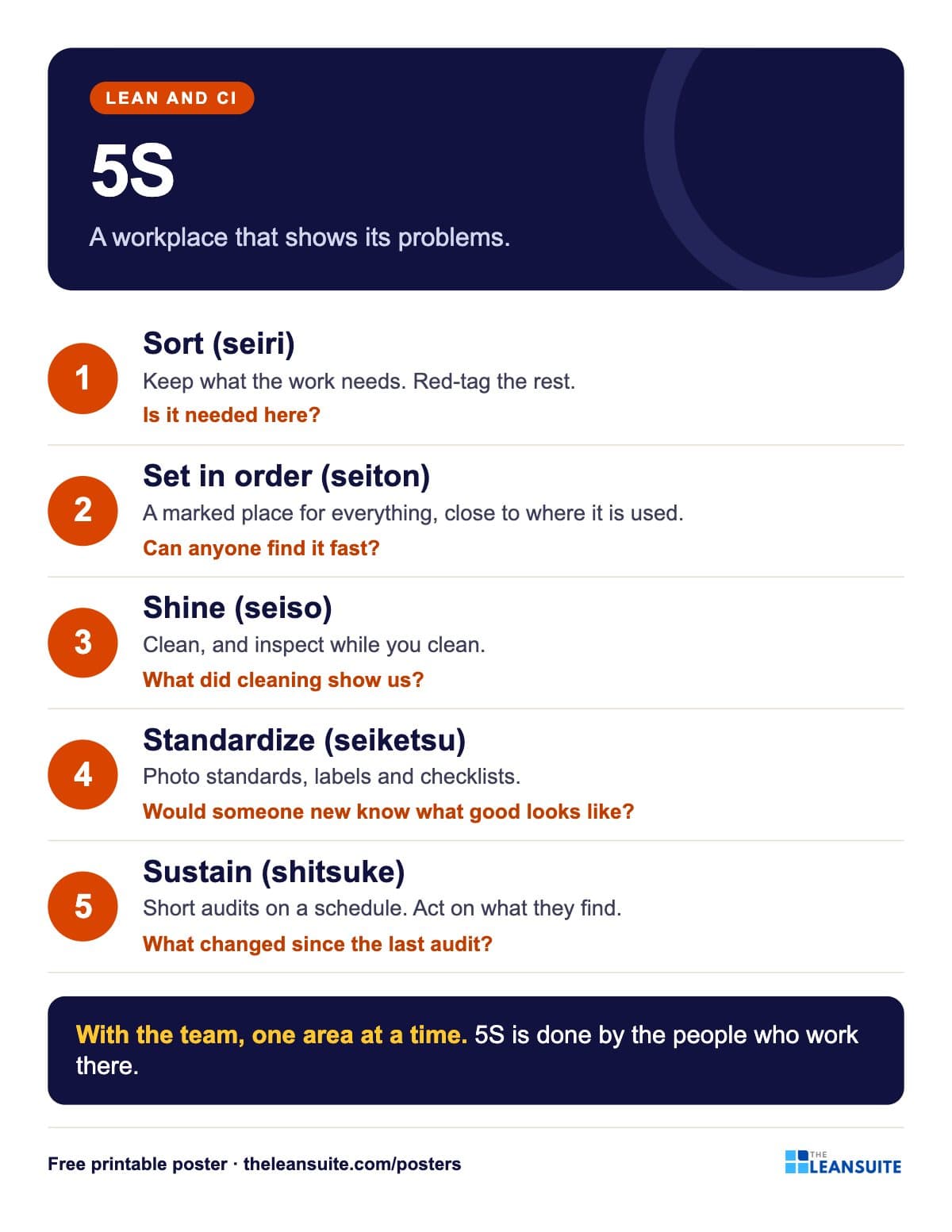 5S poster
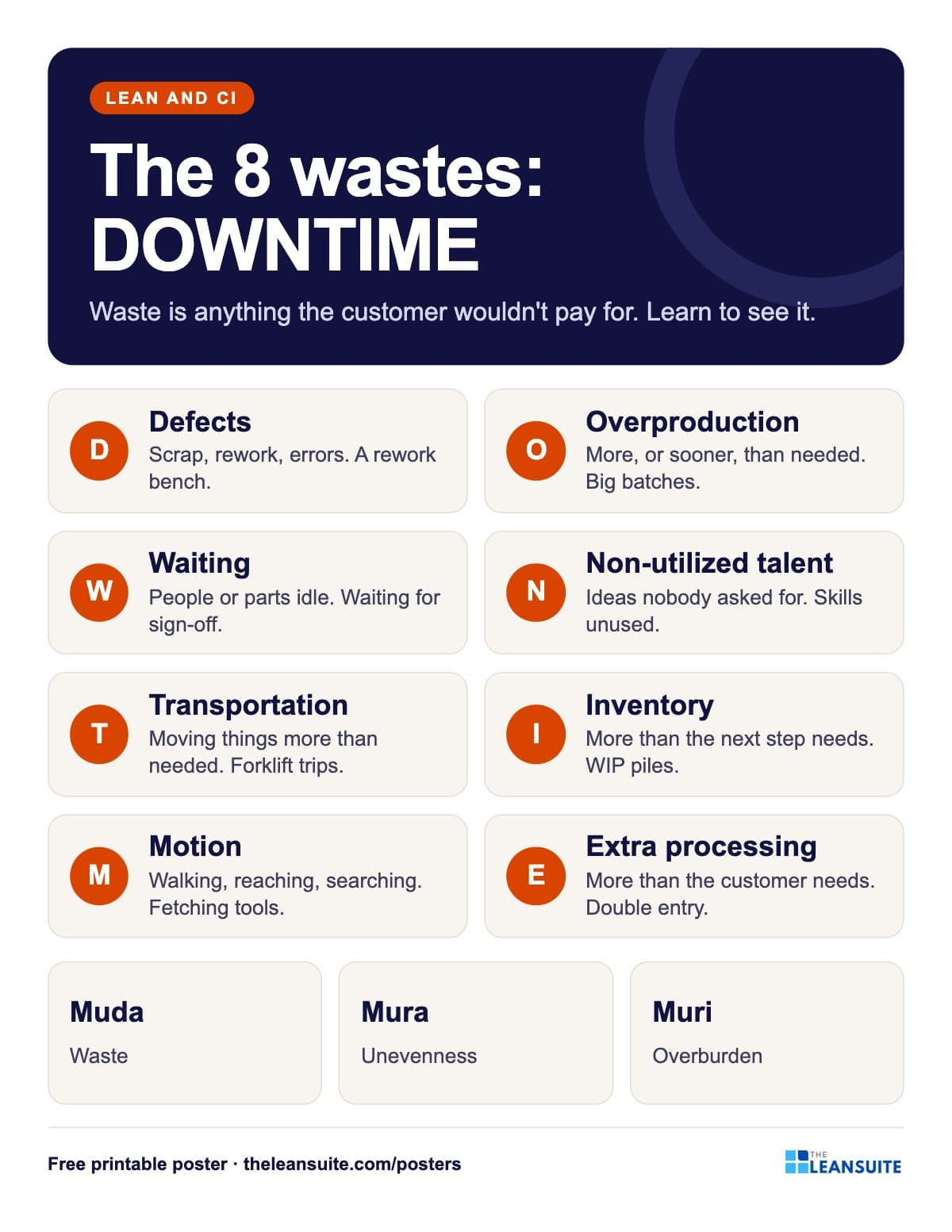 8 wastes of lean poster (DOWNTIME)
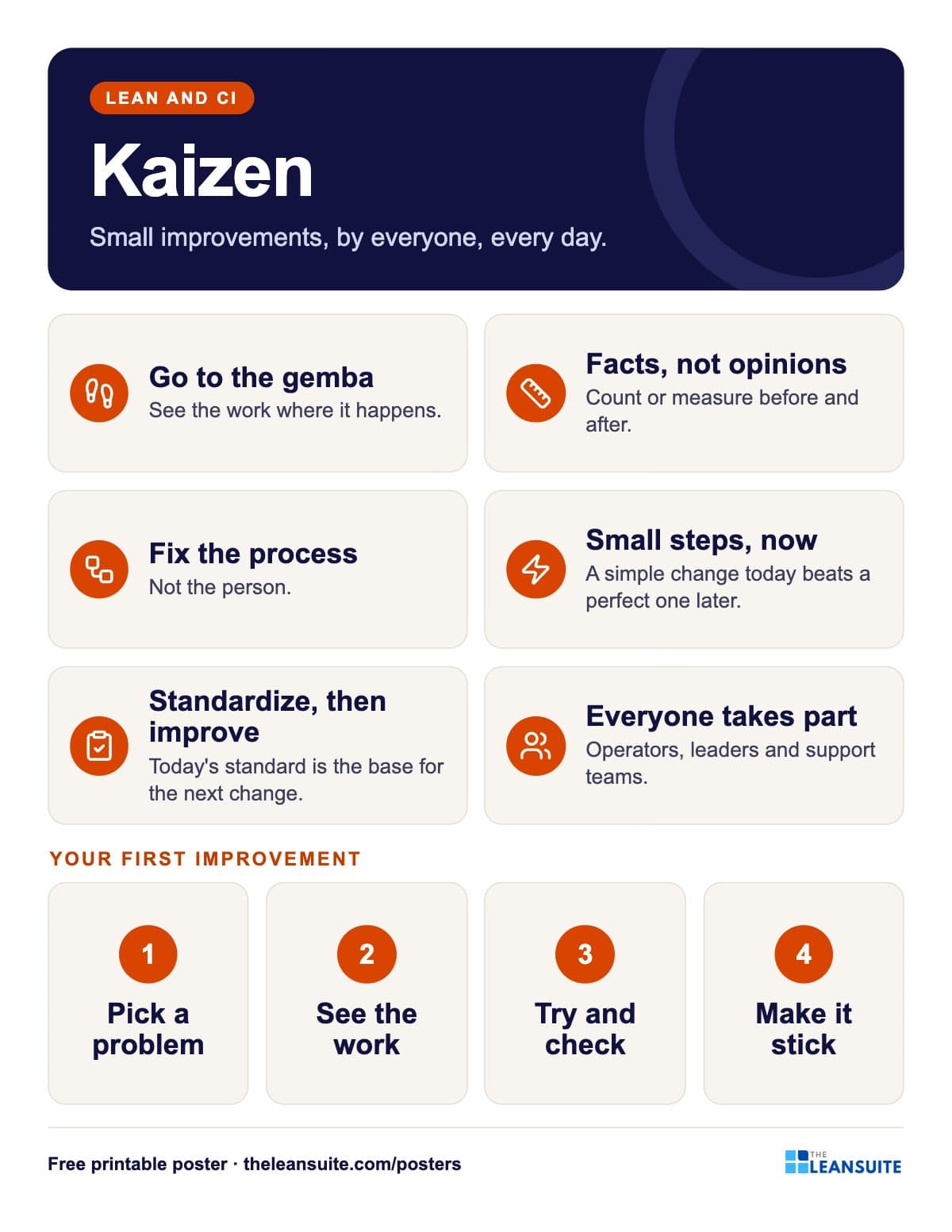 Kaizen principles poster
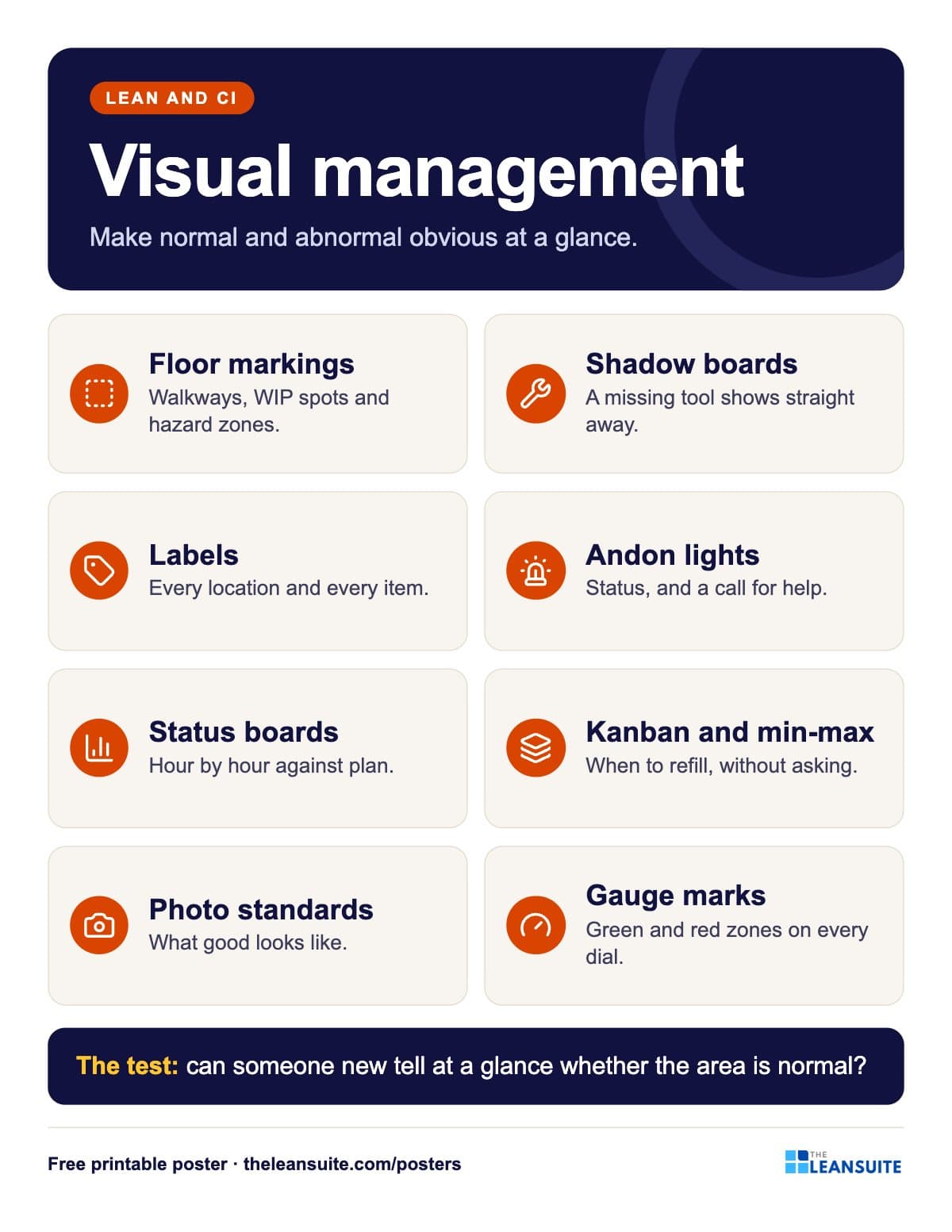 Visual management poster
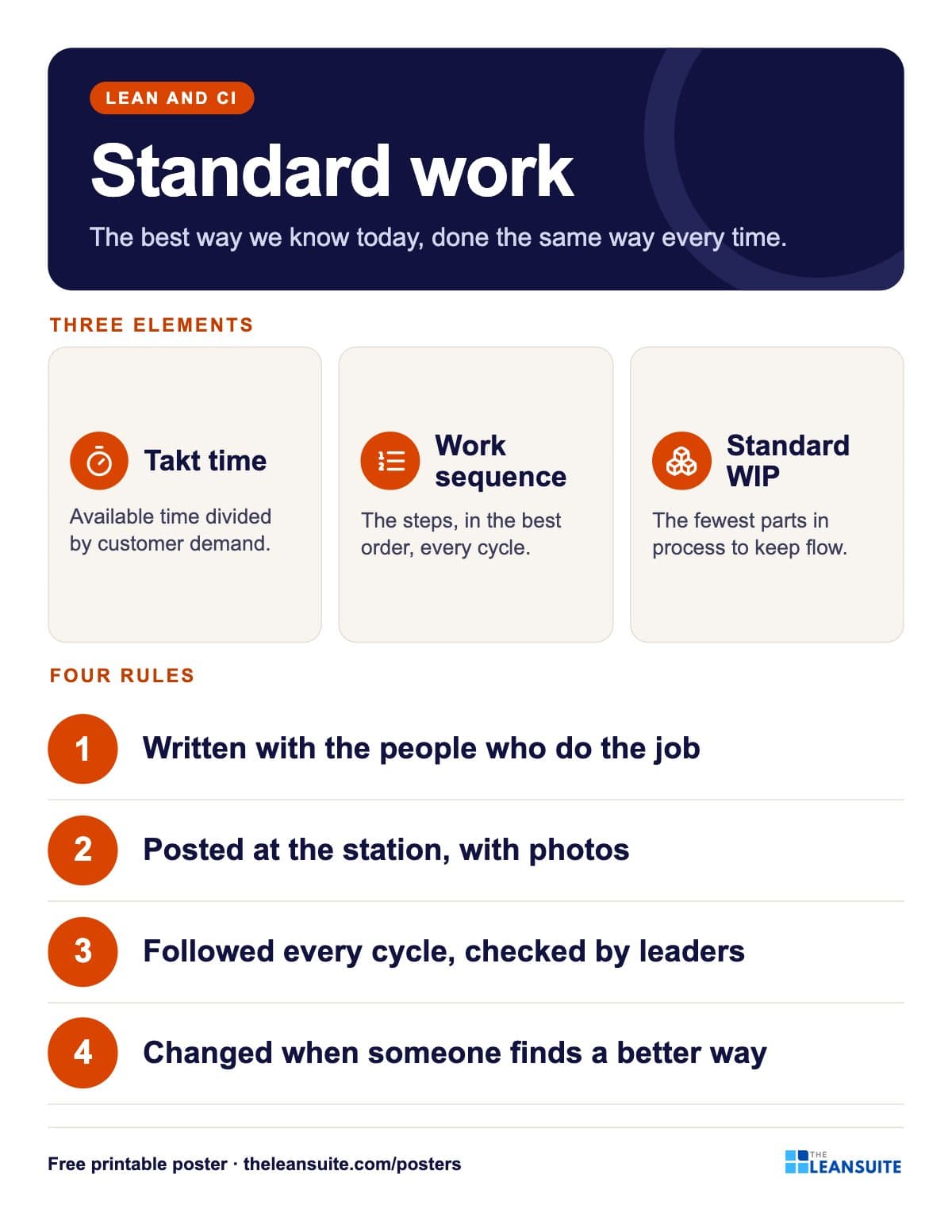 Standard work poster
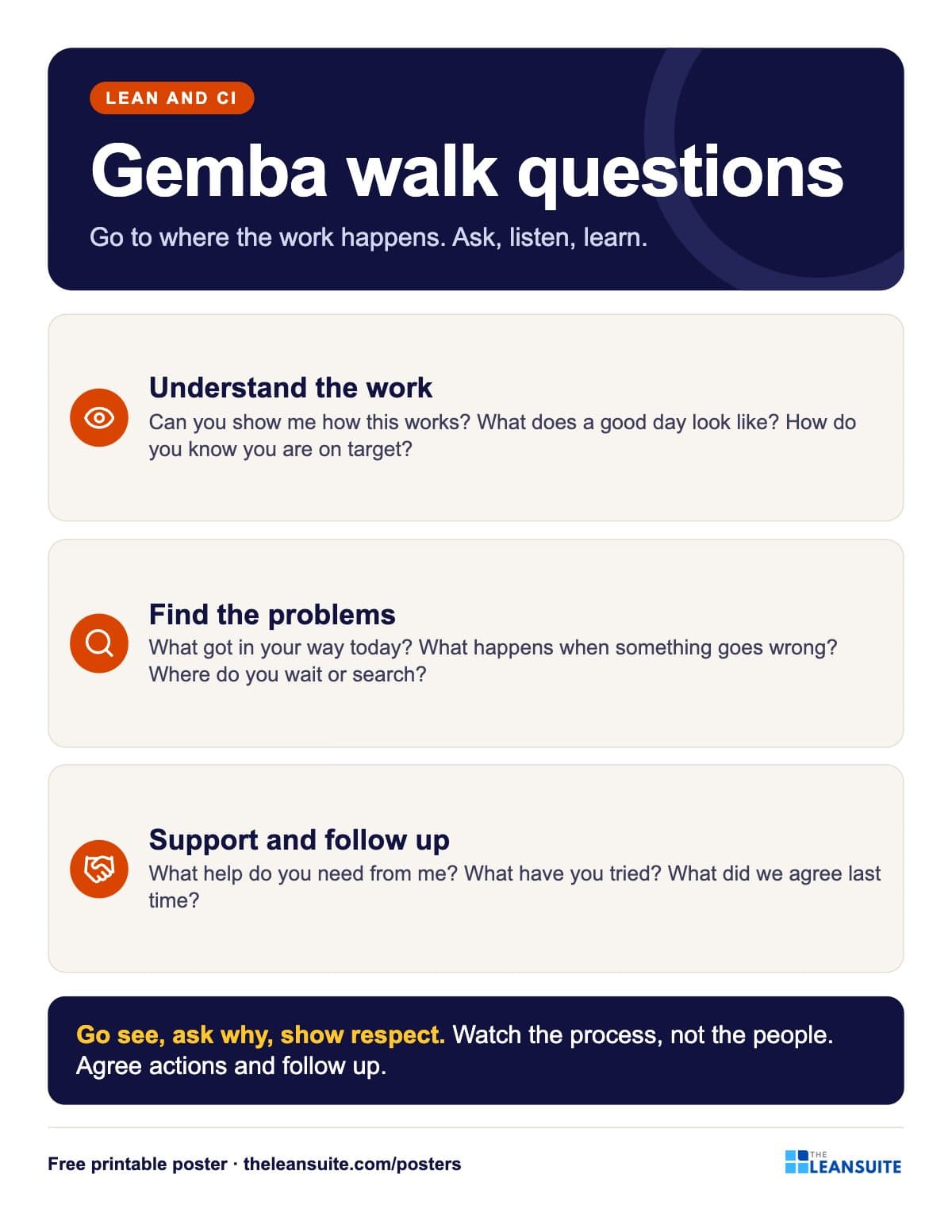 Gemba walk questions poster
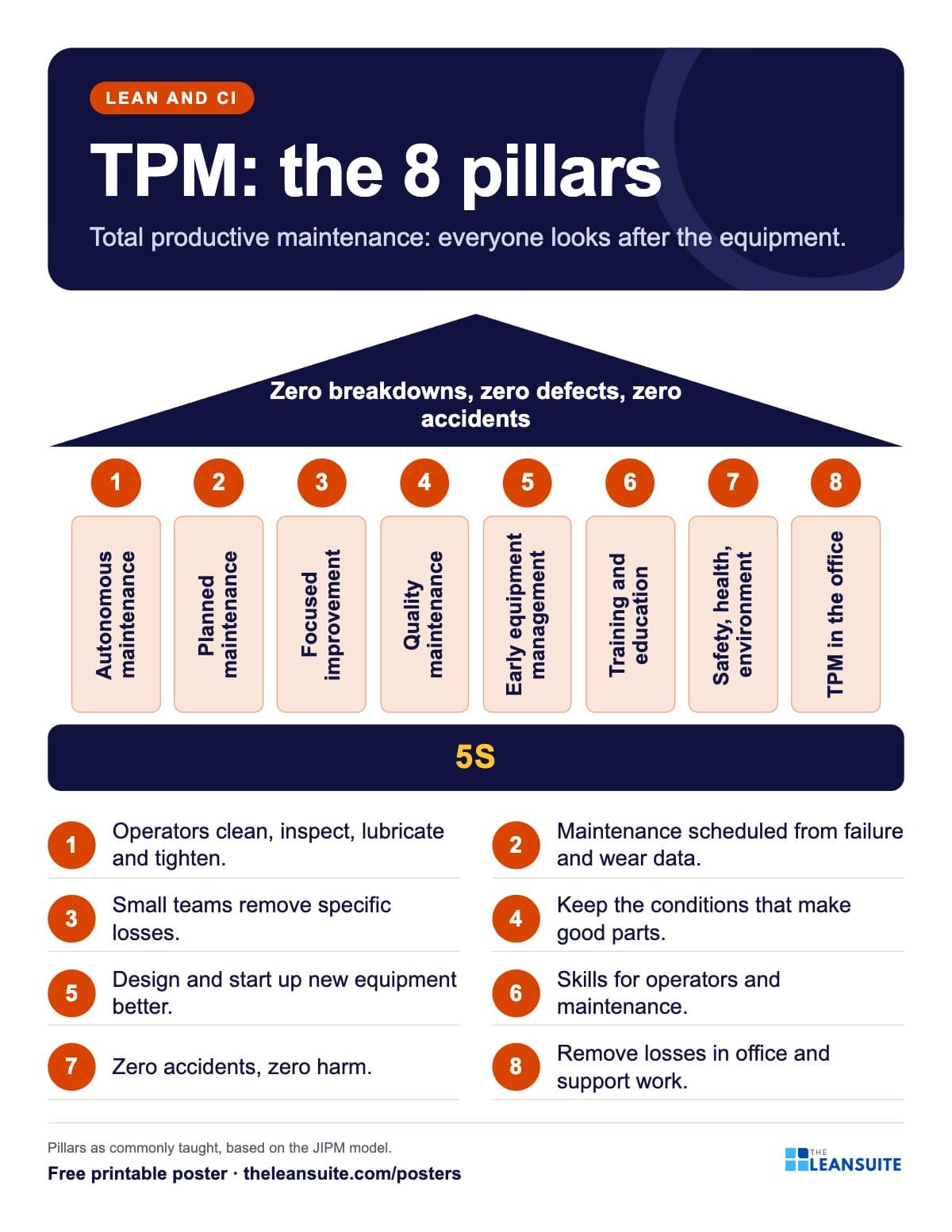 TPM 8 pillars poster
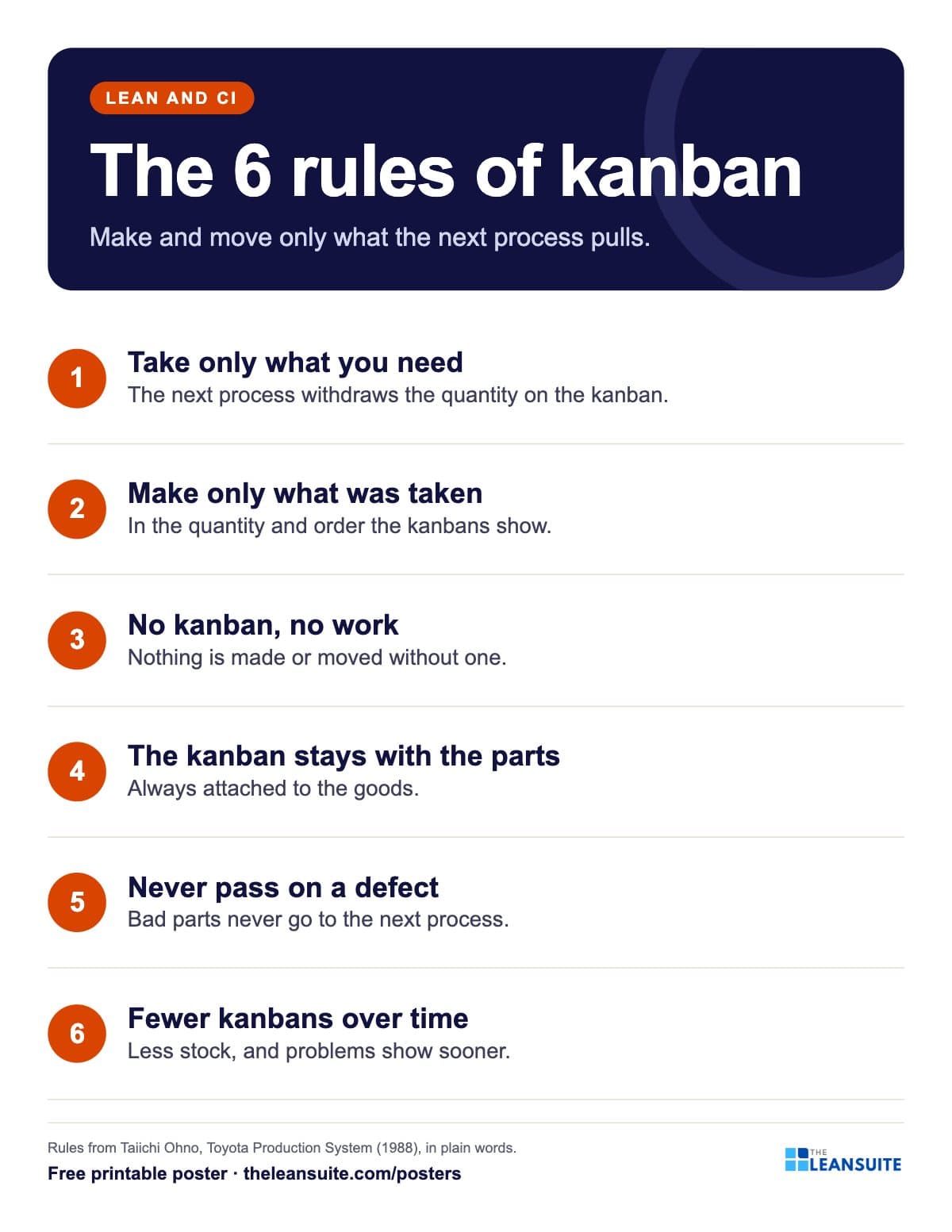 Kanban rules poster
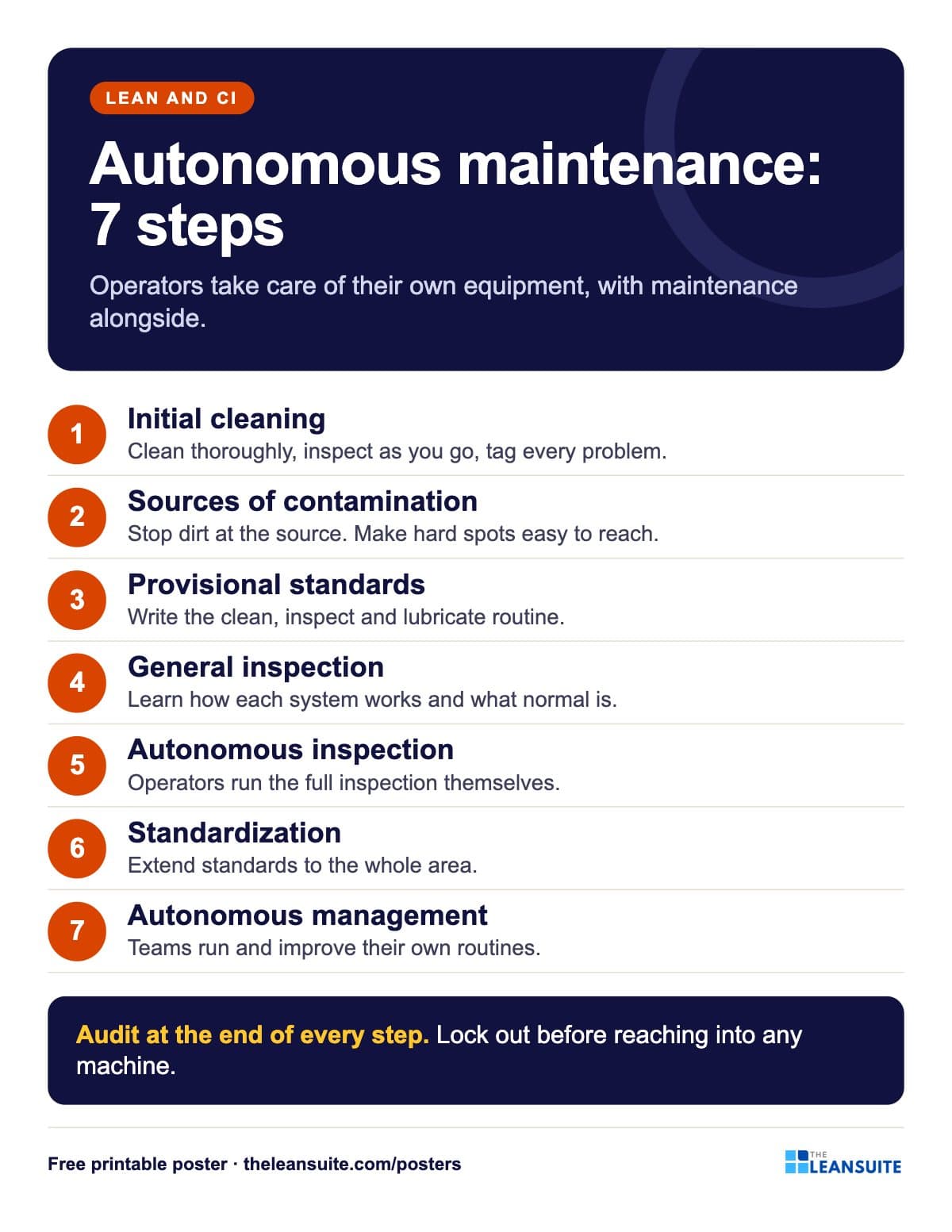 Autonomous maintenance 7 steps poster
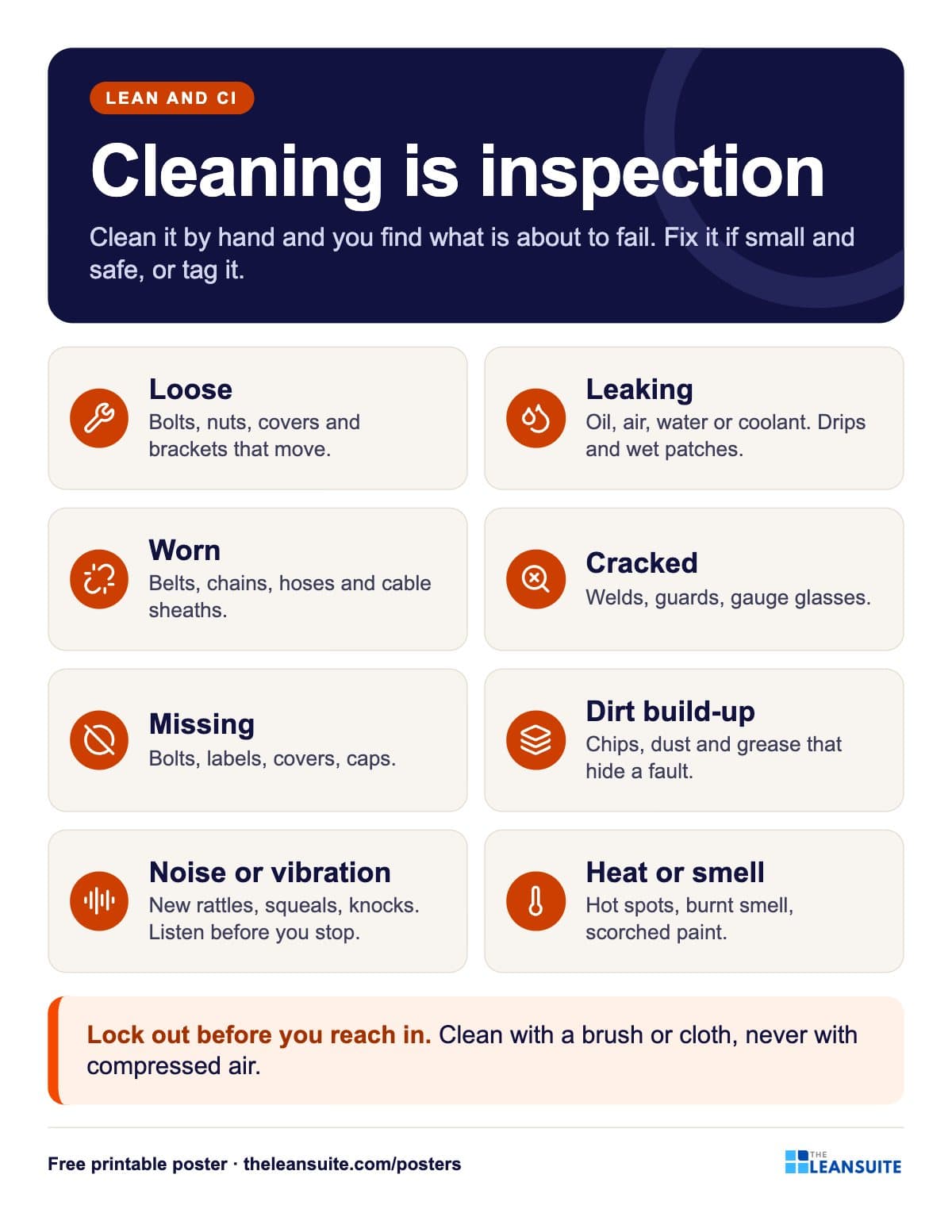 Cleaning is inspection poster
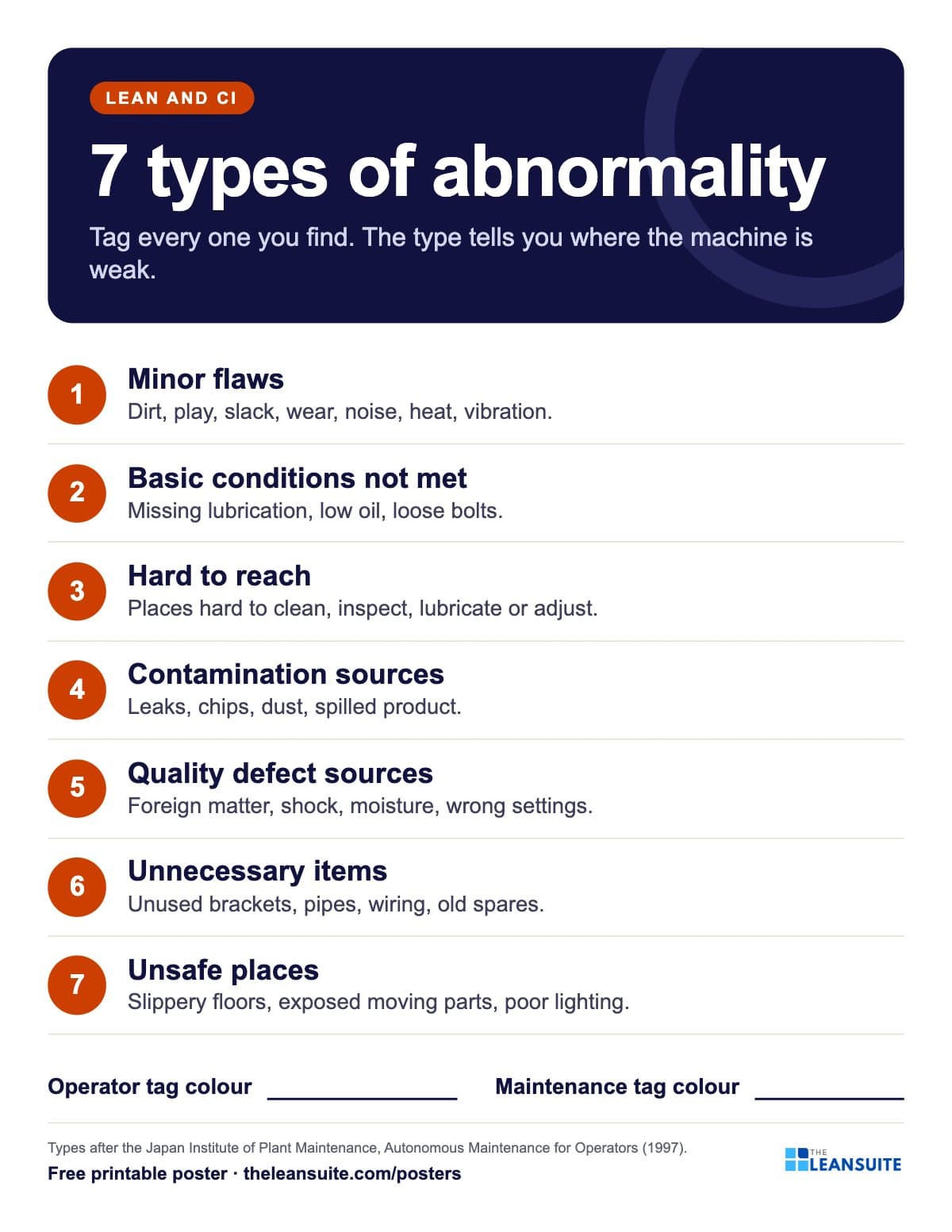 7 types of abnormality poster (TPM tags)
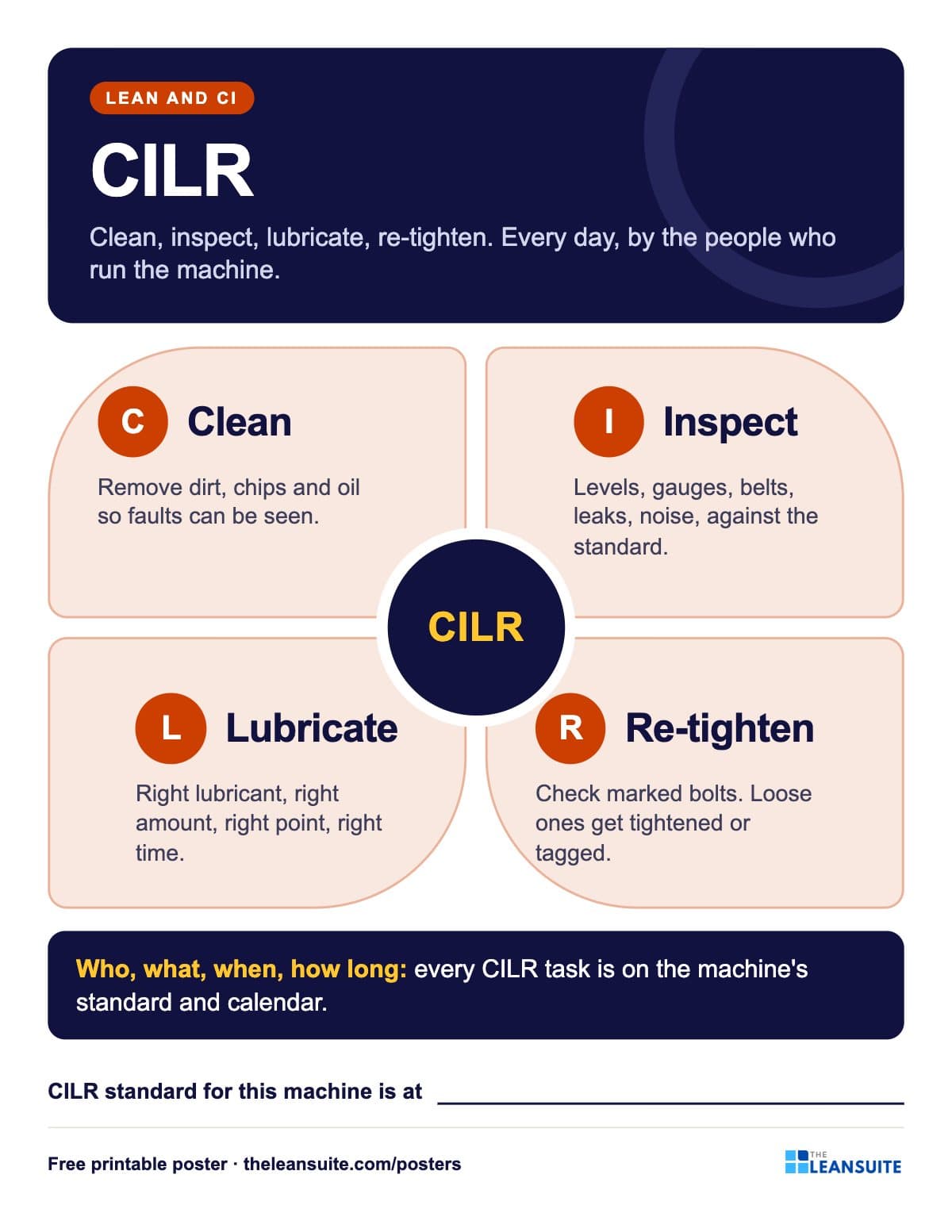 CILR poster: clean, inspect, lubricate, re-tighten
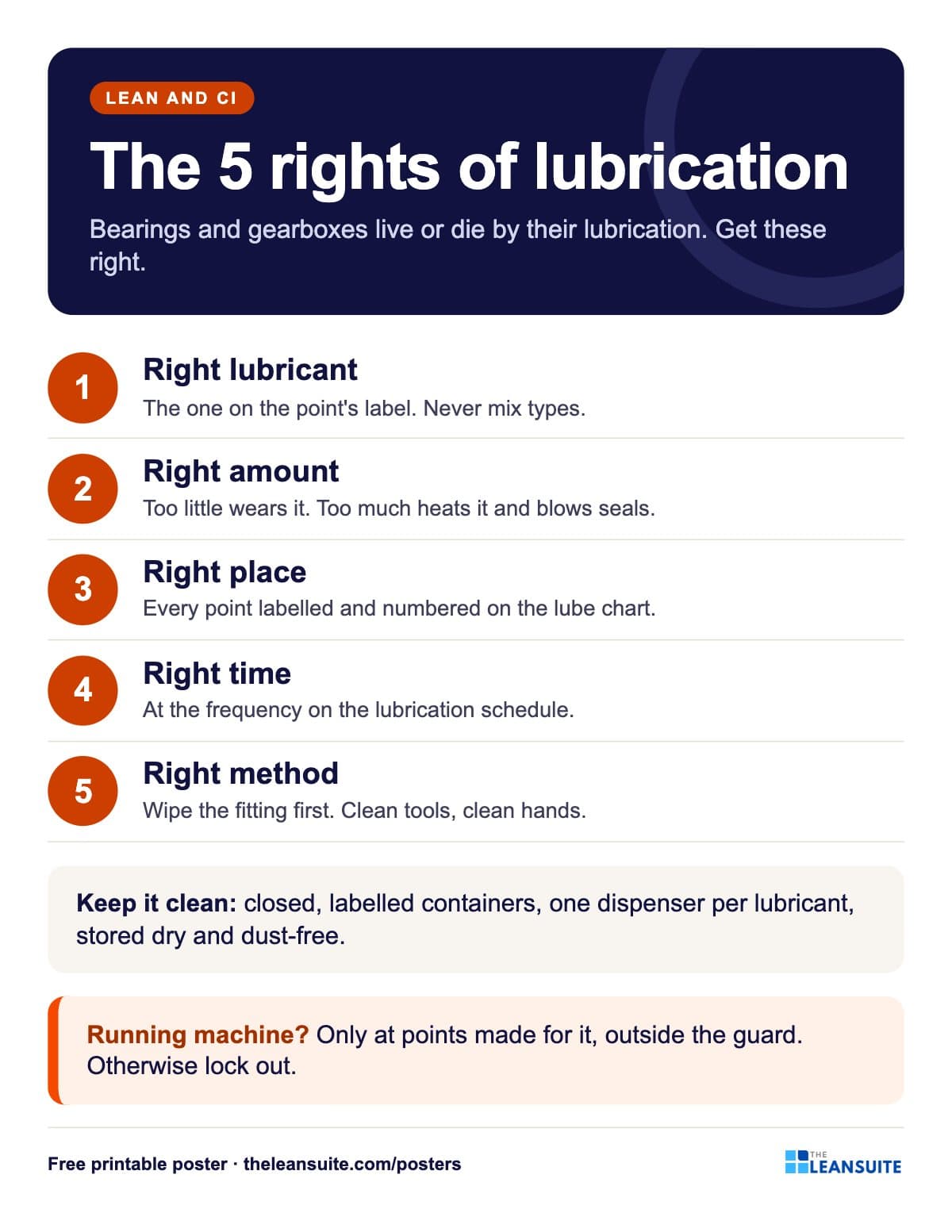 Lubrication basics poster: the five rights
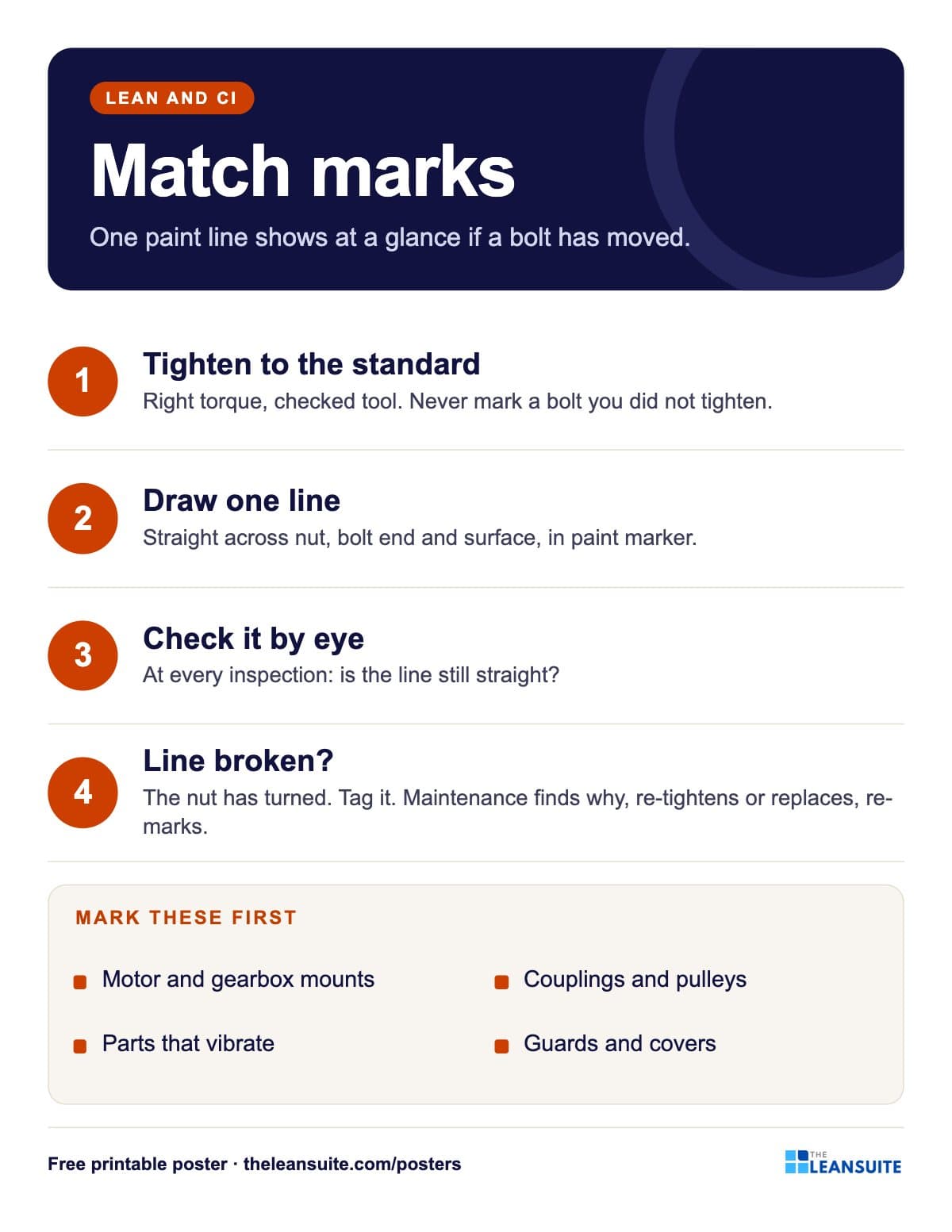 Bolt match marks poster
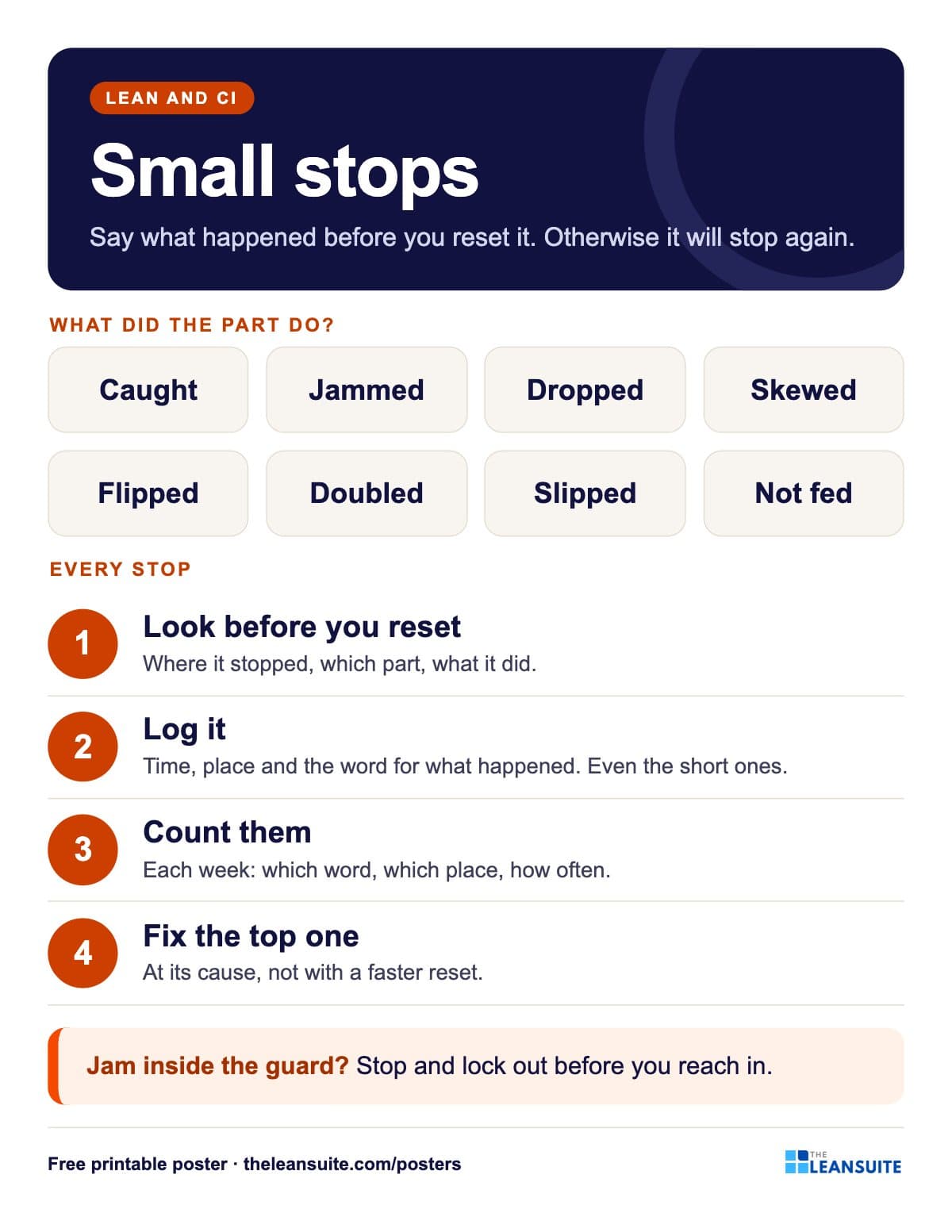 Small stops poster
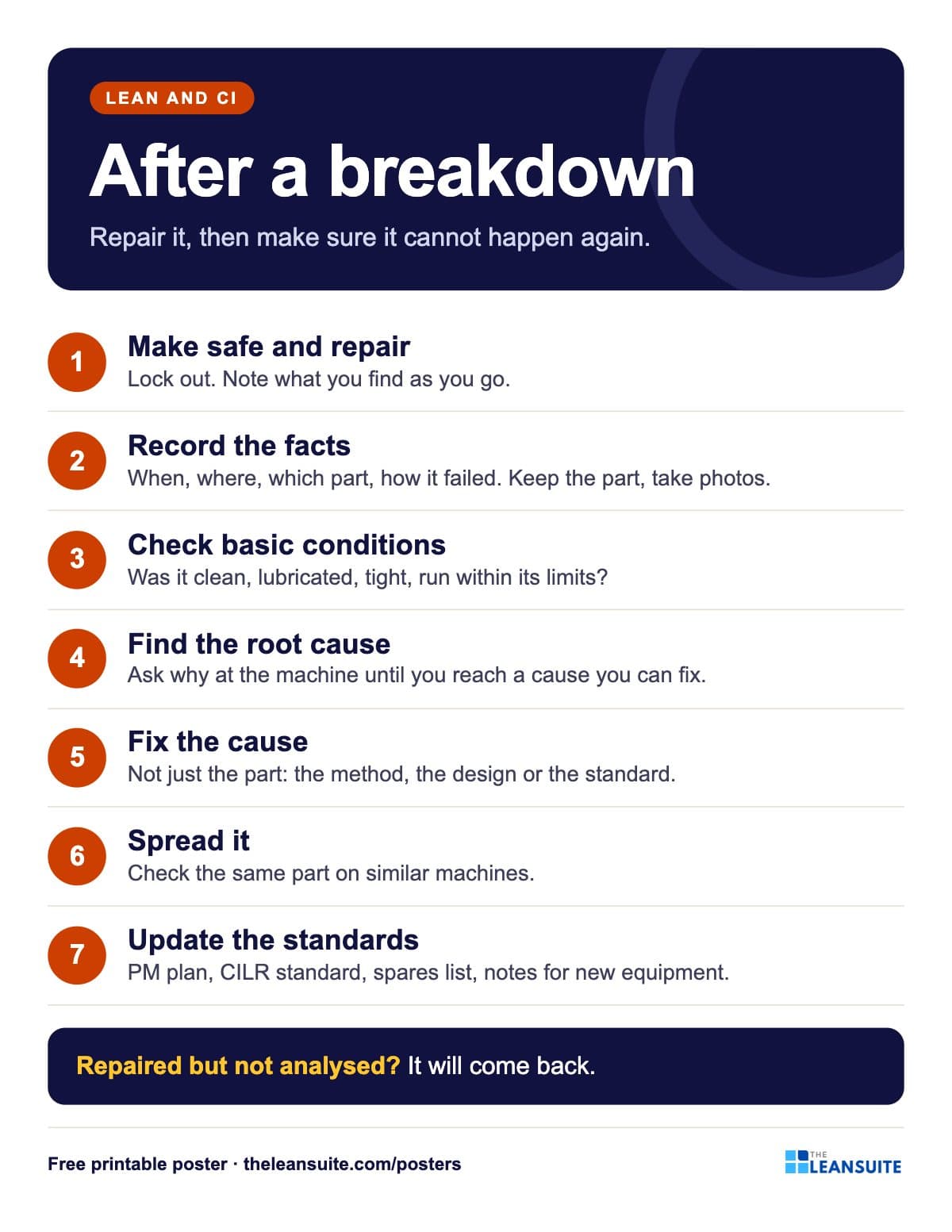 Breakdown analysis poster
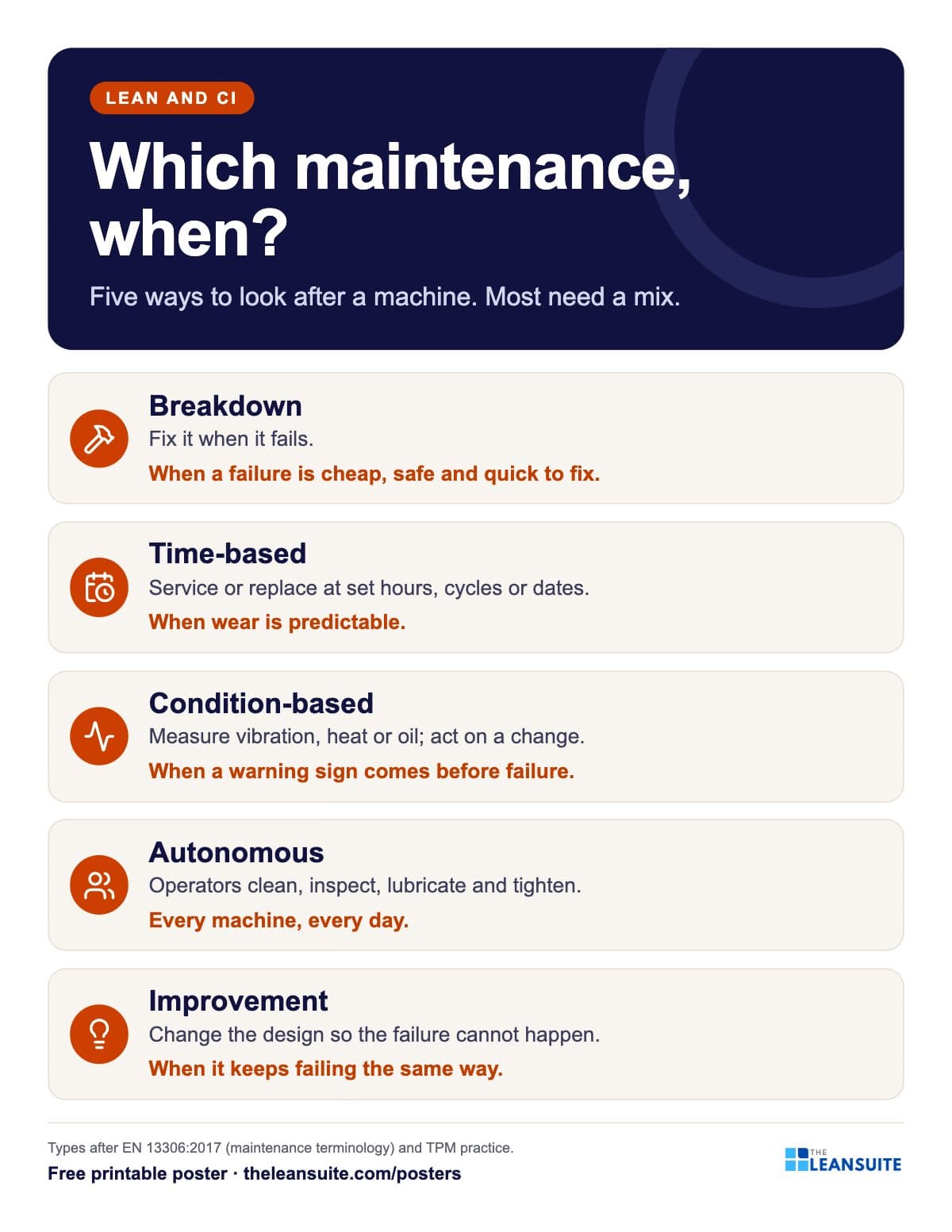 Types of maintenance poster
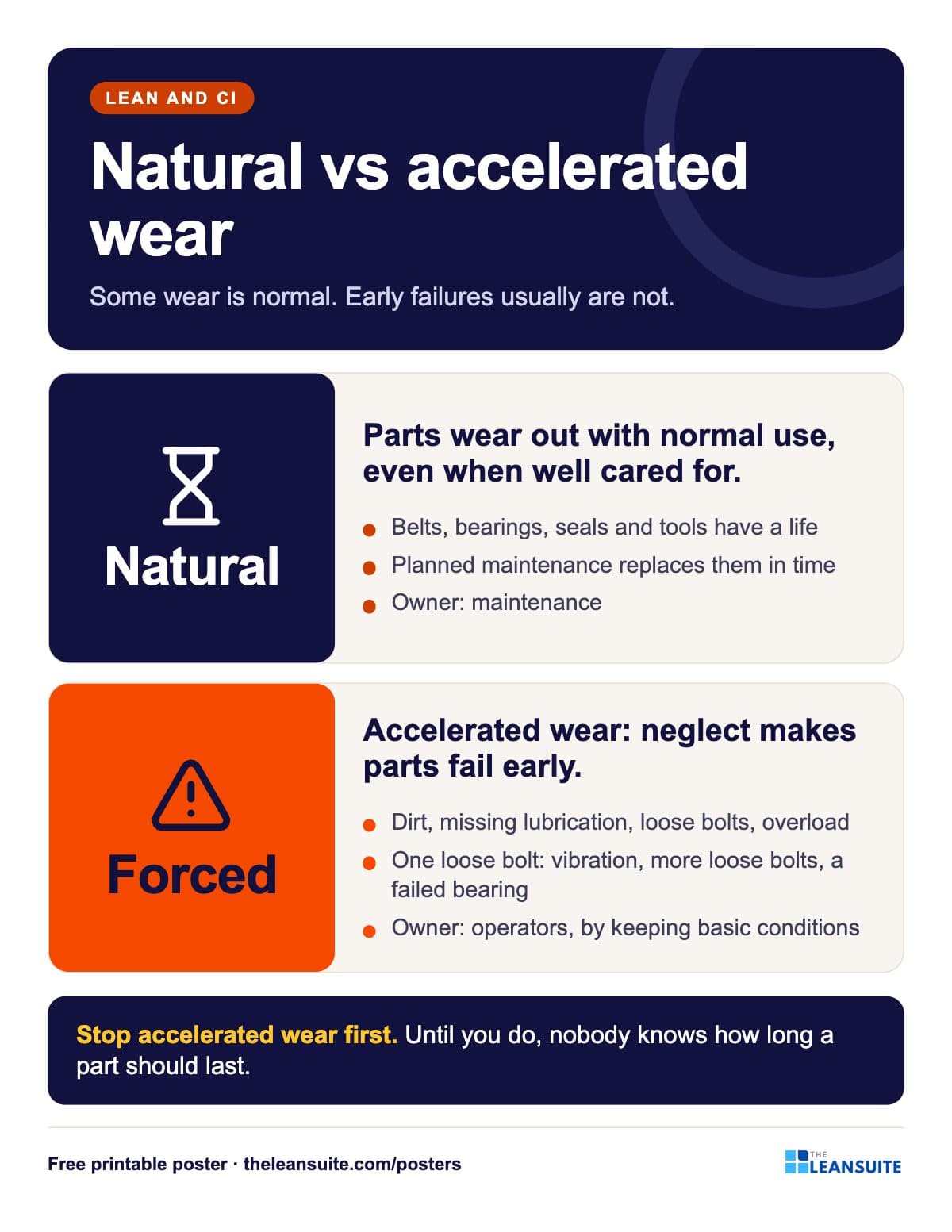 Natural vs accelerated wear poster
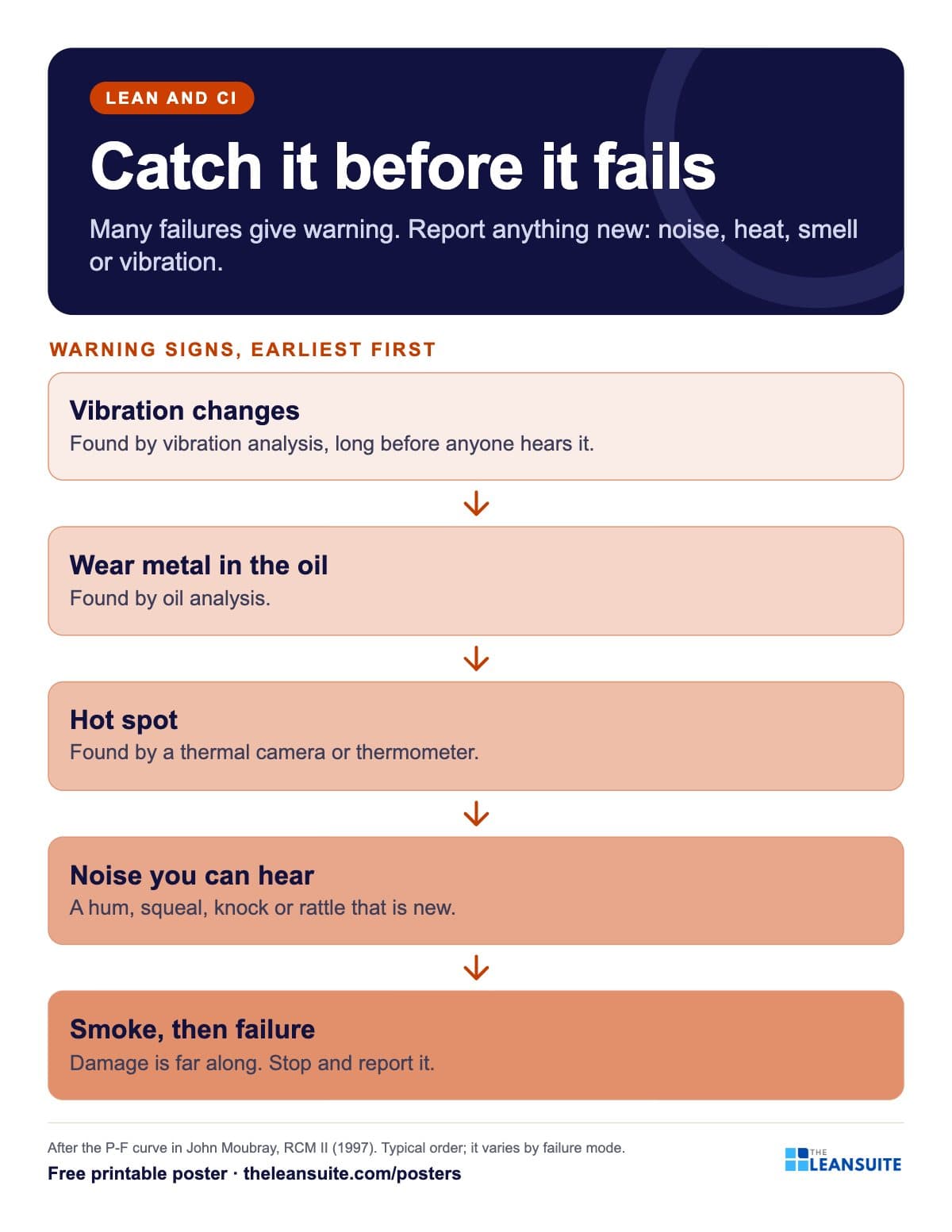 Failure warning signs poster (P-F curve)
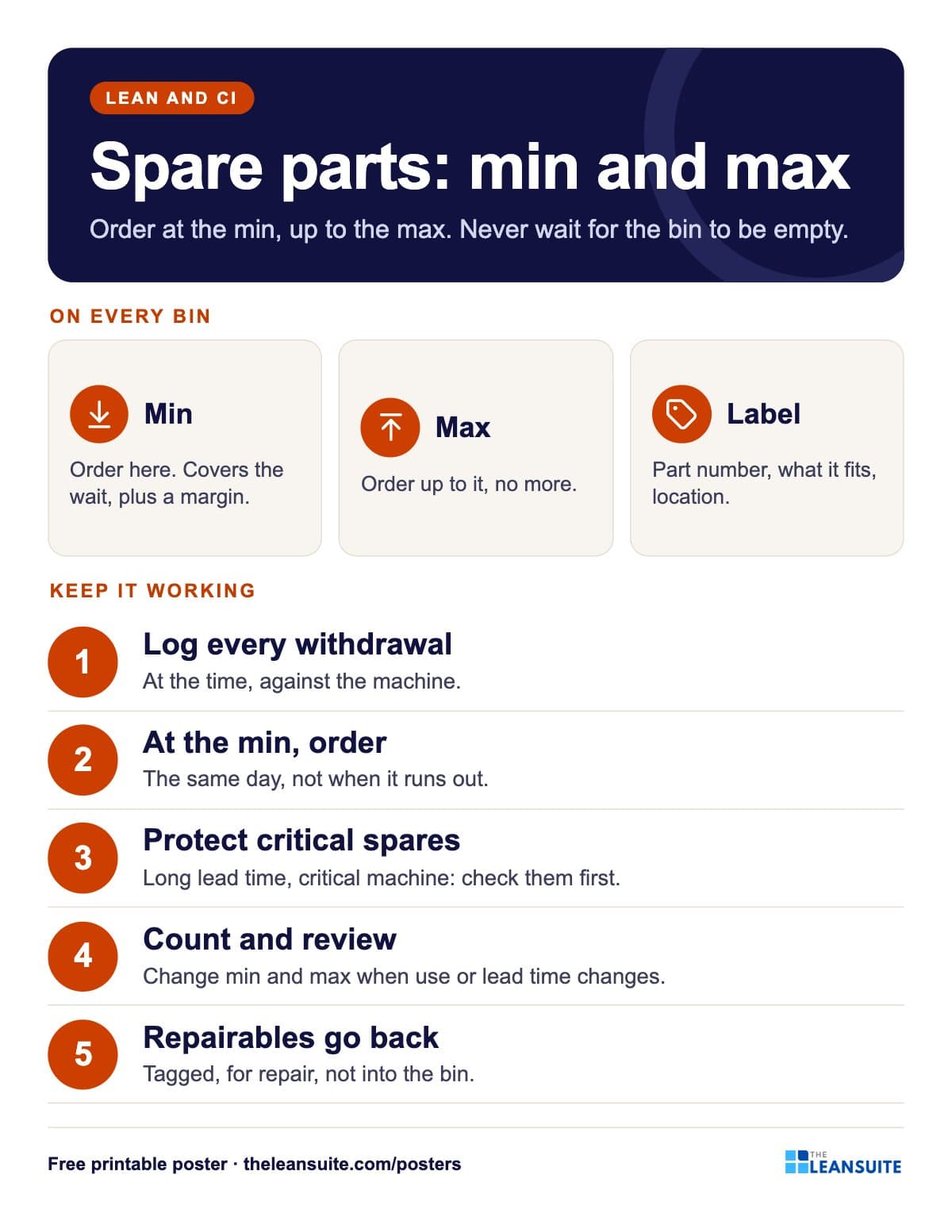 Spare parts min/max poster
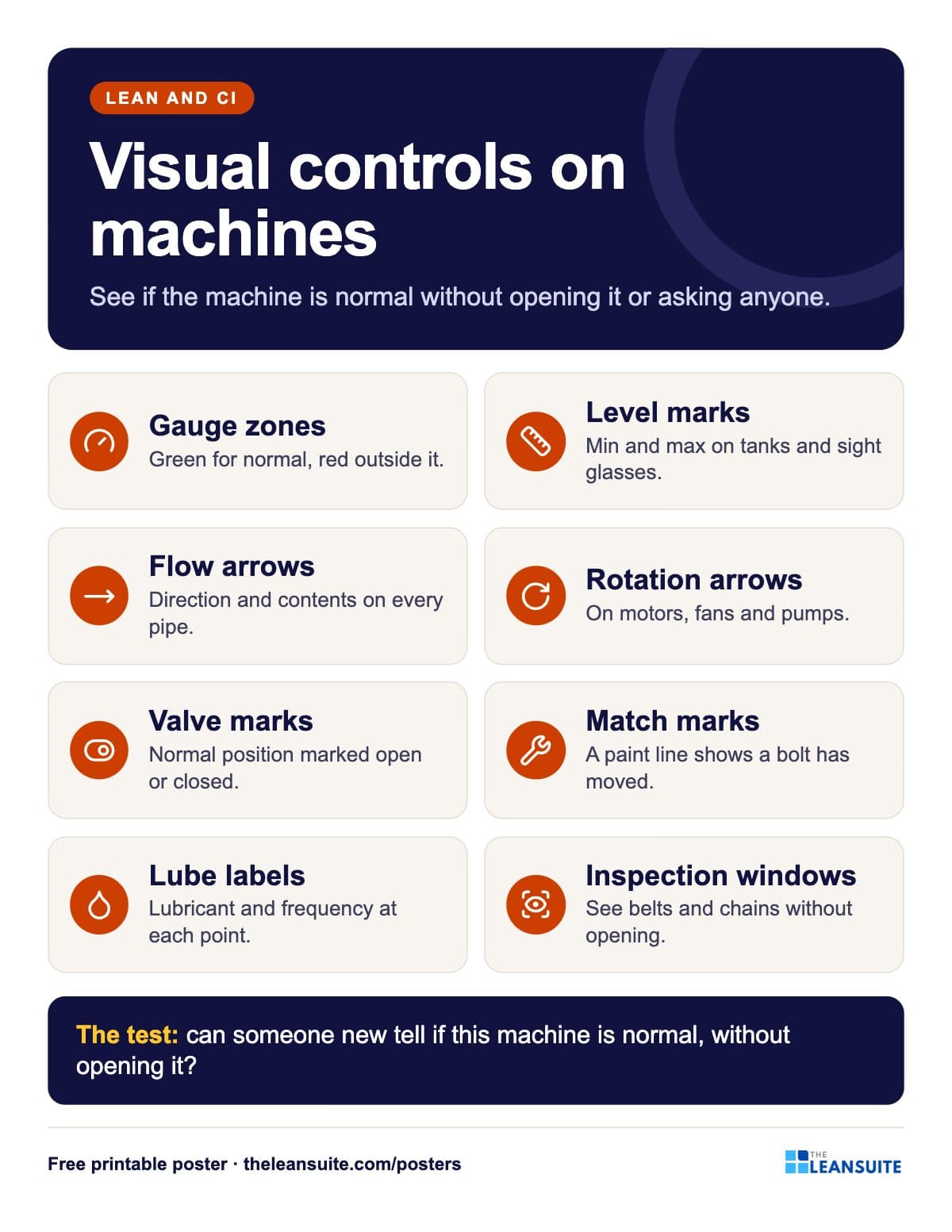 Machine visual controls poster
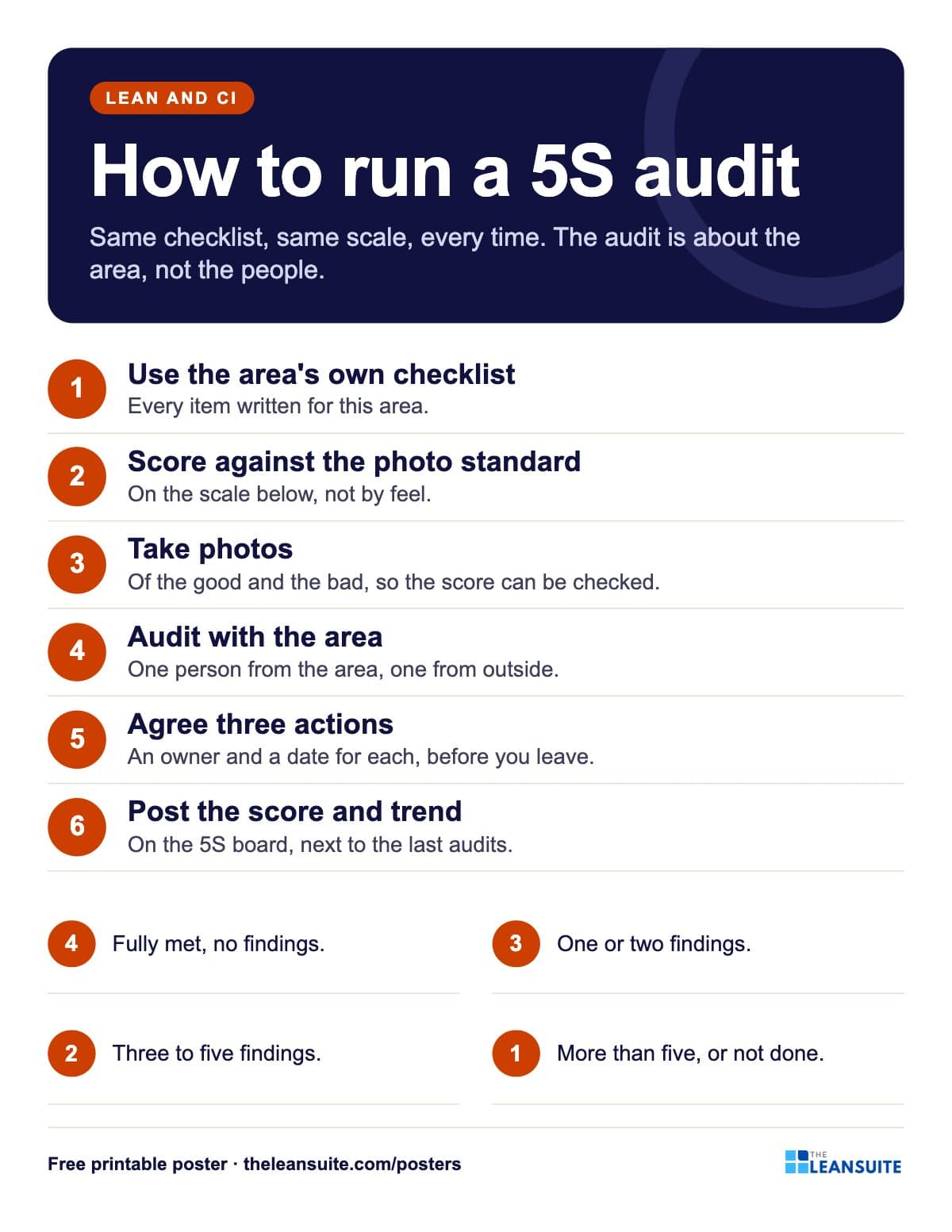 How to run a 5S audit poster
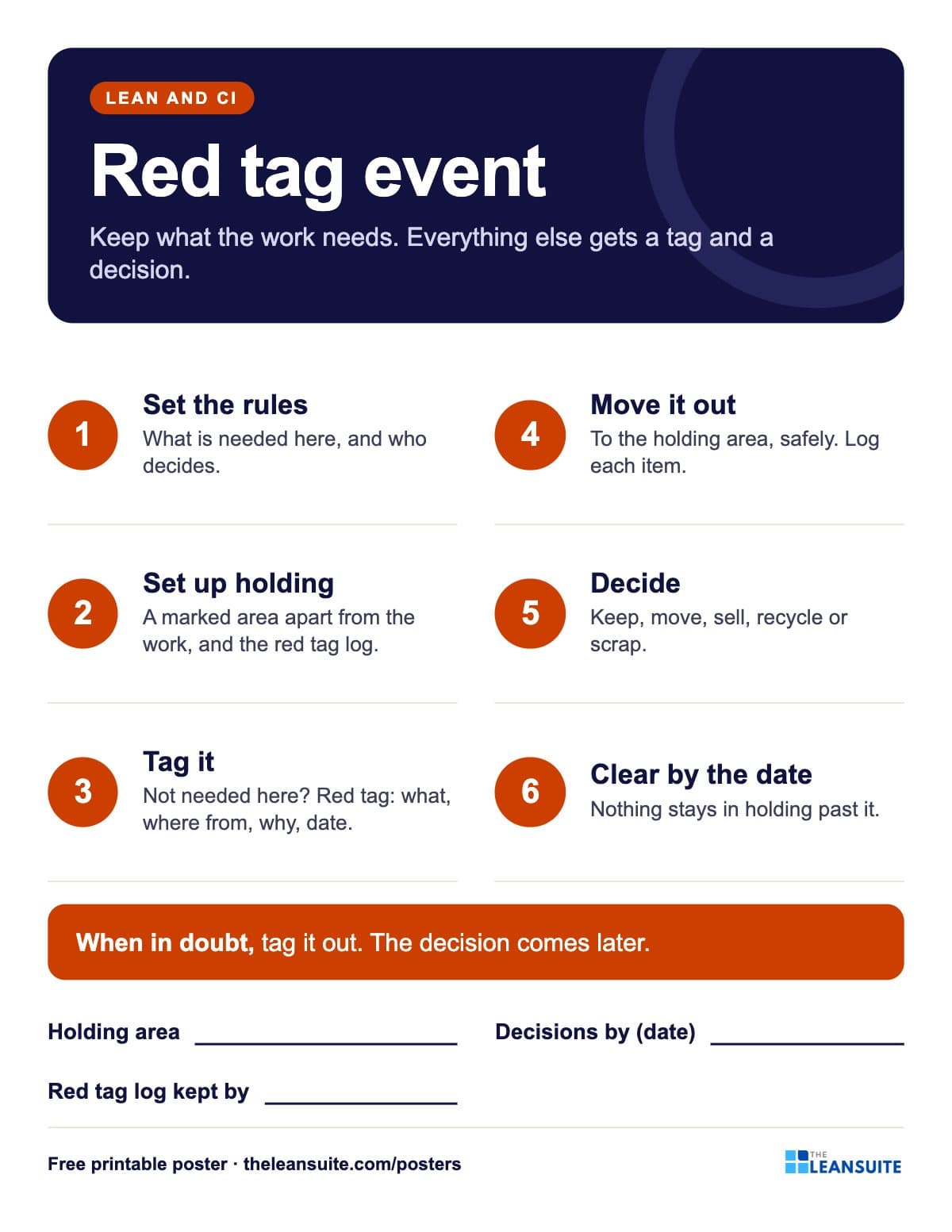 Red tag event poster
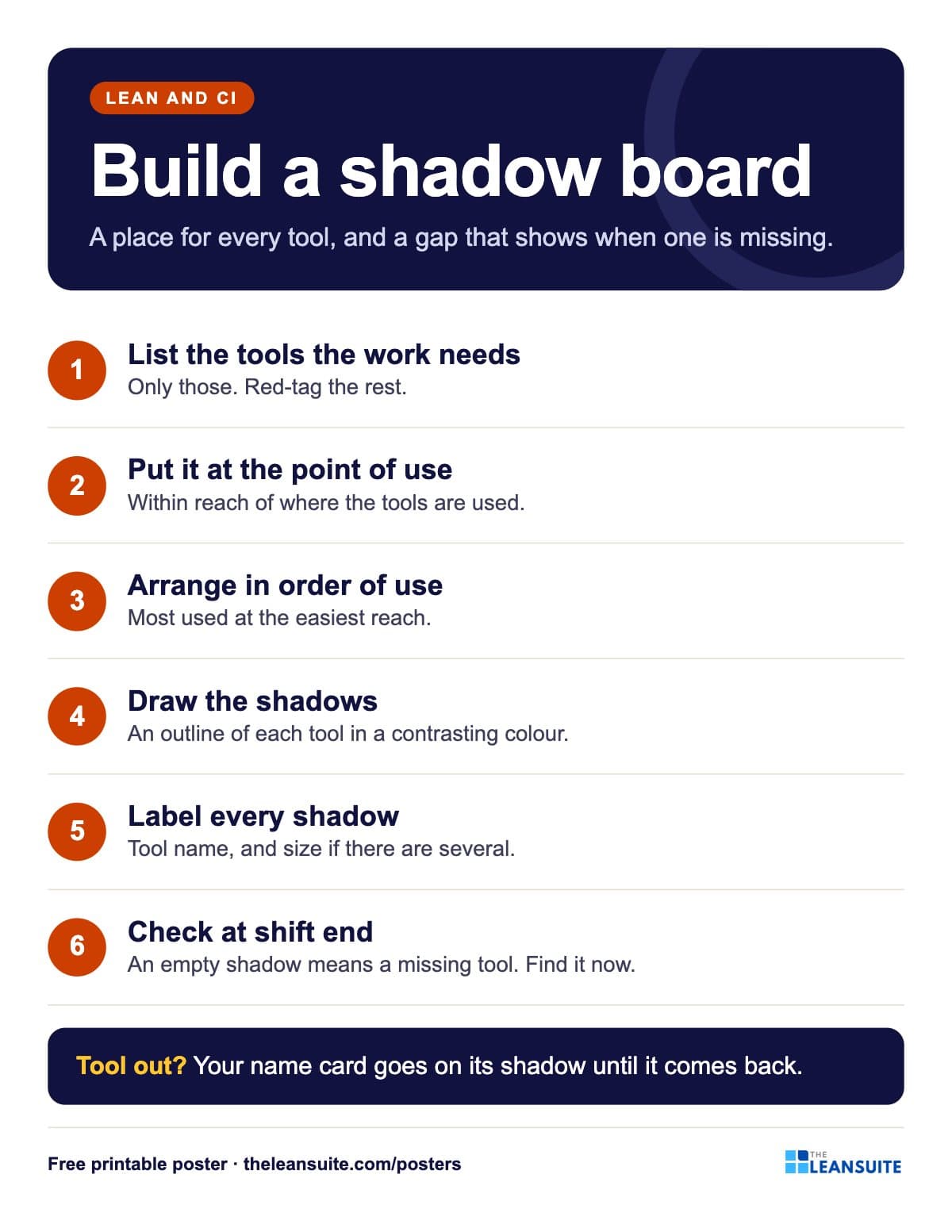 Shadow board poster
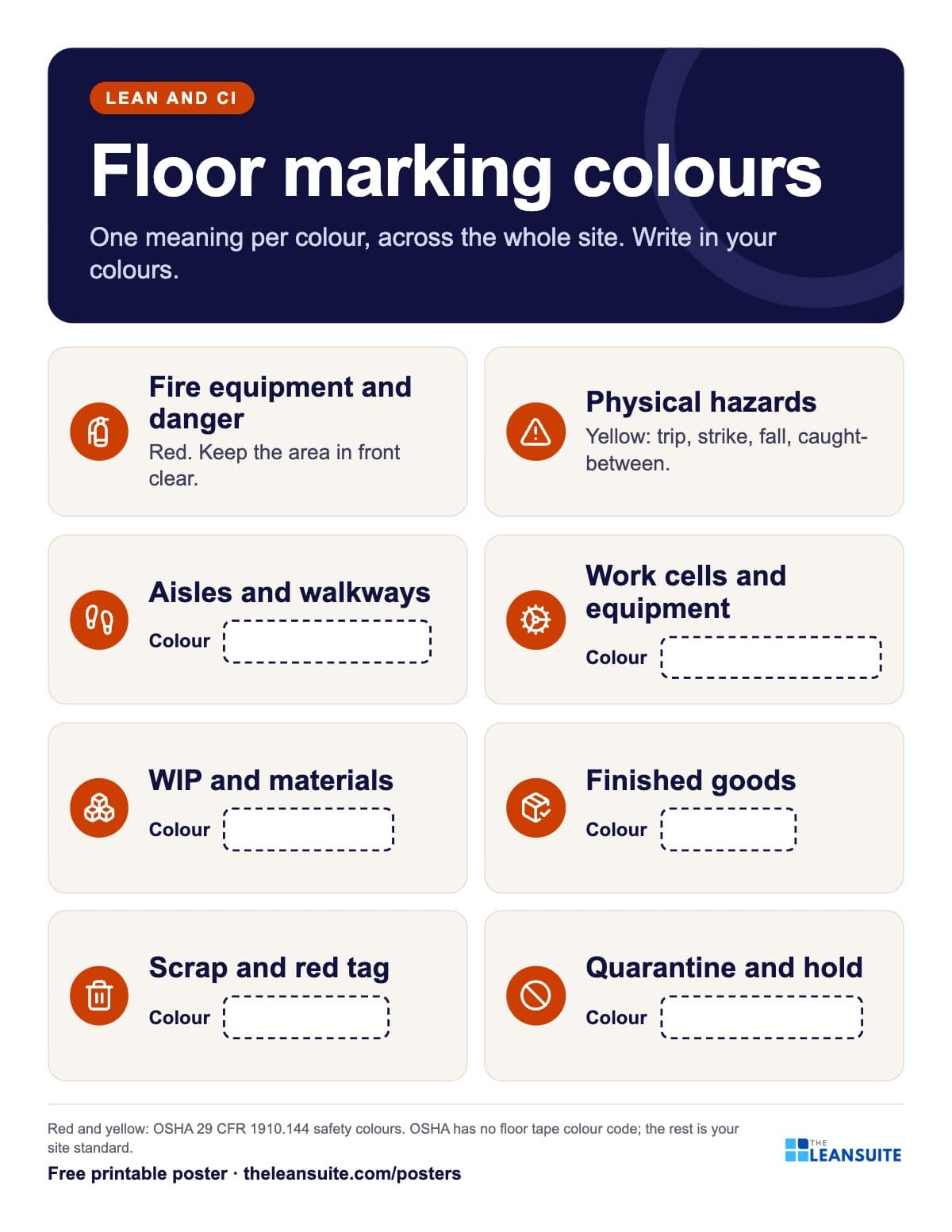 Floor marking colours poster
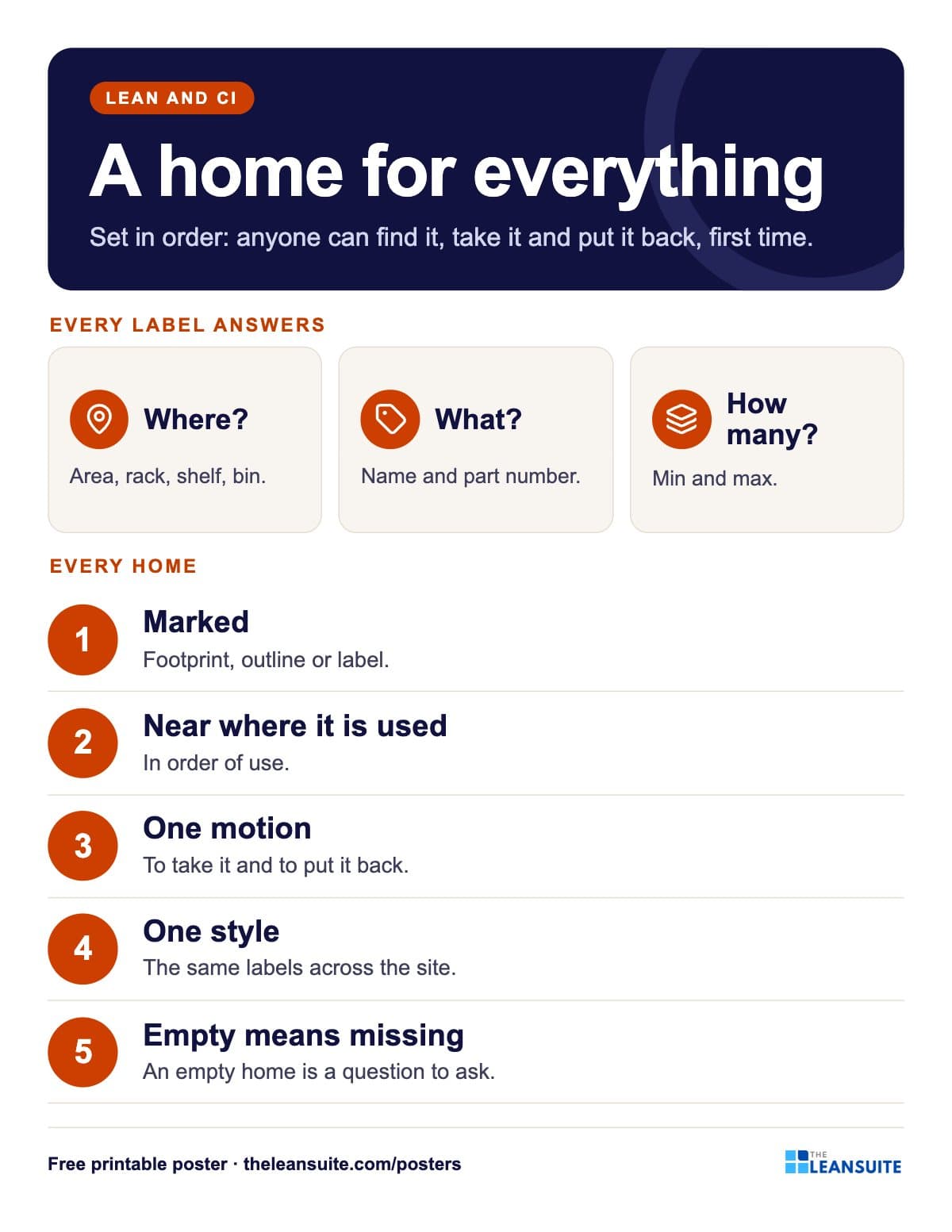 Set in order poster: where, what, how many
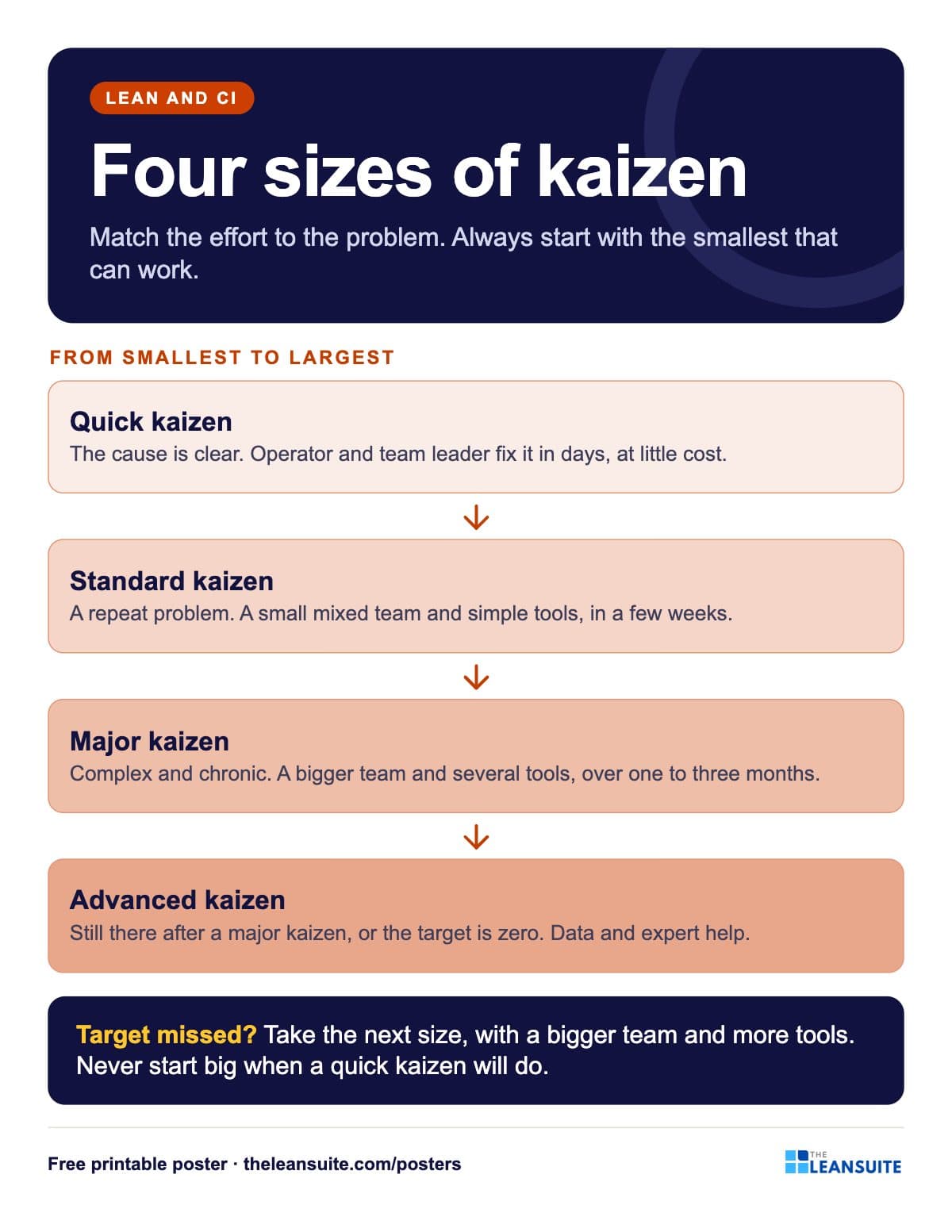 Kaizen sizes poster
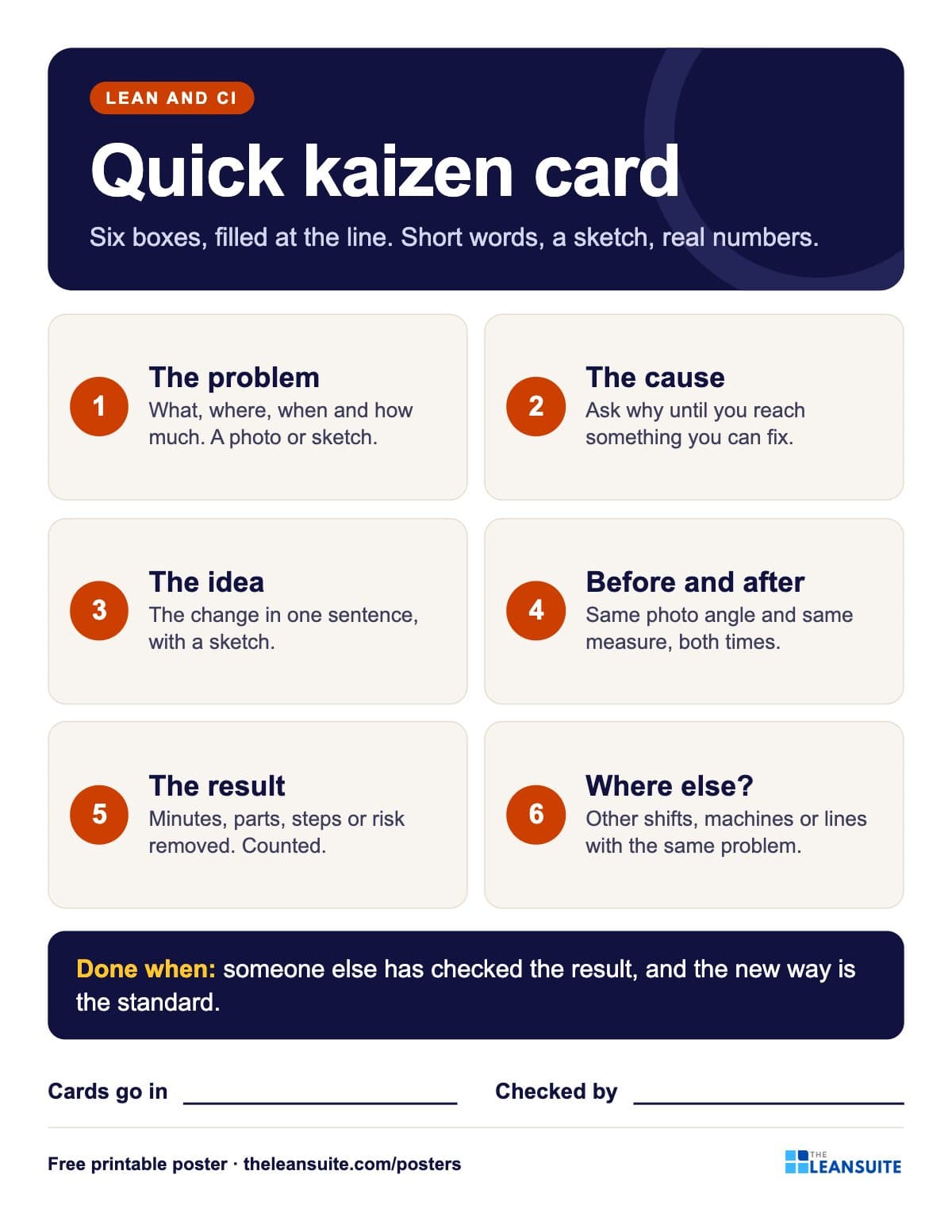 Quick kaizen card poster
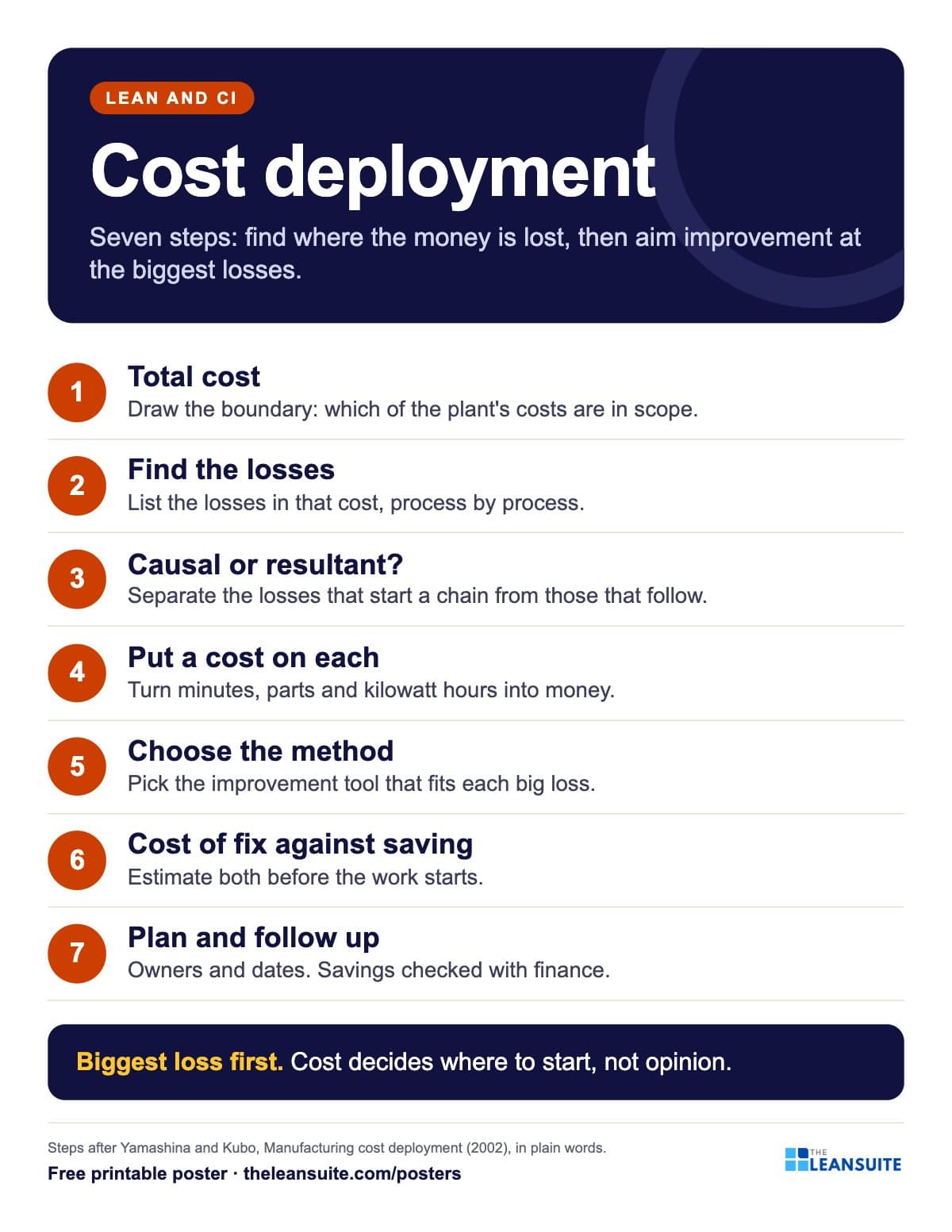 Cost deployment 7 steps poster
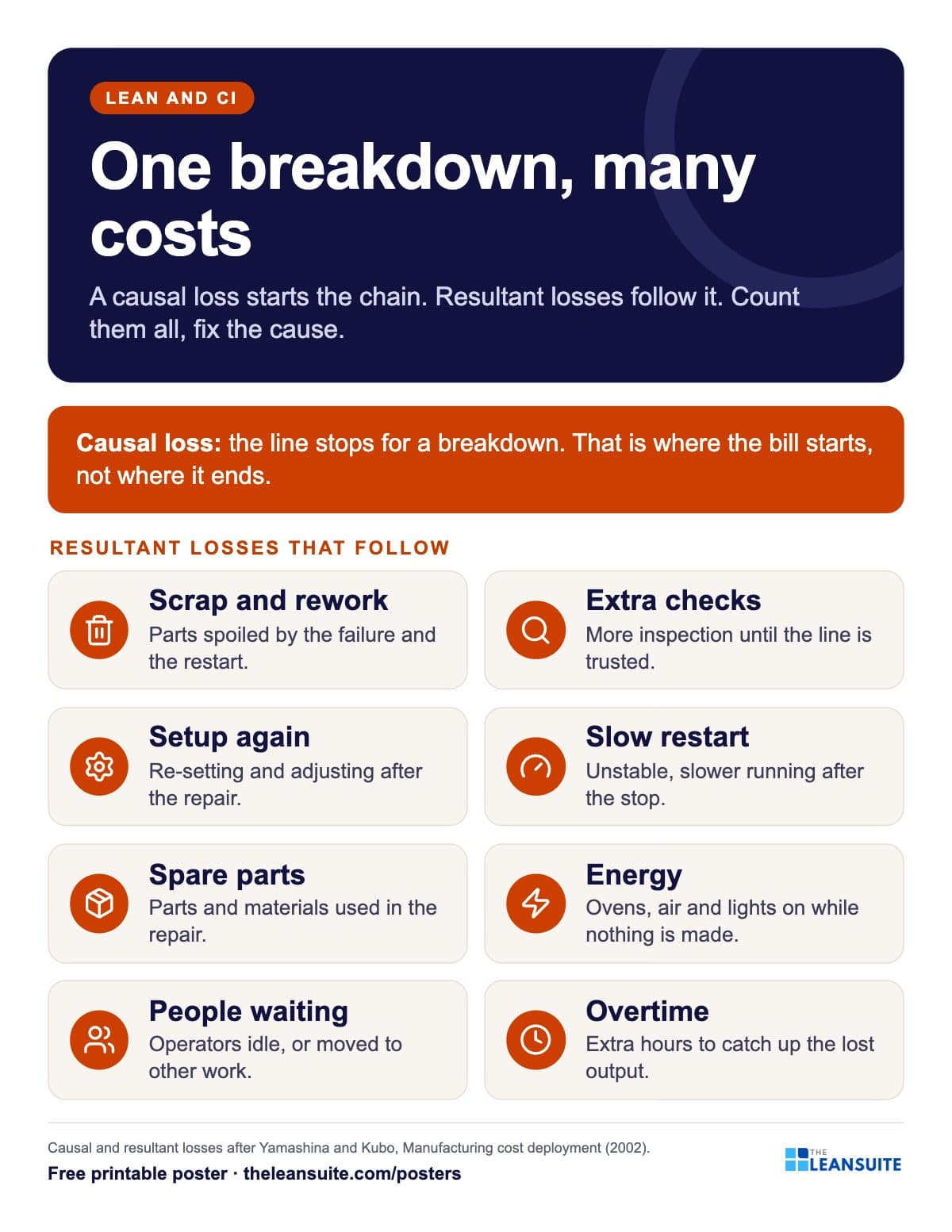 Causal and resultant losses poster
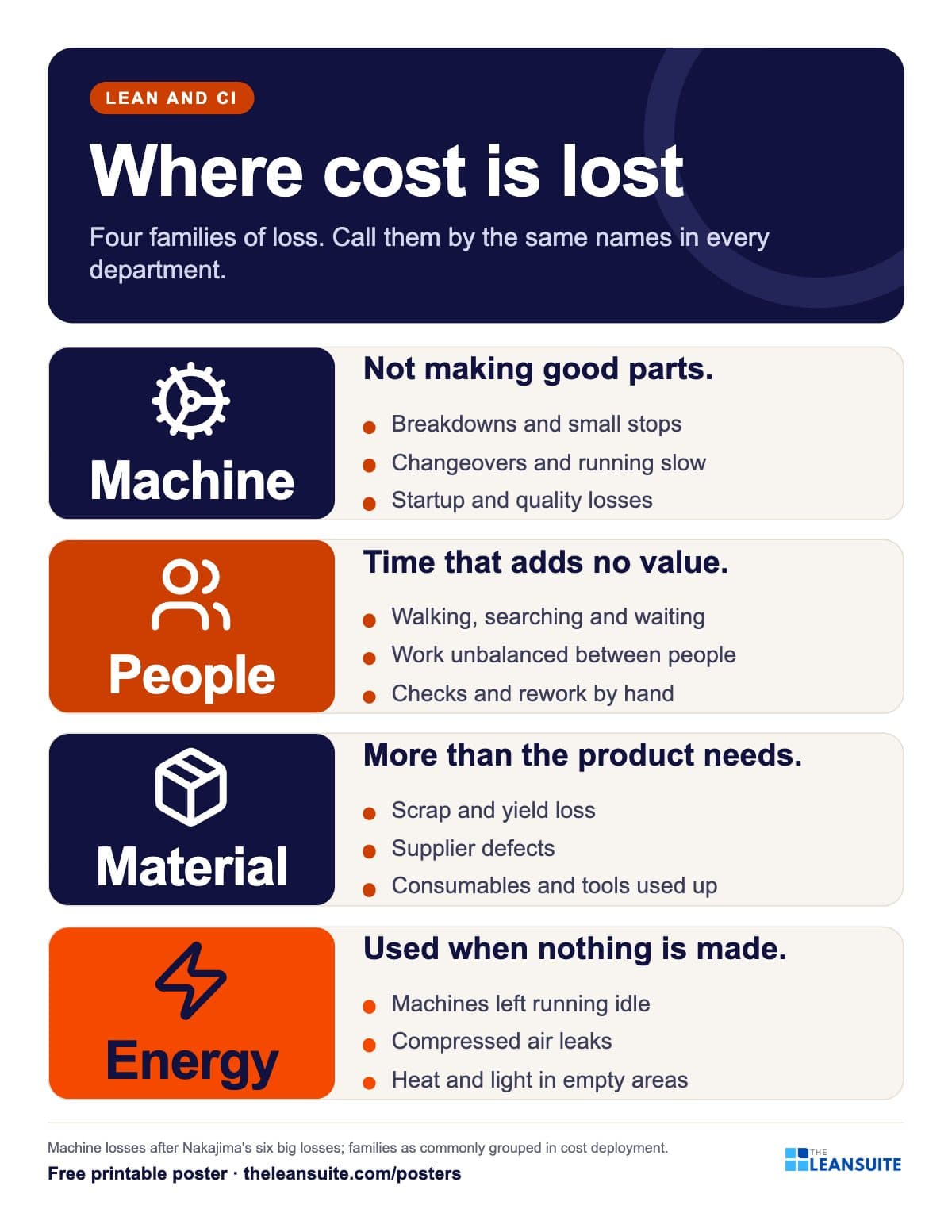 Four loss families poster
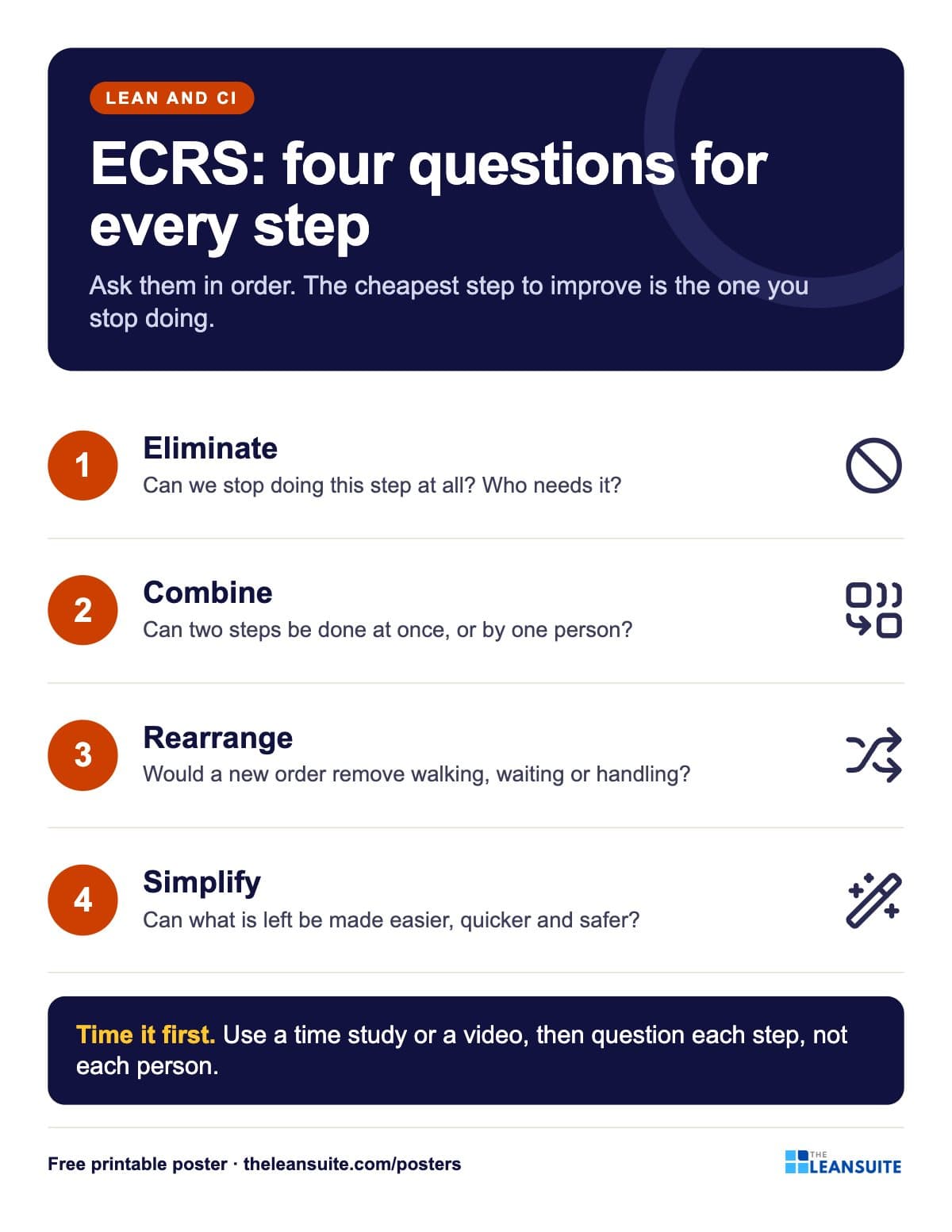 ECRS poster
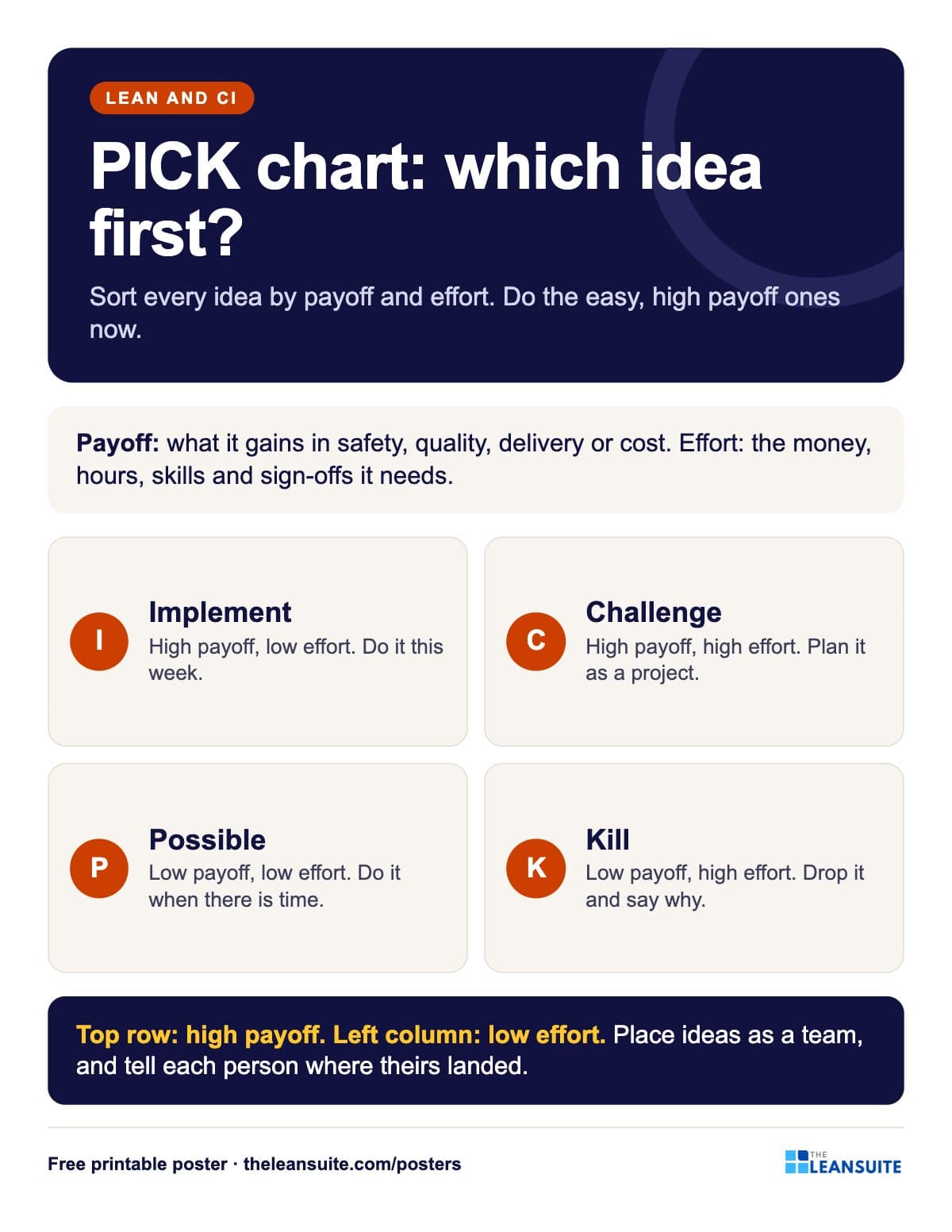 PICK chart poster
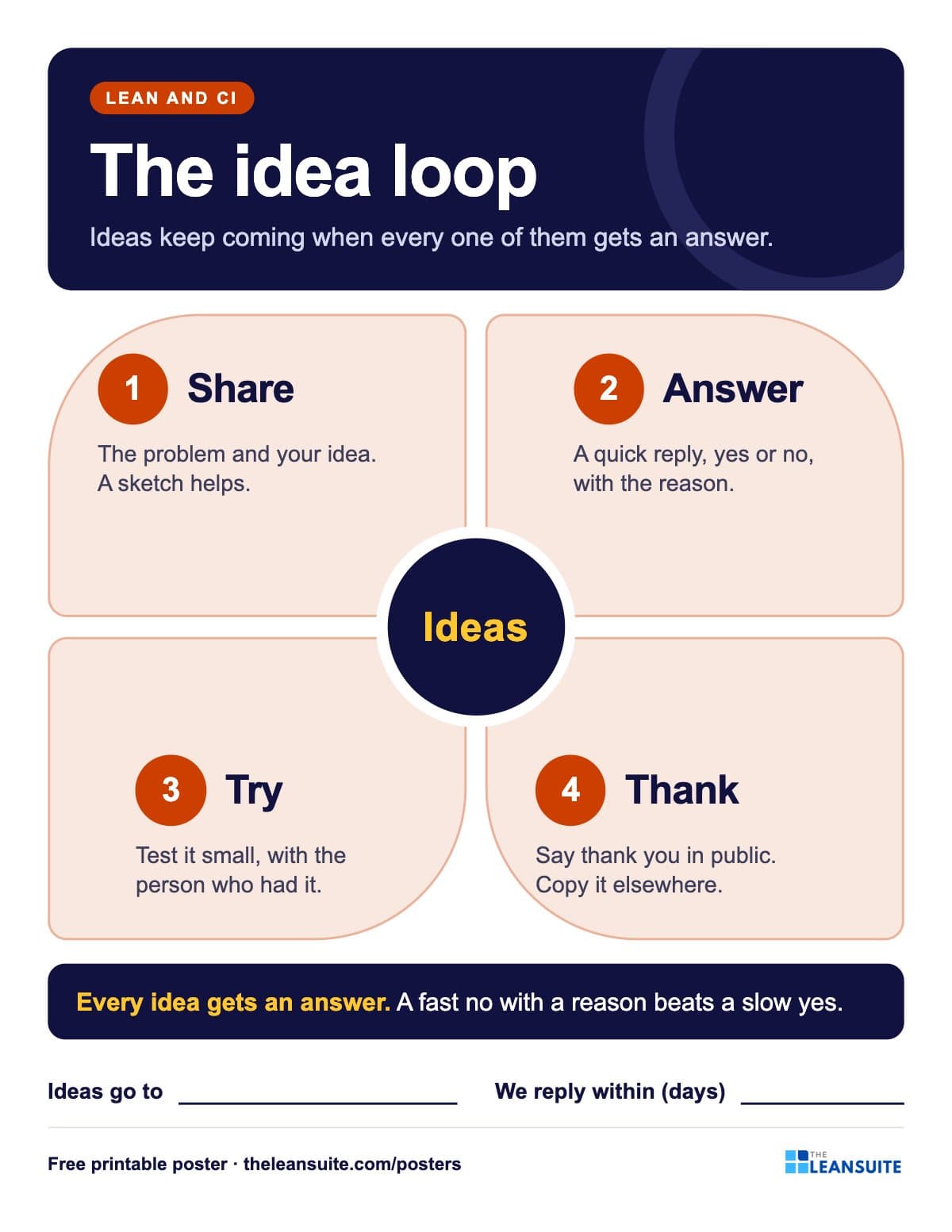 Suggestion system poster
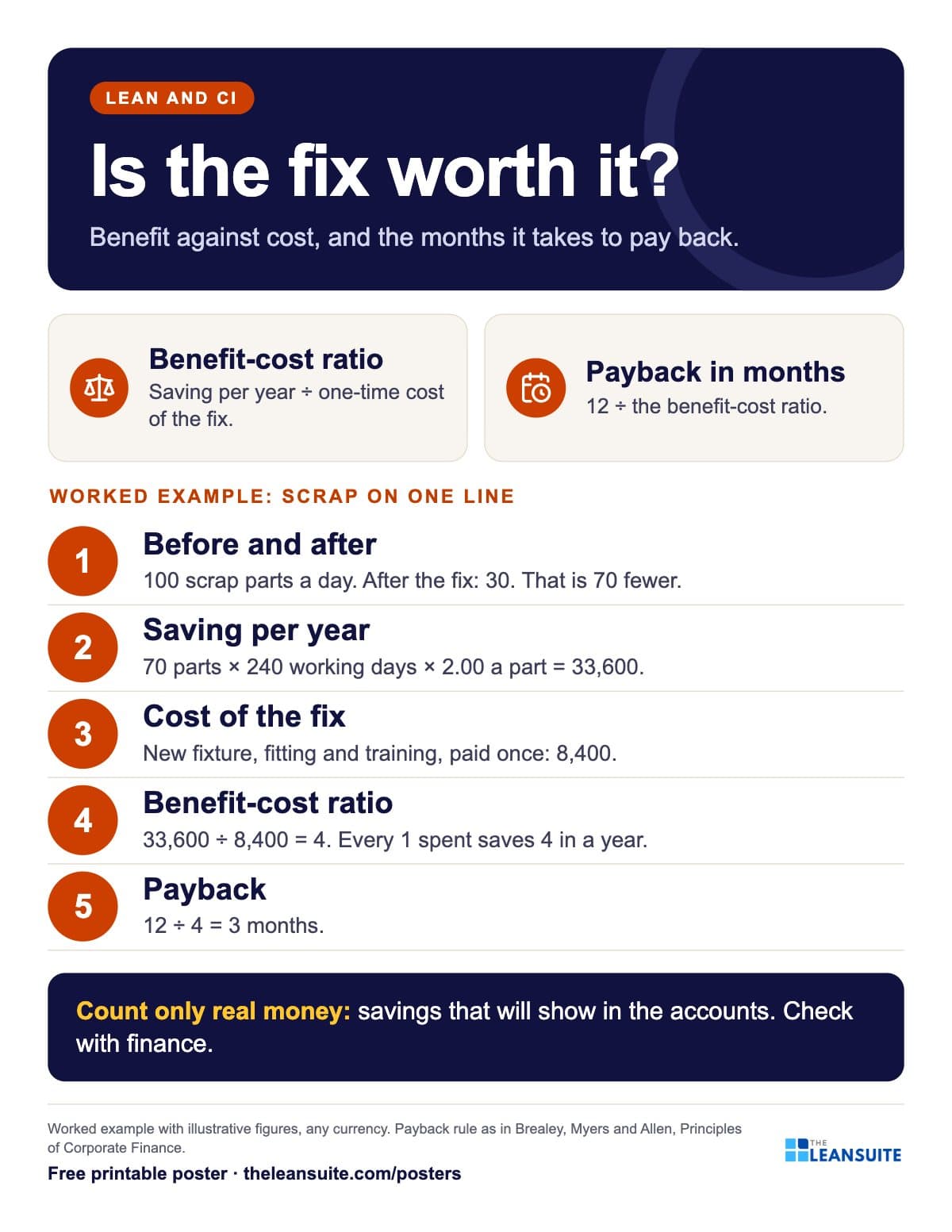 Benefit-cost ratio and payback poster
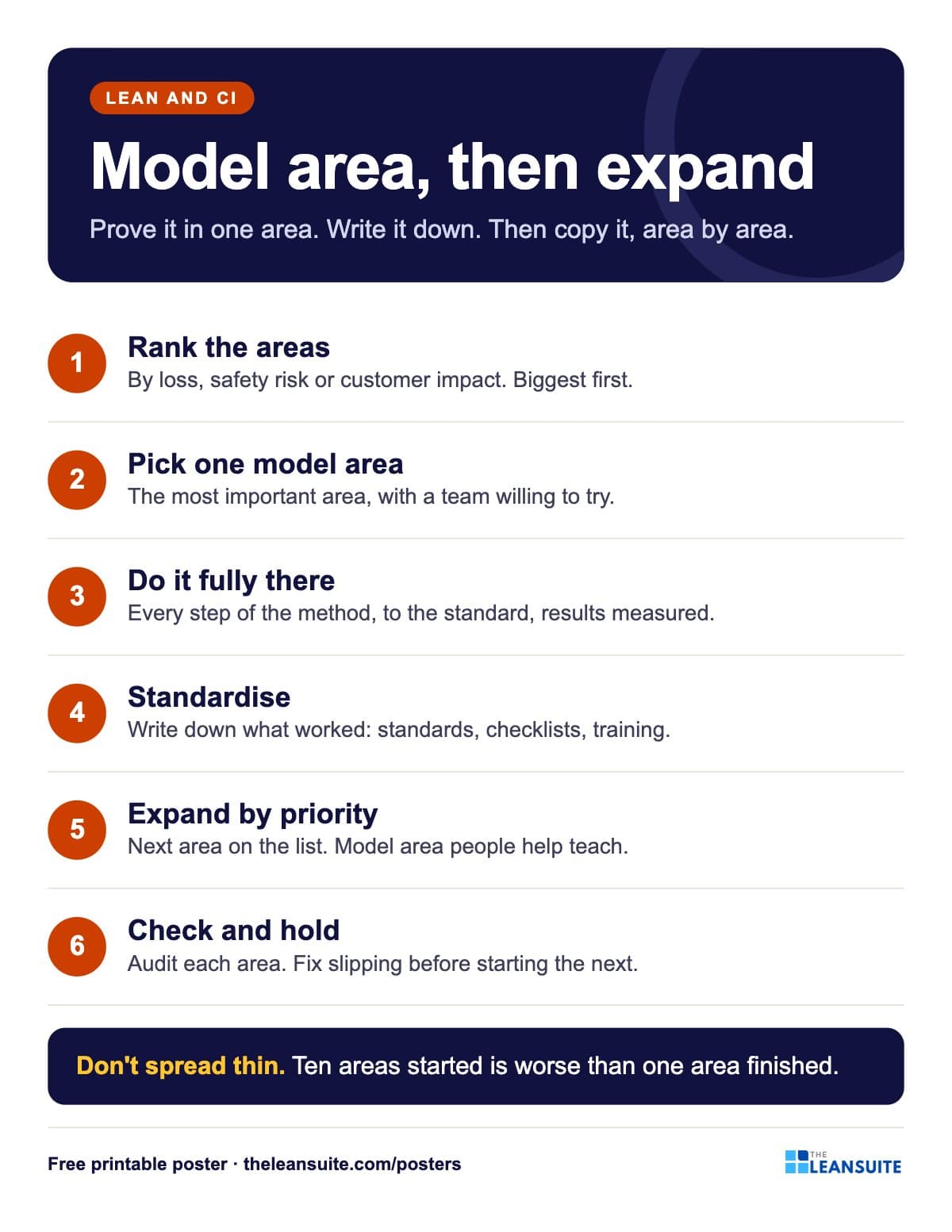 Model area and expansion poster
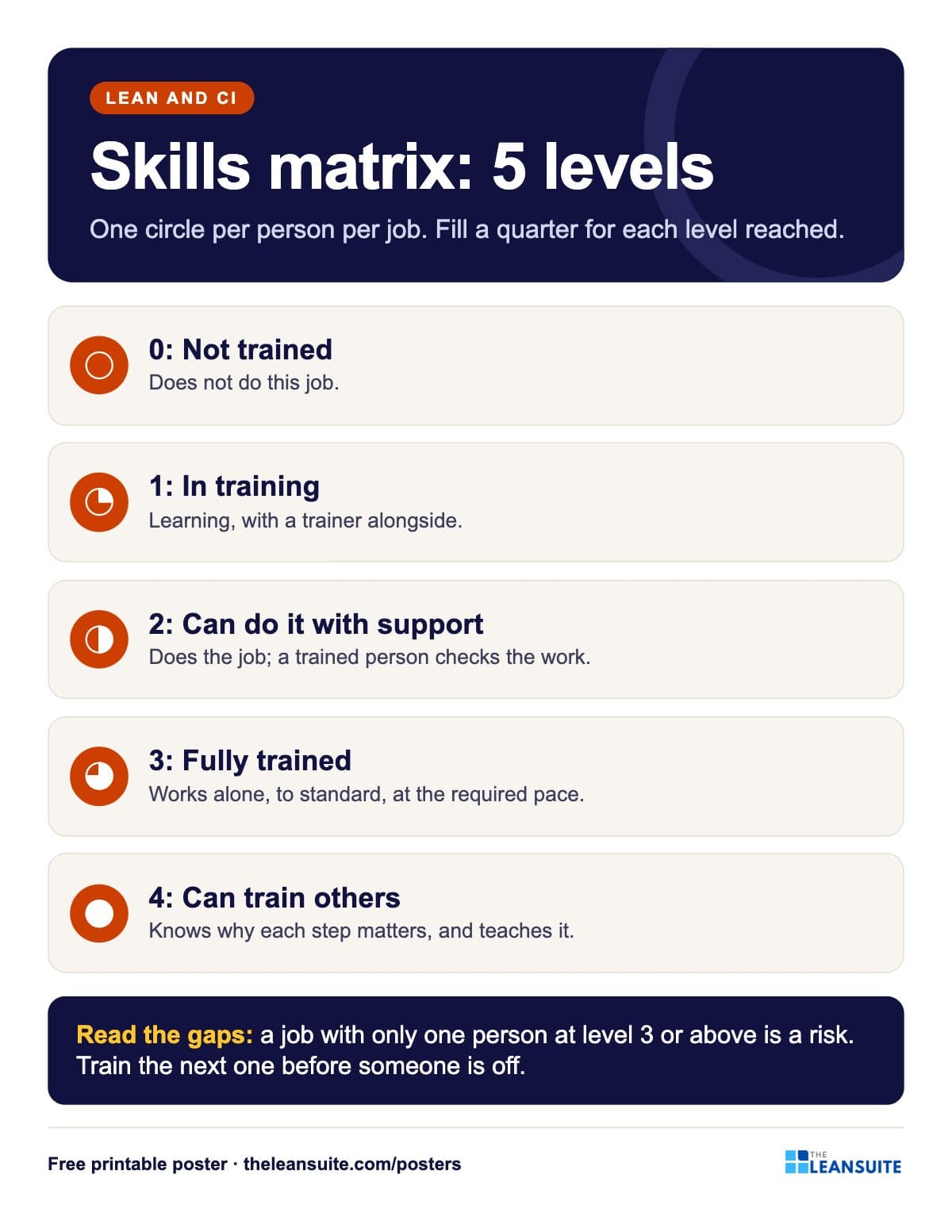 Skills matrix levels poster
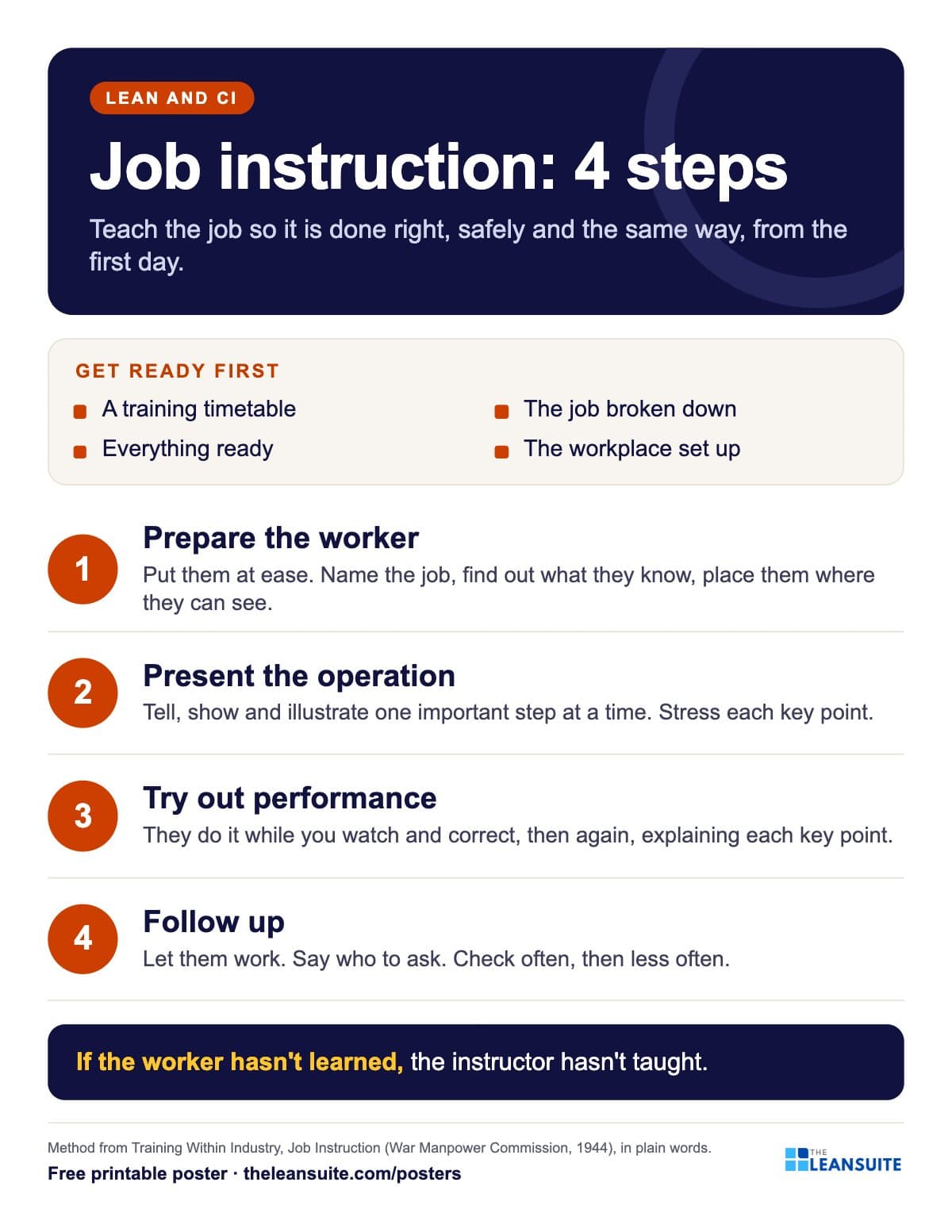 Job instruction 4 steps poster
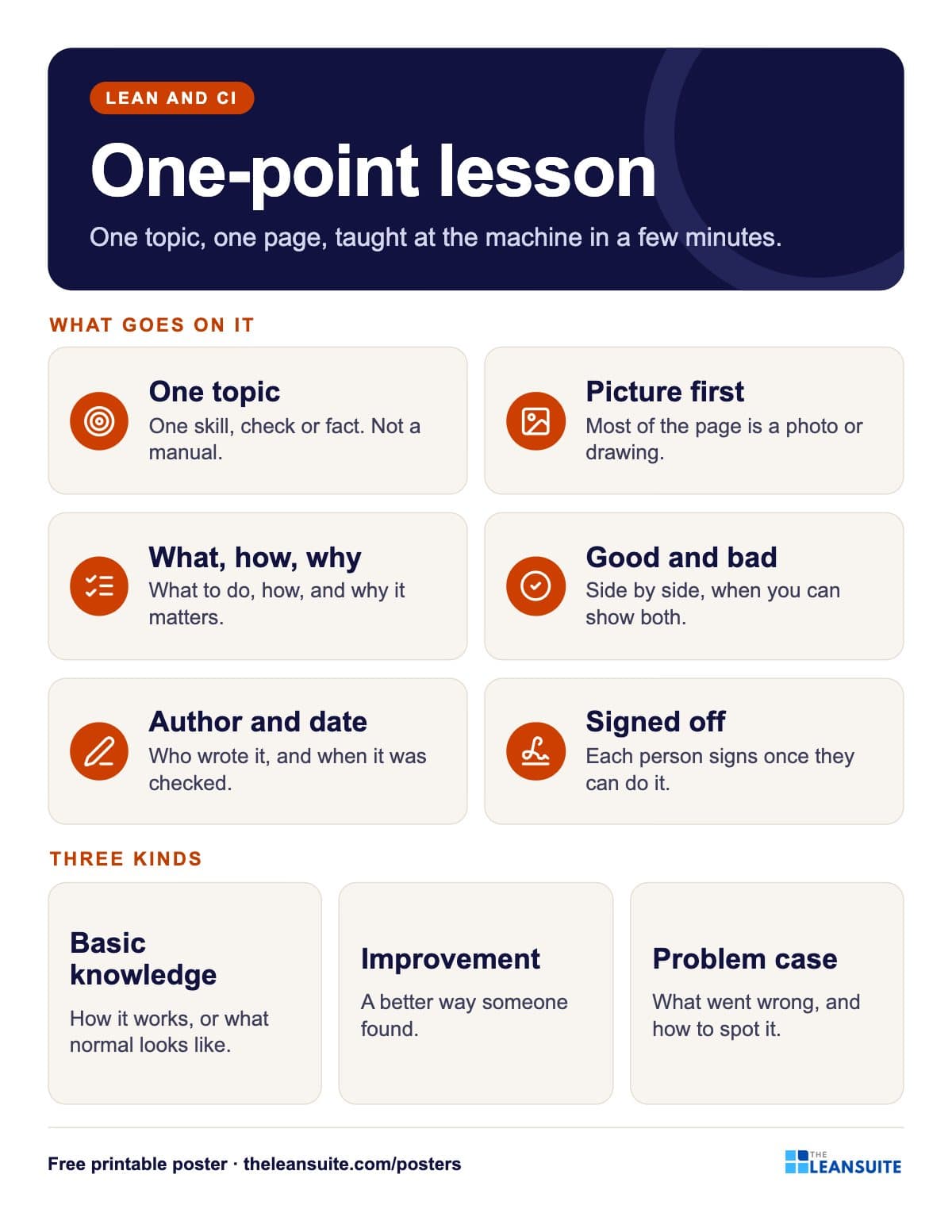 One-point lesson poster
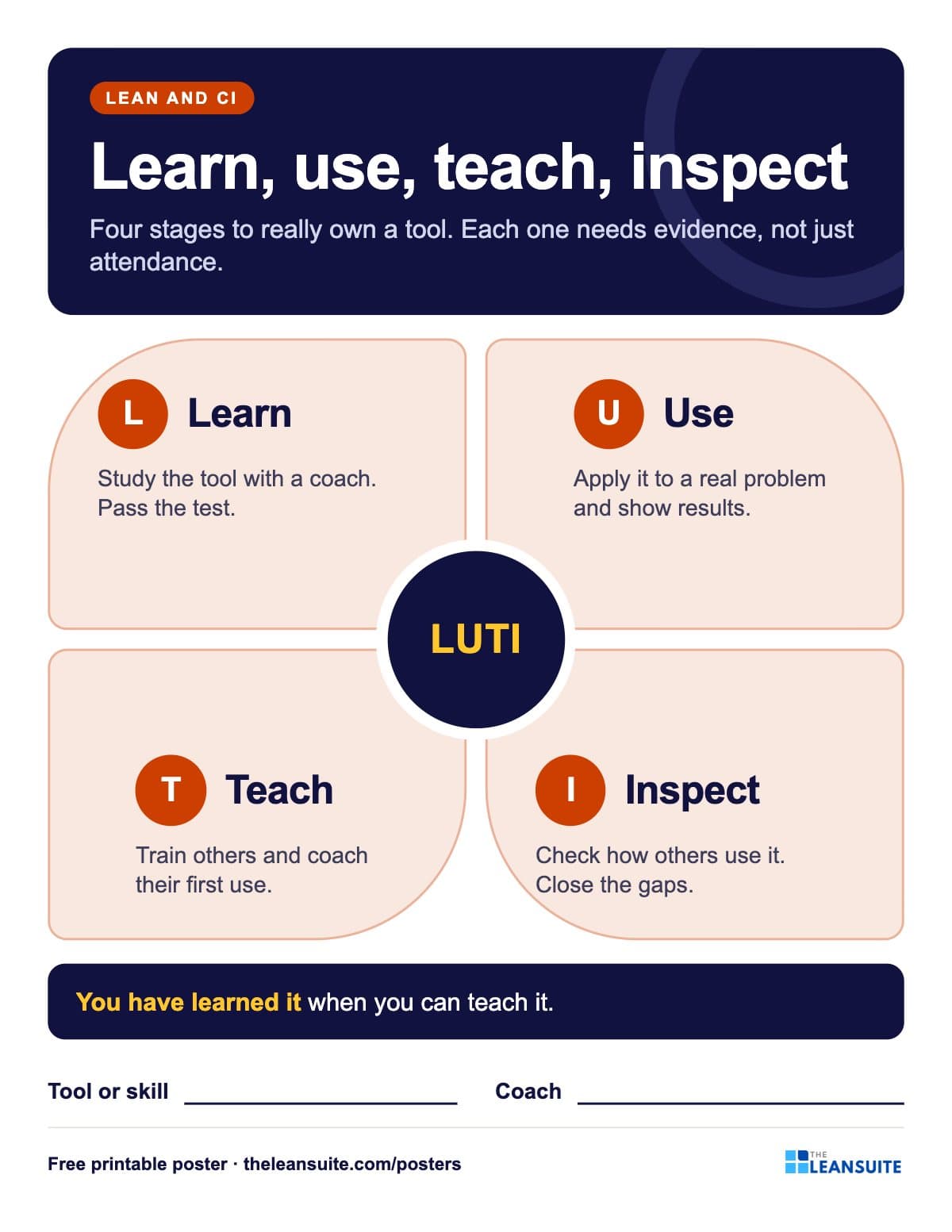 Learn, use, teach, inspect poster
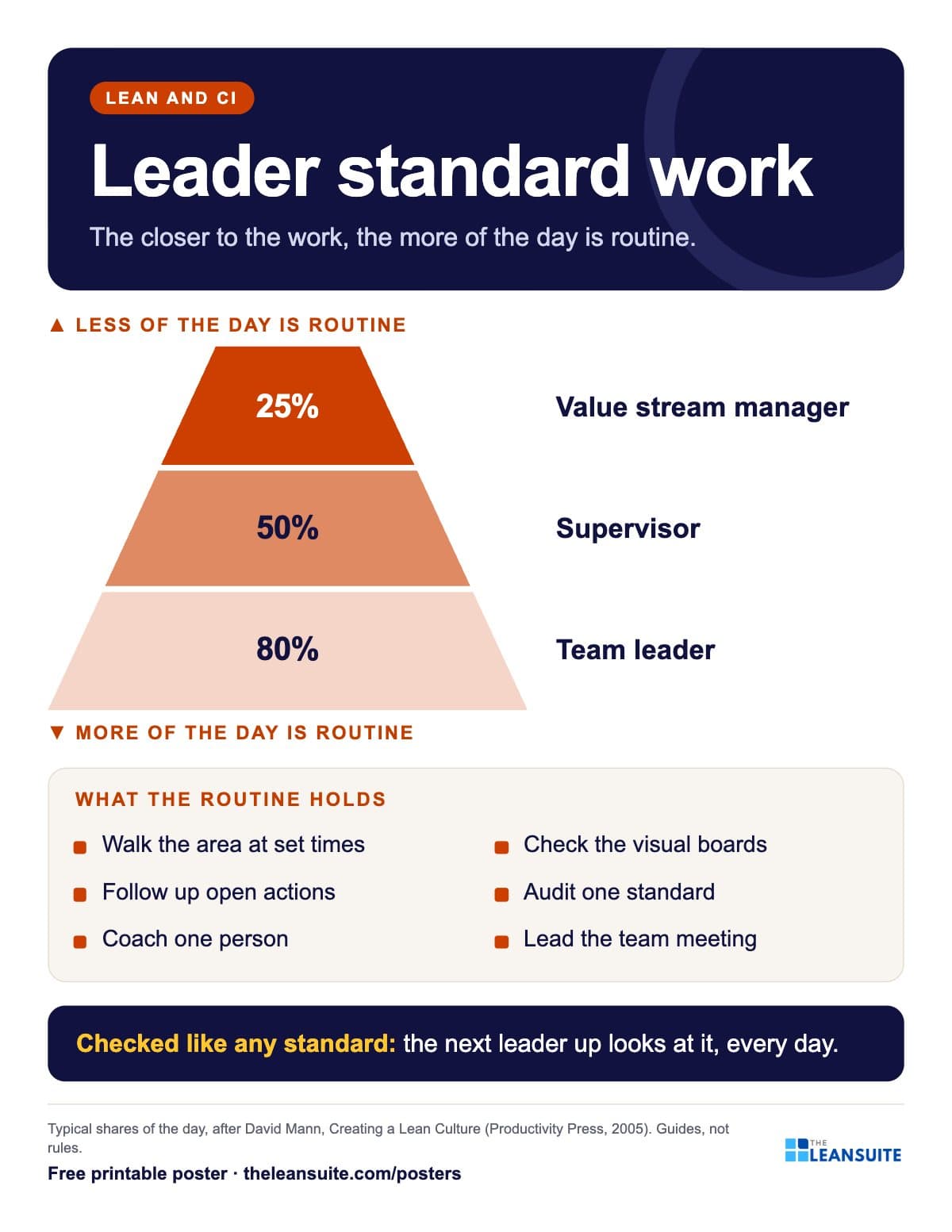 Leader standard work poster
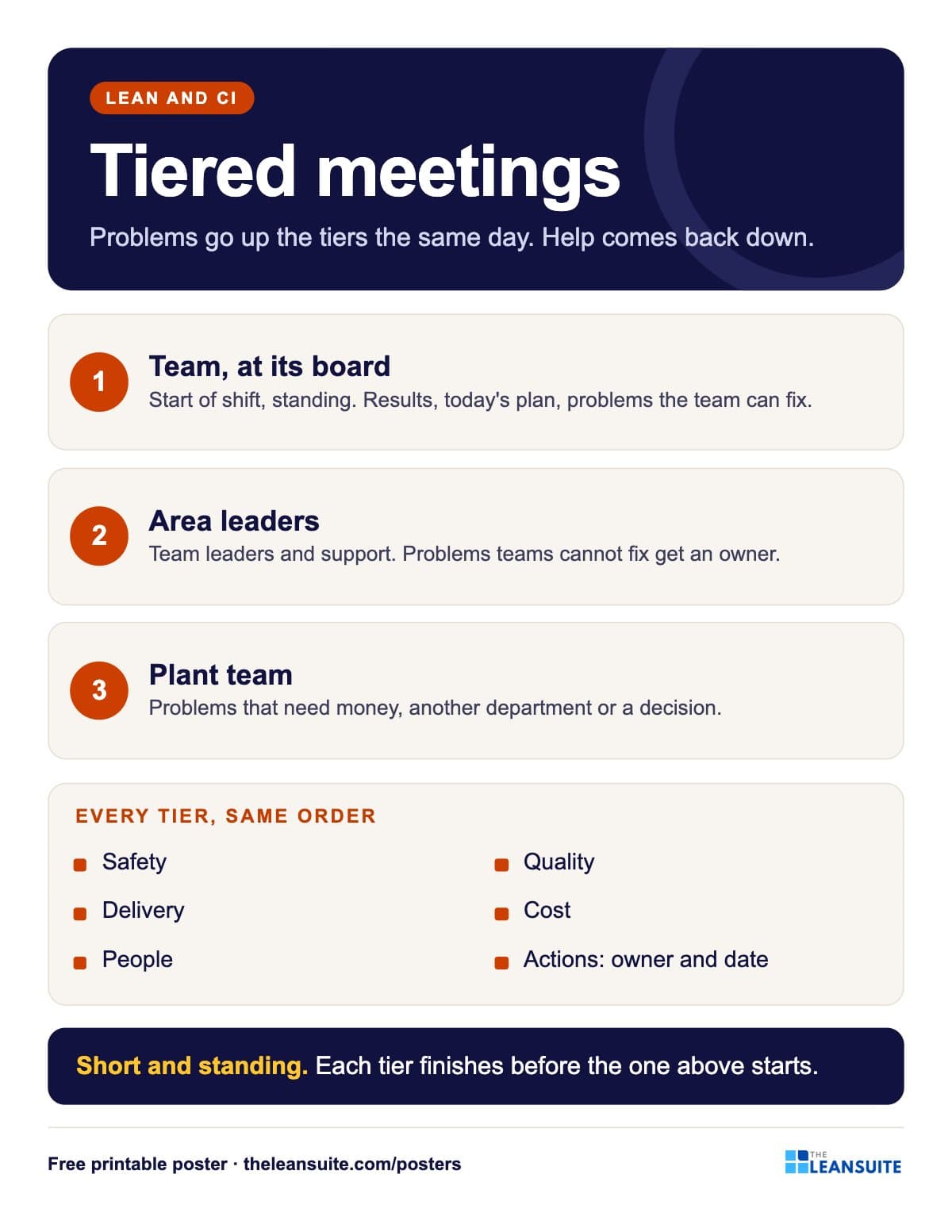 Tiered meetings poster
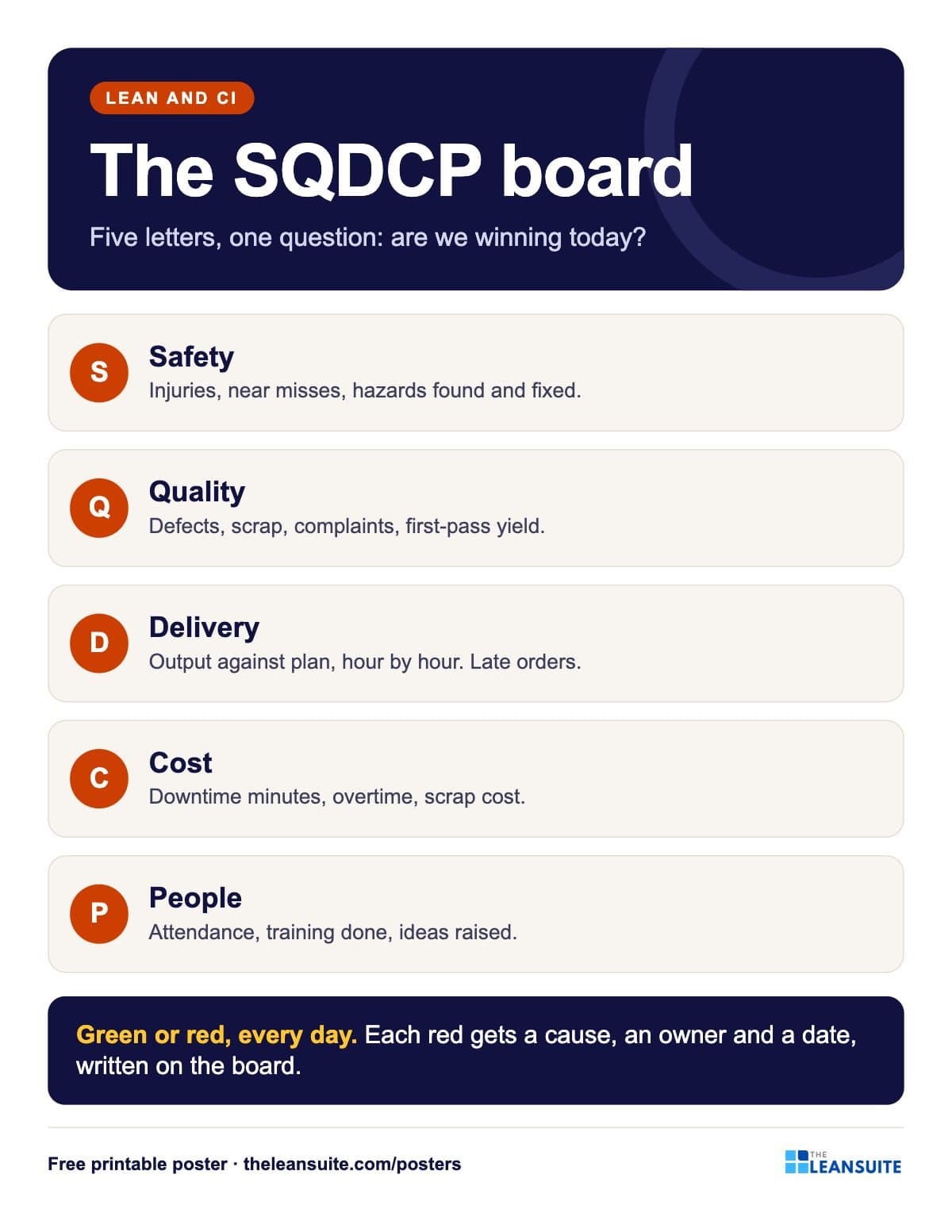 SQDCP board poster
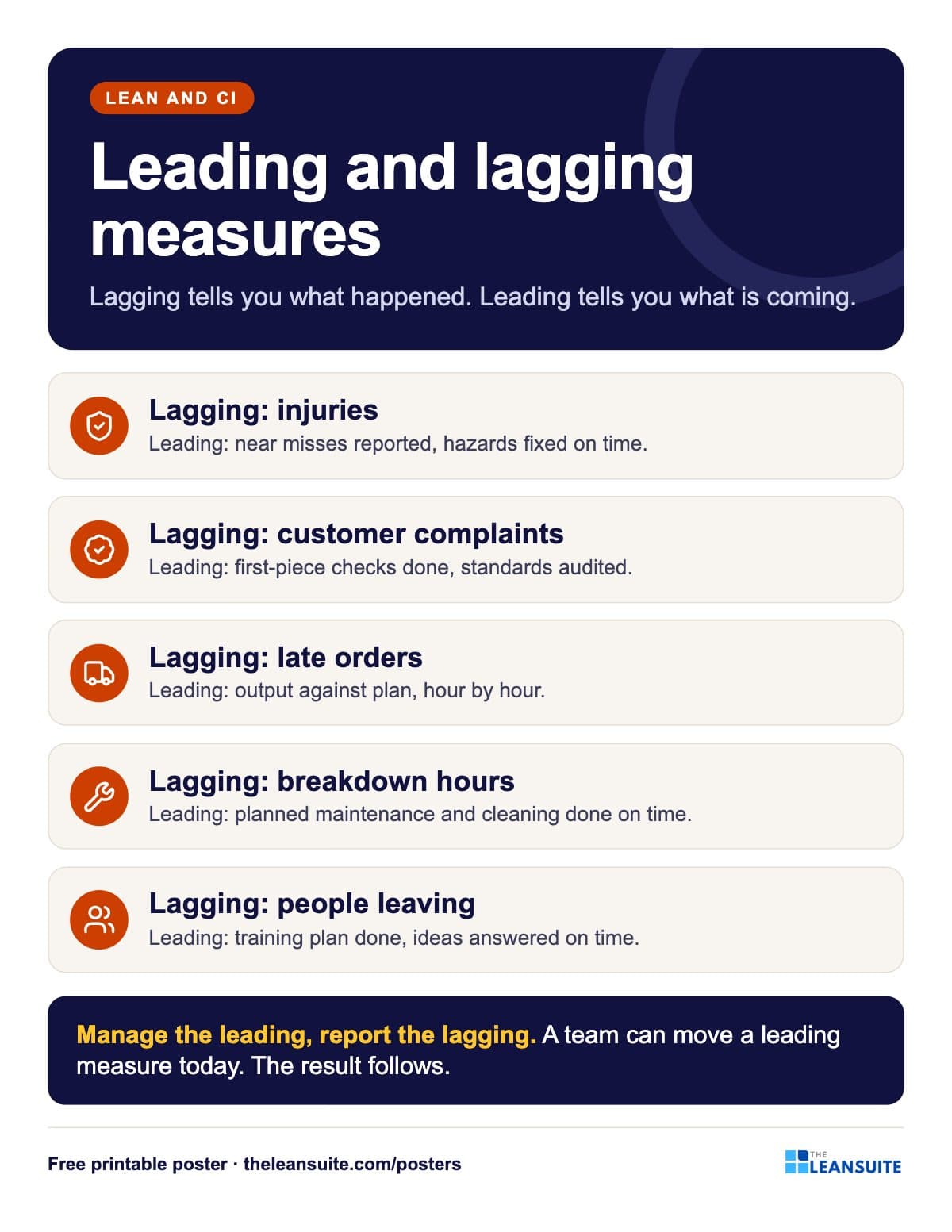 Leading and lagging indicators poster
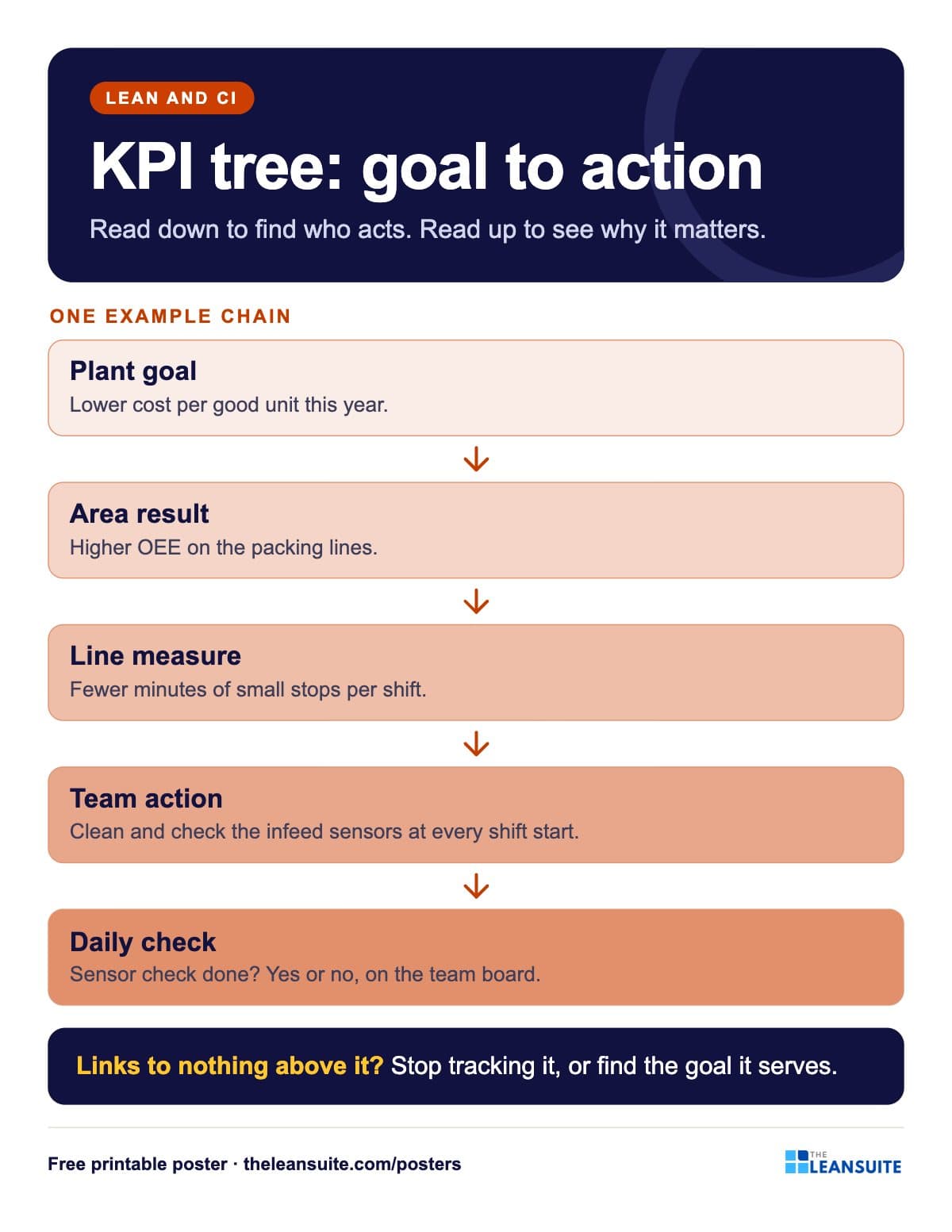 KPI tree poster
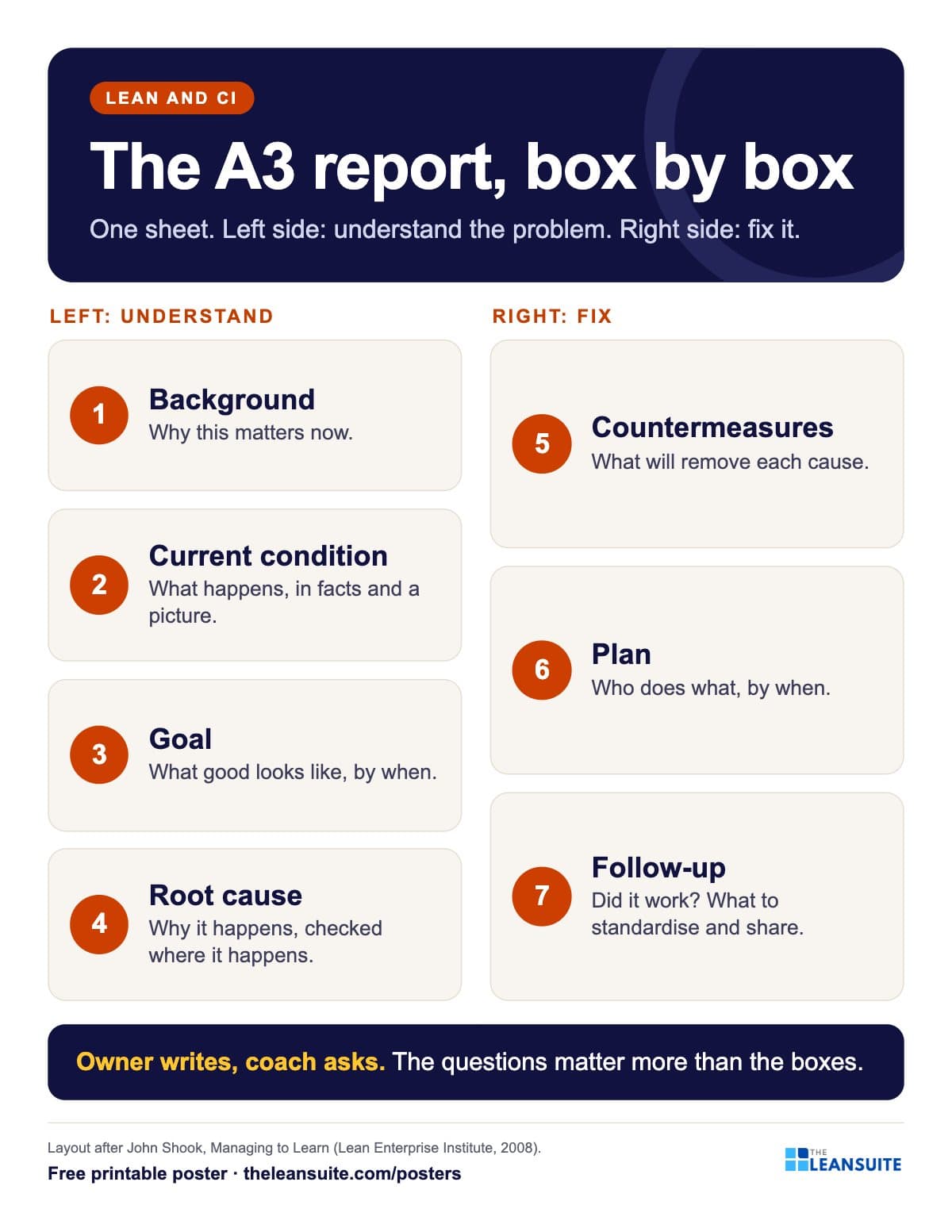 A3 report layout poster
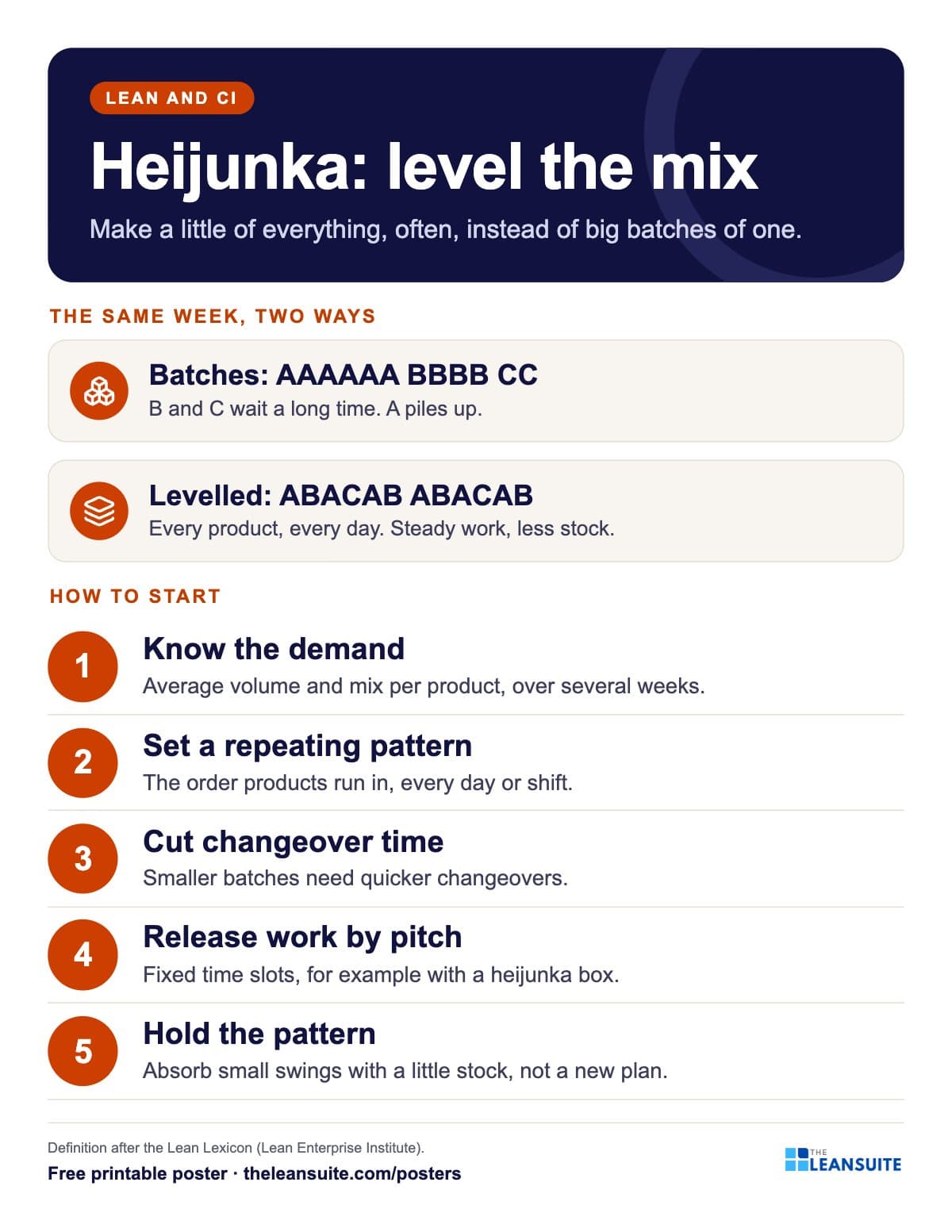 Heijunka production levelling poster
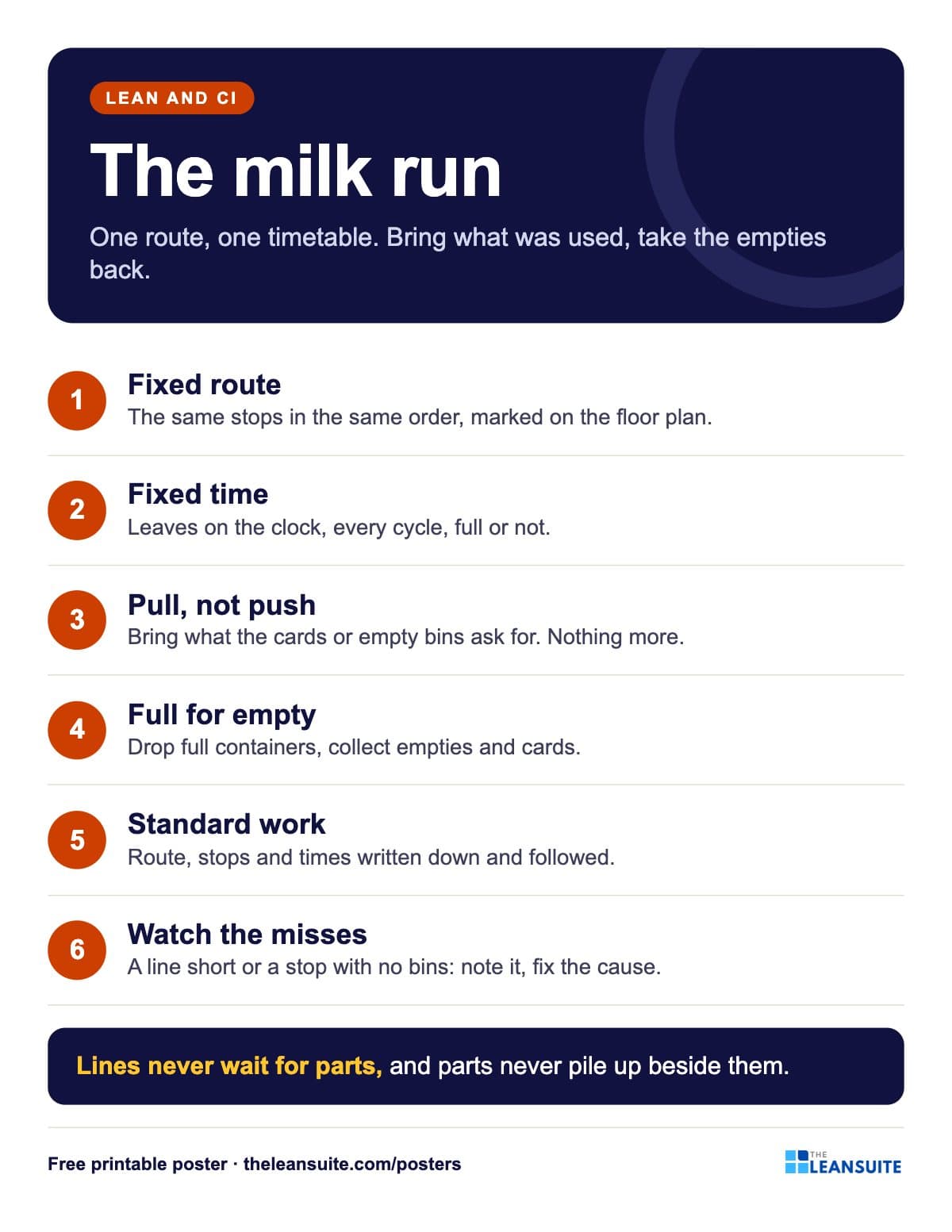 Milk run poster
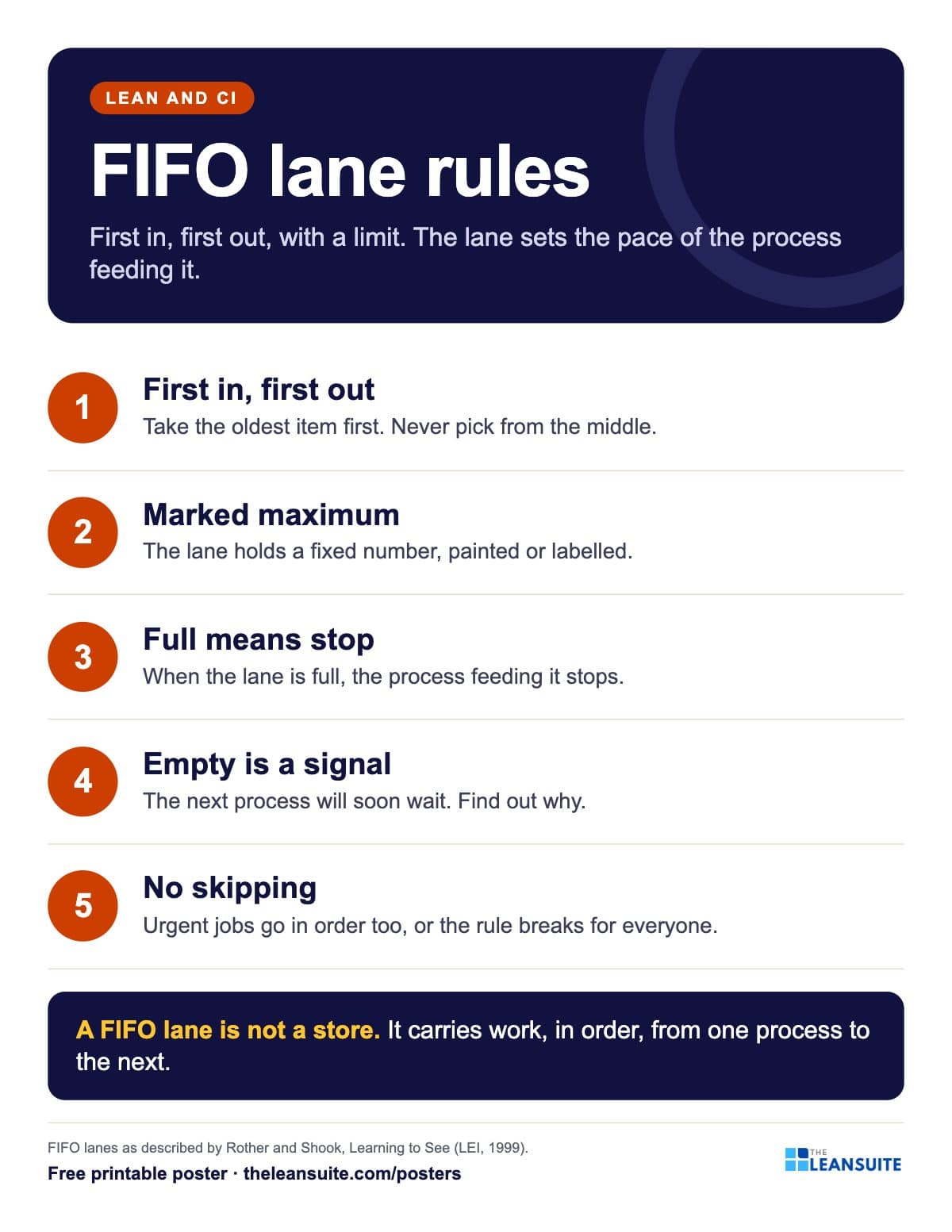 FIFO lane rules poster
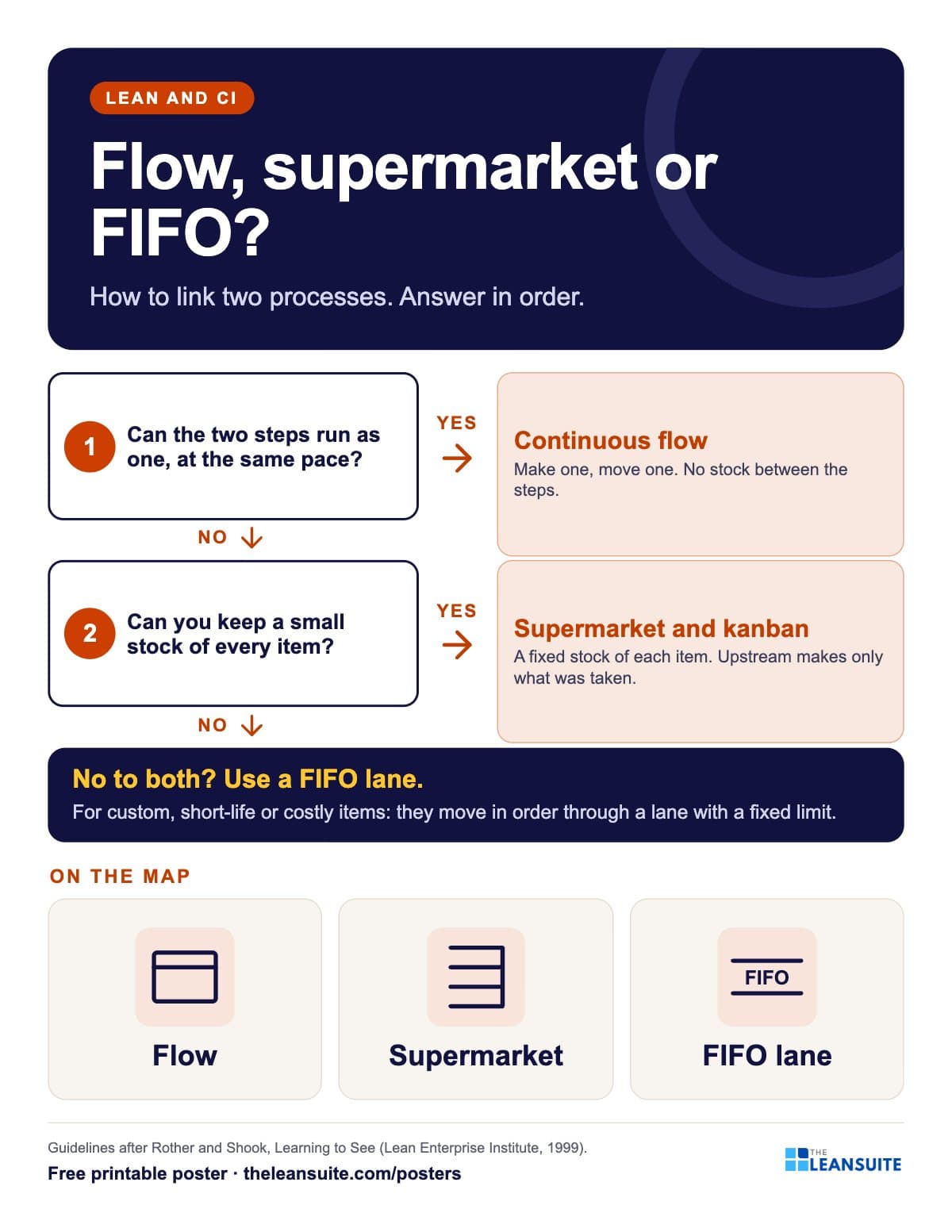 Flow, supermarket or FIFO lane poster
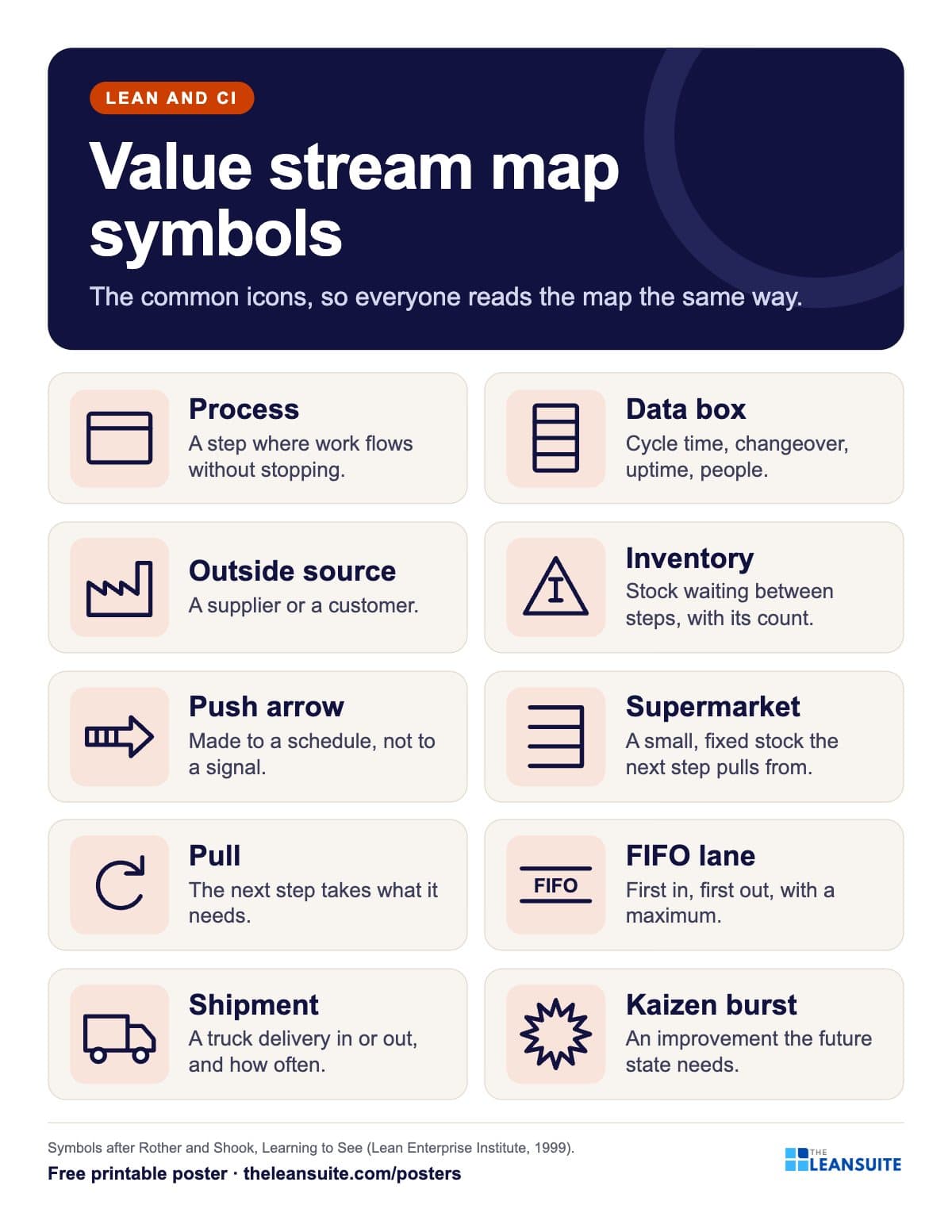 Value stream map symbols poster
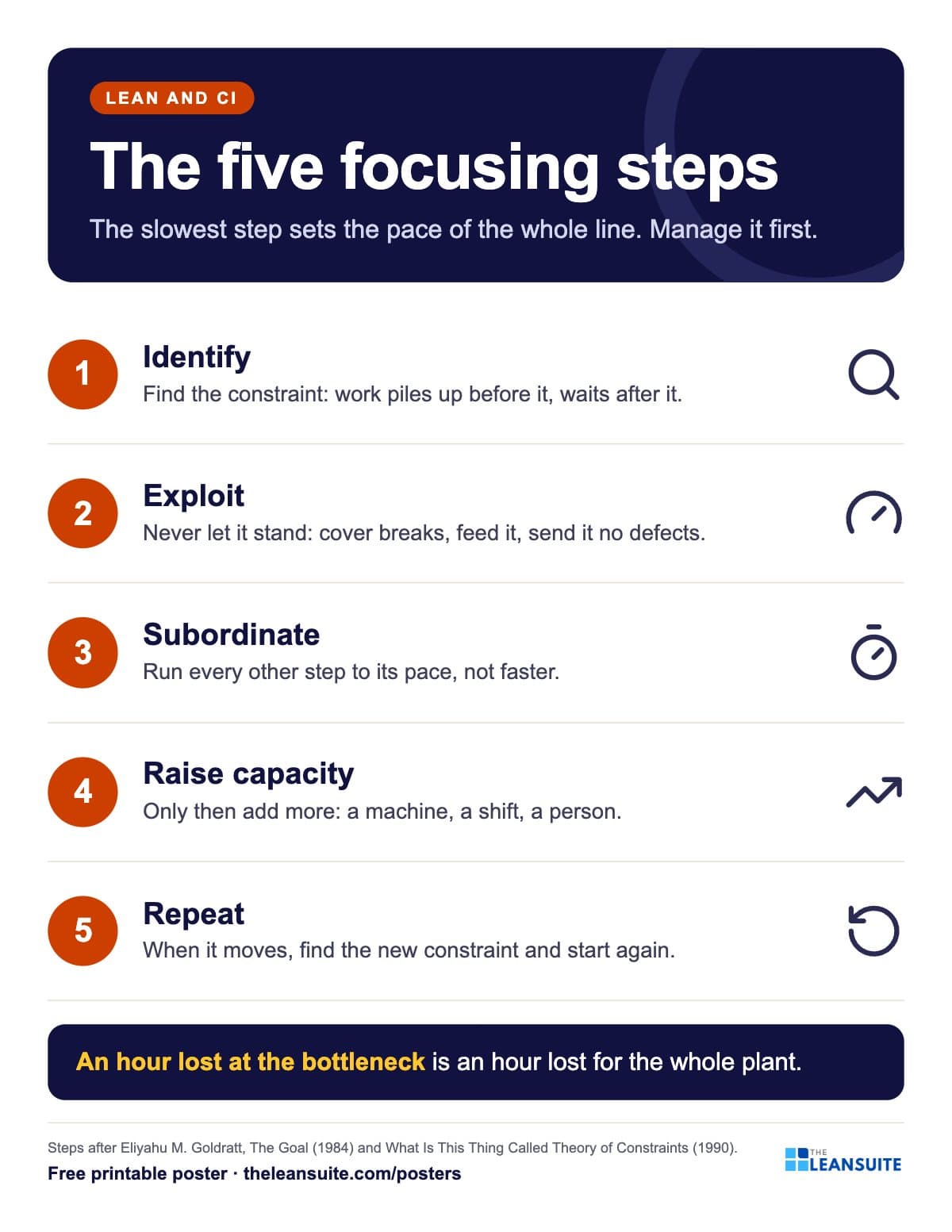 Bottleneck five focusing steps poster
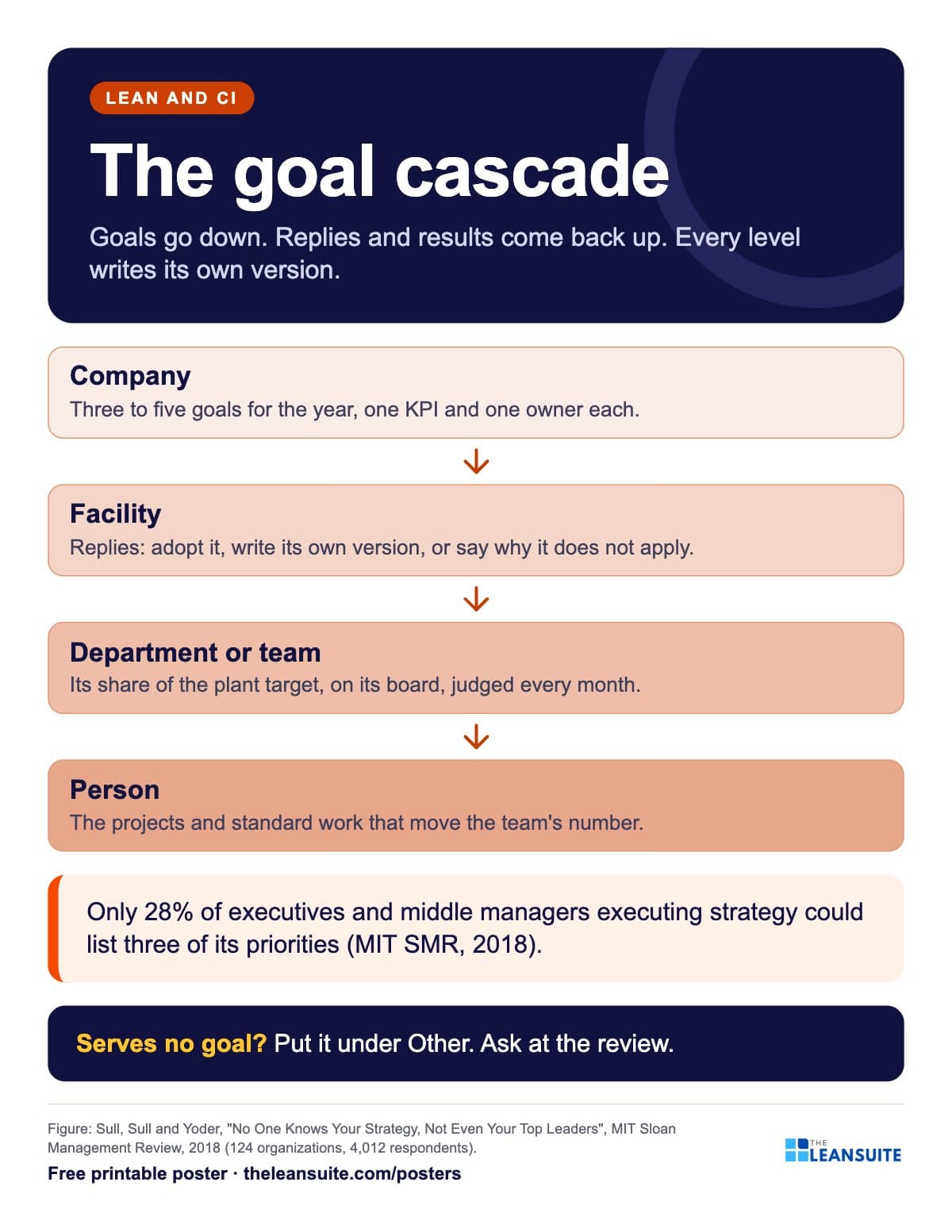 Goal cascade poster
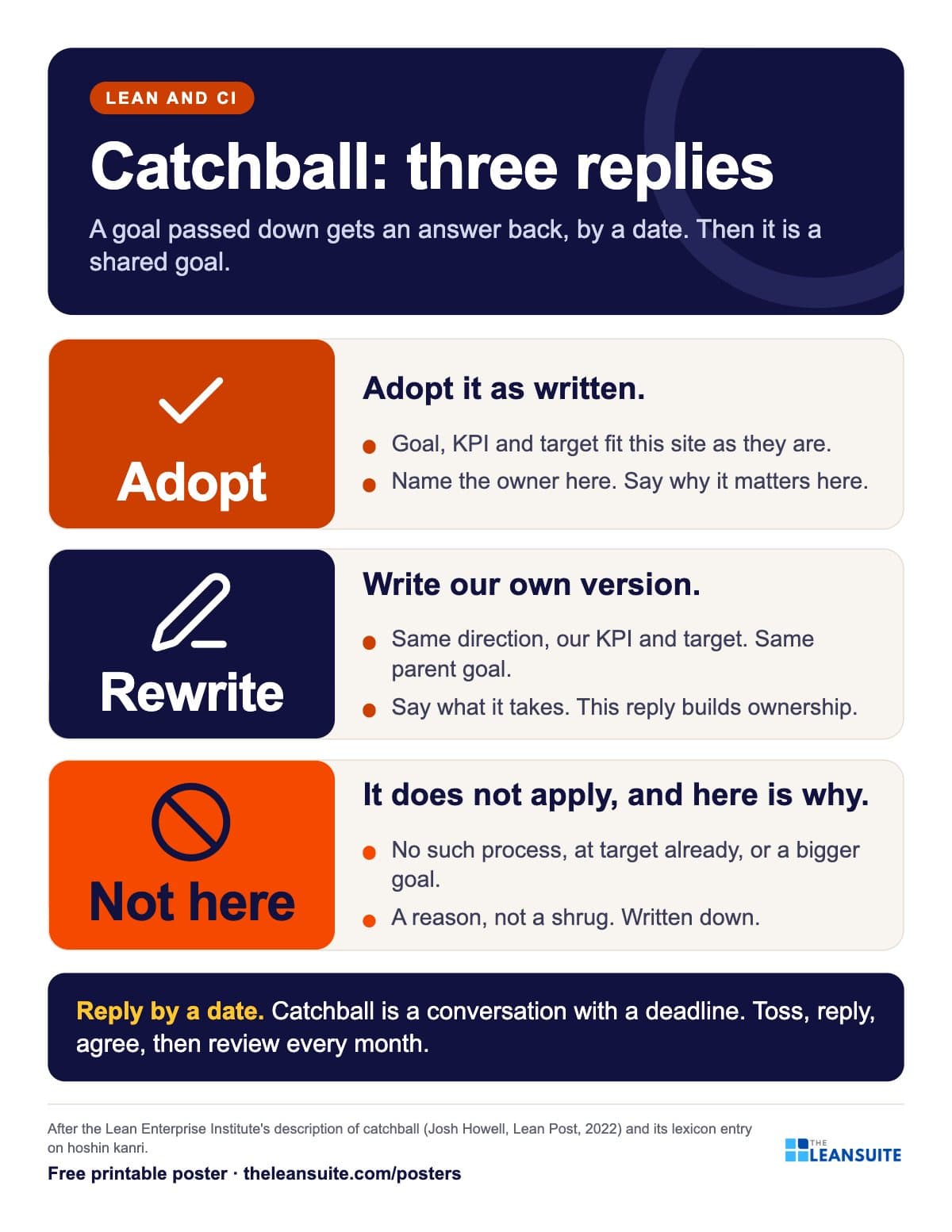 Catchball: three replies poster
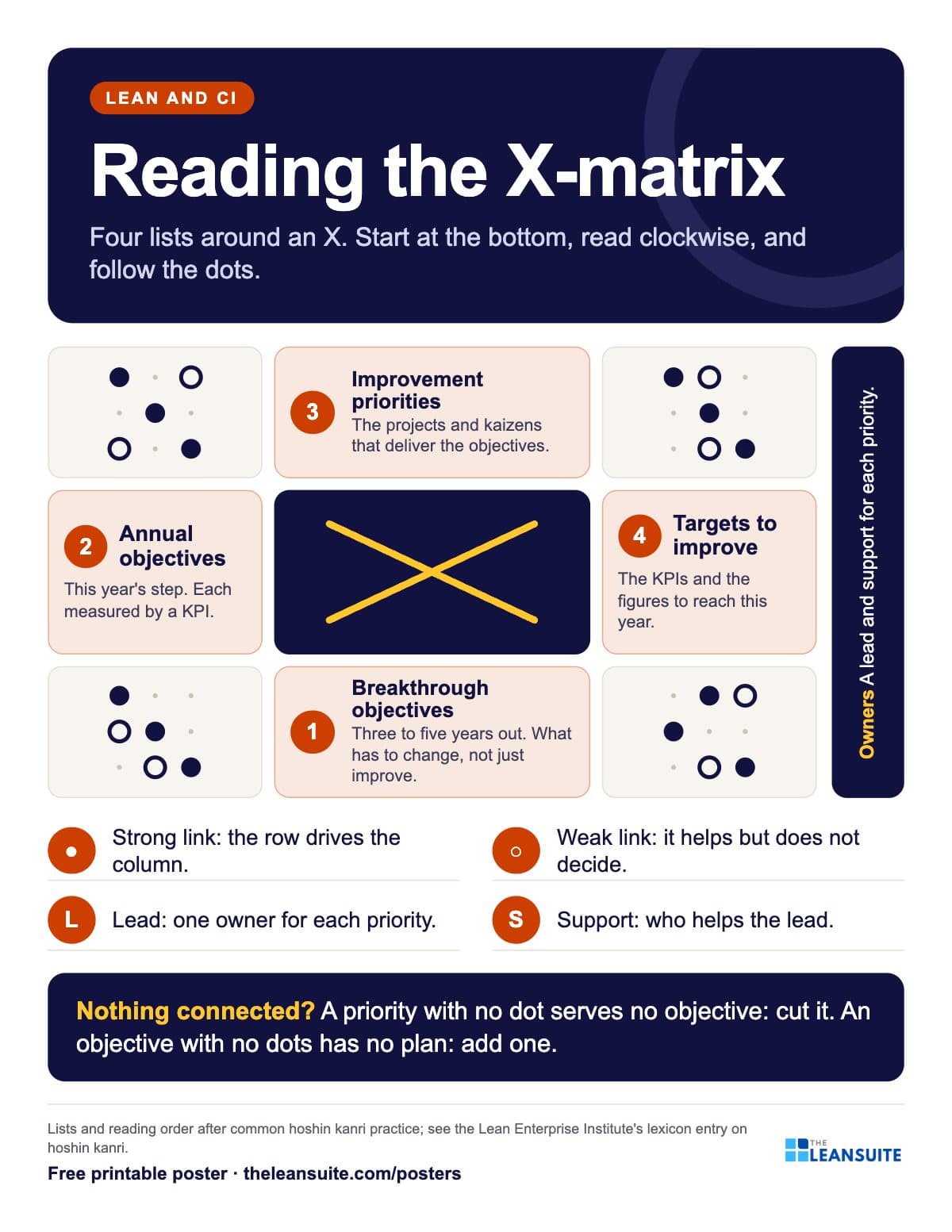 Reading the X-matrix poster
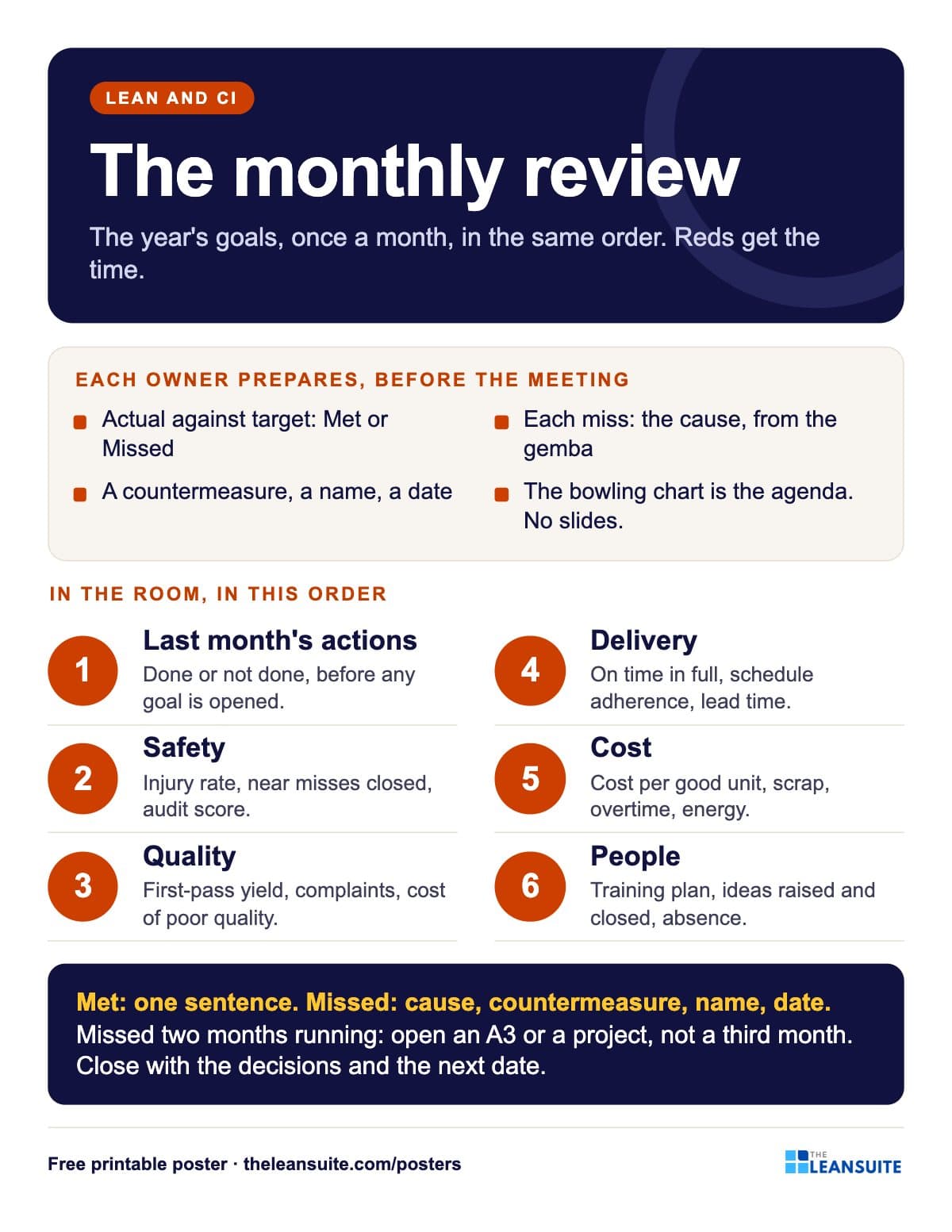 Monthly operations review poster
A poster reminds. A routine makes it stick.
See how plants run their audits, improvements and follow-ups in LeanSuite, on a call built around your own problem.
Book a 45-minute demo